
A report that Intel may raise selected processor prices again, or trim low-margin product lines, is a useful prompt for procurement review. It is not proof that an industrial computer should be redesigned around a different architecture. The reported action has not been confirmed by Intel, and its scope, affected products, regions and effective date remain unclear.
For an edge-AI team, the durable question is not whether x86 or Arm wins a headline. It is whether a specific platform can stay available, secure, supportable and economically sensible through the life of a device. That answer depends on the complete product: board, operating system, drivers, models, thermal design, field service and purchasing terms.

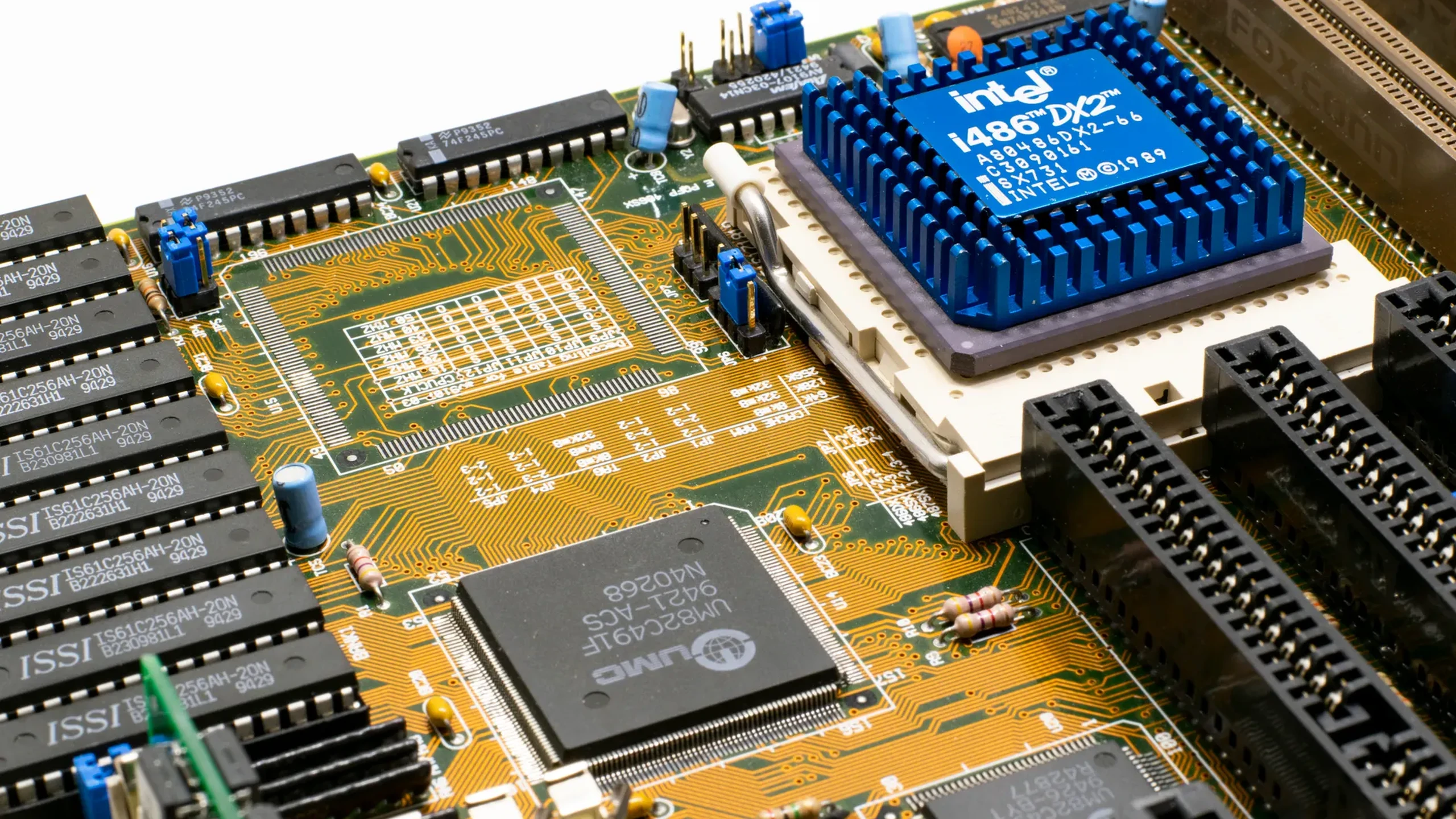
Source-attributed CPU photograph from Pexels. It is a contextual hardware image, not a depiction of a current Intel product, a pricing notice or an Arm alternative.
Start with the uncertainty, then define the decision
The supply-chain report cited a possible Intel price increase and a review of low-margin processor lines. It did not supply an official Intel customer notice or a public list of affected industrial parts. Treat those points as unconfirmed market signals. They can justify preparation; they cannot justify recording a component as end-of-life or adding an assumed percentage to a production bill of materials.
Write down the decision that would actually change if the report becomes true. Is the team choosing a processor for a new camera gateway? Extending a validated factory controller? Or renewing a long-term supply agreement? These cases have different tolerances for risk. A new product may have room to qualify two architectures. A regulated device already in the field may value continuity more than a lower component price.
Then collect the evidence that can change the answer: a distributor quotation tied to exact ordering codes, an Intel product-change notice, the existing platform's final-order date, and the cost of a validated replacement. This turns a broad rumor into a bounded procurement question.
Map the system, not just the processor
An industrial or edge-AI computer is rarely a CPU plus an operating system. It is usually connected to cameras, PLCs, proprietary expansion cards, sensors, radios and a service process. The most expensive dependency may be an old driver or an application that was compiled and tested only for x86, not the processor itself.
Create a dependency map before comparing vendors. Include boot firmware, board-support packages, kernel modules, container images, inference runtimes, model formats, hardware codecs, time-sensitive I/O, remote management and update mechanisms. Mark which components are owned by the team, which have source code, and which depend on a third party.
This exercise often reveals that an architecture migration is neither impossible nor instant. Linux applications and containerized services may be portable, while a camera driver, a Windows utility or a PCIe card can set the true schedule. Emulation may help a development lab but is not proof that timing, peripherals or failure behavior will meet a production requirement.
Compare lifecycle promises at the product level
Long availability is a central reason industrial buyers look beyond mainstream PC parts. Qualcomm and MediaTek both publish industrial or IoT programs with longevity commitments, while Intel continues to market current processors for edge deployments. These are useful starting points, not complete guarantees.
Ask each supplier or module partner for the exact processor ordering code, availability end date, security-update policy, operating-system support, board revision policy and product-change process. A processor can remain purchasable while a critical driver, wireless module or certified operating-system image stops receiving maintenance.
Also distinguish a supplier commitment from a distributor's inventory. Inventory can cushion a transition, but it can also hide a future availability problem until the buffer is gone. The relevant comparison is the support horizon for the complete qualified system.
Test AI acceleration in the workload that ships
An integrated NPU, GPU or accelerator can make Arm-based designs attractive for cameras, robots and compact appliances. Vendor specifications describe capability, but they do not establish the latency, accuracy, power draw or maintainability of a particular product. The same caution applies to x86 platforms with integrated AI features.
Build a small representative test rather than comparing TOPS figures alone. Run the actual model, pre-processing, video decode, storage and network path at the target resolution and temperature. Measure end-to-end latency, sustained throughput, memory pressure, power, thermal headroom, recovery after a dropped stream and behavior when the accelerator is unavailable.
The key question is whether the platform meets the service-level requirement with room for updates. A system that looks efficient in a short benchmark may fail after a model revision, a new camera firmware release or a hot enclosure. Keep the test assets and results as part of the platform record, so a later supplier change can be measured against the same baseline.
Put migration cost beside component cost
A processor price increase can matter, especially in a high-volume device. But the component delta is only one line in the decision. A move from x86 to Arm can require a board redesign, porting work, new driver qualification, new production tooling, additional certifications and field-service training. Staying on x86 can carry its own cost if it means a less efficient design or a shorter lifecycle.
Estimate three scenarios: continue with the qualified platform, move to a newer platform in the same ecosystem, and qualify an alternative architecture. For each, include non-recurring engineering, validation duration, supplier concentration, spare-part planning, energy use, support commitments and the cost of a failed field replacement. State which inputs are quotations, which are vendor commitments and which are assumptions.
This makes tradeoffs visible without treating a price rumor as a forecast. It also helps a team see where a dual-source strategy is practical. Sometimes the best outcome is not an immediate switch; it is a second platform that has completed enough validation to give procurement a credible option.
Make the qualification reversible
A productive comparison begins with one bounded workload. Choose a known deployment, a limited hardware batch, explicit pass criteria and a recovery plan. Test normal operation, power loss, degraded connectivity, model rollback, remote update and replacement of a failed unit. Record operator intervention and time to diagnose faults as carefully as benchmark results.
For legacy industrial equipment, test interfaces before interface performance. Can the candidate platform reliably connect to the actual camera, controller, fieldbus or expansion card? Can a technician image, provision and restore it using the existing service model? If not, a promising processor has not yet become a viable product platform.
Do not use a pilot to conceal uncertainty. Its purpose is to reduce it. Publish an internal decision record that states which claims were independently tested, which came from a vendor, what remains unverified and what event would trigger a wider rollout.
Watch for the evidence that changes the plan
If Intel issues a formal pricing or lifecycle notice, attach it to the exact products in the dependency map. If an Arm supplier or module partner offers a longer support term, obtain the terms for the complete configuration. If either platform shows a material advantage in measured power, model latency or field service, repeat the test under the expected production conditions.
The reported Intel claims may never become a universal policy. Even if they do, their operational impact will vary by contract and component. A careful team can respond without panic by maintaining a current platform inventory, qualifying alternatives where the switching cost is manageable, and keeping support evidence alongside performance data.
The practical goal is not loyalty to x86 or Arm. It is an edge-AI system whose availability, security and recovery behavior remain defensible after the next procurement cycle.