
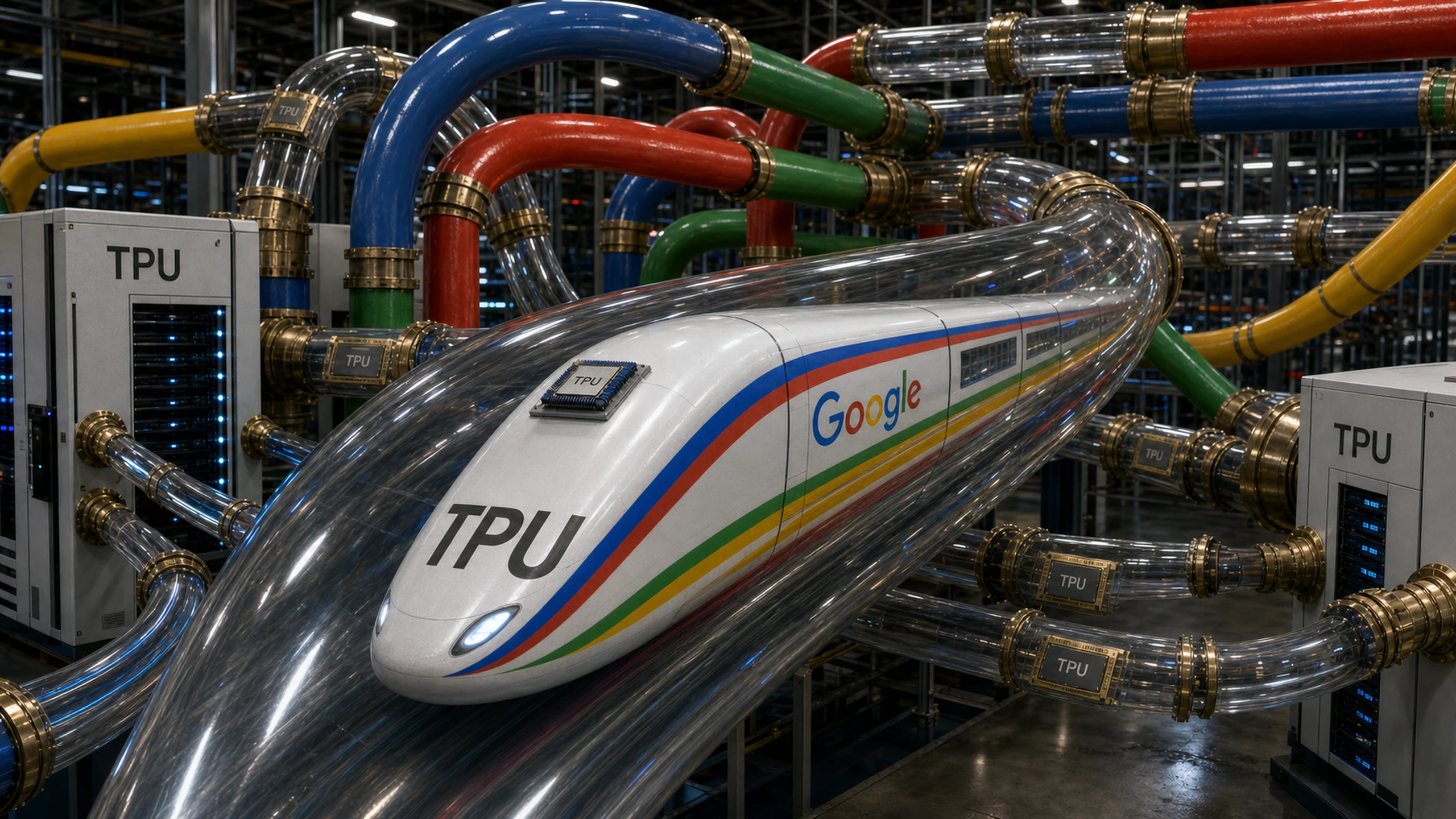
A reported Ironwood result gives infrastructure teams a reason to put Google TPUs on a real evaluation list. It does not settle that list. The InferenceX preview describes favourable price-performance results for selected models and operating points against Nvidia systems, while also showing areas where first-token latency and mature serving features still favour the GPU path. That is exactly the kind of result that should trigger a controlled comparison, not an architecture-wide migration.
The useful question is not whether a TPU is categorically cheaper. It is whether a specific service can meet its user-facing target with a lower all-in cost and an acceptable operating burden. The answer depends on request shape, model support, capacity, software maturity and the cost of keeping an alternative platform healthy.
Start with the workload, not the accelerator
Write down a representative workload before comparing hardware. Include input and output-token lengths, concurrency, target time to first token, inter-token latency, model precision, region and error budget. An 8,000-token prompt followed by a 1,000-token answer can be a useful benchmark case, but it does not stand in for a coding agent that repeatedly reads growing context, a voice assistant that cannot wait for batching, or an offline summarization job that values total throughput.
Then divide services into two buckets. Predictable, high-volume jobs with stable model shapes are plausible candidates for a TPU trial. Services that change models often, need unusual kernels, or depend on tight interactive latency need stronger evidence before they move. This framing avoids a common mistake: comparing a provider's best throughput point to an application that actually buys responsiveness.
Treat the reported cost curve as a hypothesis
SemiAnalysis reported that Ironwood could lead Nvidia B200 and B300 on performance per dollar over parts of its tested range. It also reported slower mean time to first token for Ironwood at a high-concurrency point. Both observations matter. A batch service may gladly trade a few seconds of initial delay for lower completed-request cost. A customer-facing chat product may not.
Ask for the entire curve, not the winning label. Record throughput, time to first token, inter-token latency and tail latency at each concurrency level. Keep model, precision, quality target and routing policy identical where possible. A higher batch size can improve token economics while hiding a user experience that is no longer acceptable.
Cost inputs deserve the same discipline. Modeled total cost of ownership changes with utilization, power, networking, financing, support and reserved capacity. Google can have internal economics that a cloud customer cannot reproduce. Public cloud price, committed-use terms and regional availability may produce another answer. Keep those assumptions in a versioned worksheet and show both the best case and a conservative case.
Make software maturity a release criterion
Hardware cannot remove the operational value of a mature serving stack. Nvidia's CUDA ecosystem includes familiar tools, kernels, diagnostics and experienced operators. The external TPU path around TorchTPU and SGLang is important because it gives PyTorch-oriented teams a more recognizable route to Google hardware, but the available source material also identifies incomplete work around speculative decoding, disaggregated serving, cache offloading and multi-turn agents.
Turn those into acceptance tests. Can the chosen model load and serve without a bespoke kernel project? Can the team trace a slow request, recover a worker, roll back a serving version and reproduce a performance regression? Does the platform support the cache and routing pattern the service already uses? A token-cost win that requires constant specialist intervention is not a reliable cost win.
A fair comparison must also match serving strategy. Disaggregating prompt processing from generation can materially change utilisation and latency. Comparing a highly tuned disaggregated GPU configuration with an aggregated TPU configuration tells a useful operational story, but it is not a neutral chip ranking. Record that difference explicitly instead of burying it in a summary slide.
Price portability and capacity alongside tokens
A deployment is more than a benchmark run. Check supported regions, available capacity, security controls, observability, incident procedures, model-update lead time and the exit path. TPU-specific optimisations can lower cost while increasing dependence on a single cloud and a smaller set of specialists. CUDA also creates dependency, so the aim is not abstract neutrality; it is an informed choice about which dependency matches the service.
Run the trial with a reversible boundary: one model, one workload class, a fixed traffic slice and a defined rollback. Measure completed-request cost, quality, service-level attainment, operational hours and recovery behaviour. Do not extrapolate a pilot result to every model family until it has been repeated across the shapes that matter to the business.
Keep the next-generation roadmap separate
Google's announced TPU 8i roadmap addresses several visible comparison gaps, including native FP4 support and low-latency inference positioning. Those are product claims and future plans, not evidence that an Ironwood deployment will work today. They are relevant to a procurement horizon, but should live in a separate scenario rather than improve the current benchmark score.
The practical conclusion is balanced. Ironwood makes external TPU inference worth testing for stable, large-scale work. Nvidia remains a strong default where serving software, low latency, broad model coverage and existing operating practice matter most. The winning platform is the one that meets the measured service target with the lowest repeatable cost, not the one with the most attractive isolated chart.