
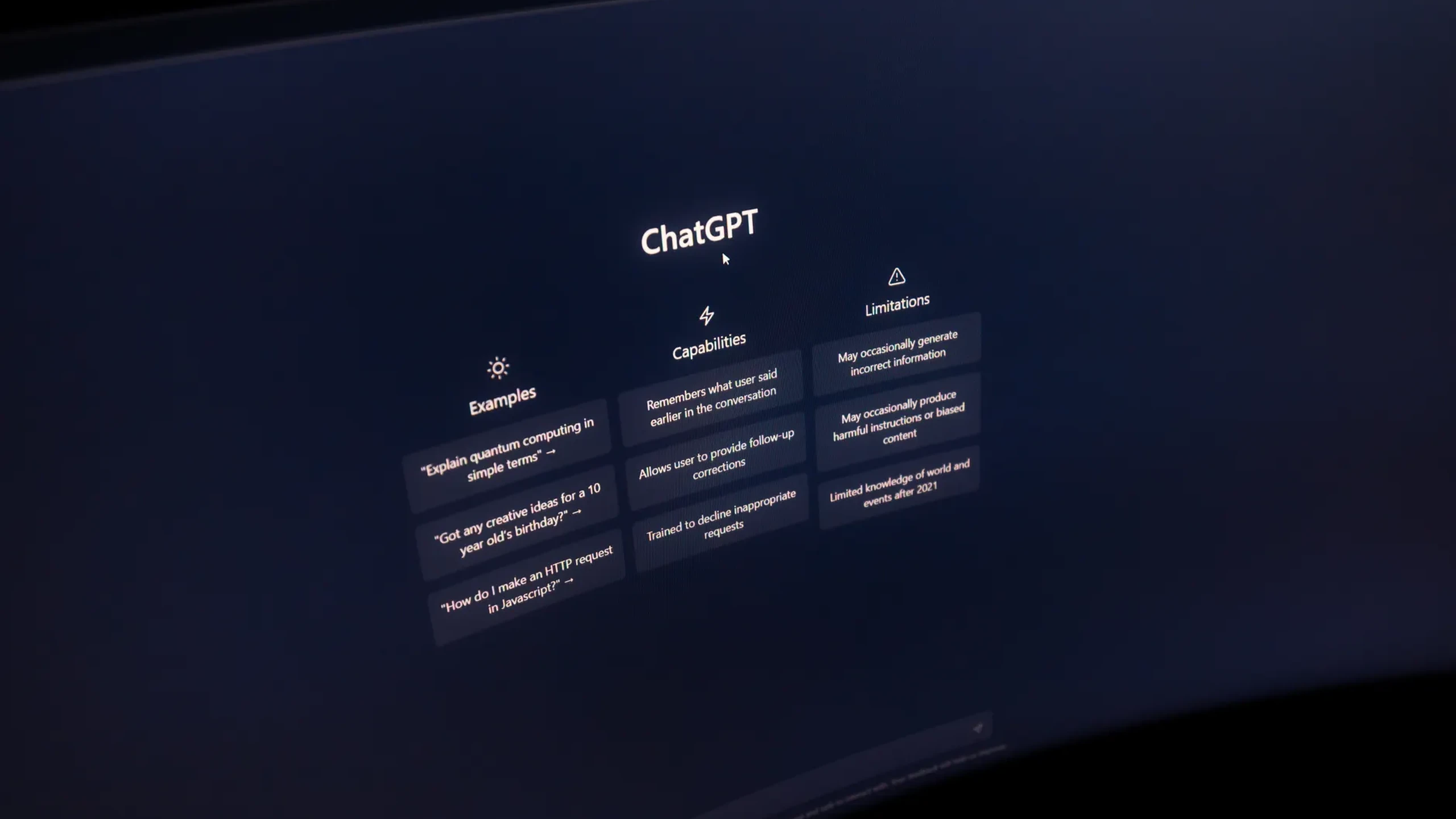
Curriculum-grounded AI starts from a different premise than a general-purpose chatbot. Instead of asking a teacher to supply every standard, source, constraint, and instructional goal in an open prompt, it connects generation to a defined curriculum base. The system may then produce or adapt lesson plans, assessments, worksheets, slides, enrichment activities, translations, or differentiated materials within that context.
That narrower starting point can reduce setup work and make outputs more relevant. It does not make them automatically accurate, instructionally sound, private, or approved. A standards code can be attached to an activity that does not truly teach the intended skill. A fluent translation can miss local meaning. A grounded system can still inherit errors or bias from its source content and model behavior.
The practical change for K-12 schools is therefore not simply faster content generation. Curriculum grounding moves AI closer to the instructional workflow, where decisions about evidence, teacher authority, student data, and procurement become unavoidable. Schools need a way to evaluate the complete system around an output, not just the quality of one generated worksheet.
Understand what grounding does—and what it does not do
A general-purpose chatbot usually begins with an empty text box. The teacher supplies context, requests an artifact, checks the result, and moves it into another application. Curriculum-grounded software begins with defined instructional material and may already know the relevant unit, sequence, standards, or platform context. That can make it easier to generate several connected resources around the same learning objective.
McGraw Hill's planned integration of Teachally illustrates this model. The company says the platform can create standards-aligned lessons, assessments, presentations, worksheets, differentiated activities, localization, and translation from curriculum content. Its announcement presents faster product development, classroom customization, localization, and generation inside existing tools as intended uses. These are product objectives, not proof of classroom outcomes.
Grounding is best treated as a source boundary. It can narrow the material available to a model and reduce the amount of context a teacher must reconstruct. It does not prove that the source is complete, that a standards mapping is current, or that the generated activity preserves the instructional sequence. Buyers should ask to see which sources informed an output, which standard was selected, what the system changed, and whether a teacher can correct the result. Without that traceability, "grounded" remains difficult to verify.
A further constraint is interoperability. District classrooms often combine publisher materials, local repositories, teacher-created documents, and public resources. A system closely tied to one catalog may be predictable inside that catalog yet awkward across the teacher's actual mix of materials. Evaluation should include ordinary cross-source work, not only a vendor's ideal demonstration.
Make teacher control observable
Teacher control should be a property of the workflow, not a reassuring label. Generated material should enter the classroom as an editable draft. Educators need the ability to inspect, reject, revise, and approve it before students see it. They should also be able to tell when AI changed a passage, assessment item, example, translation, or standards mapping.
Useful controls include visible source references, revision history, standards mappings, and an approval record. Those features help separate an error in the curriculum source from a model error, a system instruction, or a teacher's input. The distinction matters when schools need to correct a resource or understand how a problematic result was produced.
Ease of use also has a tradeoff. A system that removes complicated prompt writing may make generation accessible to more teachers. Yet a highly automated interface can hide the assumptions used to produce a result. A sound design reduces mechanical work while keeping the instructional inputs and modifications visible. It does not require teachers to trust an invisible chain of decisions.
Schools should define which tasks remain teacher-only. Final approval of student-facing material is an obvious boundary. A district may also require human review for changes to assessment difficulty, accommodations, reading level, cultural examples, or learning objectives. The rules should reflect the consequences of the task rather than treating every generated artifact as equivalent.
Test classroom value with three separate measures
AI products often combine generation speed, teacher time savings, and student learning into one efficiency claim. These are different outcomes. A system can create five resources in seconds while adding correction work, and a quicker planning process does not by itself improve what students understand.
Research supports a cautious, teacher-mediated approach. A RAND study of educators using AI for instructional planning found that lesson generation, brainstorming, and the creation of other teaching resources were common uses; ChatGPT was the most frequently mentioned tool among respondents. The RAND report shows that teachers are already exploring this category of work, but tool use alone is not evidence of instructional benefit.
The evidence base remains limited. An Institute of Education Sciences summary reported that a 2026 review found only 20 rigorous studies producing causal evidence about AI's educational effects. Its K-12 evidence overview describes more promising results for teacher-mediated or AI-augmented systems, while student-facing general-purpose tools showed mixed effects, particularly when they displaced necessary thinking.
A school pilot should therefore record three measures independently:
- Generation performance: How quickly does the system produce a requested artifact, and how often does it stay within the assigned curriculum and standard?
- Teacher workflow: How much total time is spent prompting, reviewing, correcting, formatting, and moving the material into classroom use? Include training and recovery from poor outputs.
- Instructional result: Does the final material preserve the learning objective, fit the grade and subject, and support the intended student work? Any claim about learning impact needs evidence beyond teacher adoption or output volume.
Evidence should be segmented by grade band and subject. Performance on an elementary reading task cannot establish performance in high-school history, mathematics, or science. A pilot also needs ordinary cases: differentiated practice, a revised reading level, an assessment tied to a unit, and a localized resource. Those uses reveal whether grounding preserves coherence across connected materials.
Treat privacy as part of instructional design
Personalization can invite teachers to enter details about reading levels, language needs, accommodations, or classroom performance. Even without student names, contextual information can be sensitive. Curriculum grounding does not answer who receives that information, where it is retained, or whether an underlying model provider can access it.
Before use, districts should document what data the product collects, how long it retains that data, which providers process it, and whether administrators can limit or disable features. They should also establish what teachers may enter and a correction path for accidental disclosure. An earlier certification or privacy statement should not automatically be assumed to cover a later integration, because acquisition and product changes can alter data flows, hosting, contracts, and support processes.
UNESCO's guidance for generative AI in education emphasizes privacy protection, age-appropriate design, ethical validation, and human-centered use. Those principles apply when a teacher operates the system as well as when a student interacts with it directly. Teacher-facing software can still influence what students receive and can still process sensitive educational context.
Privacy review should connect to classroom practice. A contract alone cannot prevent a teacher from pasting unnecessary student details into a prompt. Training, interface warnings, administrative settings, and local rules all belong in the implementation plan.
Buy a governed workflow, not a feature list
Procurement teams need evidence that generation is trustworthy, editable, traceable, and useful inside established instruction. A long menu of artifact types or a large count of supported standards is not enough. Schools should require a vendor to demonstrate the source and modification chain for a real unit, explain model and data responsibilities, and show how administrators set local rules.
The U.S. Department of Education's school AI guidance supports AI-based instructional materials within applicable requirements while emphasizing privacy, stakeholder engagement, responsible adoption, and teacher involvement. That framing is useful for procurement: adoption is not merely a technology-office decision. Teachers, curriculum leaders, privacy and security staff, accessibility specialists, and district administrators each see a different part of the risk.
A bounded pilot is more informative than an immediate district-wide rollout. Start with named subjects, grade bands, curriculum sources, approved use cases, and a defined group of teachers. Establish the review rule and the evidence to collect before access begins. Expansion should depend on the full workflow results, not on how impressive the initial generation looks.
Curriculum-grounded AI evaluation checklist
Use this checklist before a pilot and again before wider adoption:
- Grounding: Can teachers see the curriculum sources, standards, and unit context behind each output?
- Instructional coherence: Does an adapted resource preserve the learning objective and sequence rather than merely repeat a standards label?
- Teacher authority: Can educators edit, reject, and approve every student-facing artifact?
- Change history: Does the product show what AI altered across passages, questions, examples, translations, and mappings?
- Mixed materials: Can it work with the district's real combination of publisher, local, and teacher-created resources?
- Evidence: Are generation speed, total teacher time, and instructional results measured separately by subject and grade band?
- Privacy: Are collection, retention, provider access, administrative controls, and permitted teacher inputs documented?
- Localization and bias: Are translations, cultural assumptions, examples, and representation reviewed by qualified people?
- Governance: Are error reporting, correction, approval, training, and feature-disable procedures clear?
- Expansion rule: Does wider use require documented pilot evidence rather than eligibility, license counts, or one-time demonstrations?
Curriculum grounding can make AI more useful by giving generation an instructional foundation and keeping it near tools teachers already use. Its value depends on the surrounding controls. The durable standard is not whether software can produce a worksheet quickly, but whether a school can explain where the material came from, how it was changed, who approved it, what evidence supports it, and how student information remains protected.