
Advanced chip packaging claims often compress several different ideas into one promise: shorter connections, denser logic, lower power, faster workloads, and competitive products. Those outcomes are related, but one does not automatically prove the next. A package can improve an electrical path without improving every application, and a technically successful design can remain too difficult or expensive to manufacture at scale.
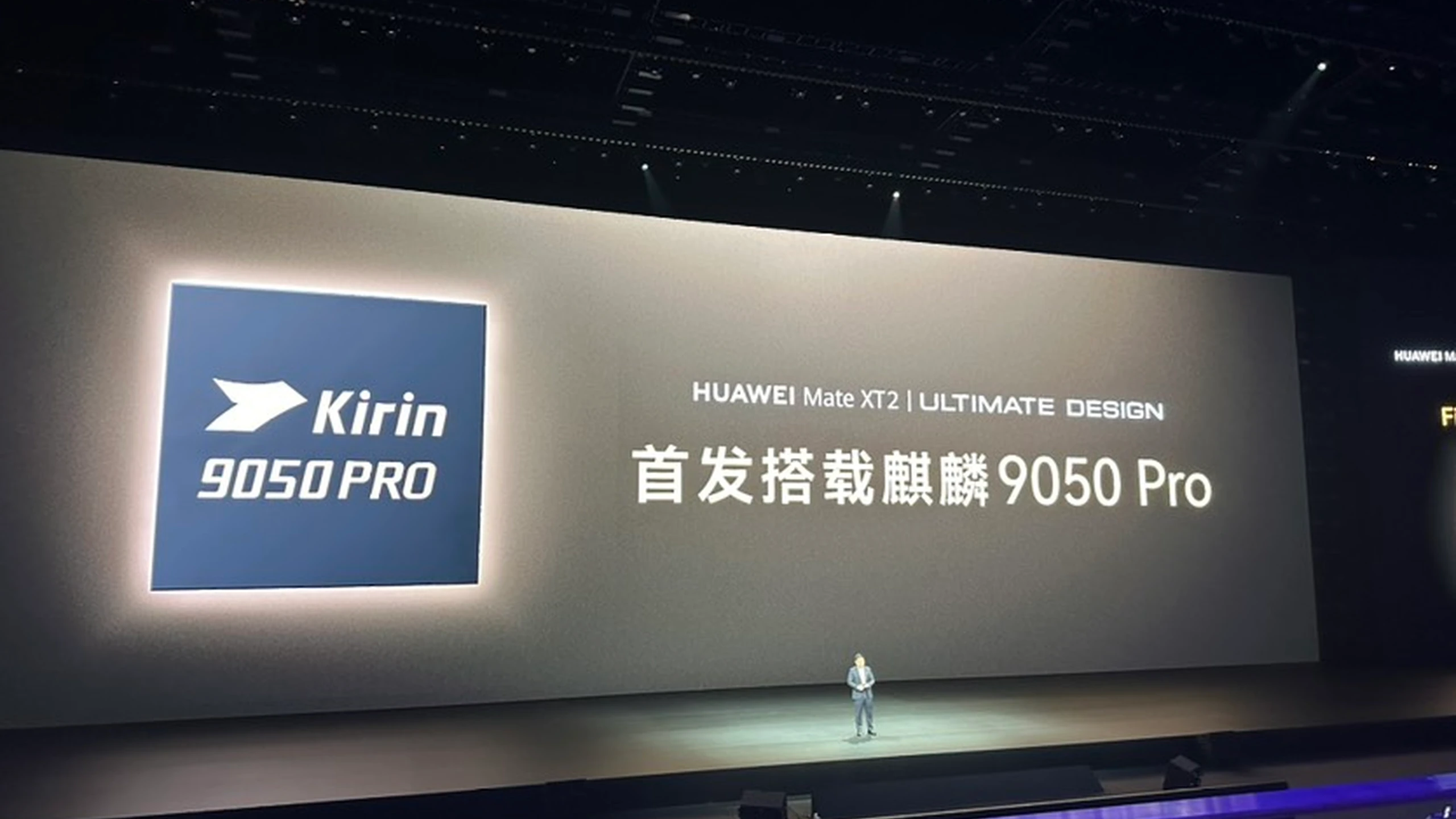
Huawei's LogicFolding provides a useful case for building a durable evaluation method. Huawei says the Kirin 9050 Pro in the Mate XT 2 uses vertically connected logic tiers under its broader Tau Scaling framework. The launch places the idea in a shipping consumer device, but most detailed performance and thermal measurements still come from Huawei. The right response is neither automatic acceptance nor dismissal. It is to separate the claims, define suitable comparisons, and identify the evidence needed at each layer.
Convert the headline into a claim map
Begin by rewriting the announcement as a set of testable statements. A typical advanced-packaging narrative may contain at least six: the physical structure shortens selected interconnects; shorter paths reduce capacitance or delay; the design can operate at lower voltage or higher frequency; the finished chip improves particular workloads; the device preserves those gains under sustained use; and the manufacturing process produces enough reliable units at an acceptable cost.
Mark who supports each statement and at what level. Huawei's Tau Scaling announcement describes LogicFolding as a way to organize circuits across connected tiers and identifies the Kirin generation as its first implementation. Huawei's paper reports block-level measurements. Launch coverage reports a 42 percent overall device-performance claim. These are not interchangeable forms of evidence: an architectural description, an internal silicon measurement, and a whole-device comparison answer different questions.
A useful evidence register has columns for the exact claim, metric, comparison system, workload, operating mode, source, and unresolved variables. Avoid broad labels such as "3D is faster" or "equivalent to a newer node." Record whether a number refers to path length, transistor density, block power, power density, peak throughput, sustained throughput, battery endurance, or a composite device score.
Check the mechanism before judging the result
Interconnect distance matters because a processor spends energy and time moving signals through metal wiring as well as switching transistors. Longer connections add capacitance and delay. Placing selected circuitry on vertically connected tiers can shorten some routes, reduce the buffering needed to drive them, and create timing margin that designers can spend on lower voltage, greater speed, or a mixture of both.
That explanation establishes plausibility, not magnitude. Huawei reports that folded paths were 20 percent shorter in typical processing cores and as much as 70 percent shorter on some critical routes, with more than half of clock-network buffers removed. Treat those as design-specific measurements. Ask which blocks were folded, what percentage of paths changed, how close the tiers are, and whether the reported path is typical or deliberately selected.
The distinction between lower power and higher performance is especially important. Dynamic power depends partly on capacitance, switching activity, frequency, and the square of voltage. A timing improvement can support a meaningful efficiency gain when voltage falls. The same margin can instead be used to raise frequency, which changes the power and heat outcome. Every evaluation should therefore request both matched-performance and maximum-performance results.
Huawei's Kirin paper reports 55 percent more transistors per square millimeter than a planar comparison and, at matched performance, power reductions of 66 percent for the neural processing unit, 58 percent for graphics, and 41 percent for a CPU performance core. In a speed-oriented configuration, it reports different outcomes, including an 18 percent CPU improvement and a 42 percent graphics frame-rate gain. These internally reported figures are useful hypotheses for independent tests, not universal properties of vertical logic.
Design comparisons that isolate the package
A whole-device number rarely isolates packaging. Huawei's reported 42 percent improvement compares the Mate XT 2 on HarmonyOS 7 with the prior Mate XTs on HarmonyOS 5.1, according to launch reporting. The operating system, processor, cooling, memory behavior, application optimization, and other components can all affect that result. It should be described as a platform comparison unless their contributions are separated.
Build a comparison matrix before testing. Keep software versions, display brightness, network conditions, ambient temperature, battery state, performance mode, and workload data as similar as possible. Report cold runs and warmed-up runs separately. For each task, capture completion time, energy consumed, average and peak power, surface temperature, and performance after repeated loops.
Use workloads that stress different parts of the system. Long graphics runs test sustained GPU behavior; local AI tasks exercise the neural processor and memory movement; browser execution and application launches reveal CPU-sensitive behavior; video export and long camera sessions combine compute, memory, image processing, and cooling. One favorable accelerator benchmark cannot establish broad application performance.
Treat heat as a system of measurements
"Runs cooler" can refer to lower total energy, lower chip temperature, lower device-surface temperature, or lower heat per unit of work. Those measurements may move in different directions. Vertical integration puts active circuitry into a compact volume and can make heat removal harder even when shorter wiring cuts total power. Device construction then determines how that heat reaches the enclosure and the user's hand.
Huawei's paper describes thermal-aware placement, selective folding, and horizontal heat spreading. It also contains a revealing exception: Huawei reported that a digital signal processor used 25 percent less total power while its footprint shrank 40 percent, causing power density to rise 24 percent. This is why an efficiency claim should never be treated as proof of lower local thermal density.
A practical thermal review needs a timeline rather than a single peak score. Record performance, power, chip temperature where available, and surface temperature from the beginning of a task until the device reaches a stable state. Note frequency reductions and the recovery period after the load ends. Repeat the test in the same environment. A short benchmark may finish before the cooling system reaches its limit.
For a foldable device, package results must also be interpreted alongside constrained internal space for hinges, displays, cameras, antennas, batteries, structural parts, and cooling material. Good results in the Mate XT 2 would show that the complete product manages this combination; they would not prove that the package behaves identically in every enclosure.
Separate yield, reliability, and availability
Manufacturing evidence is usually the least visible part of a launch. A multi-tier logic design adds bonding, alignment, testing, power-delivery, mechanical-stress, and thermal challenges. A defect in one tier or an inter-tier connection can affect the combined structure. Relevant yield therefore includes the individual tiers, the bonding step, and the completed package rather than a single wafer statistic.
Huawei has not disclosed LogicFolding yield, usable chips per wafer, or incremental production cost. Do not convert that absence into a claim of either poor or strong yield. Label it unknown. Ask for package-level yield, test coverage before and after bonding, reliability qualification, failure modes, repair or redundancy strategy, and cost per functioning package.
Public availability provides only indirect evidence. Consistent supply across several products would be compatible with useful production volume, while persistent shortages would keep scale questions open but would not diagnose their cause. Product mix, demand, allocation, display supply, and other components can also constrain shipments. The foldable market outlook is helpful context for the demanding product category, not evidence of chip yield.
Reliability needs a longer clock than launch-day performance. Thermal cycling can stress bonded structures and connections. Review qualification results when available, then watch field failure patterns, sustained availability, and whether the architecture expands into higher-volume devices or later chip generations. Repeated deployment is stronger evidence of manufacturability than one flagship release.
Measure what software contributes
Hardware and software optimization are legitimate system advantages, but they must be named accurately. Huawei controls the processor design, HarmonyOS, and the handset, allowing the scheduler and applications to direct suitable work toward efficient cores or specialized accelerators. That coordination may reduce reliance on a high-frequency CPU core for predictable, parallel work.
The benefit may narrow on third-party applications, complex web code, sustained games, or tasks that are difficult to parallelize. Huawei's paper itself identifies high-performance CPU logic as harder to fold and verify than wide parallel engines such as graphics and AI blocks. Test both optimized first-party paths and ordinary third-party workflows. Record which software version, API, precision, compiler, and acceleration path each workload used.
When an operating-system update accompanies new silicon, publish two conclusions where possible: the improvement of the new device as users receive it, and the portion credibly attributable to the chip or package. If the second cannot be isolated, say so. A useful product can still have an unproven architectural attribution.
Apply an independent-proof ladder
Evidence should advance through increasingly demanding stages. First comes a vendor explanation of the mechanism. Second comes disclosed methodology and internal measurements. Third comes independent benchmarking under controlled conditions. Fourth comes physical analysis, such as a teardown that confirms the package structure. Fifth comes repeated production evidence across time, devices, and manufacturing lots.
Peer review and replication matter, but they answer different questions. Huawei's paper provides more detail than a launch slide, yet it had not completed conventional peer review in the source package. Independent device tests can verify delivered performance and thermals without proving every internal mechanism. A teardown can confirm structure without establishing yield. No single result completes the ladder.
Preserve negative and mixed results. If peak performance improves while surface temperature rises, both belong in the decision. If matched-performance efficiency improves only in AI and graphics, narrow the conclusion to those workloads. If supply is steady but yield remains undisclosed, report availability evidence without inventing manufacturing economics.
Practical evaluation checklist
Use this checklist for a product review, procurement decision, or technical brief:
- Break the claim into structure, electrical effect, block result, device result, reliability, yield, cost, and scale.
- Record whether every metric is vendor-reported, independently measured, physically verified, or still unknown.
- Demand matched-performance and maximum-performance tests; do not mix efficiency and peak-speed modes.
- Compare path-length and density figures only for the named blocks and layouts.
- Control software version, ambient temperature, display settings, network, battery state, and performance mode.
- Run sustained CPU, graphics, AI, camera, browser, and mixed workloads rather than one short benchmark.
- Measure energy, power, throttling, chip temperature where available, and device-surface temperature over time.
- Separate lower total power from lower power density and lower user-facing temperature.
- Ask for tier, bonding, and completed-package yield plus reliability qualification and cost per good unit.
- Treat shipment availability as indirect evidence and consider other supply constraints.
- Test optimized first-party software and representative third-party applications separately.
- Seek independent benchmarks, teardowns, methodology disclosure, peer review, and repeat deployments.
- State the narrowest conclusion the evidence supports and date every unresolved assumption.
The durable lesson from LogicFolding is methodological. Shorter interconnects can plausibly improve timing and energy use, and Huawei has placed specific numbers behind that proposition. But packaging, silicon blocks, operating software, cooling, manufacturing, and the finished product form a chain. Evaluate each link with the metric and evidence suited to it. The result will be more useful than either repeating a launch claim or rejecting an architecture before the independent record is complete.