
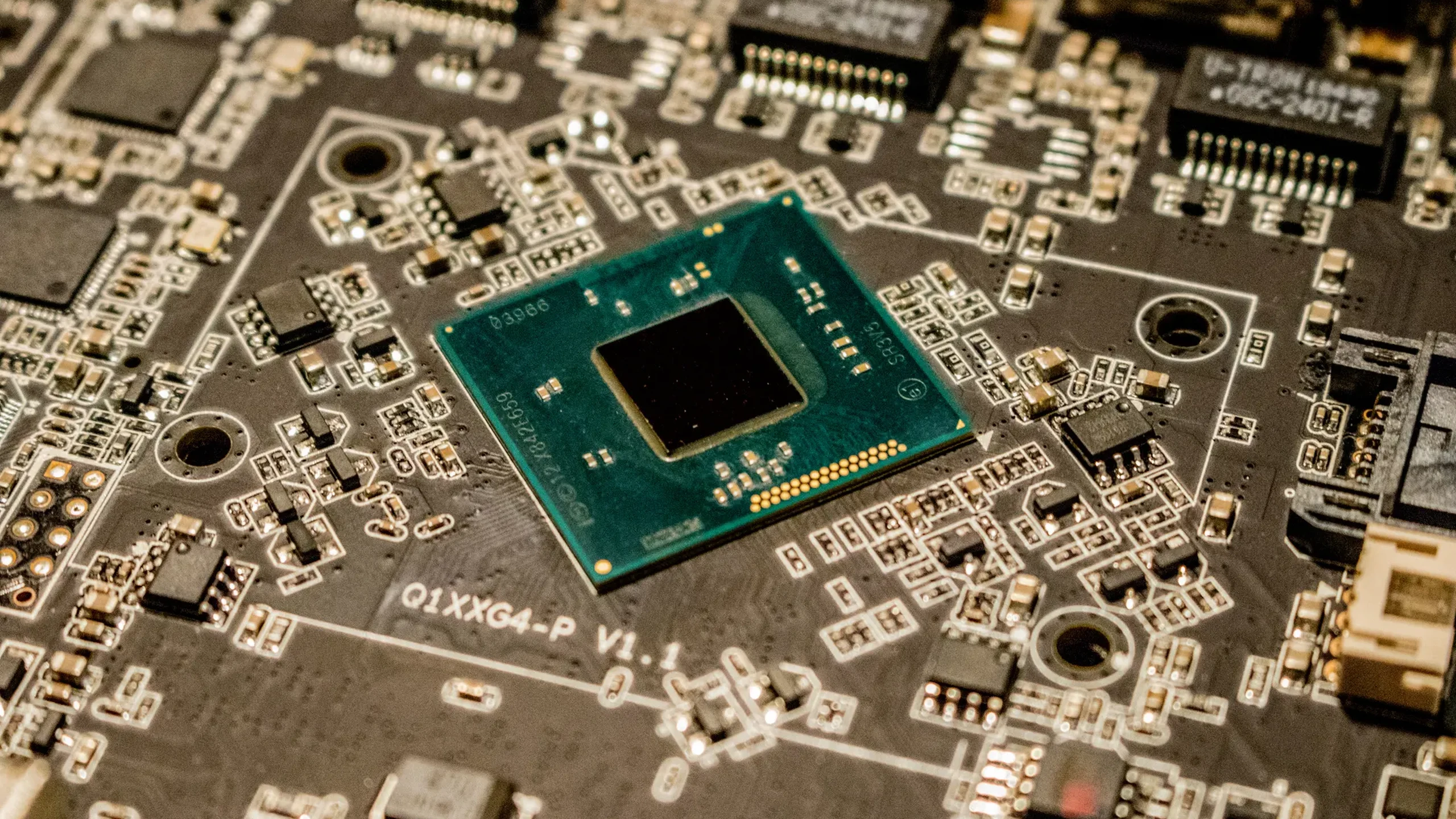
The most consequential part of the INSPIRE experiment is not that a circuit computes with light. It is that the manufactured circuit supplies the information needed to improve its own computation. Instead of learning settings entirely in a digital replica and hoping they transfer, the researchers measure how the real optical hardware responds.
Published in Nature Computational Science on October 5, 2026, the method was highlighted in a Nature research briefing four days later. Tiankuang Zhou, Yun Zhao, Shanglong Li, Guocheng Shao, Ruqi Huang and Lu Fang developed the work. Tsinghua identified its electronic engineering department and Beijing National Research Center for Information Science and Technology as the lead institution.
INSPIRE stands for in situ physical gradient descent. Its demonstrations include precise matrix fitting, computation across wavelengths, scattering media and rapid adaptation through meta-learning. They make a case for more adaptable optical hardware, not an announcement that photonics has overtaken GPUs in general-purpose AI training.
Training the chip that was built, not its ideal replica
A gradient tells an optimizer how changing a parameter changes the error. Conventional neural-network training calculates these derivatives on digital hardware. Optical processors complicate that route: light travels through waveguides, phase controls and scattering structures, and interference depends on both amplitude and phase.
A simulator can describe those interactions, but fabrication variation, thermal drift and noise separate the description from the device. In a coherent circuit, even small phase differences can change the transformation. Engineers must characterize the chip, update a model, optimize settings, transfer them and calibrate again when conditions drift.
INSPIRE moves the gradient measurement into that physical loop. Deviations from the intended design become conditions the optimizer observes rather than errors it must first reproduce perfectly in software. The method still needs an objective, electronic control and parameter updates. It reduces dependence on a complete differentiable digital twin; it does not eliminate software or simulation from chip engineering.
This distinction also changes the role of inverse design, which searches for a structure that produces a desired optical function. Simulation remains valuable before fabrication. Physical adjustment afterward offers a complementary way to use a configurable device whose exact behavior is difficult to model.
Forward and reverse light reveal the update direction
The experiment uses on-chip synthetic time-reversal holography. A forward optical field passes through the circuit and produces an output. A second, reverse-propagating field carries information associated with the output error. Measuring the complex fields—amplitude as well as phase—allows the researchers to determine how tunable elements affect the objective.
Optical reciprocity links transmission in the two directions. INSPIRE uses this relationship to extract a gradient from the physical measurements. A controller then adjusts the circuit and repeats the process. Measuring intensity alone would omit phase information needed to describe interference.
The alternative of perturbing every parameter separately would require many measurements as controls multiply. The forward-and-reverse method avoids treating each setting as an unrelated trial. Its practical value nevertheless depends on field generation, routing, measurement and reliable control, not just the mathematical gradient formula.
The authors describe the framework as topology-agnostic: it is not tied to one particular arrangement of optical components. That is a claim about the method’s applicability. Different materials, wavelengths and tuning mechanisms can still demand platform-specific engineering.
What the reported experiments establish
A matrix-training experiment reached 0.26% relative error between the desired transformation and the transformation produced by the optical system. That is evidence of precise fitting in the experimental setup. It is not the accuracy of an arbitrary multilayer neural network, and it does not by itself establish stability across long training runs.
The team also trained computation across multiple wavelengths. Different wavelength channels can carry information through the same hardware, making spectral parallelism an important part of the photonic proposition. In scattering media, the circuit exploits light mixed through complex paths rather than treating every irregularity as something to remove.
The study reports target matrices larger than the number of native tunable elements. This indicates that accessible behavior in the wider physical system can be useful beyond a simplistic count of controls. It does not create unlimited independent parameters: controllability, noise and measurement quality still bound what can be realized.
The meta-photonic demonstration addresses another question: can a learned structure adapt rapidly to new tasks? The reported single-shot adaptation accompanied 251-fold model compression and 136-fold acceleration of task-specific training. These are comparisons within the authors’ experimental framework. Neither ratio measures a commercial GPU replacement or the memory reduction of an arbitrary production model.
A new step in an existing physical-learning sequence
INSPIRE follows earlier work rather than inventing physical training from nothing. A 2018 Optica paper proposed in situ optical gradient measurement, and a 2023 Science experiment demonstrated integrated photonic backpropagation. A 2024 Nature study explored forward-mode training using only forward passes, addressing difficulties in sending error signals backward.
A March 2026 Nature result integrated linear and nonlinear computations on a photonic chip, exceeded 90% accuracy on two nonlinear classification tasks and reported robustness comparable with a digital reference. INSPIRE’s distinguishing emphasis is broader topology compatibility across matrices, scattering and meta-learning, not a claim that every preceding approach has been displaced.
These methods make different demands on reciprocity, signal routing and instrumentation. Comparing them on the same task would be more informative than placing isolated speed ratios side by side. A general method can expand the design space without being the cheapest implementation for every optical platform.
Where the system costs and scaling limits remain
Photonic arithmetic can perform selected linear operations in parallel. A useful AI system also needs memory, nonlinear functions, parameter storage, control flow and data movement. Electronic accelerators have mature software and predictable numerical behavior across these functions. INSPIRE has not demonstrated large-language-model training.
Data encoding and detection create conversion costs. Lasers, modulators, detectors, analog-to-digital and digital-to-analog converters, thermal controls and electronic parameter updates all consume time and energy. The study’s abstract does not supply an end-to-end energy comparison against a current GPU. Calling the entire system more energy-efficient would therefore go beyond the evidence.
A September scaling review discussed interferometer, diffractive and wavelength-division architectures, highlighting analog precision, accumulating errors, signal-to-noise loss and conversion inefficiency. Physical training can compensate for some fabrication mismatch; it cannot abolish optical loss, noisy gradients or thermal interactions between neighboring controls.
Packaging, yield, lifetime and calibration across many units remain manufacturing questions. Billion-parameter scale requires stable degrees of freedom and substantial memory, not simply a better rule for updating a small circuit. Software interfaces must also expose the capability without forcing application developers to operate every optical detail.
The closer applications may be sensing, communications, imaging and scientific instruments, where information already arrives as light and repeated adaptation is useful. They can avoid some conversions that a digital-first workload would add. Hybrid systems may place suitable transformations in optics while retaining electronic memory and control.
INSPIRE’s next test is consequently a larger, reproducible system reporting equal-task accuracy, full energy and latency, measurement overhead and stability after drift. Independent transfer to another platform would test the generality claim. The present result establishes a route around model mismatch; whether that route is economical depends on everything required to keep the physical learning loop running.