
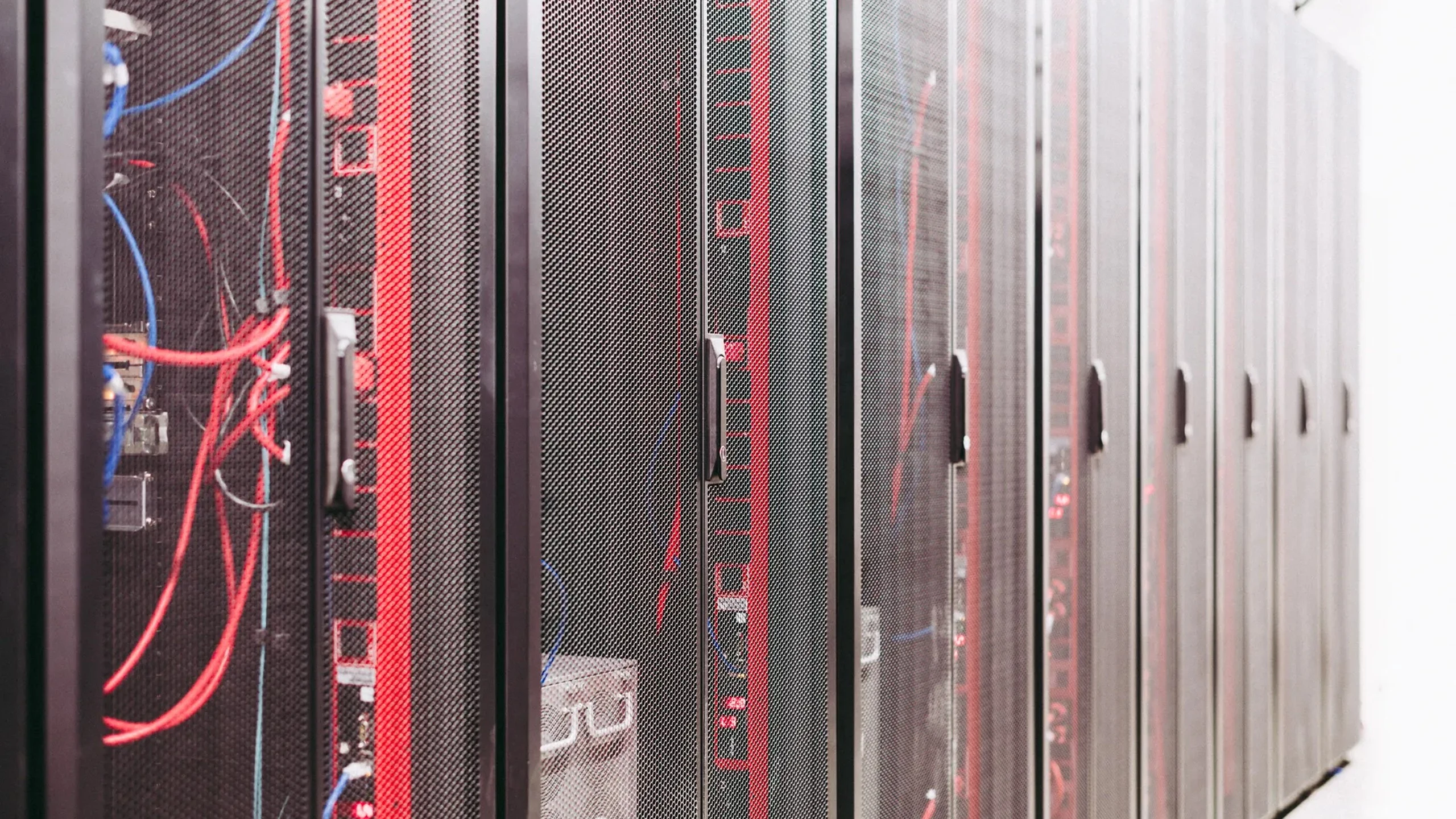
South Korea's roughly $900 billion AI investment headline describes an industrial framework, not a single government appropriation or completed construction. The plan links memory manufacturing, data centers and AI-controlled industry while trying to move more growth beyond the Seoul region. Delivering those two goals together requires infrastructure and demand to arrive on the same timetable as corporate investment.
President Lee Jae Myung presented the program June 29 alongside Samsung Electronics Chairman Lee Jae-yong and SK Group Chairman Chey Tae-won. He described semiconductor and AI competition as national survival. That political urgency does not remove years of site selection, corporate authorization, utility construction and production qualification.
Three totals should not become one government check
Samsung Electronics and SK Hynix plan two southwestern semiconductor fabs each, with a combined commitment of 800 trillion won. Another 550 trillion won is associated with an initial target of 8.4 GW of AI data-center capacity by 2029. Those two components total 1,350 trillion won, roughly $880 billion at the announcement's conversion and commonly rounded toward $900 billion.
The broader official account places three regional megaprojects at 1,558 trillion won, including related manufacturing, packaging and physical-AI programs. That is a wider scope, not a second exchange-rate calculation for the same two components. Likewise, the announcement includes an 81 trillion-won packaging hub in central Chungcheong and more than 30 trillion won over 15 years for semiconductor research, design, testing and manufacturing. These figures should not be blindly added again to the broad total.
Won is the clearest common unit. Contemporary conversions valued the 800 trillion-won chip component at approximately $518–585 billion; changing dollar amounts need not mean changing Korean commitments. The approximately $880 billion combined headline and larger 1,558 trillion-won framework should remain explicitly distinguished.
Most of the two central commitments depend on corporate capital plans. Government contributes land coordination, permits, power, water, research and selected financial support; taxpayers have not deposited 1,350 trillion won into one construction account. SK Hynix explicitly expects staged spending according to demand and board approval. A commitment is therefore neither an irrevocable annual budget nor already deployed equipment.
Memory is the starting advantage, not the whole AI stack
Samsung and SK Hynix together produce about two-thirds of global memory chips according to the cited reporting. AI accelerators need high-bandwidth memory because moving data too slowly leaves expensive processors underused. HBM stacks memory dies to provide rapid transfer during training and inference.
SK Hynix gained an early lead supplying HBM for major accelerators; Samsung is responding with products, investment and customer qualification. Micron is the principal US advanced-memory competitor, while Taiwan's TSMC dominates an important part of contract chipmaking. South Korea's leverage is manufacturing memory, not controlling every leading processor or global cloud service.
The four fabs expand geography rather than replace existing networks. Gwangju and Honam would form a second major manufacturing region beyond the Seoul/Gyeonggi semiconductor corridor. Chungcheong packaging addresses another layer: connecting processors, HBM and other specialized chips into tightly integrated systems.
Data centers could create domestic customers for memory, networking, power and cloud services. The program includes SK Group, GS Group, Naver and other developers across regions rather than placing every cluster near Seoul. This connects chip supply with computing demand, instead of assuming greater fabrication capacity alone delivers AI leadership.
Physical AI adds potential demand from existing Korean factories, vehicle plants, shipyards, batteries, electronics, machinery and defense operations. Robots, autonomous vehicles, ships and defense systems place software in the physical world. Their safety, reliability, maintenance and return requirements make adoption slower than consumer applications.
The strategy also responds to competing industrial policies: US CHIPS support and technology restrictions on China, Japanese plants including TSMC-linked investment and domestic foundry ambitions, China's self-sufficiency and AI infrastructure push, and Taiwan's advanced-logic role. Korea cannot lead every layer, so it seeks adjacent influence around an advantage it already holds.
Gigawatts are electrical scale, not installed AI capability
Science and ICT Minister Bae Kyung-hoon described a longer plan reaching 18.4 GW by 2035, with associated investment above 1,000 trillion won. The additional 10 GW between 2030 and 2035 follows the initial 8.4 GW target. The longer investment figure is not described as a separate additional sum to add to the earlier 550 trillion won.
A gigawatt measures electrical capacity, not installed accelerator count, model quality, paying customers or utilization. Land and a building become useful compute only after grid connections, cooling, financing, networking and chips are secured. Multiple regional projects must advance on overlapping schedules to reach 2029.
The cited IEA analysis estimates that hundreds of proposed Korean data centers could require almost 49 GW by 2029. That proposed pipeline is not the same as the government's 8.4 GW program or a forecast that every project will operate. Even with cancellations, it illustrates competition for grid access alongside industrial electrification and existing demand.
Government promises of timely supply exceeding 8 GW for large data centers across provinces also need generation and transmission to progress together. Generation without transmission strands power; buildings without connections strand capital. Fabs need continuous power for tools, cleanrooms, pumps and temperature control, and data centers add steady load and cooling requirements.
Water is a distinct manufacturing constraint. Wafer processing and cleaning require reliable supplies of highly purified water. Recycling can reduce net consumption, not eliminate regional water systems. Environmental assessments and local community concerns therefore belong in project execution rather than being treated as obstacles that capital automatically solves.
Regional development can slow the fastest production route
The southwest lacks a semiconductor ecosystem comparable to the established Gyeonggi base. Existing clusters bring suppliers, engineers, universities, logistics and utilities accumulated over decades. A new cluster must build many of these together; a fab cannot operate efficiently if specialist support remains hours away.
Chey Tae-won identified large sites, sufficient electricity, water and skilled staff as necessary. Government plans to accelerate permits, provide infrastructure and connect universities with hiring. But process engineers, equipment technicians, software specialists, builders and supplier teams cannot be produced on a building's schedule.
Opposition figures question southwestern power and water availability, while representatives of existing chip regions fear investment diversion. These objections do not establish failure. They expose two objectives that do not automatically align: the fastest route to output may favor existing centers, while regional policy deliberately creates a second base.
Housing, schools, transport, water networks and reliable transmission affect whether employees and suppliers relocate. The cited editorial compares the new commitments with unfinished Yongin, where power, water, permits and construction timing have already caused debate. Adding another megaproject can stretch administrative capacity even when money is available.
The sequencing dilemma is practical. Companies need credible utilities before ordering equipment; utilities need credible demand before committing capacity. Coordination can break the deadlock, but broad public promises can also conceal weak assumptions when detailed engineering lags. Neither skepticism nor political urgency substitutes for site-level delivery evidence.
Demand can change before new supply arrives
Memory remains cyclical despite exceptional AI orders. A shortage when a project is announced can become excess capacity by the time it qualifies production. Companies can phase cleanrooms, postpone equipment purchases and use board reviews to manage that risk. These controls are reasons not to read headline commitments as an immediate spending schedule.
Data-center operators face a parallel risk: securing power and buildings before enough customers exist. Simultaneous infrastructure programs in the US, Middle East, Europe, China and elsewhere in Asia will compete for tenants and hardware. Domestic demand from Naver, telecoms, manufacturers, researchers and government may support expansion without justifying every proposed gigawatt.
Exportable cloud services and partnerships could improve occupancy but add international competition and foreign dependencies. Leading memory production does not mean control of the accelerators that consume it. Export rules, supplier allocation and platform decisions can change local deployment. Domestic AI semiconductor and cloud programs address part of that gap but remain smaller than the memory and data-center commitments.
Evidence that would turn a map into operating capacity
Specific board approvals, sites, capital phases and equipment orders are the first material tests. ASML, Applied Materials, Lam Research, Tokyo Electron and domestic suppliers may show progress through orders; a broad pledge alone does not lock in all 800 trillion won.
The second test is binding utility delivery: generation, transmission routes, substations, water systems, permits, construction awards and commissioning dates for each cluster. Promised gigawatts are not operating connections. The regional-development case weakens if essential infrastructure arrives only after corporate schedules slip.
The third is actual data-center use: tenants, installed accelerators, opening dates, expansion phases and sustained occupancy. Weak use or repeated delay would suggest construction outran adoption; strong use would support the intended link between domestic chips and domestic compute. Reaching 8.4 GW by 2029 requires meaningful progress before the decade ends.
Developers could benefit through memory availability and infrastructure costs; enterprises through additional Korean cloud options; other users through the models and applications actually deployed. None follows automatically from the investment total. Korea's industrial direction is substantial, but permits, substations, hiring, equipment and occupied server halls—not a converted headline—will determine how much becomes real.
Sources and related reading
Investment commitments fact sheet · Official regional megaproject overview · Memory-market reporting · Data-center capacity plan · Regional-execution critique · IEA East Asia energy analysis · Original discovery record