
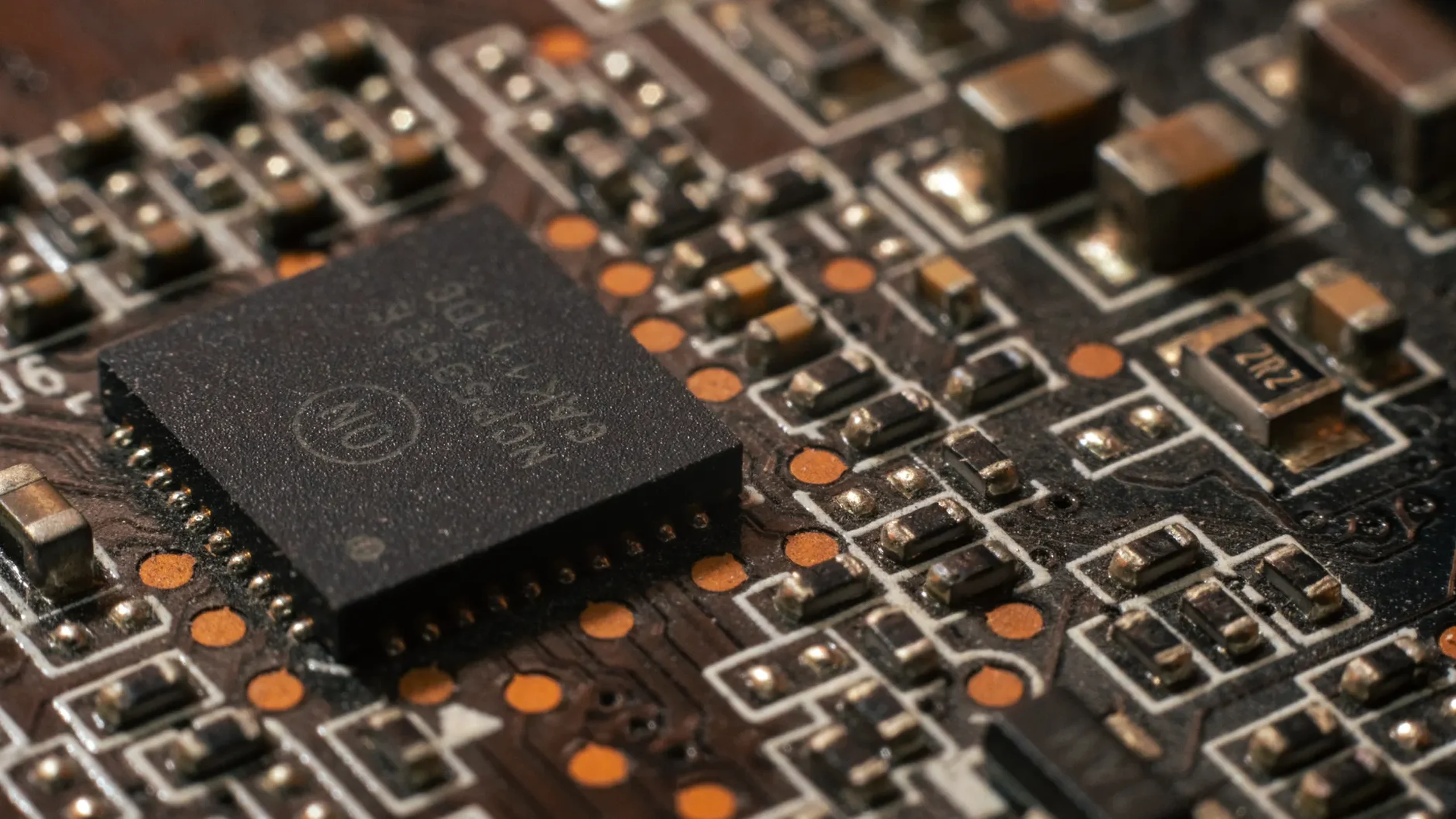
Oracle is reportedly exploring chip-purchase financing with Apollo Global Management and Goldman Sachs, opening another question about how its AI cloud expansion will be funded. The development is a preliminary discussion, not an announced transaction. Its significance lies in the gap between paying for usable infrastructure now and collecting cloud revenue over years—not proof that a new financing structure has already solved that gap.
An October 8 Chinese newsflash relayed the talks from other reporting without detailed terms. No party publicly confirmed an amount, chip supplier, collateral package, repayment timetable or final agreement. Nor was it clear who would borrow, own the hardware or record the financing on its balance sheet. Apollo and Goldman could be lenders, arrangers, investors, distributors or advisers; their precise roles remain unknown.
Existing funding plans frame the question
Oracle announced early in 2026 that it expected to raise $45 billion–$50 billion during the calendar year for Oracle Cloud Infrastructure. Roughly half would come from common equity and equity-linked issuance, with the other half from one investment-grade senior unsecured bond transaction. Goldman Sachs led the unsecured offering; Citigroup had leading roles in the equity transactions. Oracle said it did not expect further bond issuance during calendar 2026.
That guidance does not mean every alternative form of financing is prohibited. A chip-specific arrangement might replace direct purchases or fund assets or customer payments without another unsecured Oracle bond. Conversely, the reported discussions do not establish that Oracle has abandoned its capital plan or faces financial distress. Large companies compare public debt, equity, customer prepayments and private credit because their costs and constraints differ.
The cash-demand mismatch is tangible. Processors must be accompanied by networking, power, cooling and data-center space before an operator can supply usable capacity and recognize the related service revenue. A signed multiyear customer agreement makes demand more visible but does not pay every construction bill immediately or guarantee that a site opens and passes customer acceptance on schedule.
Contracted demand is not cash already earned
In its fiscal 2027 first-quarter reporting, Oracle described more than $30 billion in additional AI cloud contracts, lifting remaining performance obligations to $664 billion. Those obligations represent contracted services and revenue not yet recognized; they are not cash earnings or guaranteed cloud margins. The company also expected at least $90 billion in fiscal 2027 revenue, an outlook rather than a completed year's result.
Oracle said it delivered more than 300,000 GPUs after the preceding quarter ended and nearly three times the capacity delivered in the prior quarter. GPUs perform highly parallel computations used for AI training and inference. The delivery statement describes processors and capacity supplied; profitable conversion still requires working facilities, customer acceptance, billable utilization and sufficient prices.
Figures cited alongside the September results put operating cash flow at $23 billion and free cash flow at negative $5 billion. The supplied reporting does not establish a comparable measurement period for these two cash-flow figures. They should not be treated as independently verified single-quarter numbers or as covering the same period as the separate nine-month filing. Free cash flow, under Oracle's calculation, deducts capital expenditures from operating cash. Oracle also completed a $20 billion common-stock sale through an at-the-market program, issuing at prevailing prices rather than one fixed-price offering.
Management said the new AI contracts would not increase its existing capital-raising plan because they used prepayments, customer-provided hardware or similar arrangements. Those mechanisms can reduce Oracle's immediate cash outlay without removing the infrastructure need. A customer owning equipment may still depend on Oracle for space, networking, power and operational support.
The new talks could therefore concern earlier commitments, replace direct spending or arrange third-party capacity; the available reporting does not identify which explanation applies. Gross capital expenditure and Oracle's net cash burden are different measures. Backlog alone cannot show how each contract's delivery schedule, financing cost and capital efficiency translate into profit.
What a financing structure would actually change
A conventional corporate loan leaves the company responsible for repayment regardless of chip utilization. Asset-backed financing might instead rely partly on equipment, lease payments or contracted compute revenue. A special-purpose vehicle could buy chips and lease capacity, separating a pool of assets and cash flows from the operator's wider finances. These explain possible structures, not a confirmed Oracle deal.
Even an “off-balance-sheet” label would not answer who bears losses. Guarantees, minimum payments, repurchase commitments, residual-value support or revenue sharing can leave substantial economic exposure with the operator. A vehicle relying on customer contracts and resale value differs from one supported by Oracle's promise to repay. If Oracle offers less support, lenders may demand a higher price for taking more risk.
Outside capital can spread upfront expenditure and preserve corporate borrowing capacity for land, construction, energy, networking or acquisitions. It still creates claims on future cash through interest, leases, collateral restrictions or shared revenues. The real issue is whether risk-adjusted capital efficiency improves, not whether the financing amount is large or a particular accounting label sounds reassuring.
Oracle's fiscal 2026 nine-month filing illustrates the scale of the shift. Capital expenditures reached $39.2 billion, versus $12.1 billion a year earlier, mainly for data-center expansion; the filing said the upward trend would continue as capacity and locations increased. In that same nine-month period, operating cash flow was $17.4 billion and financing activities supplied $46.2 billion through sources including senior notes, preferred shares and commercial paper.
These nine-month numbers are a separate period from the later results discussed above. They do not prove the investment will fail: infrastructure spending can precede revenue by quarters or years. They do show how far Oracle is moving from software licenses, subscriptions and support toward an asset-heavy cloud model. Long contracts and scarce capacity can support returns, but financing costs and construction delays can consume those advantages.
Why Apollo and Goldman appear in the discussion
Both firms participated in Nvidia's August initiative with BlackRock, Blackstone, Brookfield and KKR to develop independent AI-infrastructure financing platforms. The stated ambition was to mobilize more than $500 billion over time for Nvidia customers. The memorandums did not allocate that entire sum to Oracle or guarantee that every contemplated platform would reach final agreement; separate transactions still require underwriting.
That initiative helps explain the institutions' interest, but does not identify Nvidia as the supplier in Oracle's reported talks. Goldman already knows Oracle's funding program. Apollo contributes experience across private credit, insurance capital, infrastructure and asset-backed finance, areas accustomed to costs arriving before long-duration contracted income.
The analogy is to aircraft, telecom equipment, renewable-energy projects or vehicle fleets: costly assets generate payments over time, allowing contracts, leases and use to support financing. A repeatable compute-finance market could involve pension funds, insurers, sovereign investors, banks and private-credit funds at different risk levels. Suppliers gain purchasing capacity, operators spread initial costs, and a wider investor base becomes exposed to assumptions about AI demand.
Apollo executives have also described public and private debt as increasingly interconnected, with technology companies borrowing across markets and maturities. This is the wider change: AI equipment is entering institutional portfolios, not simply corporate technology budgets. But the financing precedent is useful only if the economics of the underlying equipment endure.
Chips introduce risks that long-lived infrastructure does not erase
Processors have faster product cycles than aircraft or power plants. New generations can improve performance per watt, memory and inference costs before an old loan matures. Nvidia argues that CUDA and its broad customer base make its systems reusable across workloads and operators; lenders still need to test that claim. Accounting depreciation does not guarantee economic life or resale value.
Prices can decline with more supply, new architectures, AMD products, internally designed chips or a shift toward cheaper custom inference accelerators. Customer concentration adds another problem: a chip pool dedicated to one AI developer can look secure while its contract holds, then become difficult to value after reduced spending or renegotiation. Utilization is not enough without adequate realized prices.
Diverse customers and equipment transferable between tenants, regions and workloads can help. Standard racks, compatible networking and reusable power infrastructure offer more flexibility than highly customized sites. Yet funded chips cannot earn meaningful cloud revenue in a warehouse without energized facilities, cooling, high-speed links and software orchestration. Power availability may become the binding constraint before finance.
Oracle can combine its cloud hardware with databases, storage, networking and managed services and draw on established enterprise relationships. AWS, Azure and Google Cloud, however, can use cash from large businesses and compete through pricing, supplier terms, capacity and custom chips. Specialists such as CoreWeave show that equipment collateral can unlock capital, while also illustrating leverage and customer-concentration risks. Oracle sits between a mature software company and a capital-intensive infrastructure operator.
The evidence still has to arrive
A confirmed deal should reveal borrower, asset owner, amount, maturity, collateral and guarantees, as well as the supplier. Until then, comparisons with Oracle's bonds, equity or customer prepayments cannot establish relative cost or dilution. Equity spreads risk among shareholders; debt and leases create fixed claims; private structures may combine characteristics of both.
Operational evidence matters just as much: whether deliveries become billable, sufficiently utilized capacity; whether gross investment can rise while Oracle's own cash burden stabilizes; and how the $664 billion backlog converts into recognized revenue, operating income and cash after infrastructure and financing payments. Growing leases or guarantees alongside slow conversion would weaken the balance-sheet-relief case even if headline revenue rises.
For developers and enterprise buyers, the outcome affects region openings, accelerator availability and long-term cloud prices. Portability, service credits and explicit deployment dates matter because access to capital does not guarantee delivery of a specific cluster. Signed terms and operating results—not the talks alone—will show whether private capital improves Oracle's economics or merely moves obligations into less visible structures.
Sources
Initial financing report · Oracle first-quarter results · Nvidia financing initiative · Apollo on AI debt issuance · Oracle calendar2026 funding plan · Oracle regulatory filing