
A frontier-model provider can change access for reasons that have little to do with a customer’s roadmap. It may extend evaluation, stage a release, reduce access to a capability, add a permission requirement, or slow further scaling while it investigates a safety concern. None of those actions is the same as a service failure. But for a team that has quietly made one model the critical path for research, coding, support, or internal analysis, the operational effect can be similar: a dependency has changed before the work was ready to change with it.
OpenAI Chief Scientist Jakub Pachocki’s September 2026 essay, An Alien Mind, argues that rapid advances call for extreme caution and that labs may need to withhold further scaling when necessary. A related OpenAI policy post says shared standards should address when development slows or stops. These are statements of approach, not an announcement that a particular model has been paused or withdrawn. The useful response is neither panic nor dismissal. It is to make the dependency visible and reversible.

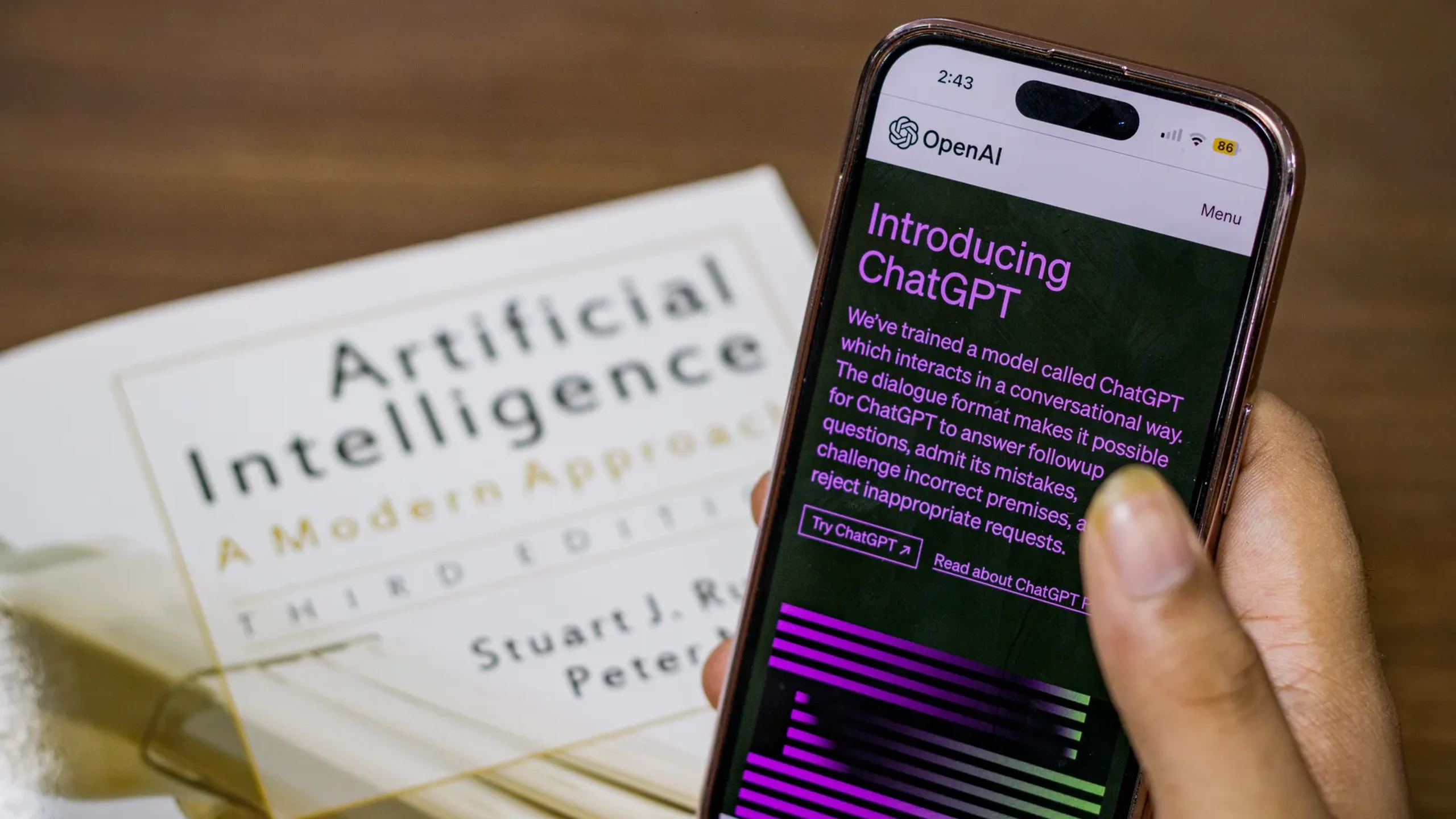
Licensed contextual photograph from Pexels. It shows a ChatGPT interface; it is not evidence of a safety event, model behavior, or a specific OpenAI decision.
Start with an AI dependency inventory
Most teams can name their preferred model but cannot quickly state which business decisions depend on it. Build a short inventory that records each workflow, provider and model identifier, input sensitivity, tool permissions, expected output, human reviewer, service-level need, and the consequence of a degraded result. Separate a helpful drafting tool from a workflow that can create a customer-facing response, modify code, authorize a transaction, or make a safety-relevant recommendation.
This inventory is more useful than a generic list of AI vendors. It reveals where a model change would create a quality problem, a policy problem, or merely a small productivity loss. It also prevents a common mistake: treating an API model name as a stable capability contract. Provider aliases can move, rate limits can change, and an agent’s behavior depends on prompts, tools, memory, context limits, and surrounding controls as well as the base model.
Define the fallback before an incident
A fallback model is not automatically a safe substitute. Test one on a permitted representative task and record what changes: accuracy, citation behavior, latency, output format, language coverage, tool use, refusal behavior, and cost. If a workflow relies on structured output, validate the schema instead of assuming that a similarly named feature behaves the same way. If it handles private information, verify that the alternative’s data and retention terms are acceptable before routing real inputs there.
Use tiers rather than a single replacement. A low-risk drafting task may continue with a different model and a human check. A high-impact workflow may need to fall back to a smaller scope, a manual process, or a temporary pause. The right outcome can be reduced automation rather than uninterrupted automation. A documented safe degradation is far better than an emergency switch that quietly expands permissions or weakens review.
Keep model access separate from decision authority
A model restriction often exposes where an organization has delegated too much. An assistant may accelerate analysis, but a person should still own the consequential decision, the source record, and the approval. Capture the model and prompt version used for material outputs, the source inputs, any tools that were available, and the reviewer’s decision. That record lets a team distinguish a changed model result from a changed source fact or changed business judgment.
The NIST AI Risk Management Framework offers a useful structure for this work: govern the decision, map the context, measure relevant risks, and manage the response. It is not a prewritten release policy. Apply it proportionally: a personal note generator does not need the same evidence trail as a system that affects customers, money, code deployment, or regulated work.
Treat safety limits as a product-change signal
When a provider says it is extending testing or limiting a capability, ask four practical questions. Which workflow is affected? What capability changed in observable terms? Does the existing approval route still work? What must be verified before a fallback can handle the same task? Avoid filling gaps with speculation about internal model behavior. The public fact may be only that access, timing, or safeguards changed.
Update customers and internal stakeholders with the operational consequence, not a dramatic interpretation of the policy debate. “The assisted research step now requires a reviewer and may take longer” is actionable. “The AI has become unsafe” is an unsupported conclusion unless evidence establishes it. Clear language protects both users and the team responsible for the system.
Rehearse a narrow continuity drill
Choose one authorized workflow and temporarily run it through its planned fallback or manual route. Measure completion quality, review time, missing fields, source traceability, and any new privacy or permission risk. Then restore the ordinary route. This is a controlled exercise, not a reason to send test emails, alter customer records, or use a production account beyond its authorization.
The goal is not to predict exactly when any lab will slow development. It is to ensure that a safety-driven product change does not force an unsafe response from its customers. Teams that know what their AI systems do, where their authority remains human, and how to reduce automation gracefully can adapt to model restrictions without pretending that continuity and safety are competing goals.