
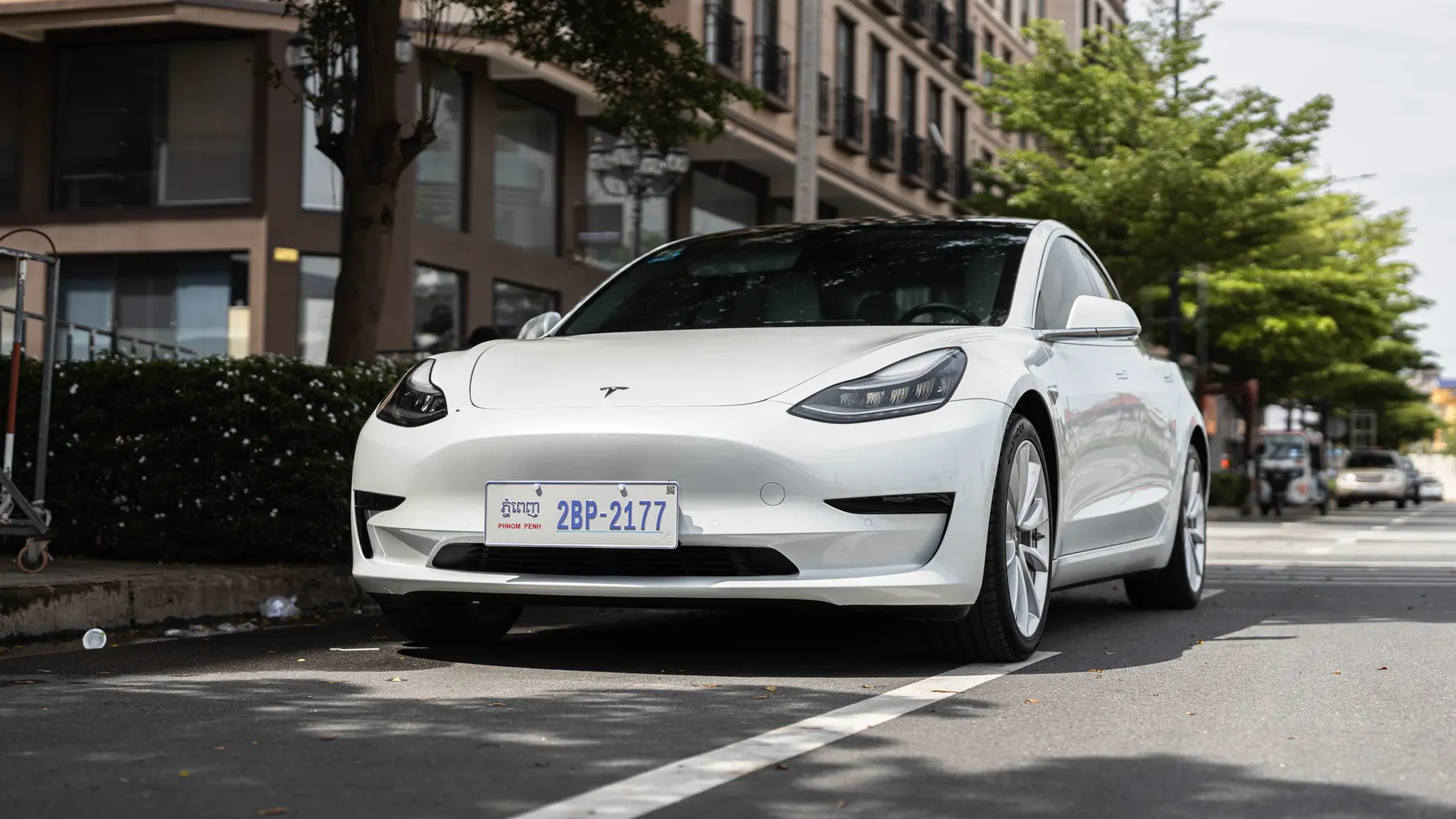
Tesla's European move from “Full Self-Driving (Supervised)” to “Tesla Assisted Driving” changes the promise attached to its software, while leaving the central responsibility with the driver. The new wording appeared on several regional websites in early October 2026 as the company sought broader regulatory access. It is a naming and approval development, not a technical milestone establishing autonomous operation.
The distinction matters because two processes are moving together without becoming the same thing. Tesla can make its language clearer, and individual countries can accept a supervised system, while an EU-wide decision remains outstanding. Reporting put the bloc-wide vote back from October to at least December, with further national assessments underway. A clearer product name does not complete those tests.
What changed on the websites, and what did not
Reuters identified the new label on Tesla pages serving Germany, Spain, Slovakia and the Netherlands. The American website continued to use Full Self-Driving (Supervised). That creates a regional naming split, but it should not imply that the available software and permitted functions are identical across markets.
Tesla's European owner documentation describes advanced driver assistance. Functions can include adaptive cruise control, lane centering, lane changes, parking and responses to traffic controls, depending on the configuration and market. The driver must stay attentive and be ready to act immediately. The system can control important parts of vehicle movement without taking over the complete driving task.
“Assisted Driving” puts that limitation at the center of the name. The older phrase led with a claim of self-driving and then restored human responsibility through “Supervised.” Tesla has not announced a matching global rebrand or publicly characterized the European change as an admission about its earlier marketing.
The practical boundary remains the difference between supervised assistance and a system that assumes the driving task under defined conditions. More capable steering and speed control do not, by themselves, remove supervision. The name is useful only if demonstrations, sales material, vehicle alerts and executive messaging convey that same boundary.
Germany's support followed a specific negotiation
Germany's Transport Ministry disclosed on October 6 that Tesla offered the new name during discussions. Minister Steffen Bilger had spoken with the company in September about functions, responsibility and the conditions Germany could support. He described the earlier wording as somewhat misleading because the software does not perform the whole task.
The talks also addressed speed behavior. According to the ministry's statement, the parties accepted a maximum adjustment of ten percent above the posted speed limit, with officials presenting limited situational adjustment as supporting traffic flow. That reported position remains a regulatory issue for other countries to assess. It should not be interpreted as general permission for a driver to disregard applicable road rules.
Germany said it supported advancing the European approval process quickly. Its position matters given the country's automotive market and regulatory influence, but support for the process is not approval of every function or resolution of every liability question. It gives Tesla momentum while preserving the supervised classification and the driver's responsibility.
National acceptance is different from an EU decision
The Dutch vehicle authority RDW granted provisional approval for the Netherlands in April 2026. It explained that broader recognition requires submission to the European Commission followed by member-state voting in the responsible committee. Dutch authorization alone does not open every EU market.
By October, eight countries reportedly allowed the system, with Slovakia expected to follow. Those are reported national positions, not a completed common authorization. France was among countries undertaking additional testing, and the EU-wide vote was reportedly postponed to at least December.
These stages explain why a website change can precede wider availability. The rebrand addresses consumer expectations, whereas authorities still assess functions, compliance and human supervision. Another country recognizing the Dutch authorization would extend access without settling the bloc-wide process.
The Dutch testing record is substantial but not the whole public safety case
RDW says its assessment took more than 18 months. In a June explanation it described over 3,000 testing hours, more than 1,000 test runs and 1.8 million kilometers driven in Europe with the system. It said experts examined Tesla's collection and statistical methods and used their own equipment rather than relying exclusively on company submissions.
Those details support a more substantial assessment than a manufacturer demonstration. They do not give outside researchers a complete, independently reproducible safety analysis. RDW also cautioned against directly comparing European and American versions because software and authorized functions differ.
Tesla's own reporting uses another important definition: it counts a collision as related to the assistance system if the system was active within five seconds before the event. The company says this captures disengagement shortly before a collision and reports collisions without assigning fault. Understanding that definition is necessary before comparing rates.
A headline collision rate can still be affected by road type, weather, vehicle age, driver behavior and the composition of mileage. Those differences matter when one group drives mainly on easier roads or under different conditions. A comparison needs its denominator and operating environment, not just a favorable number.
The open dispute concerns evidence and the human role
The European Transport Safety Council asked governments in a June letter to delay recognition until further questions were answered. It requested evidence that the system improves safety without introducing new risks, including meaningful observations from Dutch roads. That criticism identifies a public verification gap; it does not itself prove the system unsafe.
Supervised automation also creates a demanding human task. When the software handles routine driving for long periods, attention can decline. A rare failure may require the driver to understand a developing situation and intervene quickly. Monitoring gaze can help identify inattention but cannot establish that a person has correctly understood a hazard.
Responsibility therefore needs traceable evidence after an incident. Investigators may need to know what the system did, which warnings appeared, when it disengaged and how much response time existed. Engagement, intervention and collision severity need consistent definitions if national authorities are to compare outcomes.
Remote updates complicate ongoing oversight. Approval based on one configuration is not a reason to ignore later behavioral changes. Authorities need a way to identify updates that alter safety assumptions and determine when another review is necessary.
What the European change actually achieves
The rebrand removes an unusually ambitious autonomy claim from the European product label. It can improve understanding, particularly if all customer communication uses the assisted-driving language consistently. It cannot guarantee attention, settle liability or substitute for comparable safety evidence.
The next useful signals are the rescheduled European process, independently reviewable information about the tested regional version and consistent communication inside and outside the car. Tesla's concession may make negotiations easier. Broader acceptance still depends on the supervised product beneath the name and on how its limits are communicated and monitored after deployment.