Original document
GPT Image 2 · en
Scene:
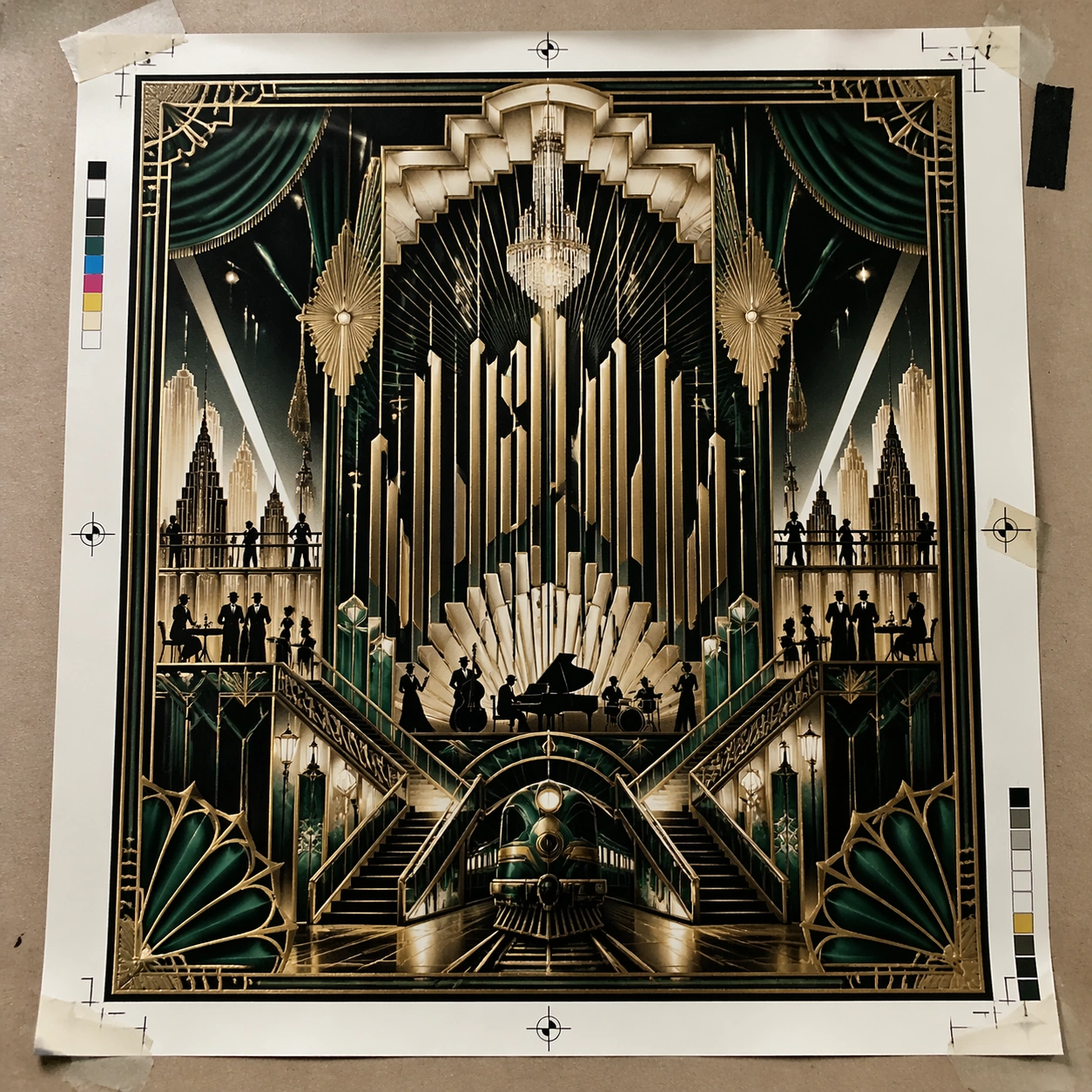
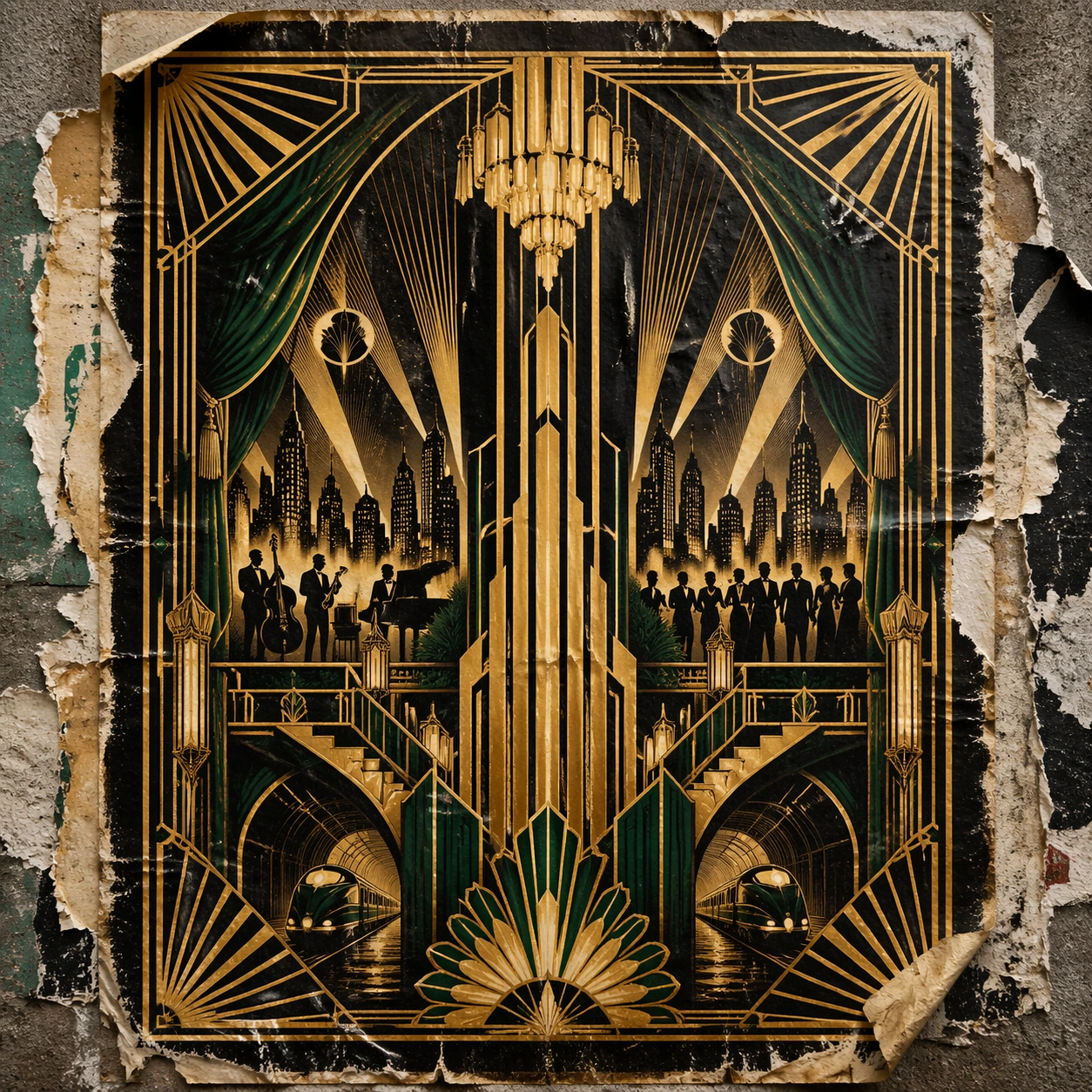
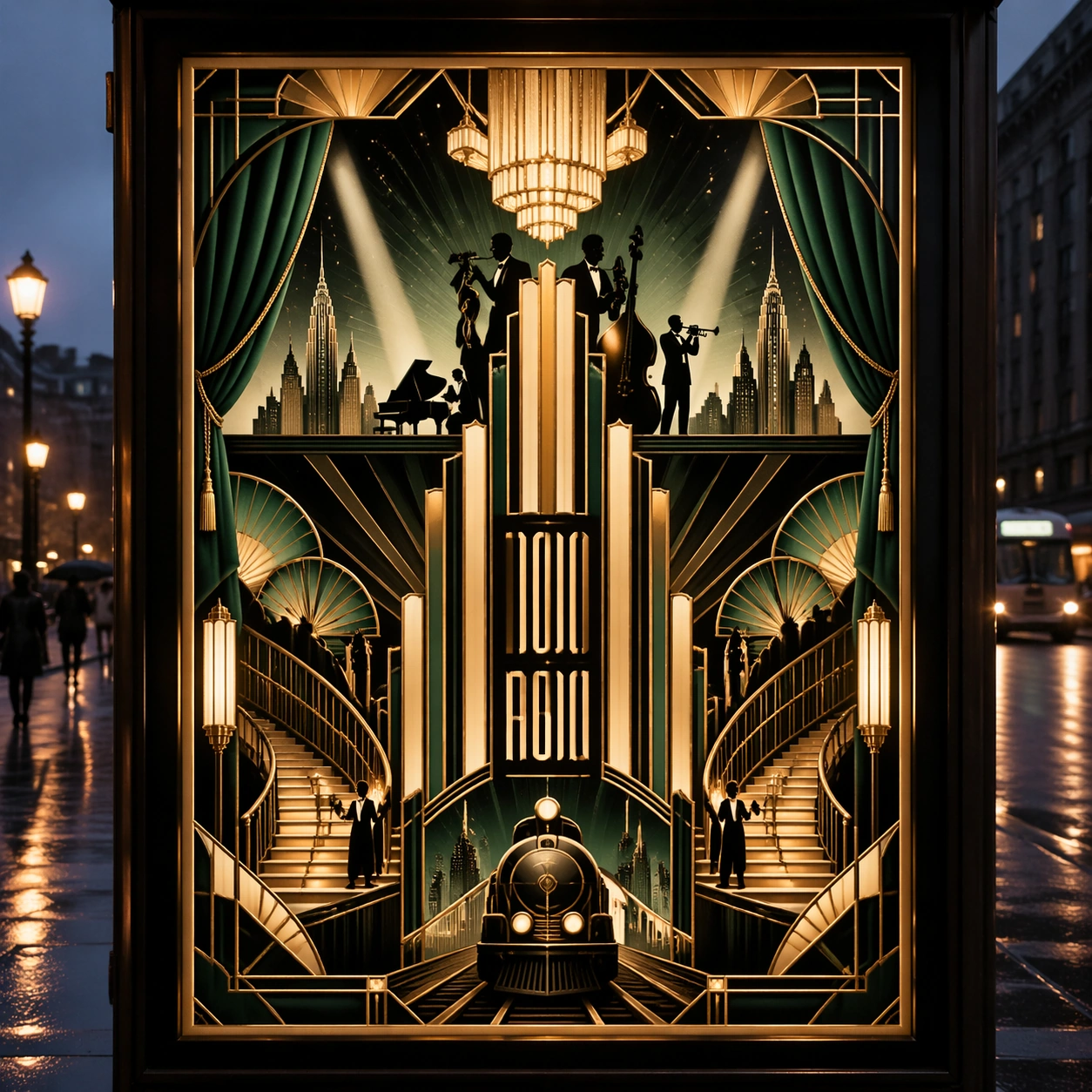
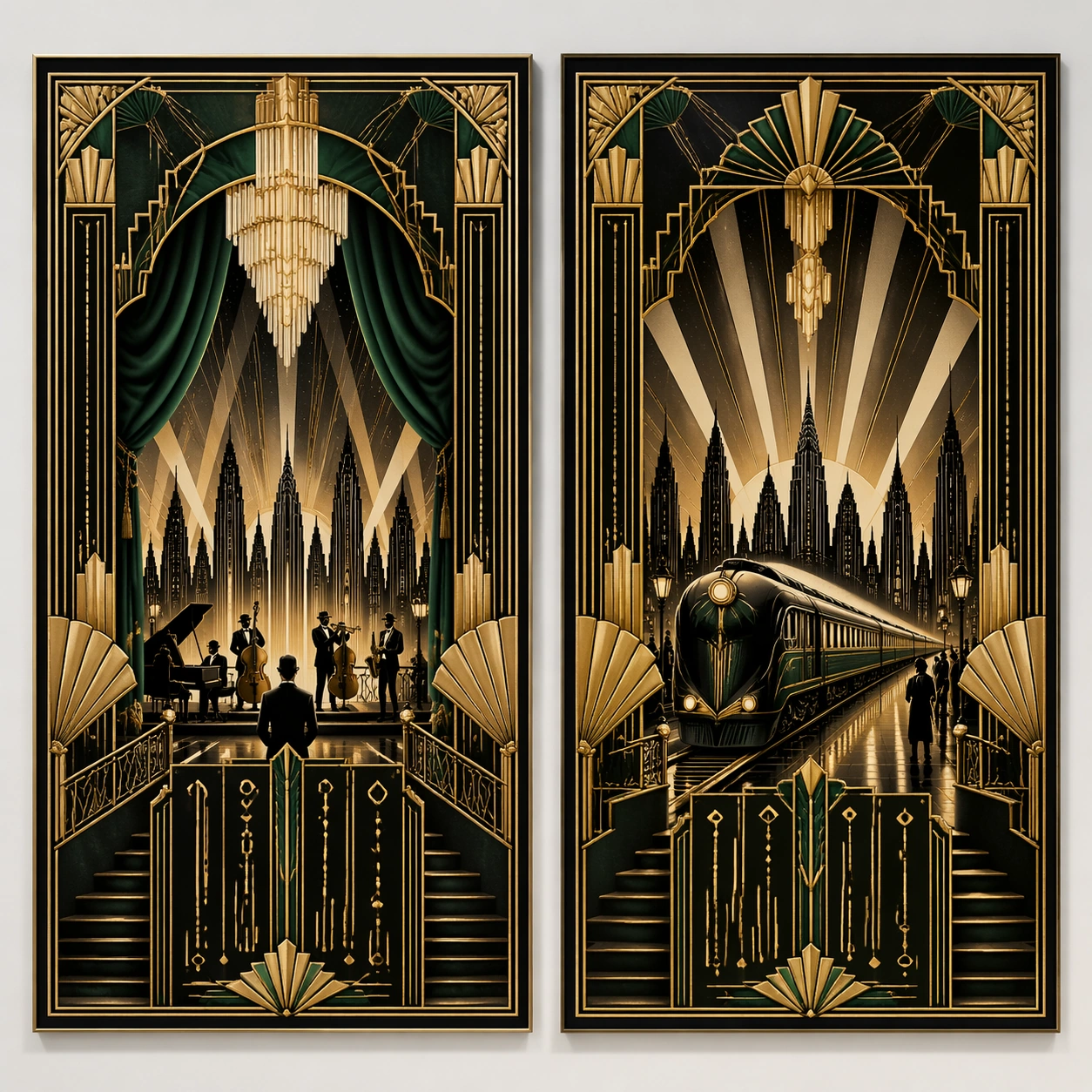
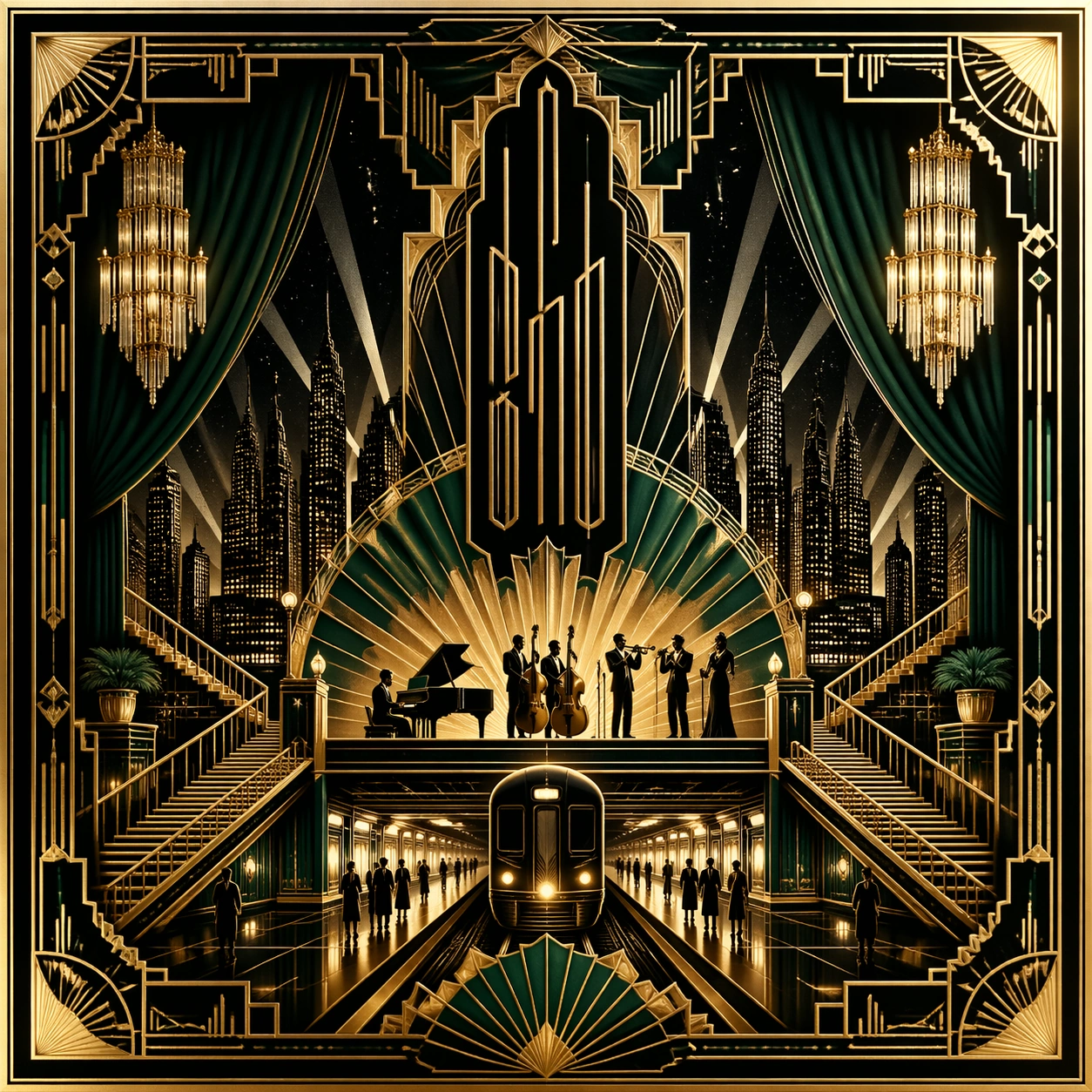
A square front-facing poster presentation on a clean neutral wall, lit like a premium print test, with crisp edges and a polished but still tactile finish appropriate to the style. The poster should express luxury theatre-era deco symmetry with stepped arches, fan motifs, sunbursts, and jewel-like border framing, using metallic gold, deep black, emerald green, ivory, and restrained champagne highlights and a tactile surface appropriate to the medium.

Subject:
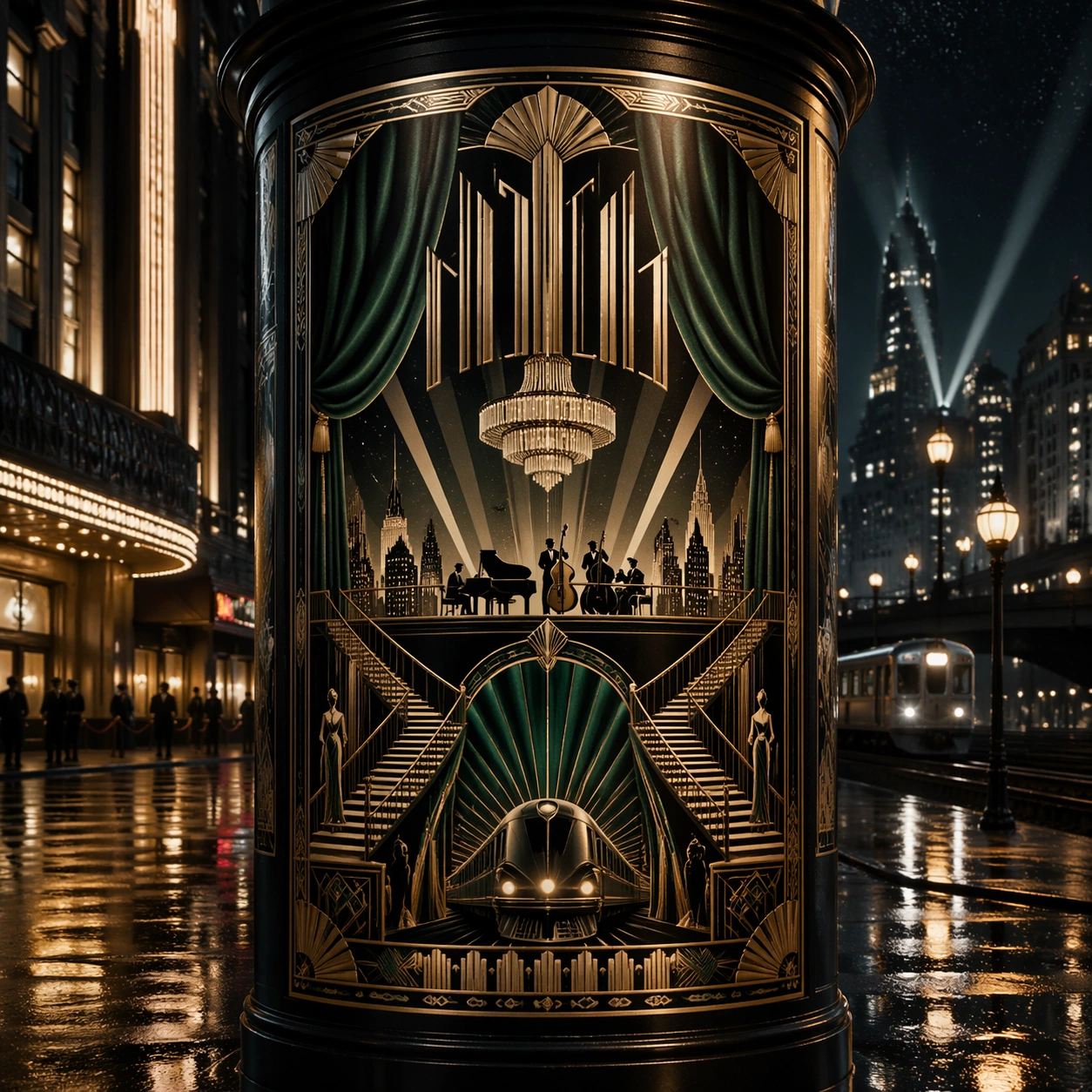
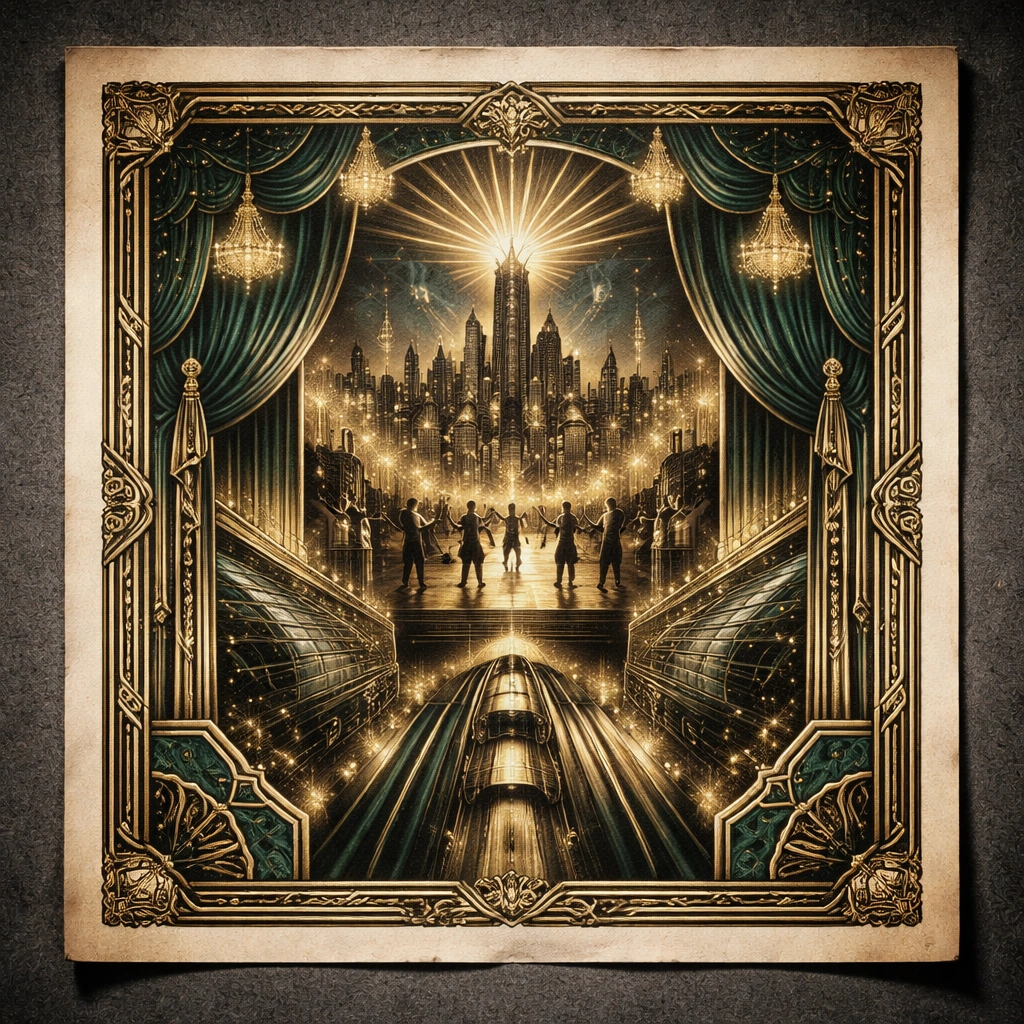
Apply the historical poster language to a contemporary urban subject so the old visual grammar proves it can carry present-day themes without losing authenticity or formal discipline. Use velvet curtains, skyline silhouettes, chandeliers, mirrored staircases, stage spotlights, and fan-shaped rays as the main visual ingredients, and organize them with tall condensed deco glyph blocks kept ornamental and non-readable. For the contemporary-subject axis, thread in a nocturnal rooftop jazz gala and sleek city train arrival absorbed into deco glamour. The poster must feel like an original design object rather than a reproduction of any known work.

Important details:
This is not parody. The contemporary subject should feel genuinely absorbed into the style through palette, composition, symbolic compression, and non-readable lettering treatment. Preserve mirror symmetry, thin metallic linework, precise ornament pacing, and elegant vertical emphasis. Keep every letterform abstract and non-readable, as if it were a typographic texture rather than language. Make the style unmistakable through composition, palette, surface behavior, and symbolic compression. no cheap glitter, no modern interface chrome, no casual streetwear, no cartoon softness.

Use case:
Art Deco Theatre single study 9/9, testing historical grammar on a present-day subject.

Constraints:
No readable text, no watermark, no logos, preserve exact 1:1 aspect ratio, no copyrighted characters, no real brand marks, no QR codes, no interface chrome, no accidental gibberish lettering.
How to use
- Copy the complete original prompt, including any parameters.
- Replace the subject, text and composition with your own requirements.
- Use a compatible external tool; check its current access conditions and review the result.
Before you start
- Check whether a reference image is required. A compatible model label does not mean this example was generated with that model.
- Keep names, figures and visible text accurate; results can vary between model versions.