
Original document
GPT Image 2 · en
Scene:
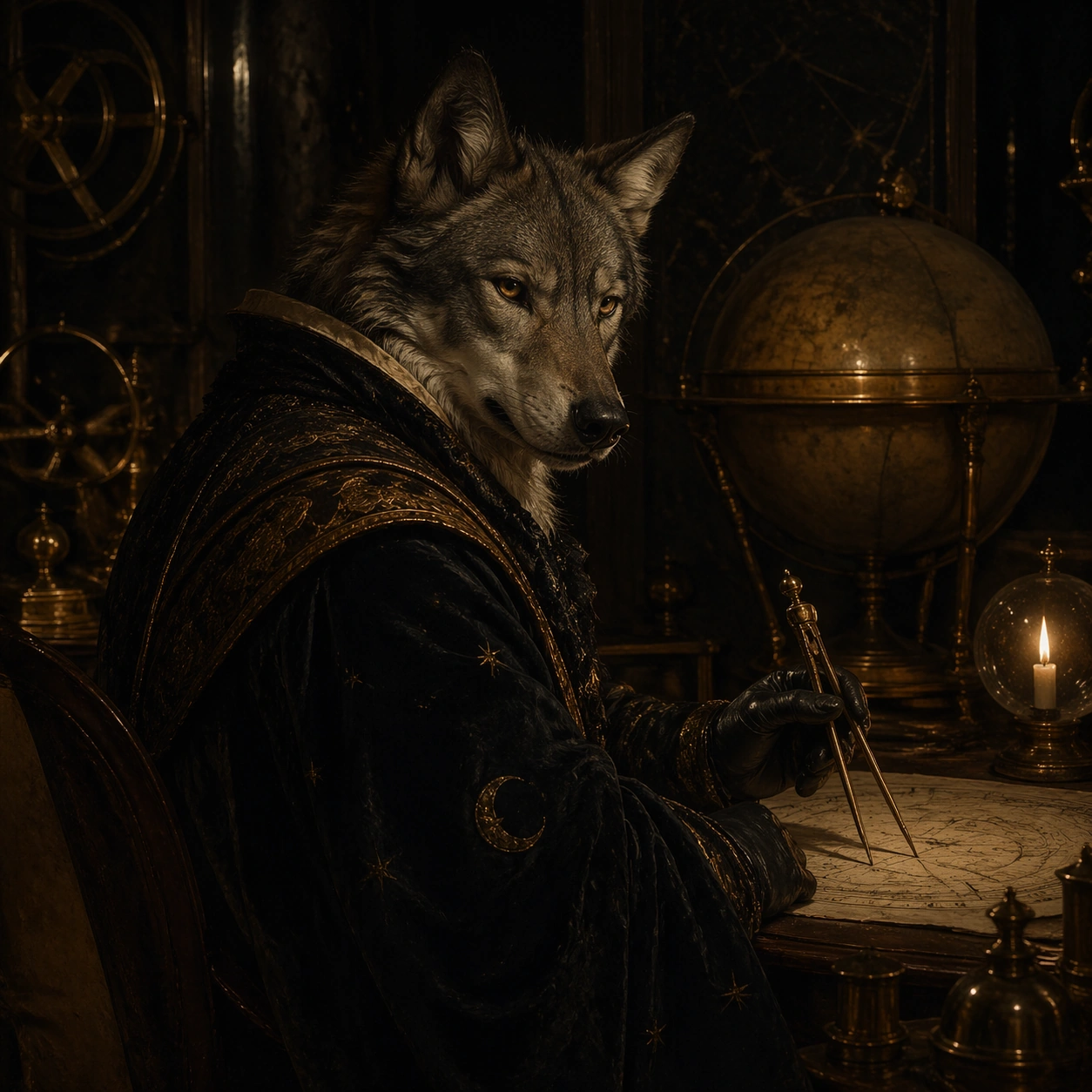
A square portrait staged in a dark chamber lit by candles, embers, or a single hidden lantern, with heavy shadows, warm ochre skin tones, black velvet darkness, and a painterly yet physically believable material presence. The frame should feel ceremonial, intimate, and heavy with air, fabric, and oil-rich color. Use a dim observatory study with brass dividers, a star globe, and a candle reflecting off smoked glass.

Subject:
The subject is a fantastical humanoid beast presented with aristocratic gravity: horned, feathered, scaled, furred, or antlered, dressed in ornate garments and posed as if for an old court portrait. The creature should feel specific, dignified, and psychologically readable rather than monstrous chaos. A wolf-faced astronomer in night robe turns slightly toward the viewer while one gloved hand steadies a charting compass.

Important details:
The visual law is baroque portrait discipline fused with invented natural history. Preserve luxurious fabric folds, worn metal embroidery, candle smoke, skin texture, fur detail, and solemn hand placement. Avoid cartoon exaggeration, playful fantasy tropes, or bright modern polish. The room should feel scholarly and nocturnal, with brass instruments serving as quiet satellites around the main portrait.

Use case:
Baroque Bestiary Candlelight single study 7/9.

Constraints:
No readable text, no watermark, no logos, preserve exact 1:1 aspect ratio, no crowns copied from real regalia, no readable heraldic text, no slapstick fantasy, no modern makeup styling, no glossy digital sheen, no broken anatomy, no low-detail background, no accidental text fragments.
How to use
- Copy the complete original prompt, including any parameters.
- Replace the subject, text and composition with your own requirements.
- Use a compatible external tool; check its current access conditions and review the result.
Before you start
- Check whether a reference image is required. A compatible model label does not mean this example was generated with that model.
- Keep names, figures and visible text accurate; results can vary between model versions.