Original document
GPT Image 2 · en
Scene:
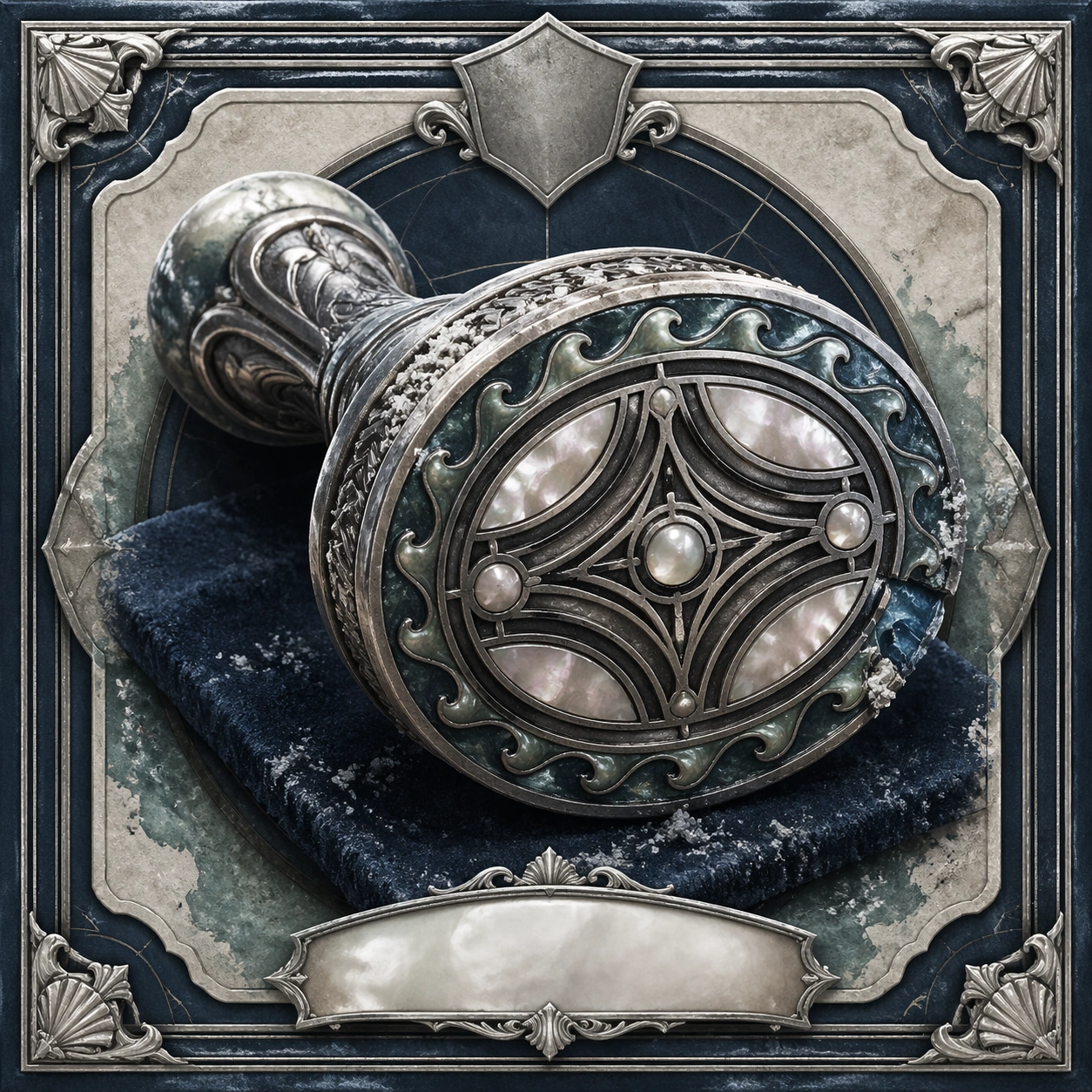
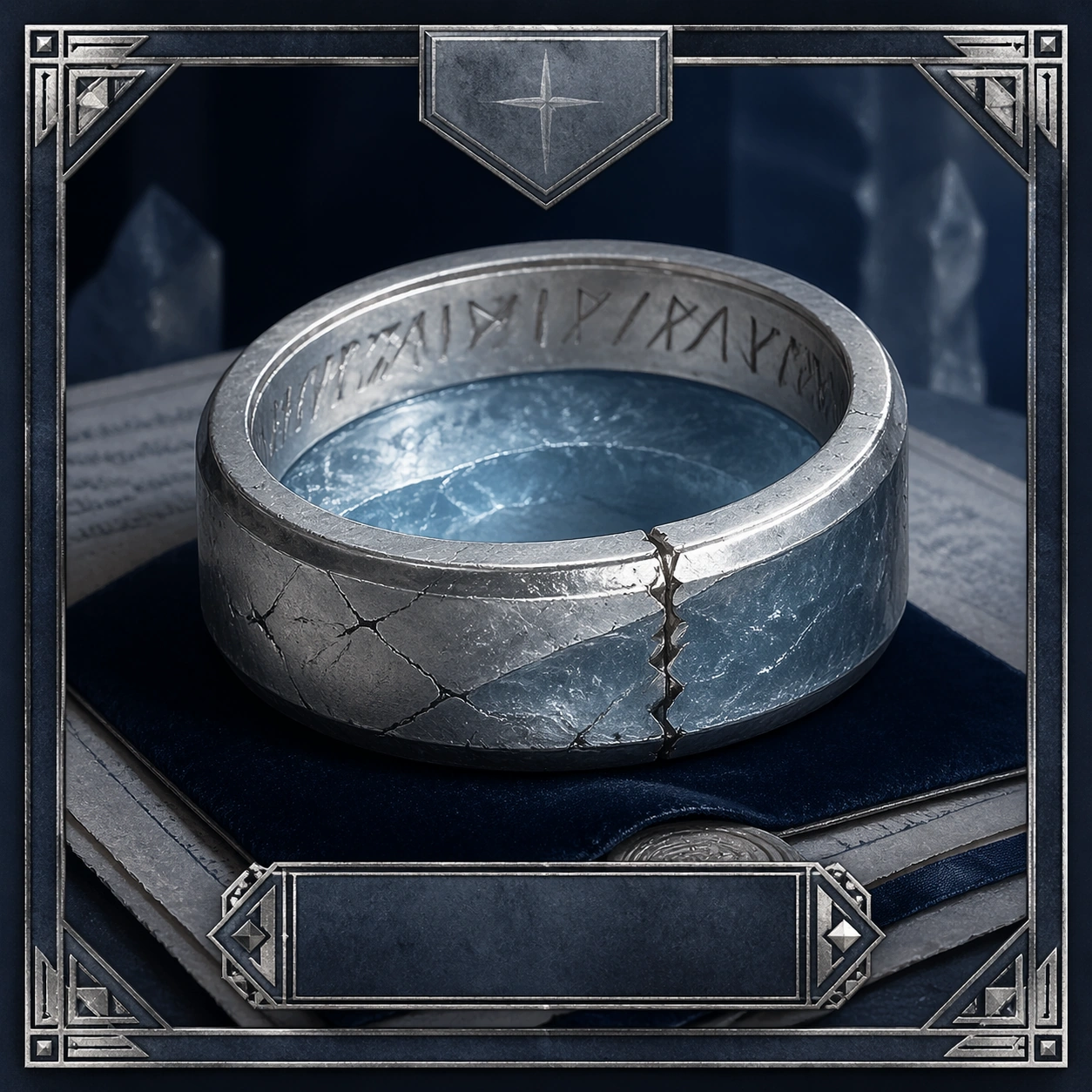
Create a square collectible relic card with an austere diplomatic mood. Use cold silver light, deep navy shadows, and pale frost texture within a disciplined codex frame. The central object should sit over layered archival paper and velvet forms, surrounded by quiet geometric corners and blank insignia plates that imply ceremonial classification. Keep the presentation elegant, stable, and slightly severe.

Subject:
The relic is a frostbound treaty ring forged to seal peace between rival winter kingdoms. It is a broad signet ring made of pallid white metal with a translucent ice-blue stone trapped inside the band rather than mounted above it. The metal carries faint stress cracks from repeated freezing and thawing. On the inside edge, there are abstract incisions that remain unreadable but imply formal ritual language. One side of the ring shows a seam where the band was once broken and repaired, suggesting the treaty itself was violated and later renewed.

Important details:
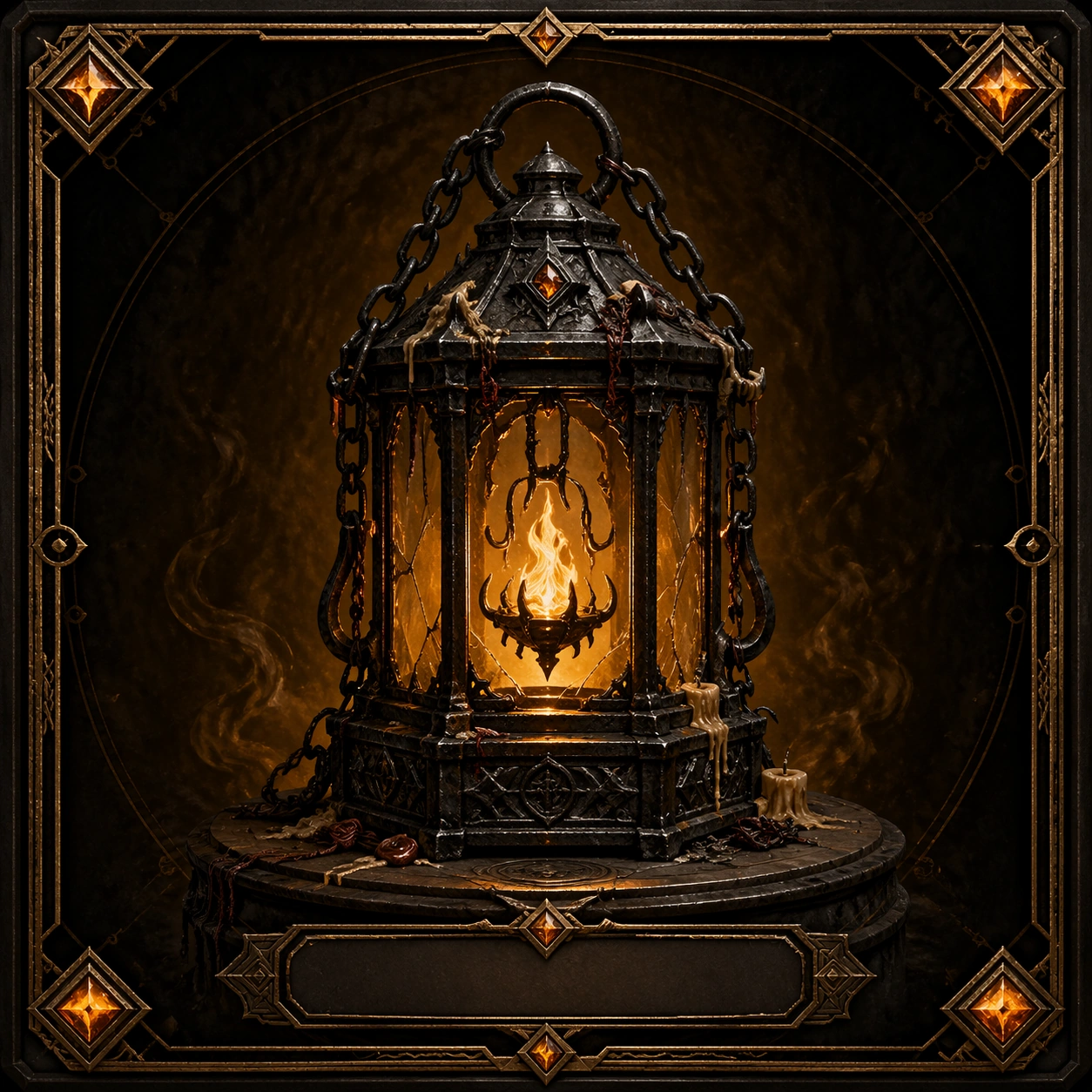
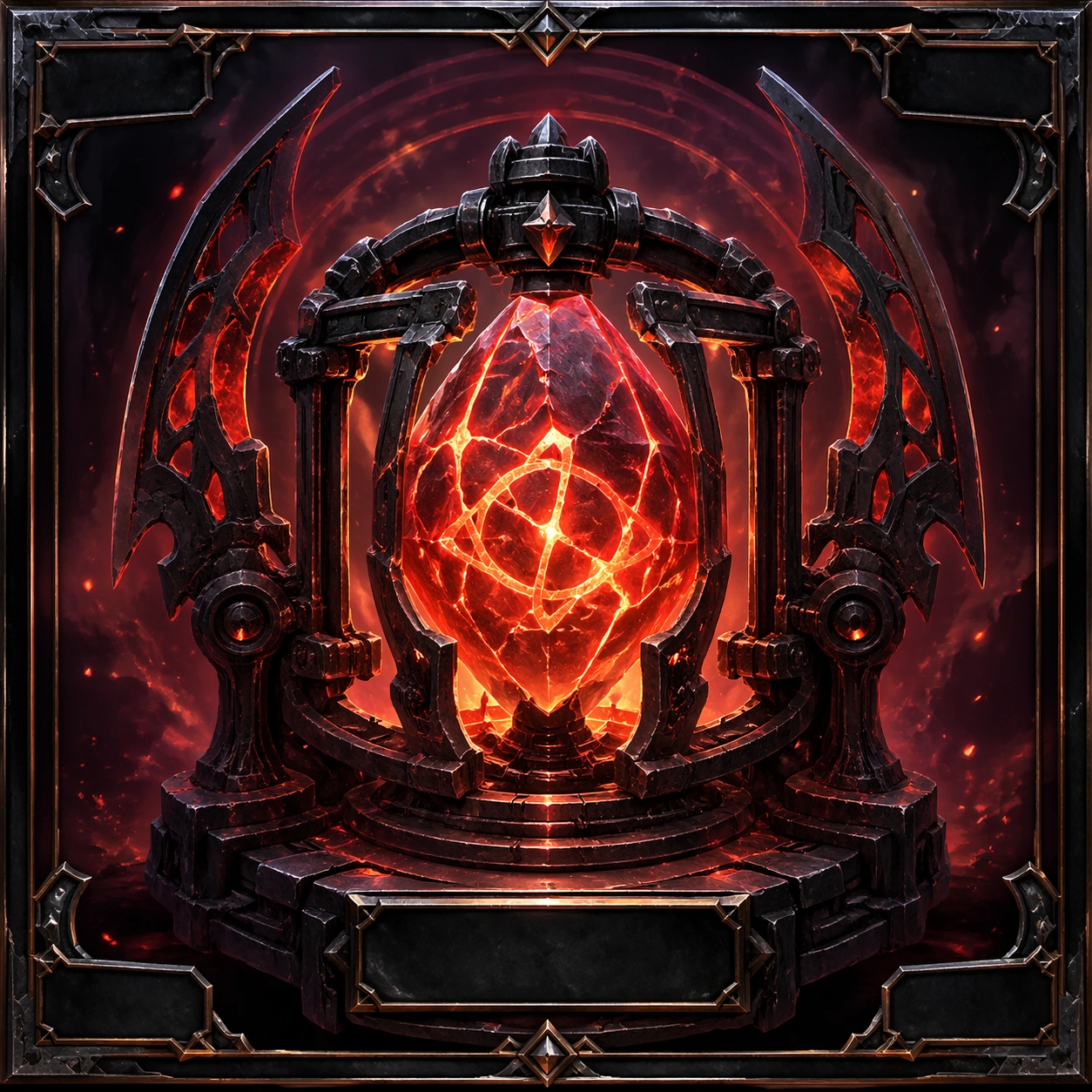
The ring must feel politically important, not merely luxurious. Emphasize weight, temperature, and restrained symbolism. The ice caught inside the band should feel ancient and impossible, while the metal repair seam adds history. Keep the silhouette bold enough for card readability and the material behavior credible under cold light. The card frame should echo the set's collectible language yet stay quieter than the boss core or lantern card. Avoid modern jewelry advertising, wedding-ring clichés, or glossy fashion styling.

Use case:
Relic Artifact Lore Card Set single study 6/9.

Constraints:
No readable text, no watermark, no logos, preserve exact 1:1 aspect ratio, no modern diamond ring design, no luxury brand cues, no snowstorm clutter, no extra crown props, no cartoon ice spikes, no overpolished metal.
How to use
- Copy the complete original prompt, including any parameters.
- Replace the subject, text and composition with your own requirements.
- Use a compatible external tool; check its current access conditions and review the result.
Before you start
- Check whether a reference image is required. A compatible model label does not mean this example was generated with that model.
- Keep names, figures and visible text accurate; results can vary between model versions.