
Original document
GPT Image 2 · en
Scene:
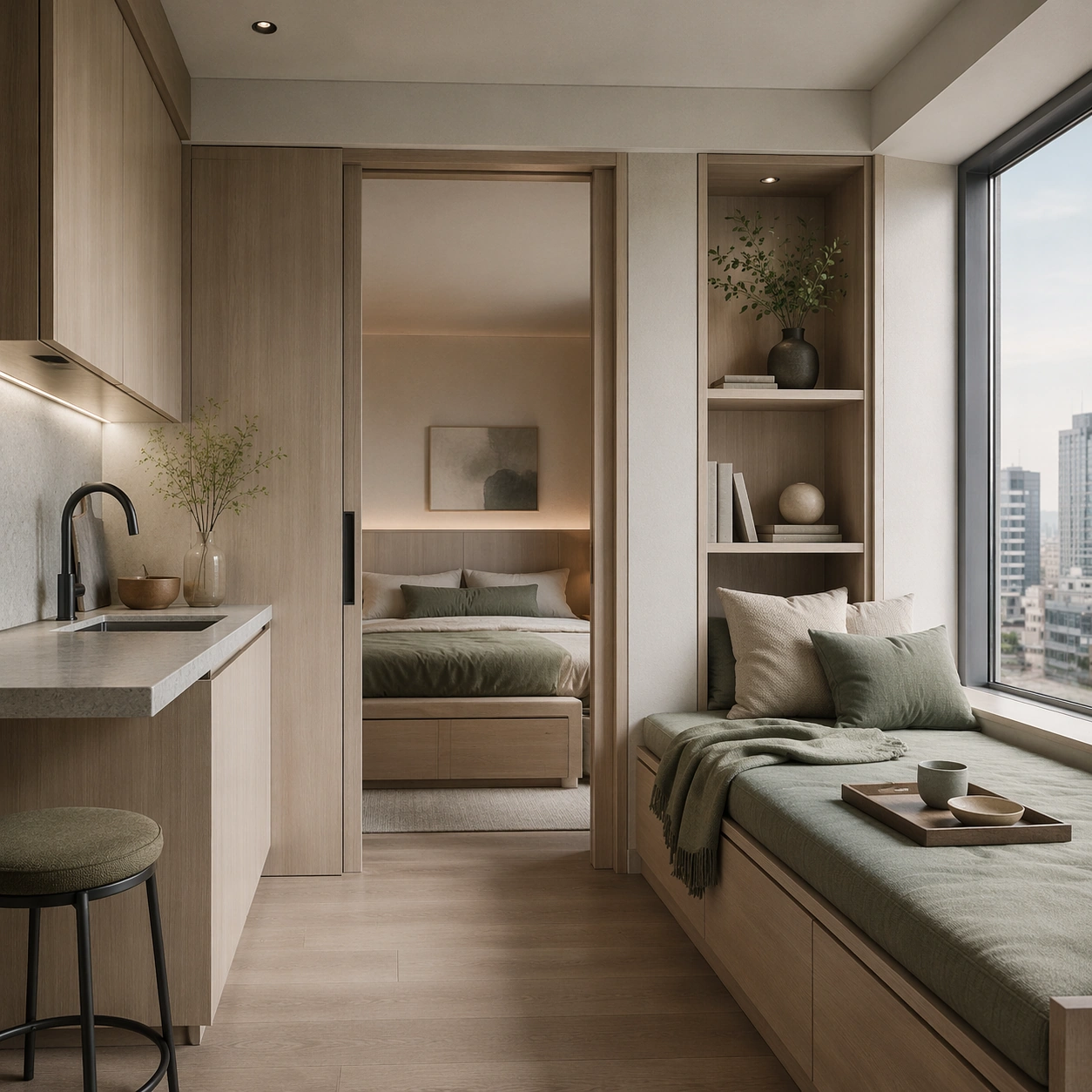
Create a square standalone support study for Compact Urban Apartment Efficiency Aesthetic. Use a quiet window nook with bench seat, shelf, and city light beyond and frame it like a premium commercial still or design-editorial crop with clear focal hierarchy, disciplined perspective, and enough breathing room for the materials and objects to read at both thumbnail and full size. Keep light ash wood, warm white plaster, soft graphite accents, pale stone, and muted sage textiles as the tonal guide so the image still belongs to the same theme family, and light the scene in a controlled way that emphasizes texture, edge quality, and authored atmosphere over spectacle.

Subject:
Show a compact urban apartment with ash wood millwork, sliding partitions, hidden storage walls, a built-in platform bed, compact stone kitchen surfaces, and calm metropolitan daylight. In this support study, focus on micro-living comfort, layered textiles, and negative space. The image should work independently, yet it must still feel like it belongs to the same broader world of Urban Apartment. Make the space, props, and detailing useful for real campaign, editorial, or design-review contexts rather than moodboard abstraction.

Important details:
Carry forward the broader language of the sliding partition system, integrated storage geometry, ash wood detailing, compact kitchen language, and quiet city-apartment restraint, but let this image prove a new support surface or secondary deliverable. Material realism is essential: wood grain, metal sheen, glass edges, textiles, and stone should feel physically plausible and carefully art directed. Any graphic panels, labels, menus, packaging, or captions must stay abstract and unreadable. The overall result should feel reusable for rental campaigns, design editorials, developer micro-unit decks, and small-space planning references, with enough structure that a creative or operations team could build on it.

Use case:
Compact Urban Apartment Efficiency Aesthetic single study 7/9, exploring editorial support for a calm urban lifestyle.

Constraints:
No readable text, no watermark, no logos, preserve exact 1:1 aspect ratio, no clutter piles, no messy shoes, no novelty gadgets, no colorful toy furniture, no cramped distortion, no dominant skyline billboards.
How to use
- Copy the complete original prompt, including any parameters.
- Replace the subject, text and composition with your own requirements.
- Use a compatible external tool; check its current access conditions and review the result.
Before you start
- Check whether a reference image is required. A compatible model label does not mean this example was generated with that model.
- Keep names, figures and visible text accurate; results can vary between model versions.