Original document
GPT Image 2 · en
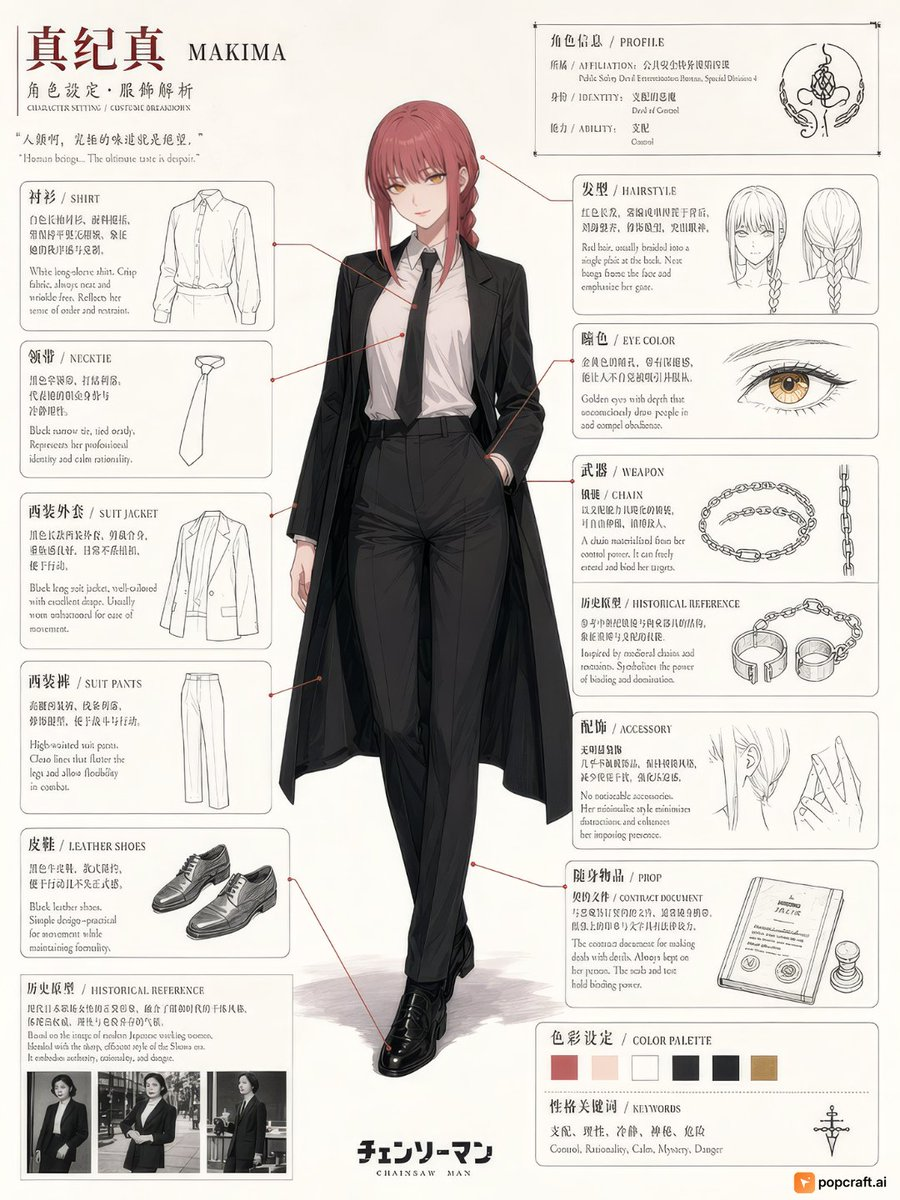
Goal: Create a detailed anime character design sheet for Makima from Chainsaw Man.
Canvas: Vertical layout, clean white background with black text and line art.
Layout: Central full-body illustration of the character. Surrounding panels detail specific costume elements, physical traits, and profile information.
Subject details: Makima stands in the center wearing a long-sleeved white button-down shirt tucked into high-waisted black trousers, a black necktie, and a long black coat draped over her shoulders like a cape. She has red hair braided at the back with bangs framing her face, golden eyes with distinct rings, and black leather shoes. Her expression is calm and composed.
Sections:
- Top Left: Title "Makima" (真纪真) and subtitle "Character Setting / Costume Breakdown".
- Top Right: Profile box listing Affiliation (Public Safety Devil Extermination Bureau), Identity (Divine of Control), and Ability (Control).
- Left Column (Costume Breakdown): Panels for Shirt, Necktie, Suit Jacket, Suit Pants, Leather Shoes, and Historical Reference (showing photos of women in suits).
- Right Column (Physical & Props): Panels for Hairstyle (front/side/back views), Eye Color (close-up of golden eye), Weapon/Chain (illustration of chains), Historical Reference (chains/handcuffs), Accessory (earring/hand gesture), Prop (contract document and stamp), Color Palette (swatches of red, beige, black, gold), and Keywords (Control, Rationality, Calm, Mystery, Danger).
Visual style: High-quality anime illustration mixed with technical fashion sketching. Clean lines, precise shading on clothing folds, and elegant typography.
Text content: Include bilingual labels (English/Japanese) for each section header as seen in the reference image.
How to use
- Copy the complete original prompt, including any parameters.
- Replace the subject, text and composition with your own requirements.
- Use a compatible external tool; check its current access conditions and review the result.
Before you start
- Check whether a reference image is required. A compatible model label does not mean this example was generated with that model.
- Keep names, figures and visible text accurate; results can vary between model versions.