Original document
GPT Image 2 · en
Scene:
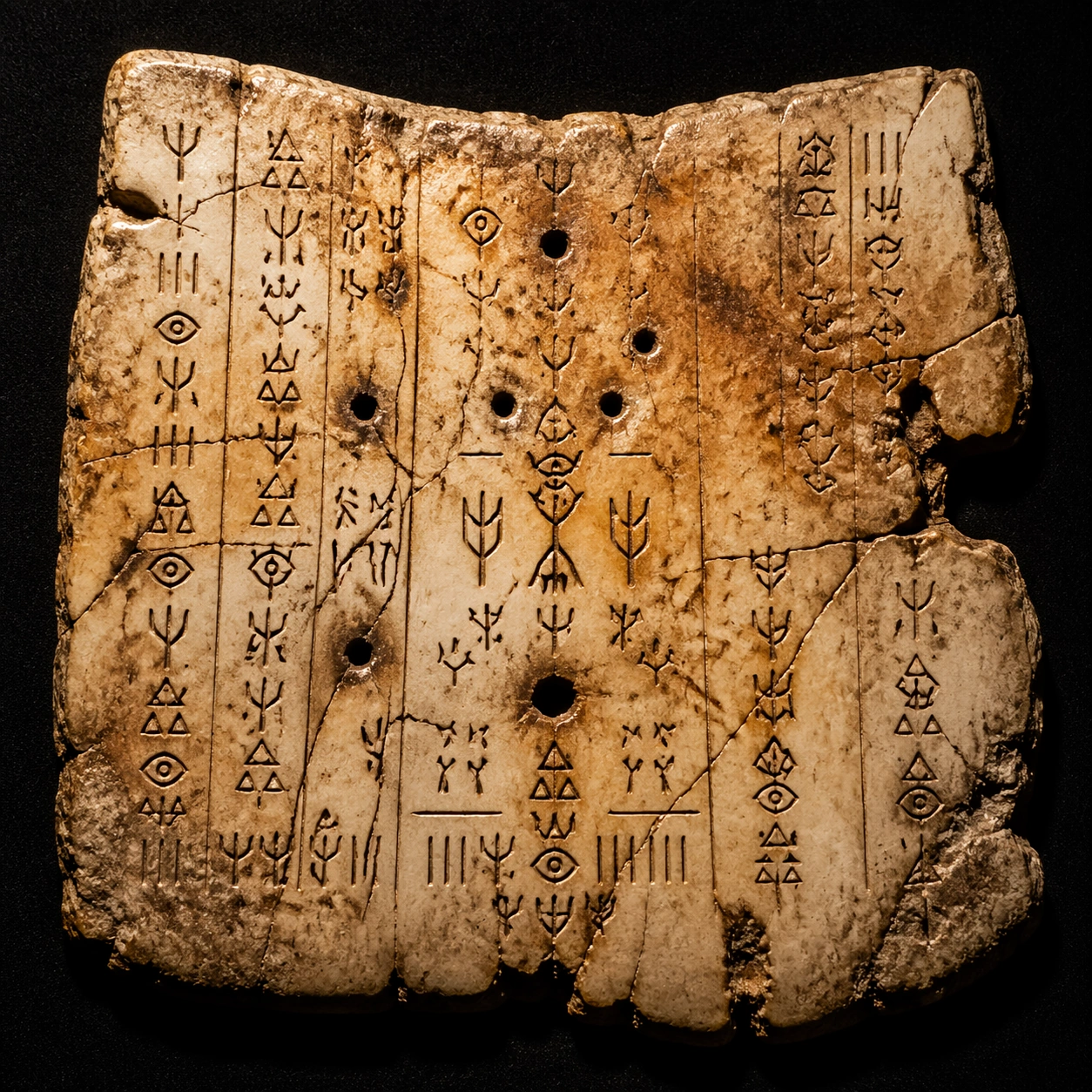
Square studio photograph of a cracked oracle-bone display panel on black felt, lit with a narrow warm beam and soft museum spill. The bone surface is ivory, amber, and smoke-brown, with scorched divination pits, hairline fractures, and tiny mineral deposits. The arrangement should feel like a high-end exhibition object, not a textbook diagram.

Subject:
An independent fictional oracle-bone symbol system. The surface contains carved glyphs inspired by the idea of bone inscriptions but not copying real oracle bone script. Symbols are built from antler forks, seed triangles, rain hooks, nested eye marks, and short tally cuts. Several repeated compounds appear in columns and around burn marks, implying questions, omens, and responses without using any readable language.

Important details:
Create a believable pseudo-decoder artifact through visual organization alone. Include small separated zones, repeated radicals, careful alignment, and a few emphasized central glyph clusters. The glyphs must be sharp enough to inspect, with consistent carving depth and spacing. Avoid decorative chaos: the viewer should sense a grammar, even though no real text is present. The artifact should balance archaeological realism with fantasy worldbuilding craft.

Use case:
Fictional Symbol System single study 5/8, testing an independent bone-inscription artifact with controlled invented glyph repetition.

Constraints:
No readable text, no watermark, no logos, preserve exact 1:1 aspect ratio, no Latin letters, no real alphabets, no real Chinese oracle script, no museum caption card, no translation labels, no modern pen marks, no random scratches pretending to be writing.
How to use
- Copy the complete original prompt, including any parameters.
- Replace the subject, text and composition with your own requirements.
- Use a compatible external tool; check its current access conditions and review the result.
Before you start
- Check whether a reference image is required. A compatible model label does not mean this example was generated with that model.
- Keep names, figures and visible text accurate; results can vary between model versions.