
Original document
GPT Image 2 · en
Scene:
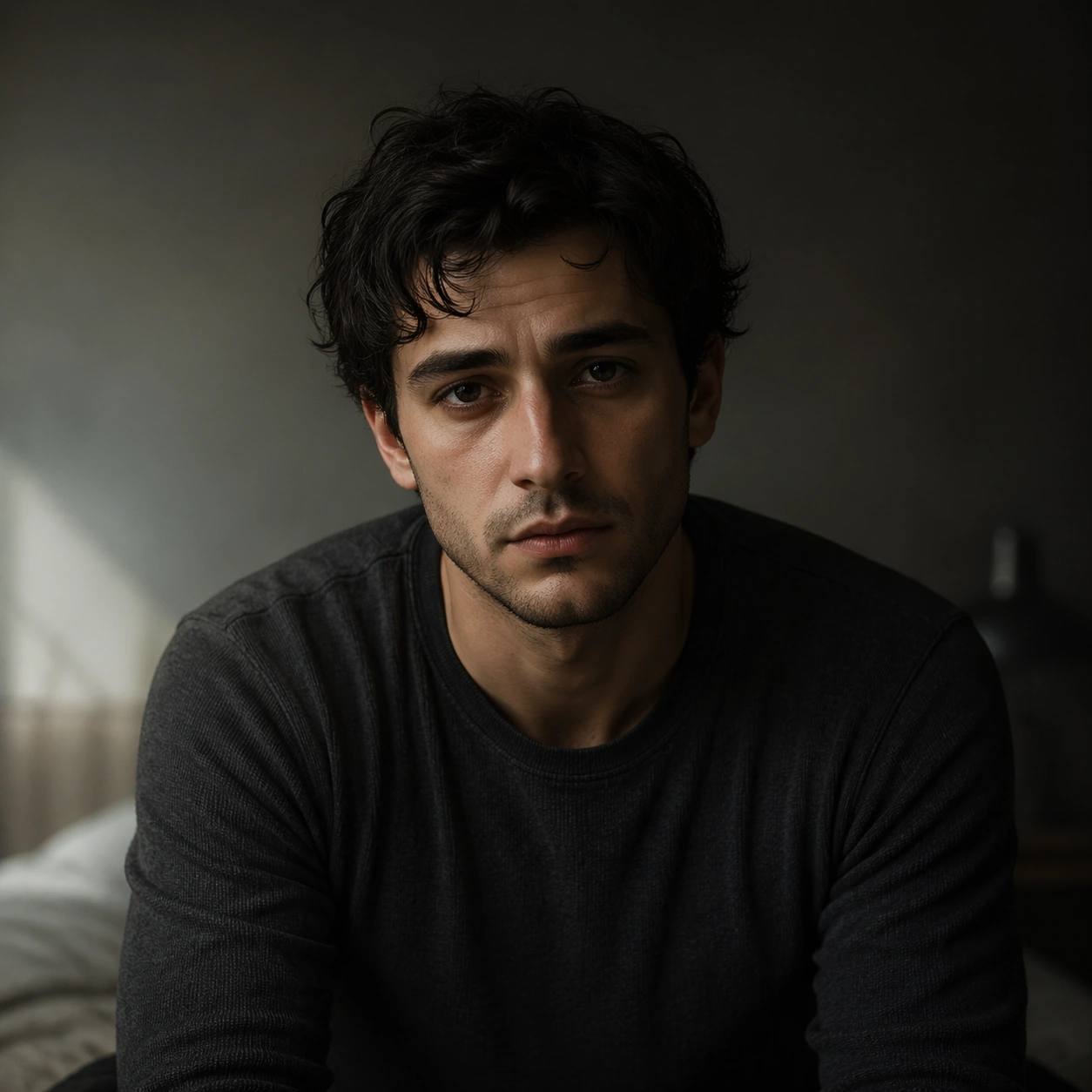
Create a square 1:1 portrait image for Cinematic Story Portrait Sequence. Use a premium story-led portrait setup with calm atmosphere, cinematic light discipline, and enough detail to define the recurring character. The frame should feel like a finished professional deliverable rather than a casual snapshot, with clear lens discipline, believable light falloff, and a palette that directly supports Build portrait sequences that feel like stills from a character-driven film, with emotional continuity, scene logic, and camera-language variation.. Keep enough surrounding space and compositional control for gallery, research, campaign, or approval-board reuse while staying photoreal and human-scaled.

Subject:
Center one film protagonist with pale olive skin, tired expressive eyes, slightly tousled dark hair, and a grounded natural build. Establish the exact face, hair base, body proportions, and costume baseline that later story beats must preserve. Use the example direction from the brief as grounding context: Build portrait sequences that feel like stills from a character-driven film, with emotional continuity, scene logic, and camera-language variation.. Wardrobe, lighting, environment, and pose may shift to serve this variation, but the viewer must immediately understand that the same reference identity is still in front of the camera.

Important details:
This backlog line is difficult because Build portrait sequences that feel like stills from a character-driven film, with emotional continuity, scene logic, and camera-language variation.. Preserve skin tone family, bone structure, eye spacing, nose shape, mouth shape, hairline logic, shoulder width, and overall body read across the entire series. preserve exact face / hair base / body proportions from the reference model. This is the anchor portrait for a narrative sequence, so recognition matters more than spectacle. Avoid the common failure described in the brief: ordinary image models often lose likeness once styling, lighting, or layout changes enter the frame. Success should feel like the result should feel professionally usable, coherent, and clearly built around one stable human identity.

Use case:
Cinematic Story Portrait Sequence series study 1/9, the baseline character portrait.

Constraints:
No readable text, no watermark, no logos, preserve exact 1:1 aspect ratio, preserve exact face / hair base / body proportions from the reference model, no crowd, no unreadable poster text, no genre clutter, no face ambiguity.
How to use
- Copy the complete original prompt, including any parameters.
- Replace the subject, text and composition with your own requirements.
- Use a compatible external tool; check its current access conditions and review the result.
Before you start
- Check whether a reference image is required. A compatible model label does not mean this example was generated with that model.
- Keep names, figures and visible text accurate; results can vary between model versions.