
Original document
Nano Banana · en
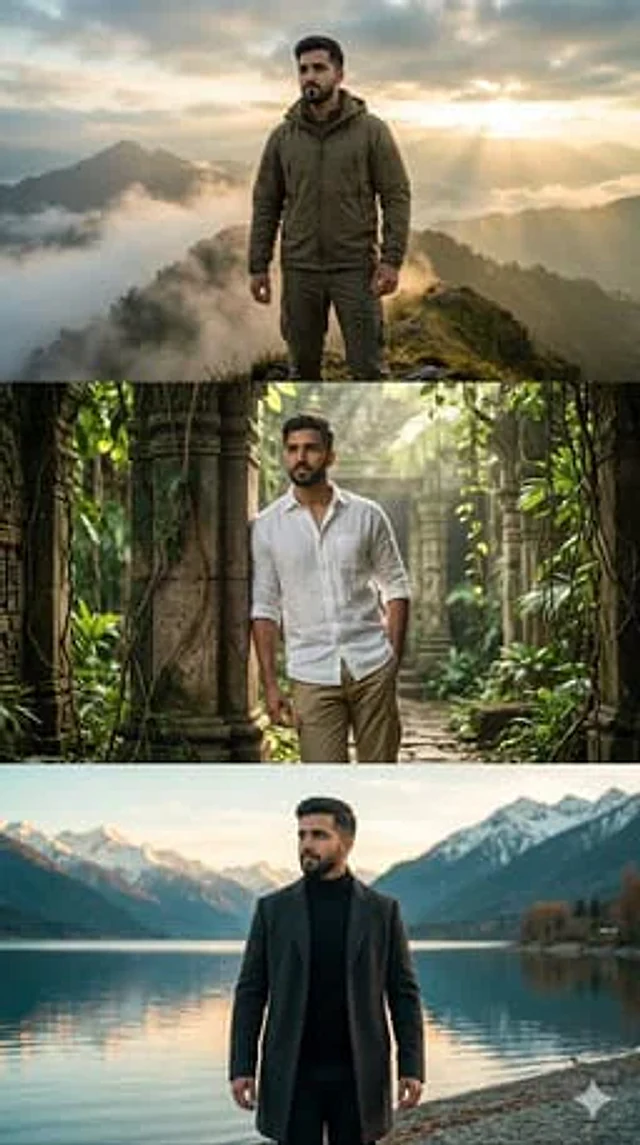
Create a hyper-realistic three-panel vertical cinematic collage in 9:16 aspect ratio, editorial fashion photography style. The collage consists of three distinct vertical frames stacked seamlessly, each featuring the exact same man with consistent face, skin tone, short black hair, sharp jawline, and intense gaze directly at the viewer, as if from the same reference photo.

Top panel: The man stands confidently on a misty mountain ridge at sunrise, dramatic Himalayan peaks in the background with golden light piercing through low clouds. He wears a rugged dark olive green tactical field jacket with rolled sleeves, black cargo pants, and sturdy hiking boots. Cool blue-gray color grading with subtle film grain.

Middle panel: The man leans against an ancient stone pillar inside a grand abandoned temple in a dense tropical jungle, soft diffused sunlight filtering through overgrown vines and carved arches. He wears a lightweight white linen button-up shirt (slightly unbuttoned at the top) tucked into slim khaki trousers, with brown leather loafers. Warm earthy tones with teal shadows and cinematic haze.

Bottom panel: The man walks along a serene lakeside at golden hour, crystal-clear water reflecting snow-capped mountains in the distance, surrounded by pine trees. He wears a black merino wool turtleneck sweater layered under a tailored charcoal wool overcoat, dark jeans, and polished Chelsea boots. Moody teal-orange cinematic grading with soft bokeh and gentle film grain.

Maintain perfect facial consistency across all three panels — same man, same reference face, no variations in features. Ultra-detailed skin texture, realistic fabric details, natural lighting per environment. Cinematic color grading, subtle film grain, editorial composition, high-end fashion photography aesthetic, shot on 35mm film, 4k resolution, photorealistic, masterpiece.
How to use
- Copy the complete original prompt, including any parameters.
- Replace the subject, text and composition with your own requirements.
- Use a compatible external tool; check its current access conditions and review the result.
Before you start
- Check whether a reference image is required. A compatible model label does not mean this example was generated with that model.
- Keep names, figures and visible text accurate; results can vary between model versions.