Original document
GPT Image 2 · en
Scene:
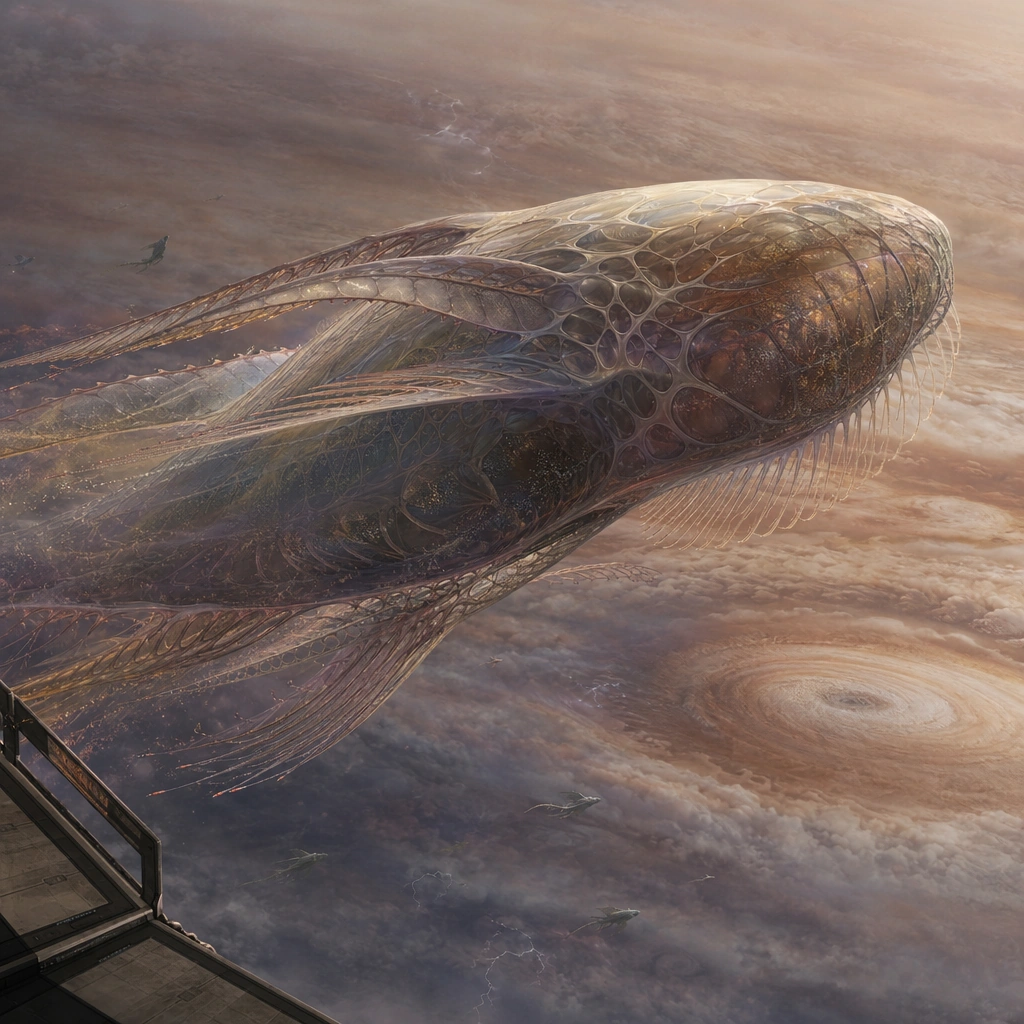
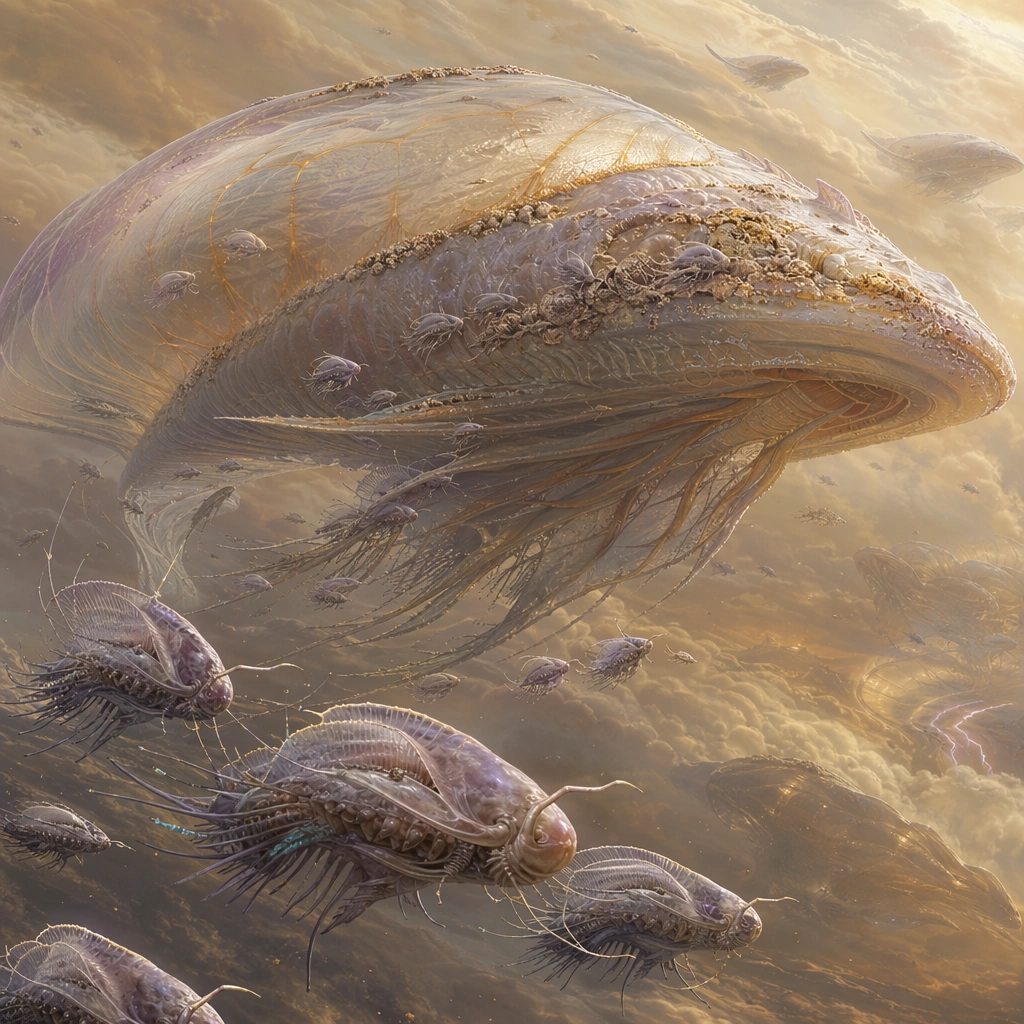
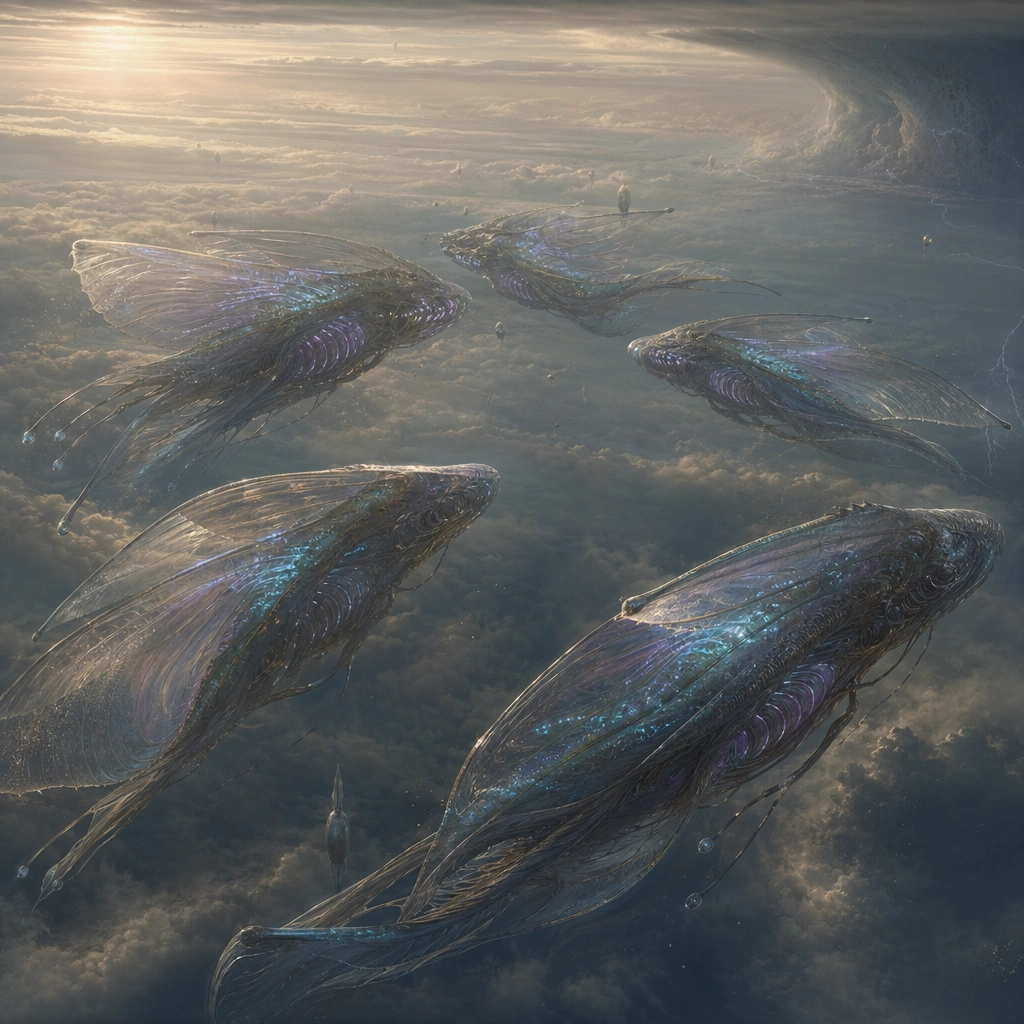
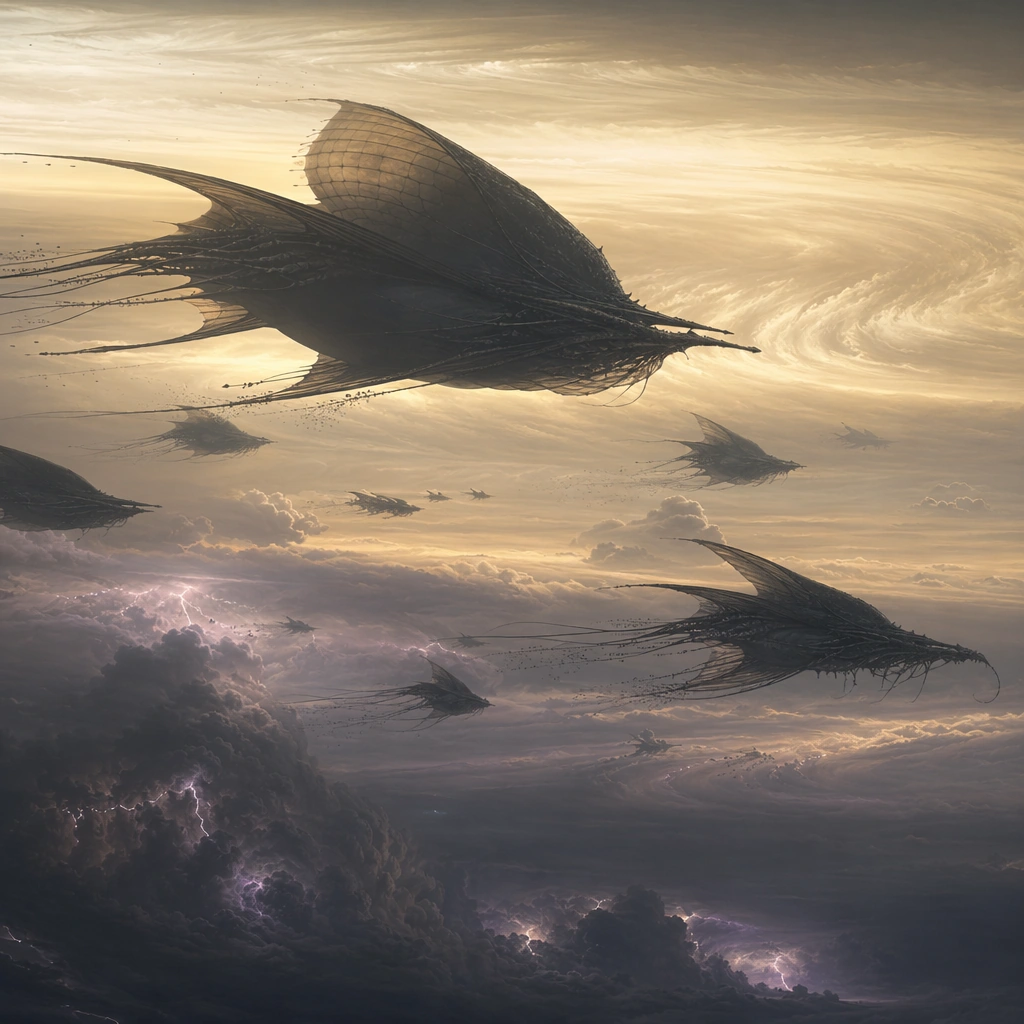
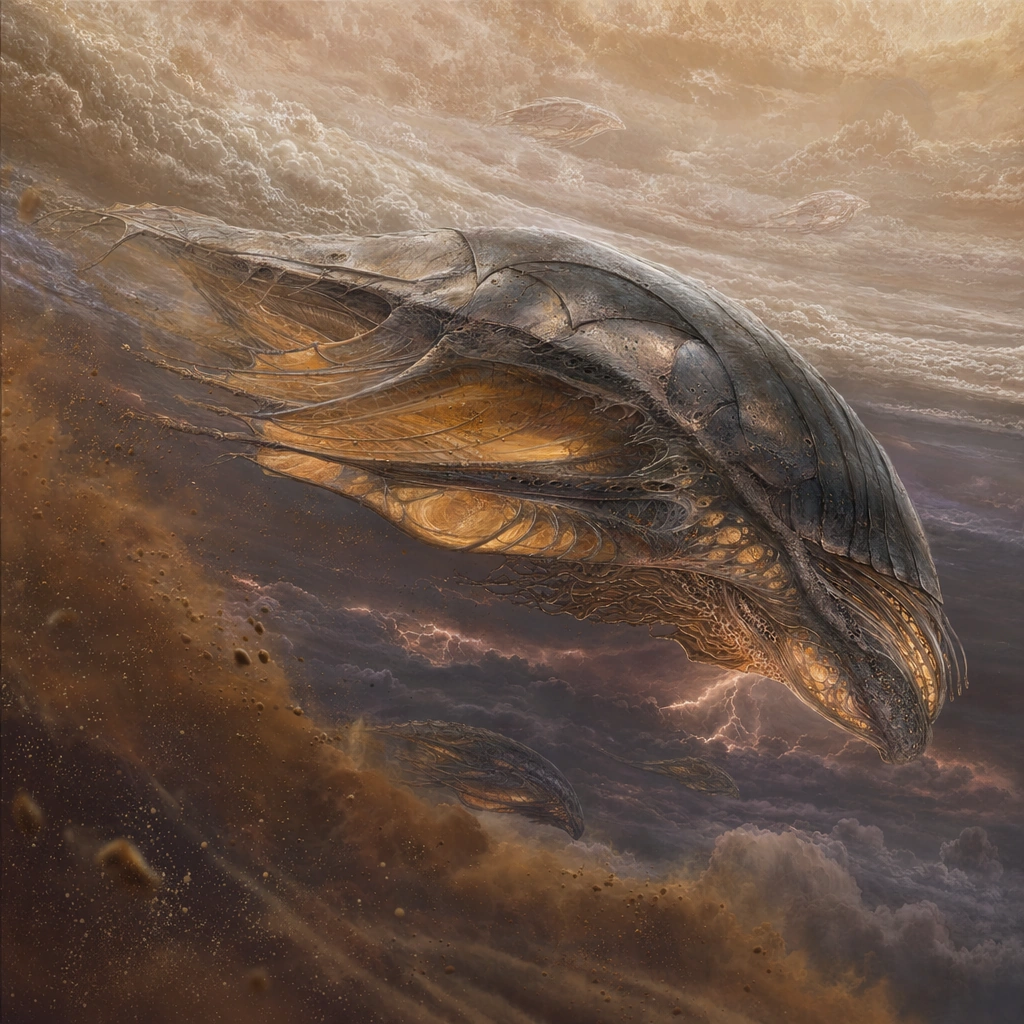
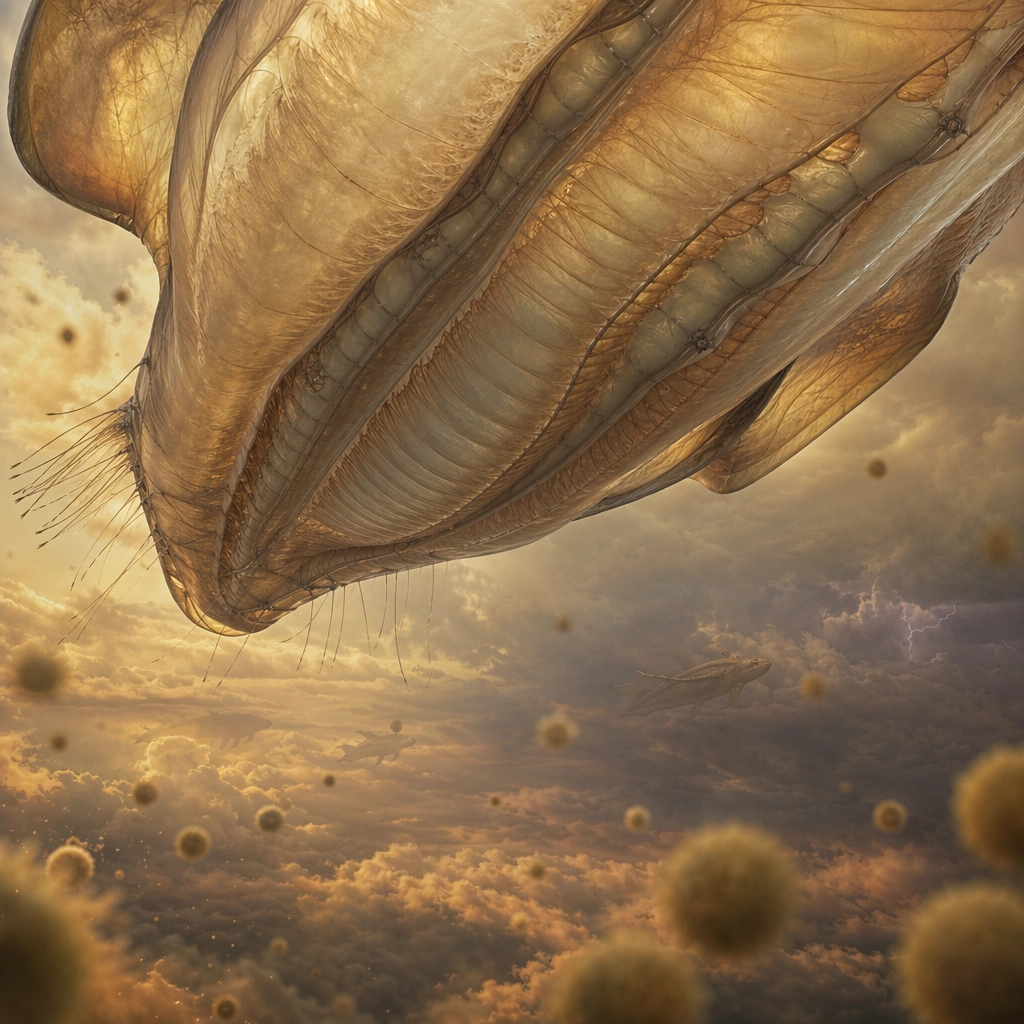
Frame the viewer just beneath a passing juvenile giant, with its underbelly filling the upper part of the square and layered clouds dropping away below. Soft amber atmospheric light should filter through semi-translucent buoyancy tissues while storm shadows drift in the distance. Build the frame as a square natural history study with disciplined composition, believable lighting, and enough environmental evidence to explain how this organism or system functions without any caption. Keep the image polished, observational, and suitable for a research gallery rather than pulp fantasy spectacle.

Subject:
Focus on ventral filter folds, gas bladders, stabilizing fins, and sensory whisker structures shaped by dense air flow. The juvenile should look lighter and more flexible than an adult, with growth seams and less armored surfaces. Show the anatomy, habitat interaction, and scale cues clearly so the viewer can infer locomotion, feeding, reproduction, or ecological role from the visual alone. Every visible structure should feel evolved for a purpose, with layered foreground, midground, and background information that rewards close inspection.

Important details:
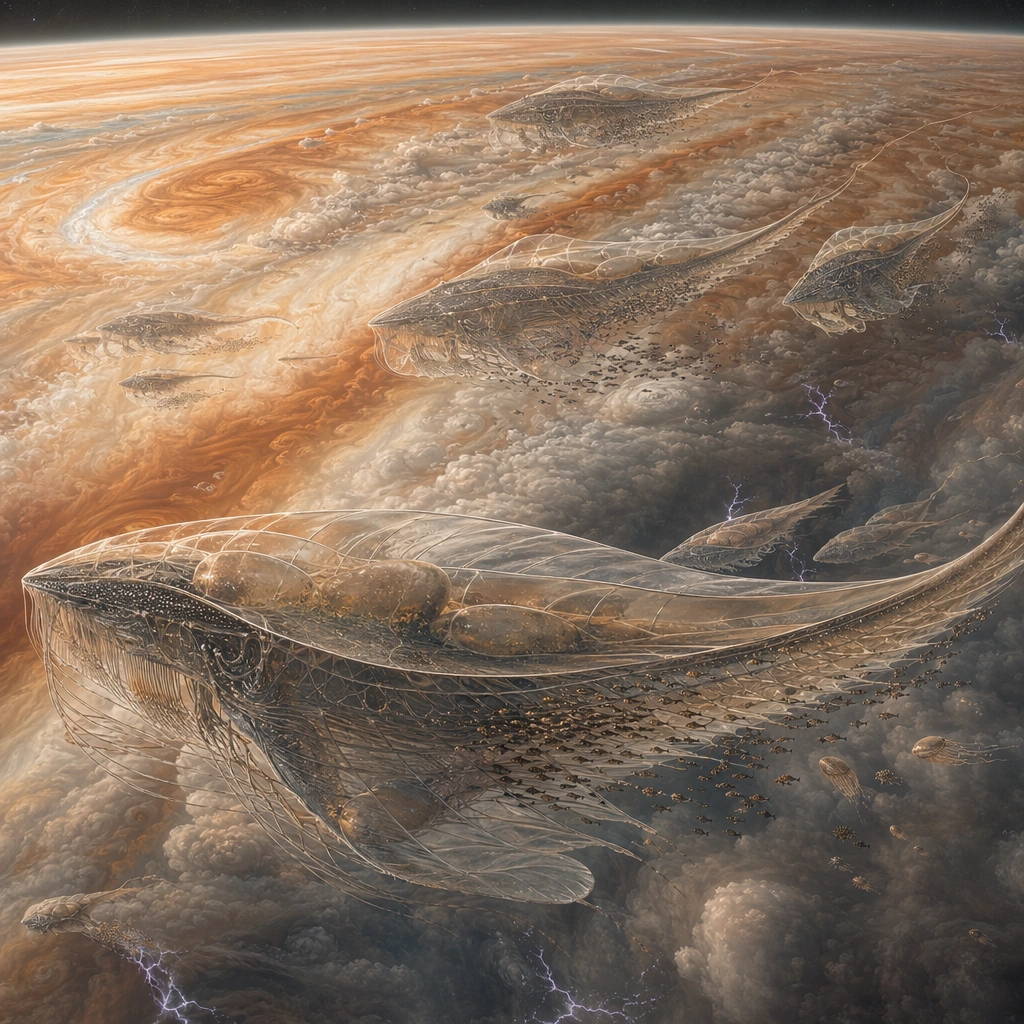
Assume these giants maintain buoyancy with gas-filled tissues, membrane sails, and chemistry-driven metabolism in a dense upper atmosphere. Their behavior should respond to pressure bands, storm fronts, nutrient aerosols, and electrical weather rather than ocean analogies pasted into the sky. Keep the anatomy aerodynamic and biologically coherent. Membranes should billow with pressure, tissues should show gradations of density, and the creature should feel born to swim through gas rather than water. Favor coherent biology over decorative excess: tissues, shells, membranes, spores, tendrils, fins, silica lattices, or atmospheric sacs should all follow one material logic. Preserve a convincing relationship between the environment and the body plan, use restrained color hierarchy, and make the image feel like a serious speculative field record rather than a random monster concept.

Use case:
Jovian Cloud Whale Migration single study 2/9.

Constraints:
No readable text, no watermark, no logos, preserve exact 1:1 aspect ratio, no dolphin face, no bird wings, no mechanical airship look, no cartoon expression, no accidental brand resemblance, no direct copy of known terrestrial species, no cartoon simplification.
How to use
- Copy the complete original prompt, including any parameters.
- Replace the subject, text and composition with your own requirements.
- Use a compatible external tool; check its current access conditions and review the result.
Before you start
- Check whether a reference image is required. A compatible model label does not mean this example was generated with that model.
- Keep names, figures and visible text accurate; results can vary between model versions.