
Original document
GPT Image 2 · en
Scene:
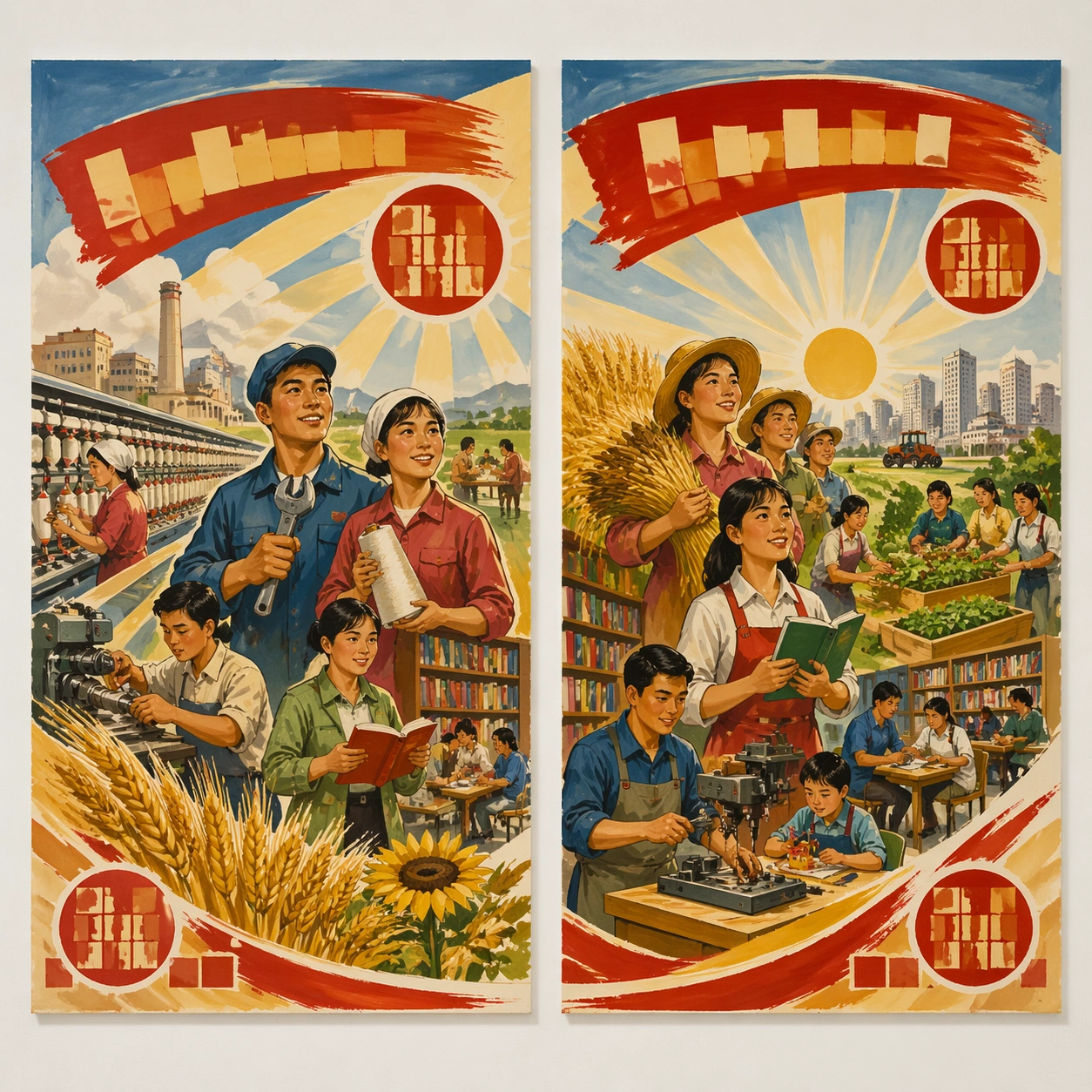
A square white-wall installation showing two companion posters hung side by side with equal spacing, photographed frontally so the pair reads as a designed conversation rather than two unrelated sheets. The poster should express late-1970s handmade gouache poster language with bright optimism, grouped figures, clean silhouettes, and celebratory sunlit staging, using red, gold, sky blue, leaf green, cream, and warm skin tones painted opaquely and a tactile surface appropriate to the medium.

Subject:
Compose a matched diptych: two posters sharing one style system while splitting the narrative across paired motifs, mirrored masses, or complementary color emphasis. Use workers, farmers, teachers, textile mills, books, wheat, machinery, and radiant sky bands as the main visual ingredients, and organize them with brush slogan panels and seal forms treated as non-readable compositional devices. For the contemporary-subject axis, thread in urban community gardens, public libraries, and makerspaces rendered through optimistic collective poster grammar. The poster must feel like an original design object rather than a reproduction of any known work.

Important details:
Both halves should feel distinct yet inseparable. Preserve one coherent visual language, but let each sheet carry its own focal symbol and rhythm without readable wording. Preserve uplifted expressions, gouache blending, clear grouping hierarchy, and warm public-education energy without specific portraiture. Keep every letterform abstract and non-readable, as if it were a typographic texture rather than language. Make the style unmistakable through composition, palette, surface behavior, and symbolic compression. no actual political portraits, no national emblem, no cynical decay, no muddy desaturated palette.

Use case:
Chinese 70s Poster single study 6/9, testing system flexibility across a paired set.

Constraints:
No readable text, no watermark, no logos, preserve exact 1:1 aspect ratio, no copyrighted characters, no real brand marks, no QR codes, no interface chrome, no accidental gibberish lettering.
How to use
- Copy the complete original prompt, including any parameters.
- Replace the subject, text and composition with your own requirements.
- Use a compatible external tool; check its current access conditions and review the result.
Before you start
- Check whether a reference image is required. A compatible model label does not mean this example was generated with that model.
- Keep names, figures and visible text accurate; results can vary between model versions.