Original document
GPT Image 2 · en
Scene:
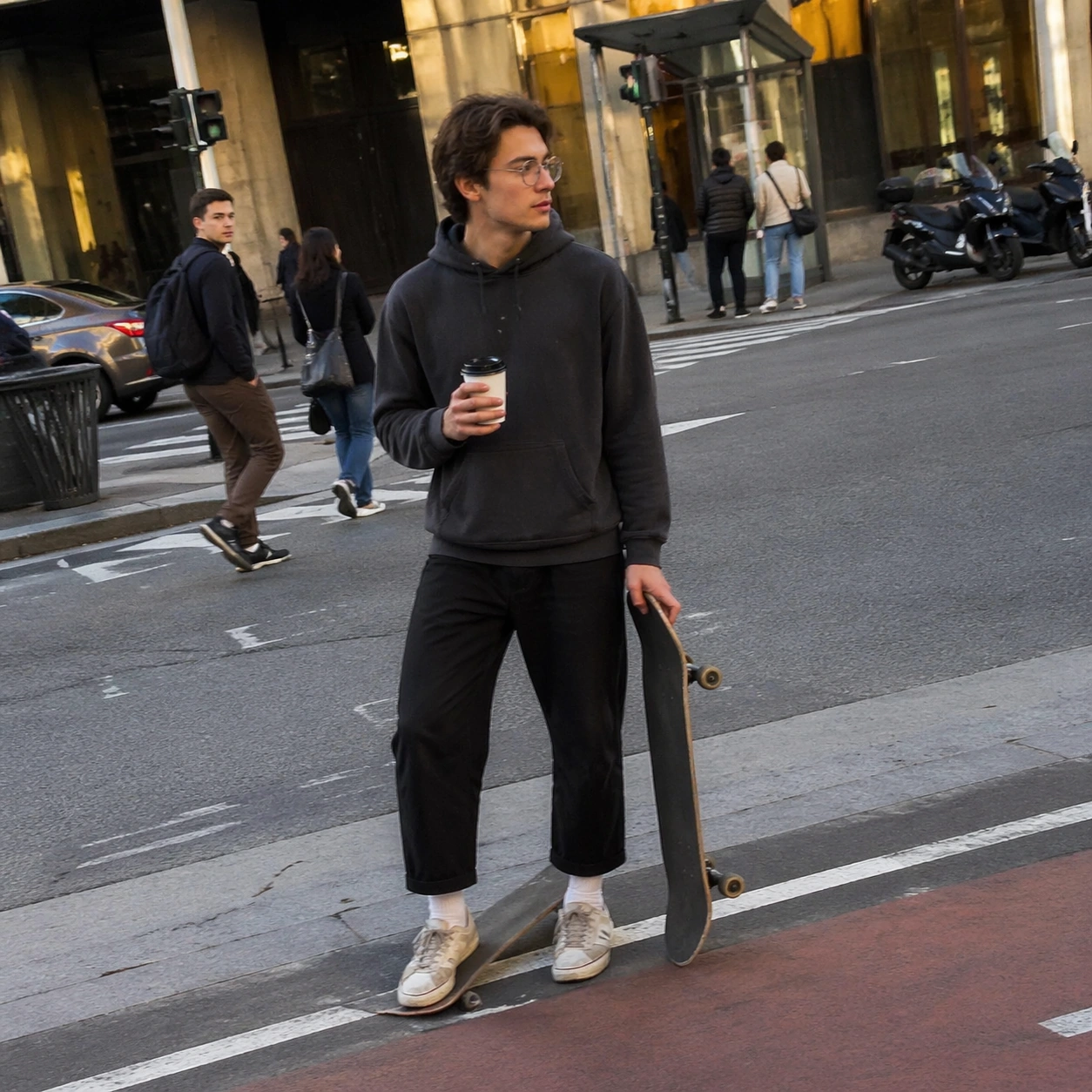
A square smartphone snapshot in late afternoon city light, slightly tilted and imperfectly framed as if taken quickly from across a bike lane. The image has natural phone-camera compression, mild motion blur at the edges, realistic asphalt texture, parked scooters, a bus stop shelter, and ordinary pedestrians in soft background focus. The mood should feel plausible and unposed, like a casual social-feed photo, not a studio portrait.

Subject:
A completely fictional young tech-founder celebrity-like person pauses on a skateboard at a crosswalk, wearing a plain charcoal hoodie, cropped trousers, worn sneakers, and round non-branded glasses. They have an invented face that does not resemble any real public figure. One hand holds a paper coffee cup with no readable markings; the other steadies the skateboard. A passerby glances over, suggesting mild recognition without crowd drama.

Important details:
The core test is believable accidental realism: uneven phone exposure, pedestrian scale, natural shadow direction, slight background clutter, and a subject who reads as famous only through confident posture and subtle attention from bystanders. Avoid paparazzi aggression. Make all storefronts and transit signs unreadable or abstract. Keep skin texture, clothing folds, wheels, curb paint, and reflections physically convincing.

Use case:
Fictional Celebrity Snapshot single study 1/8, testing a mundane invented-public-figure phone snapshot without real-person likeness.

Constraints:
No readable text, no watermark, no logos, preserve exact 1:1 aspect ratio, no real celebrity likeness, no real person name, no claimed real event, no brand marks, no news caption, no staged red-carpet lighting, no distorted hands, no unsafe traffic action.
How to use
- Copy the complete original prompt, including any parameters.
- Replace the subject, text and composition with your own requirements.
- Use a compatible external tool; check its current access conditions and review the result.
Before you start
- Check whether a reference image is required. A compatible model label does not mean this example was generated with that model.
- Keep names, figures and visible text accurate; results can vary between model versions.