Original document
GPT Image 2 · en
Scene:
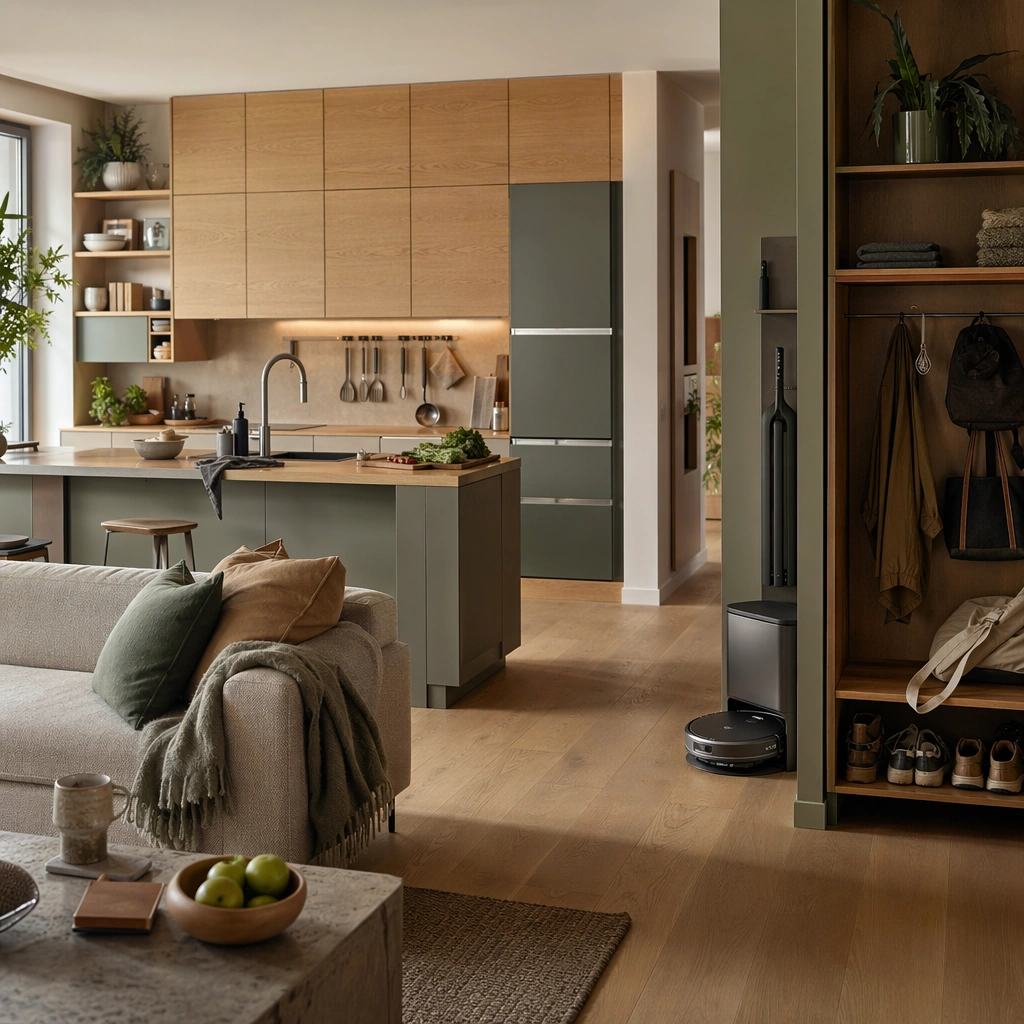
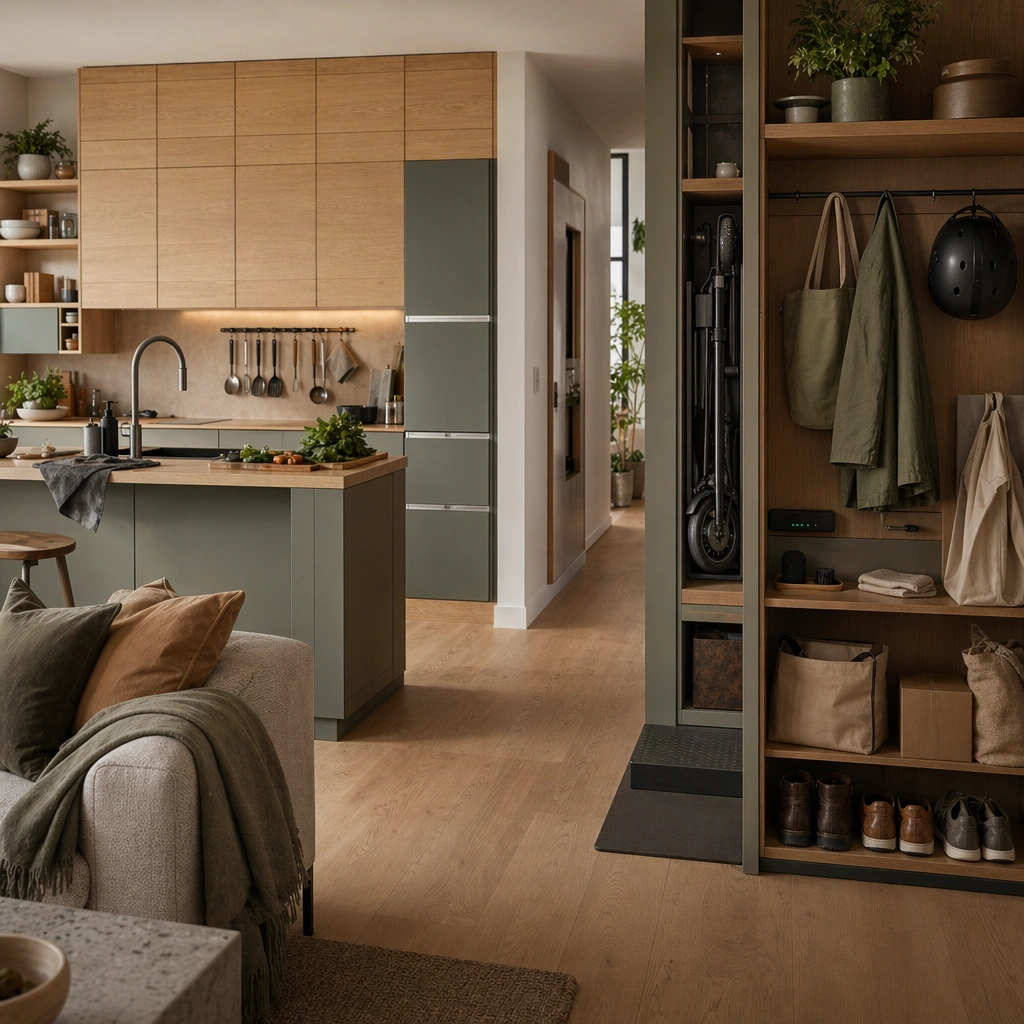
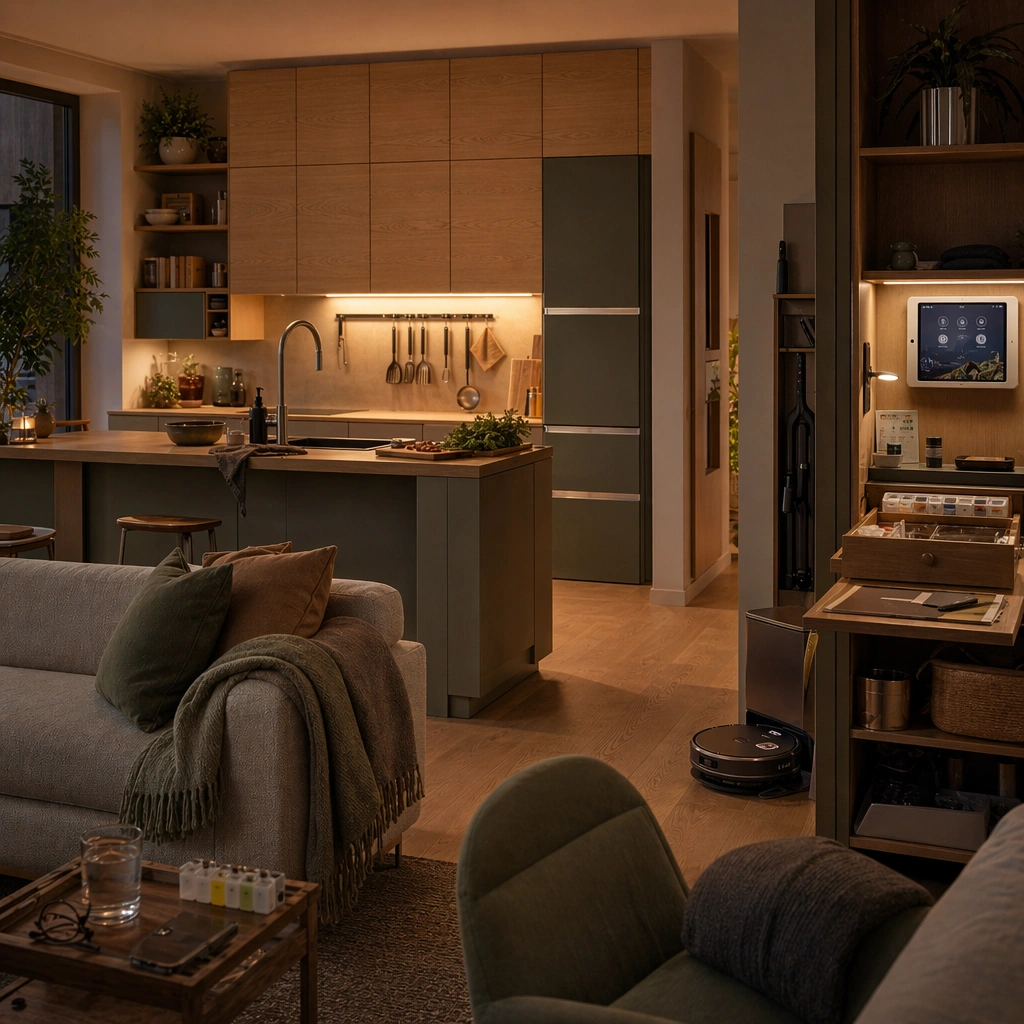
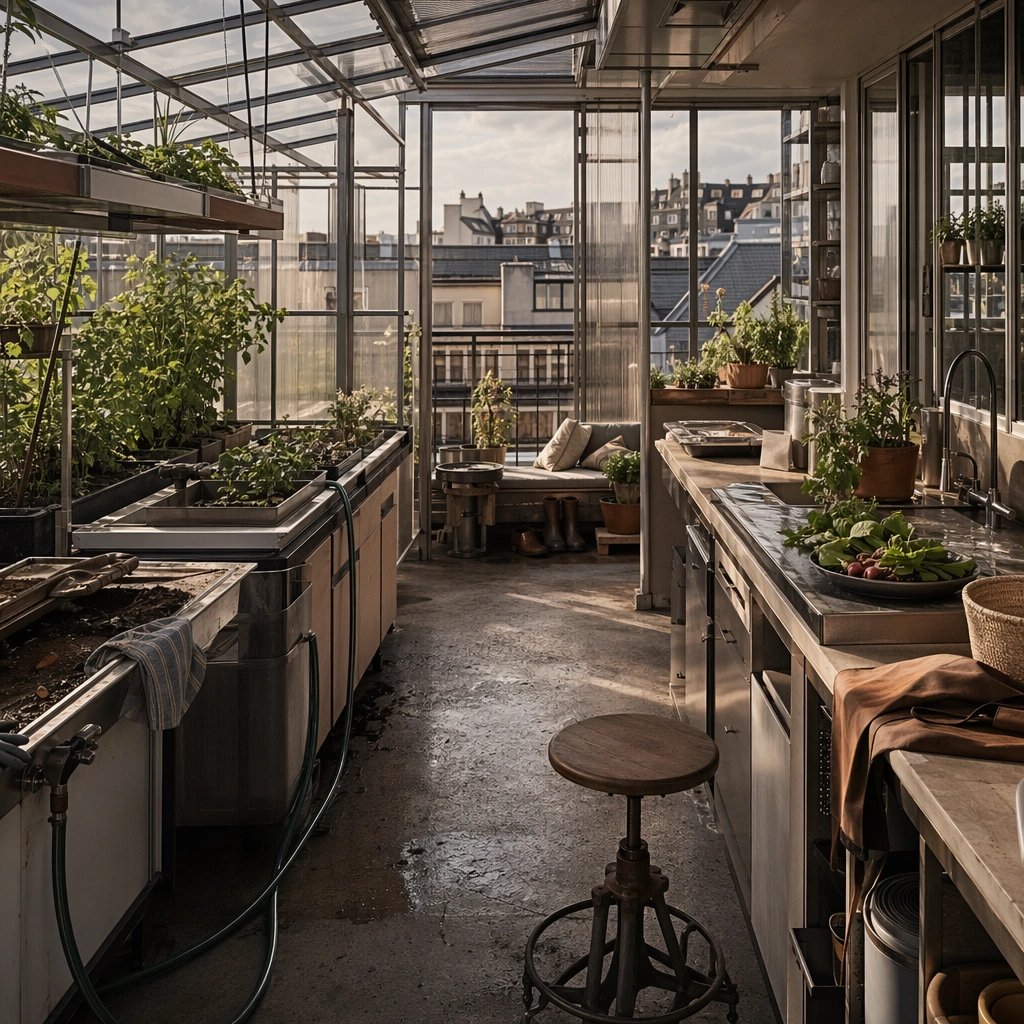
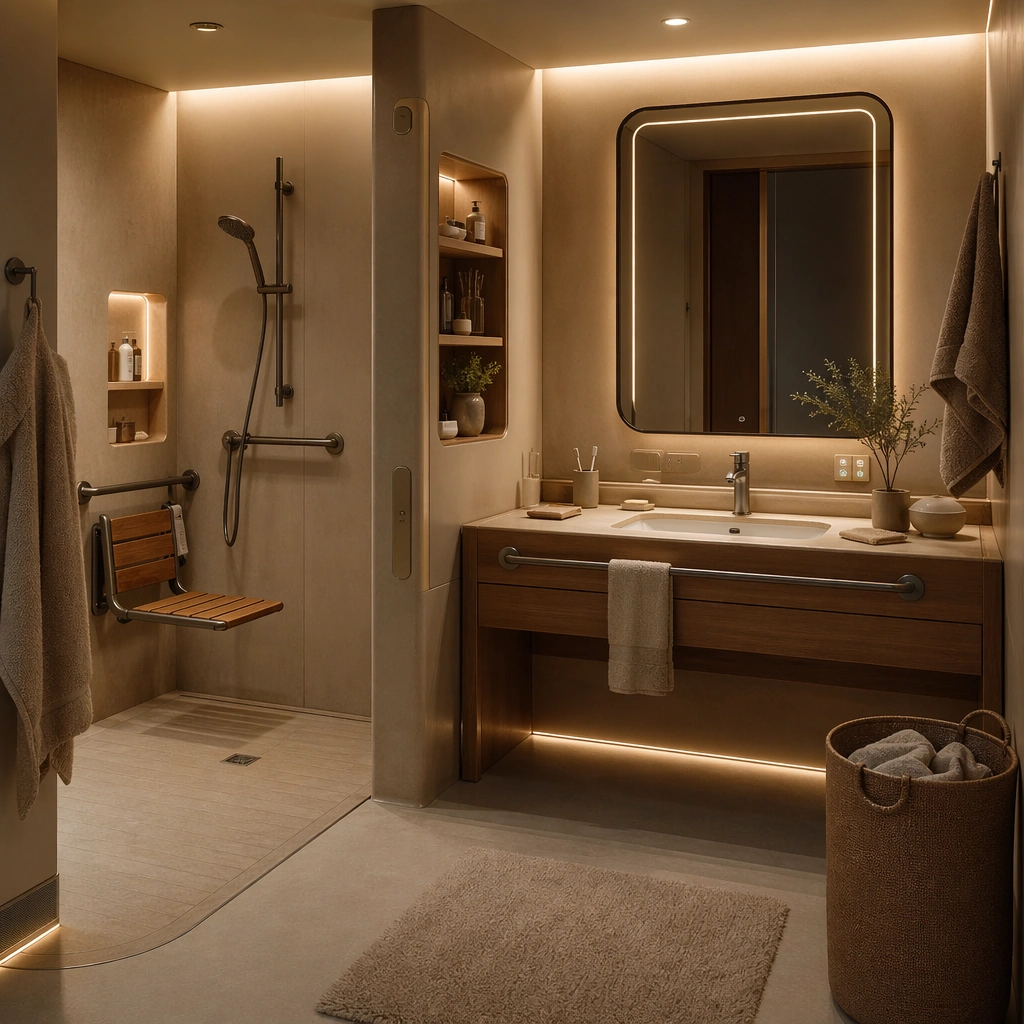
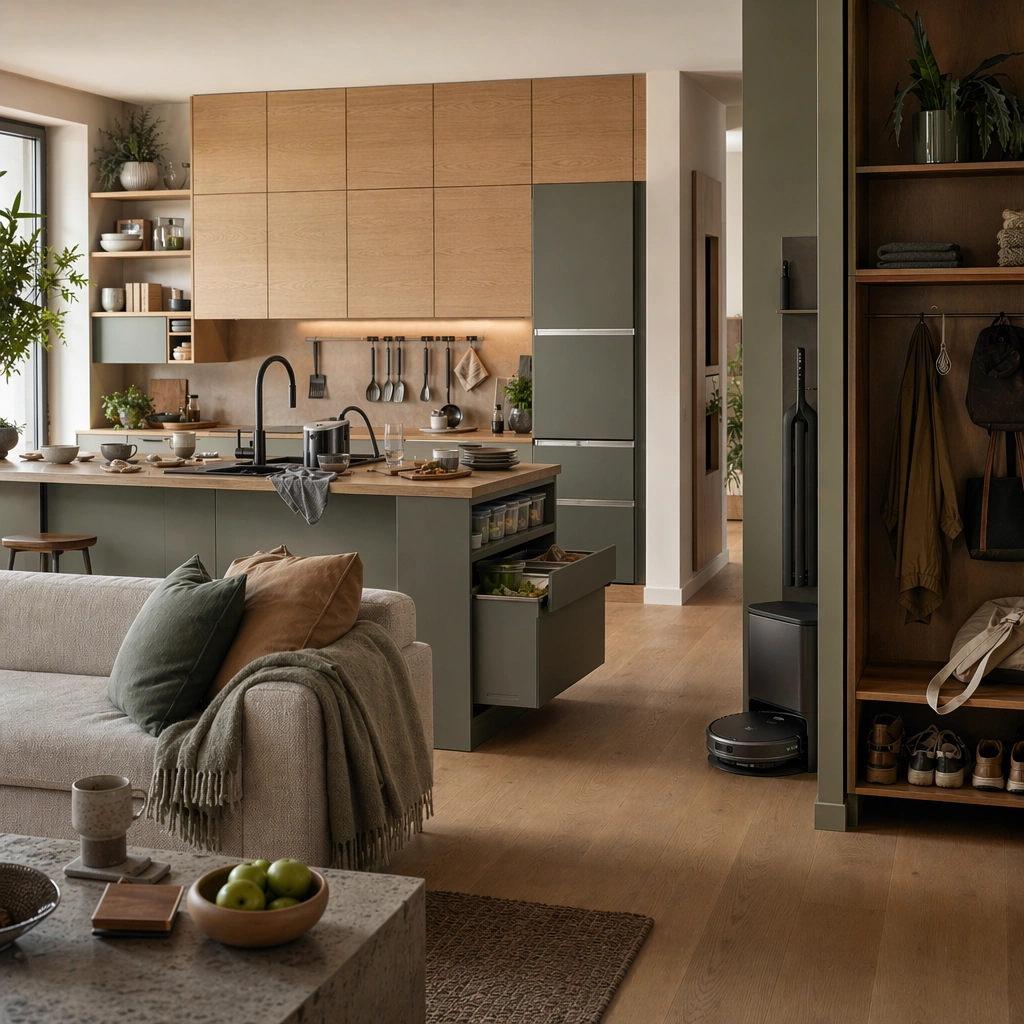
Create a square near-future domestic interior that feels photographed for an editorial concept spread rather than a sterile showroom. Light should feel natural and inhabitable, with enough softness to imply routine use while preserving product and spatial clarity. The framing should reveal both room layout and the material relationship between furniture, appliances, storage, and circulation. Keep the same room family but shift the moment to post-breakfast with soft daylight, half-cleared surfaces, and a compact cleaning device active near the sink.

Subject:
Center the image on a believable domestic system where appliances, furnishings, utilities, and personal habits have evolved slightly into the future without losing everyday realism. The space should feel occupied by real people with routines, maintenance, and storage needs, even if those people are only implied through objects and traces. Preserve the reference cabinetry, appliance shapes, and seating logic while foregrounding dish flow, food storage, and cleanup choreography.

Important details:
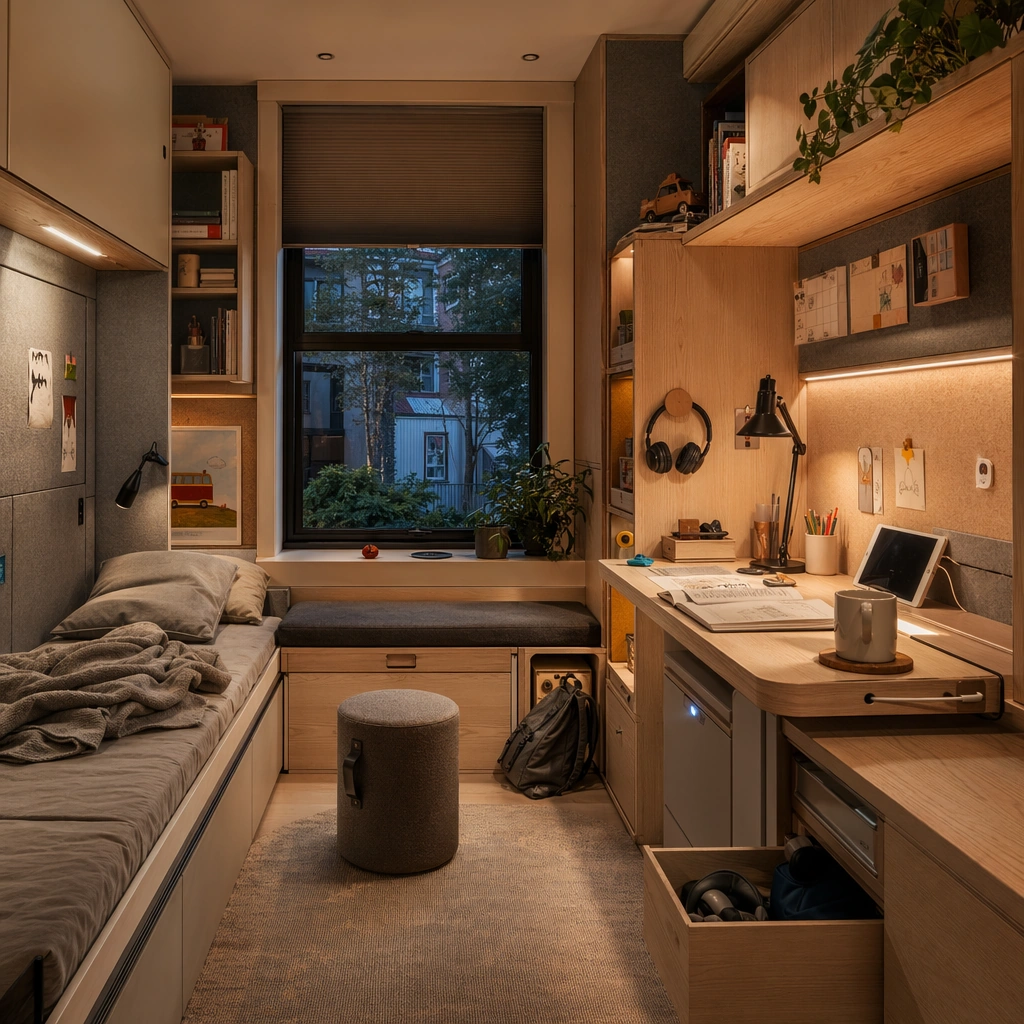
Prioritize near-future plausibility over flashy gimmicks. Small workflow clues, quiet automation, adaptable surfaces, and durable materials should explain how the room supports daily life. Use refined but grounded color, tactile surfaces, and careful object hierarchy so the results remain useful for brand inspiration and editorial concept work. The image should feel organized and human, using routine traces rather than clutter to show that the space is actively used. Preserve the exact structural language established by the reference image, especially the cabinetry geometry, appliance language, soft material palette, and lived-in storage logic.

Use case:
Future Domestic series study 2/4, designed as a reusable core-system image for this topic.

Constraints:
No readable text, no watermark, no logos, preserve exact 1:1 aspect ratio, no luxury showroom emptiness, no perfect sterile sci-fi lab look, no floating hologram clutter, no unreadable brand marks, no messy chaos, no robotic spectacle.
How to use
- Copy the complete original prompt, including any parameters.
- Replace the subject, text and composition with your own requirements.
- Use a compatible external tool; check its current access conditions and review the result.
Before you start
- Check whether a reference image is required. A compatible model label does not mean this example was generated with that model.
- Keep names, figures and visible text accurate; results can vary between model versions.