Original document
GPT Image 2 · en
Scene:
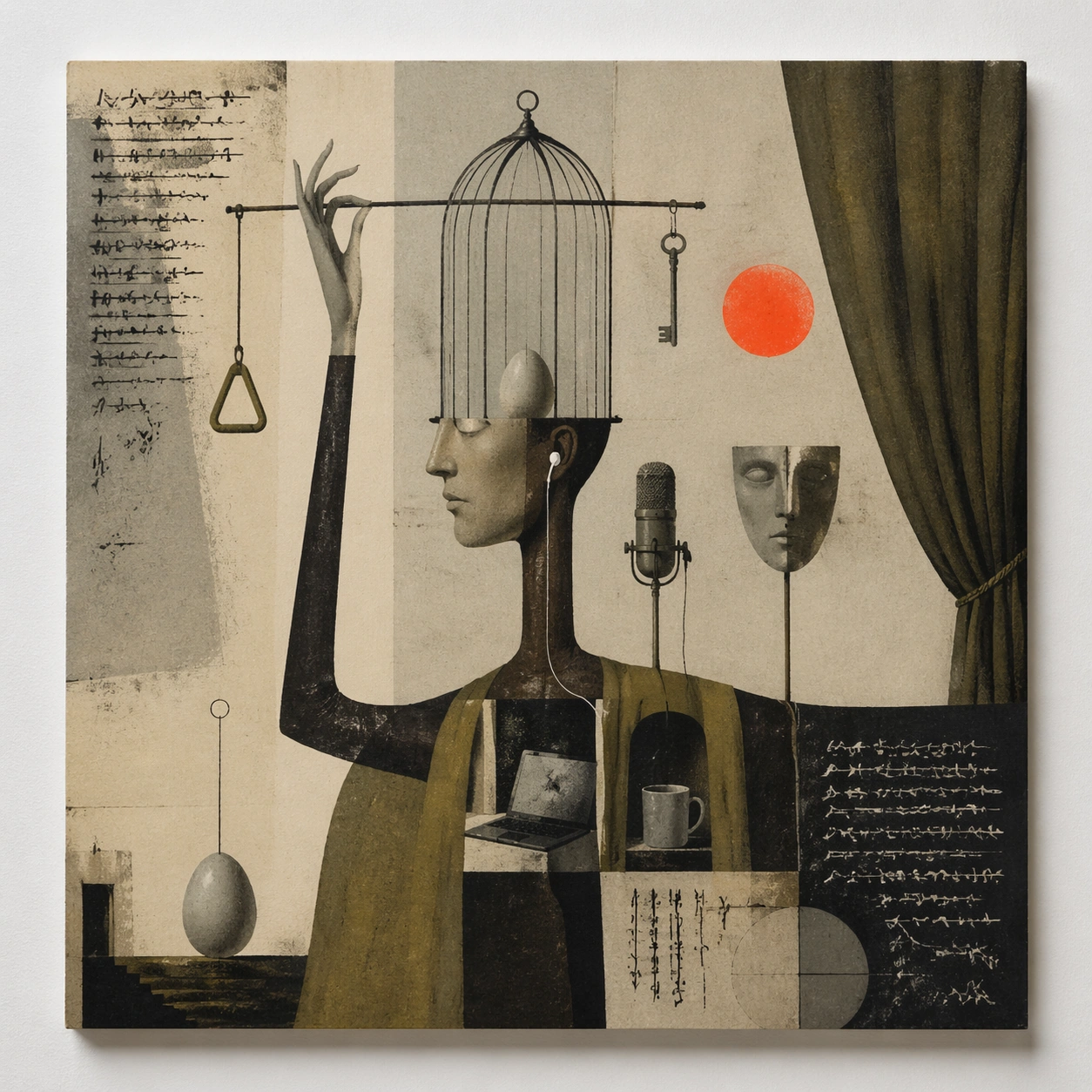
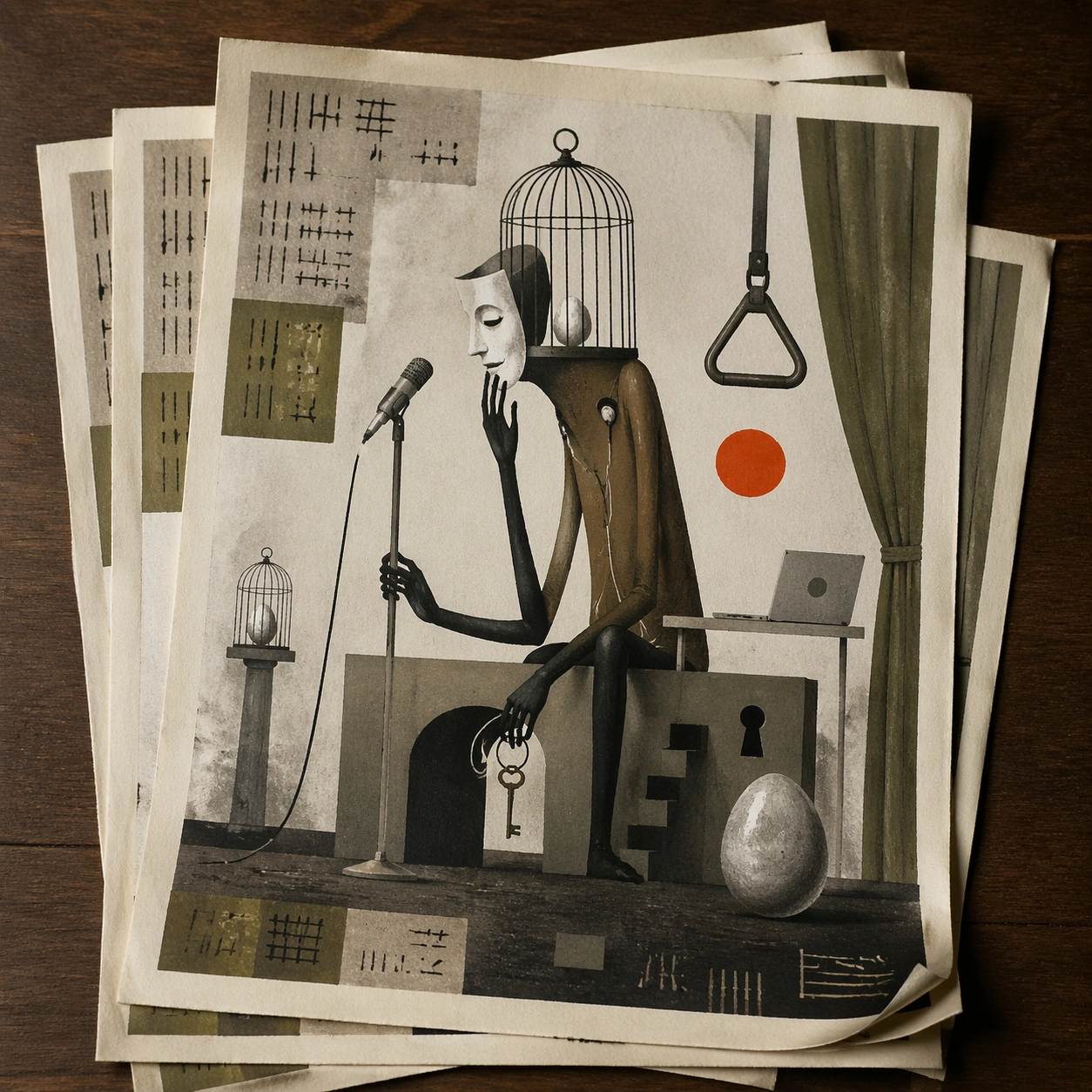
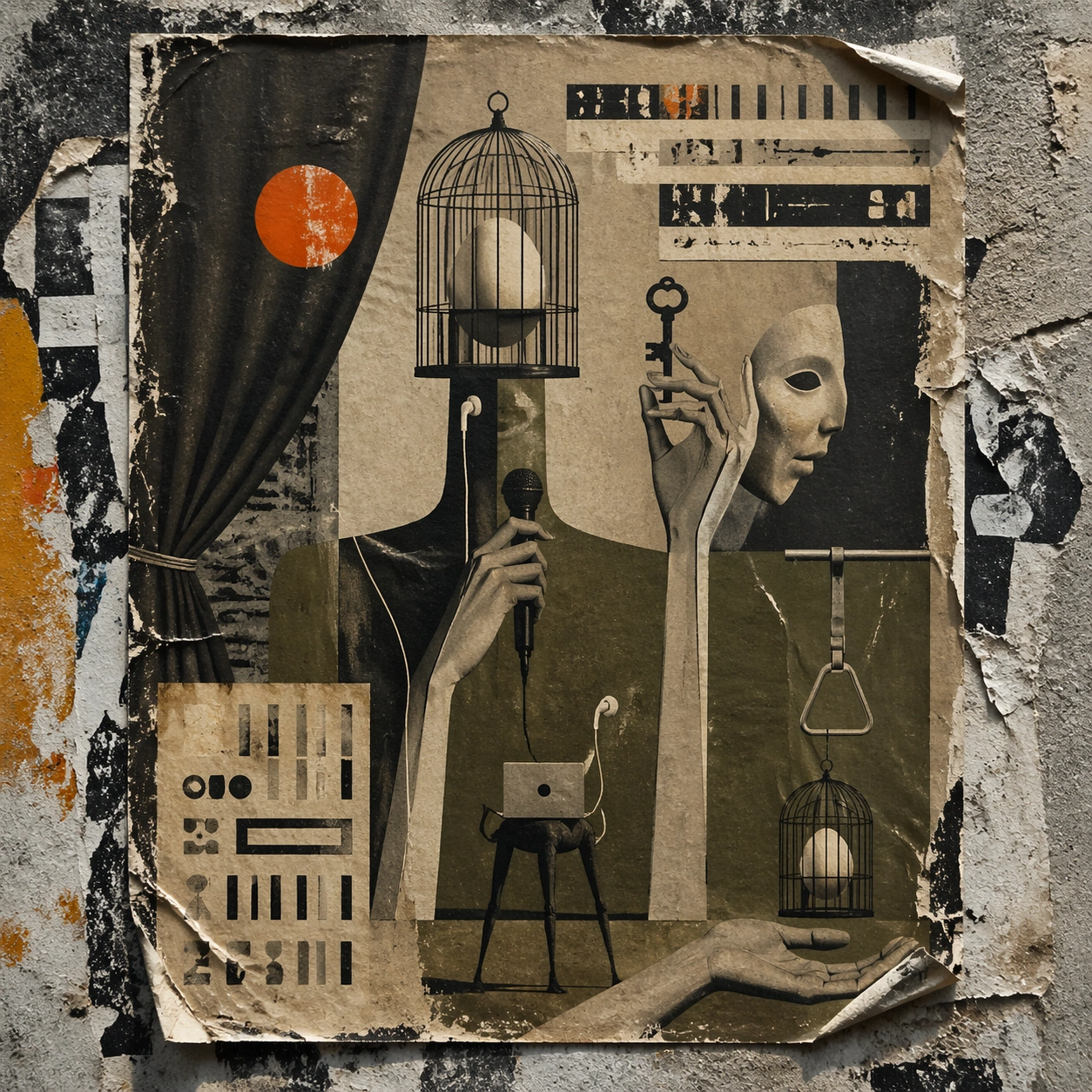
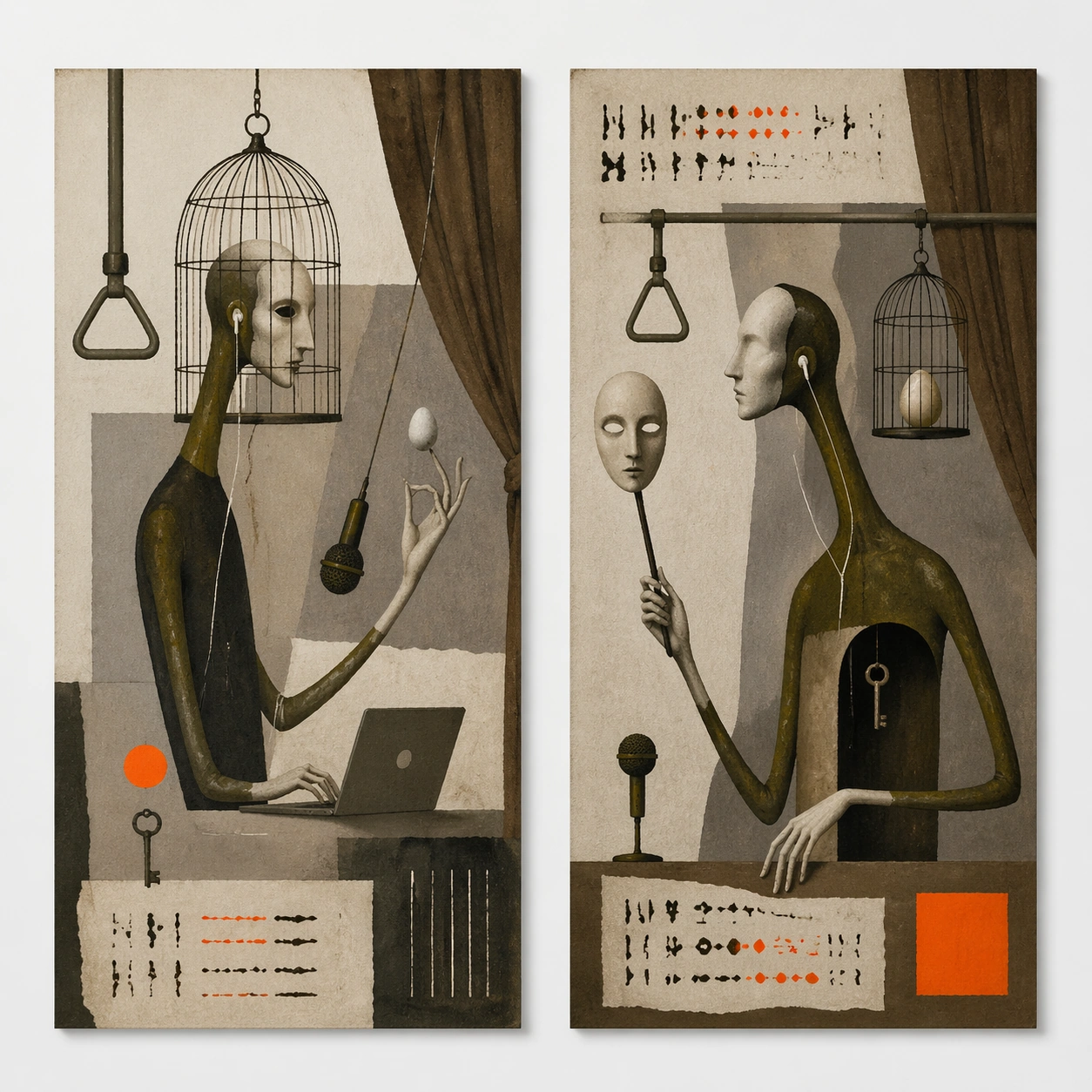
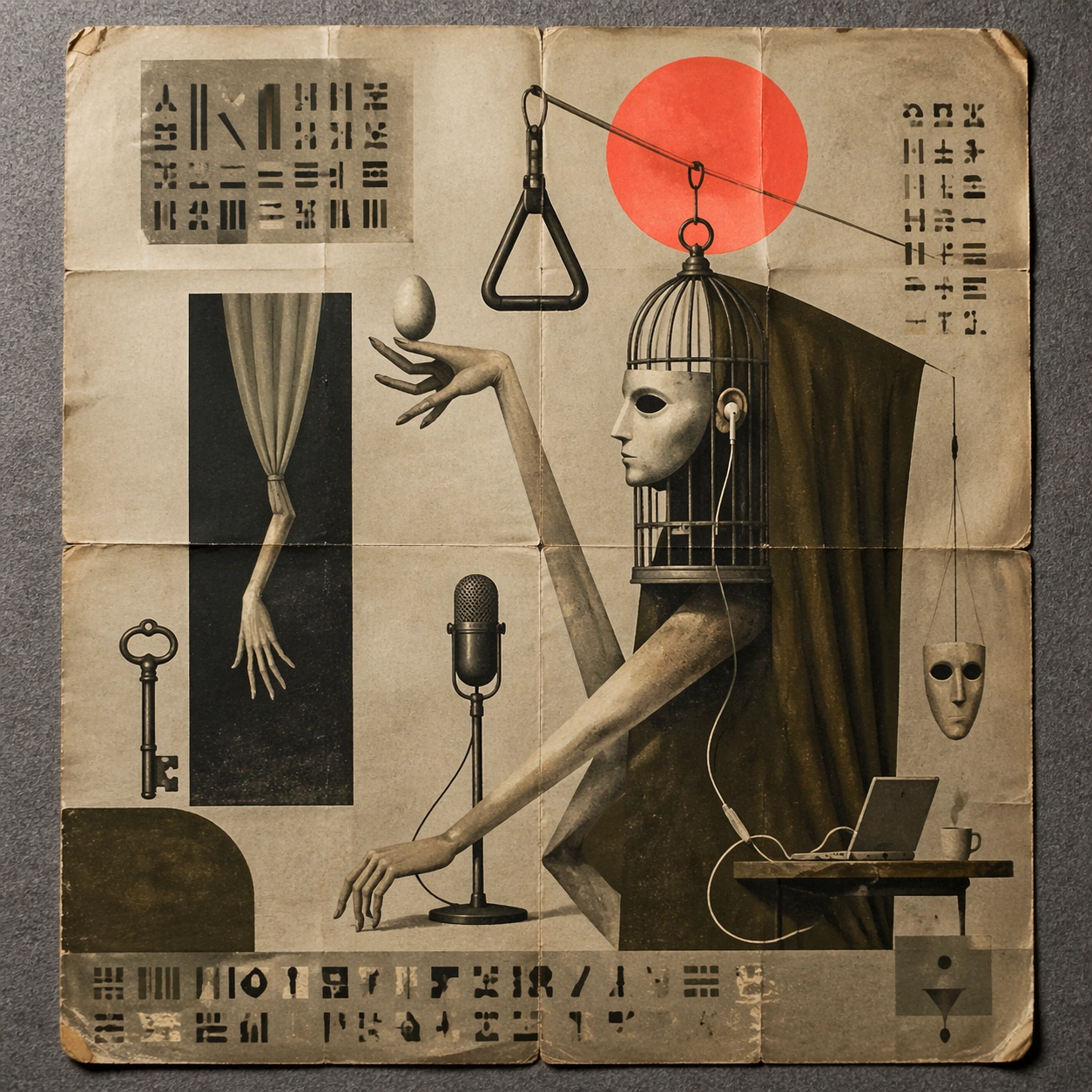
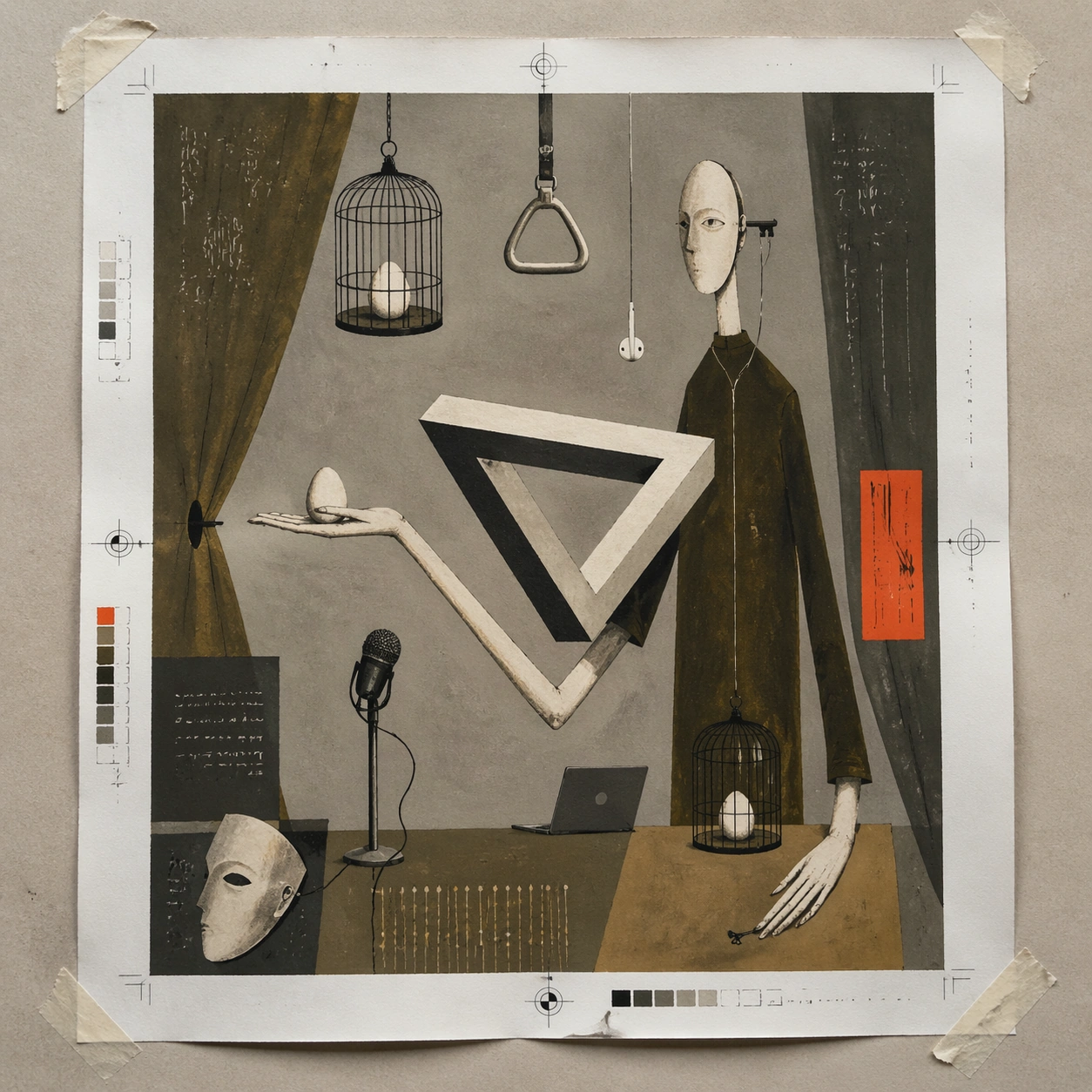
A square overhead tabletop photograph of a fresh poster proof on neutral worktable paper, lit by cool daylight, with crop marks, tape tabs, and slight paper bow visible around the sheet. The poster should express dry surreal theatre-poster logic using one impossible symbol, large mute fields, and an intellectual deadpan mood, using ash gray, olive, umber, bone, and a single acid orange or neon pink accent and a tactile surface appropriate to the medium.

Subject:
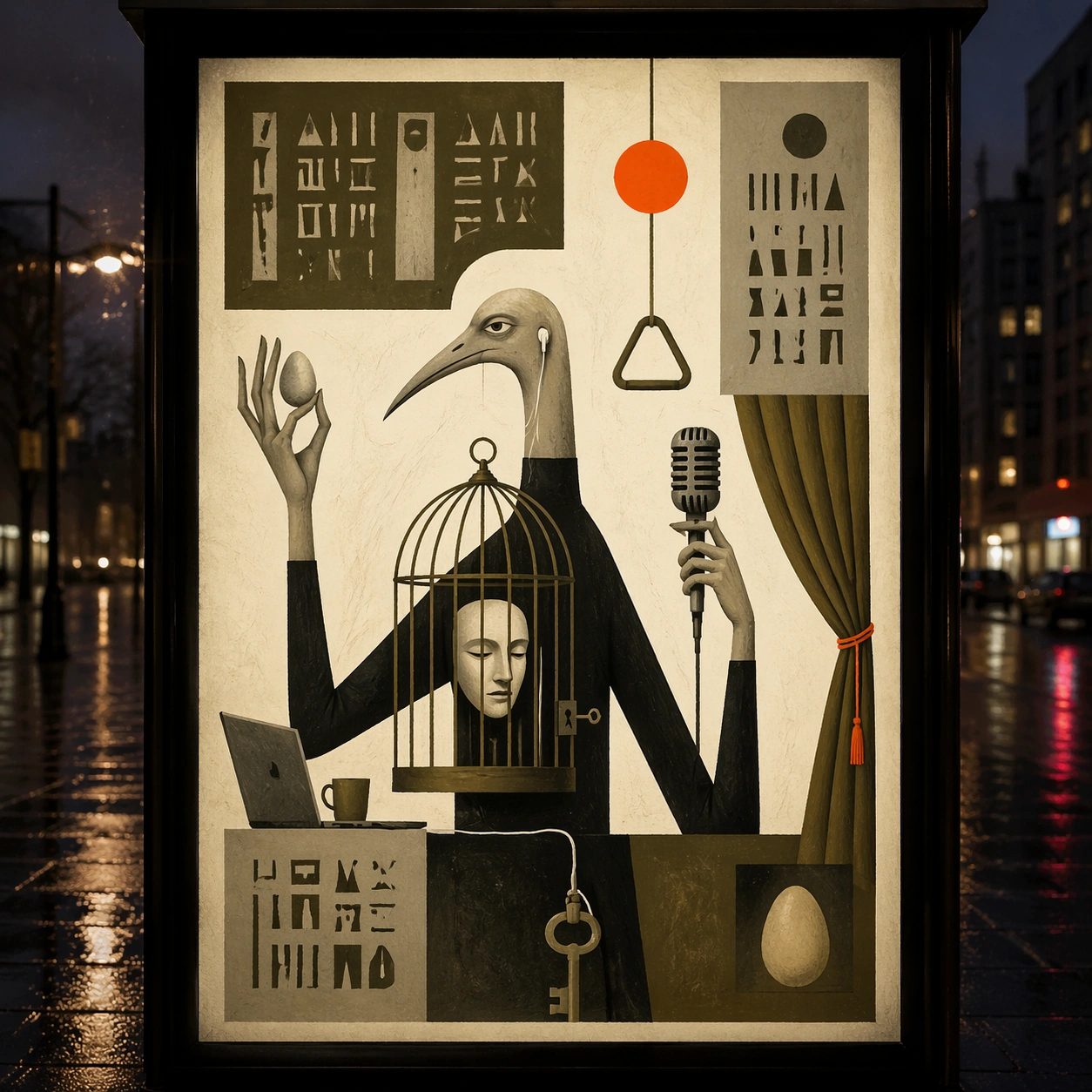
Design the poster as a print-shop proof, preserving the same poster language while allowing production clues such as edge trims, registration targets, and process marks to frame the composition. Use elongated limbs, bird cages, eggs, microphones, masks, curtains, keys, and impossible body-object hybrids as the main visual ingredients, and organize them with quiet hand-drawn title blocks used as texture and spacing devices rather than readable type. For the contemporary-subject axis, thread in remote-work objects, earbuds, and subway handles fused into a deadpan surreal theatre metaphor. The poster must feel like an original design object rather than a reproduction of any known work.

Important details:
The image must still read as a finished poster concept, but it should carry believable print-process evidence and material tactility instead of gallery-wall perfection. Preserve symbolic compression, painterly paper tooth, sparse composition, and one decisive accent color. Keep every letterform abstract and non-readable, as if it were a typographic texture rather than language. Make the style unmistakable through composition, palette, surface behavior, and symbolic compression. no crowded collage, no glamour sheen, no literal plot illustration, no cheerful advertising tone.

Use case:
Polish Surrealist single study 2/9, testing production realism and process evidence.

Constraints:
No readable text, no watermark, no logos, preserve exact 1:1 aspect ratio, no copyrighted characters, no real brand marks, no QR codes, no interface chrome, no accidental gibberish lettering.
How to use
- Copy the complete original prompt, including any parameters.
- Replace the subject, text and composition with your own requirements.
- Use a compatible external tool; check its current access conditions and review the result.
Before you start
- Check whether a reference image is required. A compatible model label does not mean this example was generated with that model.
- Keep names, figures and visible text accurate; results can vary between model versions.