
Original document
GPT Image 2 · en
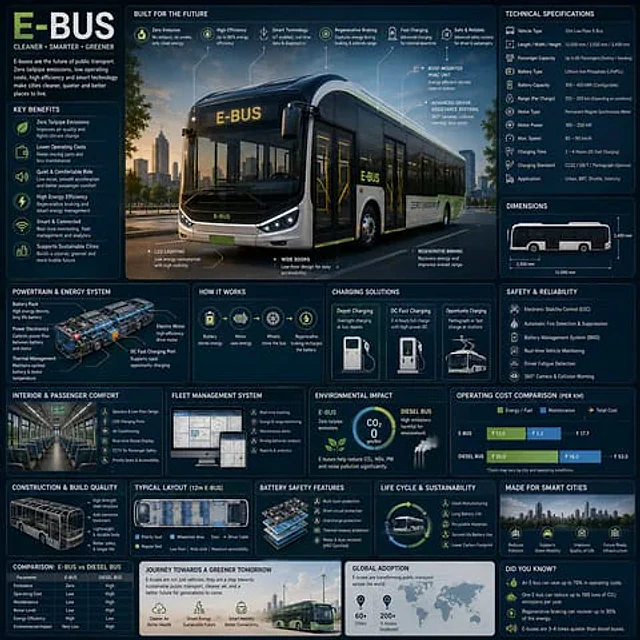
Create a premium square “reference-style sustainable transportation infographic” centered around a futuristic electric city bus called the {E_BUS_NAME}, designed as a beautifully curated urban-mobility handbook page rather than a commercial vehicle advertisement.

The composition should feel like a modern visual encyclopedia mixed with an elite public-transit engineering guide and high-end editorial infographic system.

Visual Direction

• 1:1 square composition
• Premium smart-city background with subtle transportation blueprints, circuit-inspired overlays, and urban infrastructure schematics
• Elegant palette using deep navy, graphite black, electric green, steel gray, and soft cyan accents
• Refined editorial typography hierarchy
• Rounded modular information cards with clean spacing
• Gentle realistic reflections and premium transit-system dividers
• Minimal transportation engineering iconography
• Extremely detailed central electric bus render viewed in dramatic three-quarter perspective driving through a futuristic smart-city boulevard
• Thin precision annotation lines pointing toward key systems and technologies
• Clean, organized “knowledge-first” layout with high information density but breathable spacing

Main Subject Presentation

A stunning ultra-detailed realistic render of the {E_BUS_NAME} placed at the center, featuring:

• sleek aerodynamic body design
• panoramic windshield
• illuminated destination display
• low-floor accessibility layout
• futuristic LED lighting systems
• premium electric drivetrain details
• realistic urban reflections
• smart-city transportation realism

Surround the bus with engineering callouts explaining:

• battery pack technology
• electric motor system
• regenerative braking system
• charging infrastructure compatibility
• smart fleet management systems
• passenger accessibility features
• thermal battery management
• energy-efficiency technologies
• safety monitoring systems
• intelligent driver assistance features

Include Modular Sections

• E-Bus Overview
• Technical Specifications
• Vehicle Dimensions & Capacity
• Powertrain & Energy System
• Battery Technology Breakdown
• Charging Solutions
• Passenger Comfort Features
• Safety & Reliability Systems
• Fleet Management Technology
• Environmental Impact Analysis
• Operating Cost Comparison
• Construction & Material Engineering
• Sustainability Lifecycle Assessment
• Smart-City Integration
• Global Adoption Trends
• “Did You Know?” Facts Section
• Future of Electric Public Transport

Add Premium Visualization Modules

• battery architecture diagrams
• charging workflow graphics
• energy-consumption charts
• passenger-capacity visualizations
• smart-city integration maps
• drivetrain cutaway illustrations
• environmental impact comparisons
• fleet-management dashboards
• vehicle blueprint dimensions
• lifecycle sustainability graphics

Style Keywords

“premium transportation encyclopedia”
“editorial electric mobility handbook”
“high-end public transit infographic”
“scientific transportation poster”
“museum-quality electric bus reference page”
“modular smart-city knowledge system”
“clean engineering editorial design”
“ultra-detailed mobility visualization”
“future transportation showcase”
“sustainable urban mobility design”

Avoid

• generic vehicle advertisements
• cluttered commercial brochure layouts
• cartoon transportation styling
• unrealistic flying-bus concepts
• excessive cyberpunk neon overload
• low-detail stock-vehicle renders

Final Goal

The final result should resemble a professionally published transportation-engineering reference-book page created for urban planners, transportation engineers, sustainability researchers, architects, public-transit authorities, and smart-city enthusiasts, combining technical accuracy, sustainability insights, and premium editorial design.
How to use
- Copy the complete original prompt, including any parameters.
- Replace the subject, text and composition with your own requirements.
- Use a compatible external tool; check its current access conditions and review the result.
Before you start
- Check whether a reference image is required. A compatible model label does not mean this example was generated with that model.
- Keep names, figures and visible text accurate; results can vary between model versions.