Original document
GPT Image 2 · en
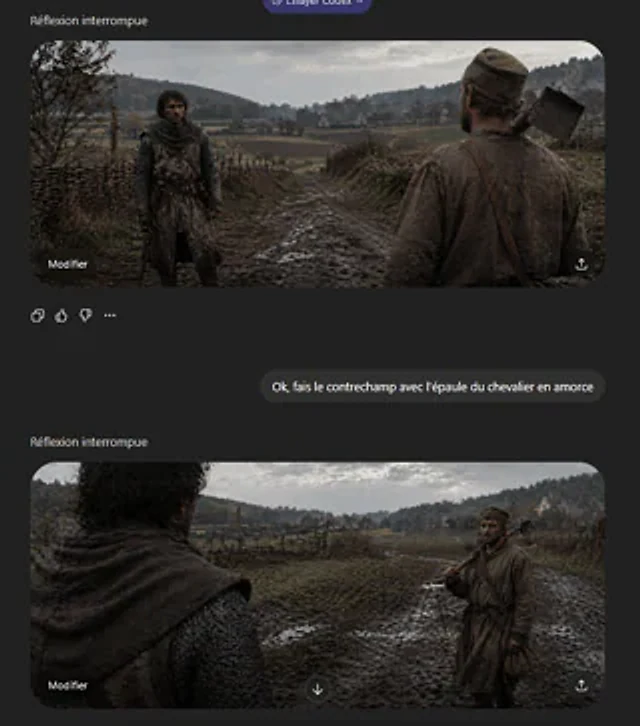
A series of cinematic medieval reverse shots, presented as grainy historical film stills, utilize a 21:9 ultrawide aspect ratio, overcast natural light, soft earth tones, a damp autumn atmosphere, realistic muddy textures, shallow depth of field, and strong over-the-shoulder composition. The scene is set on a muddy country road winding through a rural valley, flanked by rough wooden fences. In the distance are low, rolling hills covered with sparse trees, open fields, and a light-colored stone farmhouse or church on a hillside to the right. Two characters stand facing each other on the road. One is a weary medieval peasant, wearing a dirty brown tunic and hat, of medium build, carrying a wooden-handled axe on his shoulder and a leather belt across his chest. The other is a knight or armed traveler, wearing dark, weathered chainmail and a tattered hooded blouse, standing warily. Please create a reverse shot demonstration using cinematic grammar: First frame shown.{argument name="foreground character" default="Farmer carrying an axe"} From the perspective of his back in the right foreground, his shoulders and back occupy the right foreground of the image, while{argument name="background character" default="Knight in chainmail"} The first frame shows the knight in a full-body shot on the left, facing the camera and standing on a muddy road; the second frame reverses the angle, showing the knight's shoulders and hooded back blurred in the left foreground, while the farmer stands in the right mid-ground, carrying an axe. Maintaining consistency in location, weather, clothing, lens quality, and spacing between characters in both shots creates a restrained dramatic realism and a tense confrontational atmosphere.How to use
- Copy the complete original prompt, including any parameters.
- Replace the subject, text and composition with your own requirements.
- Use a compatible external tool; check its current access conditions and review the result.
Before you start
- Check whether a reference image is required. A compatible model label does not mean this example was generated with that model.
- Keep names, figures and visible text accurate; results can vary between model versions.