Original document
GPT Image 2 · en
Scene:
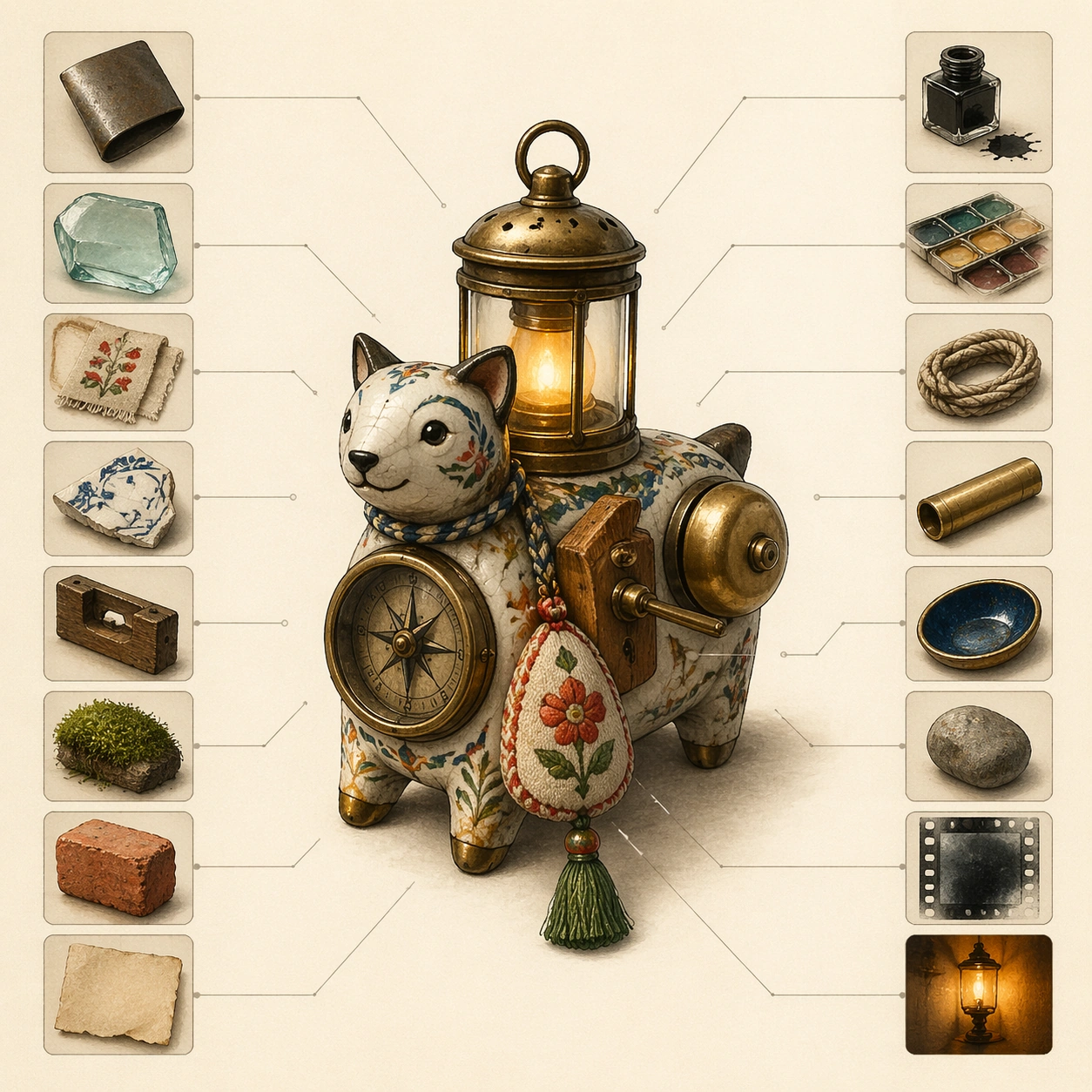
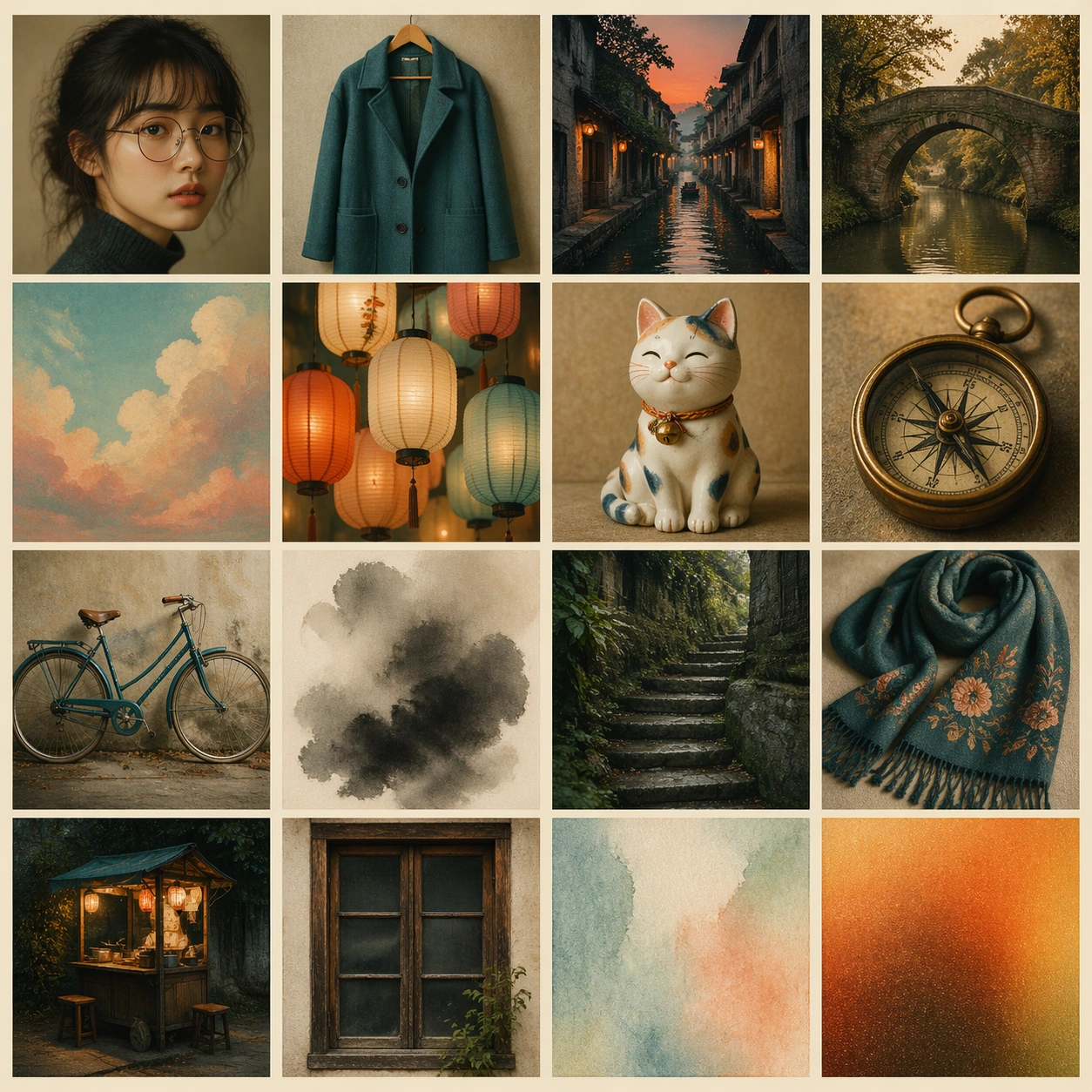
A square synthetic reference board laid out as a precise 4 by 4 grid of sixteen image tiles on warm museum paper. Each tile is a distinct visual source cue, separated by thin cream gutters, photographed straight-on with even catalog lighting. The board feels like a curated mood atlas rather than a collage mess.

Subject:
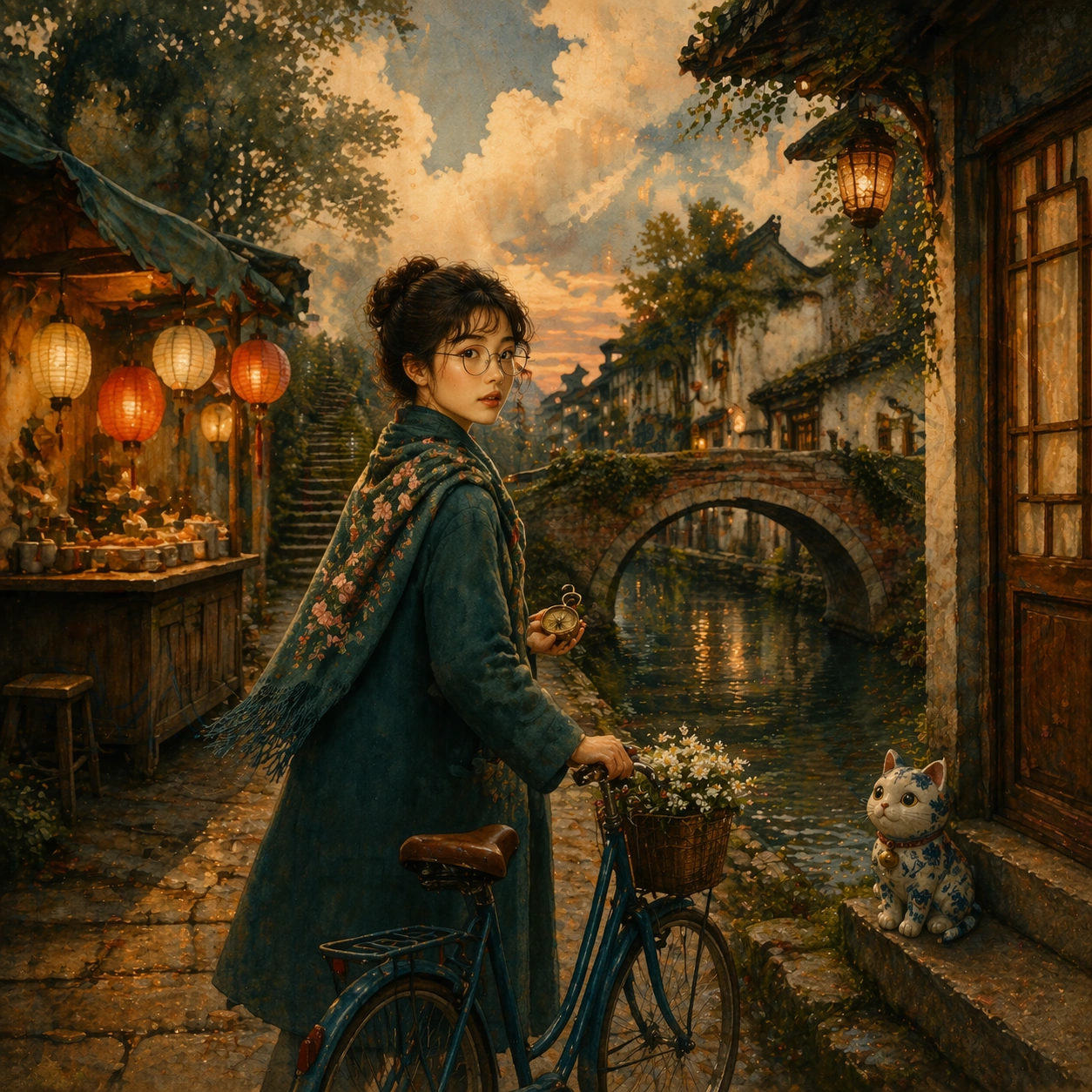
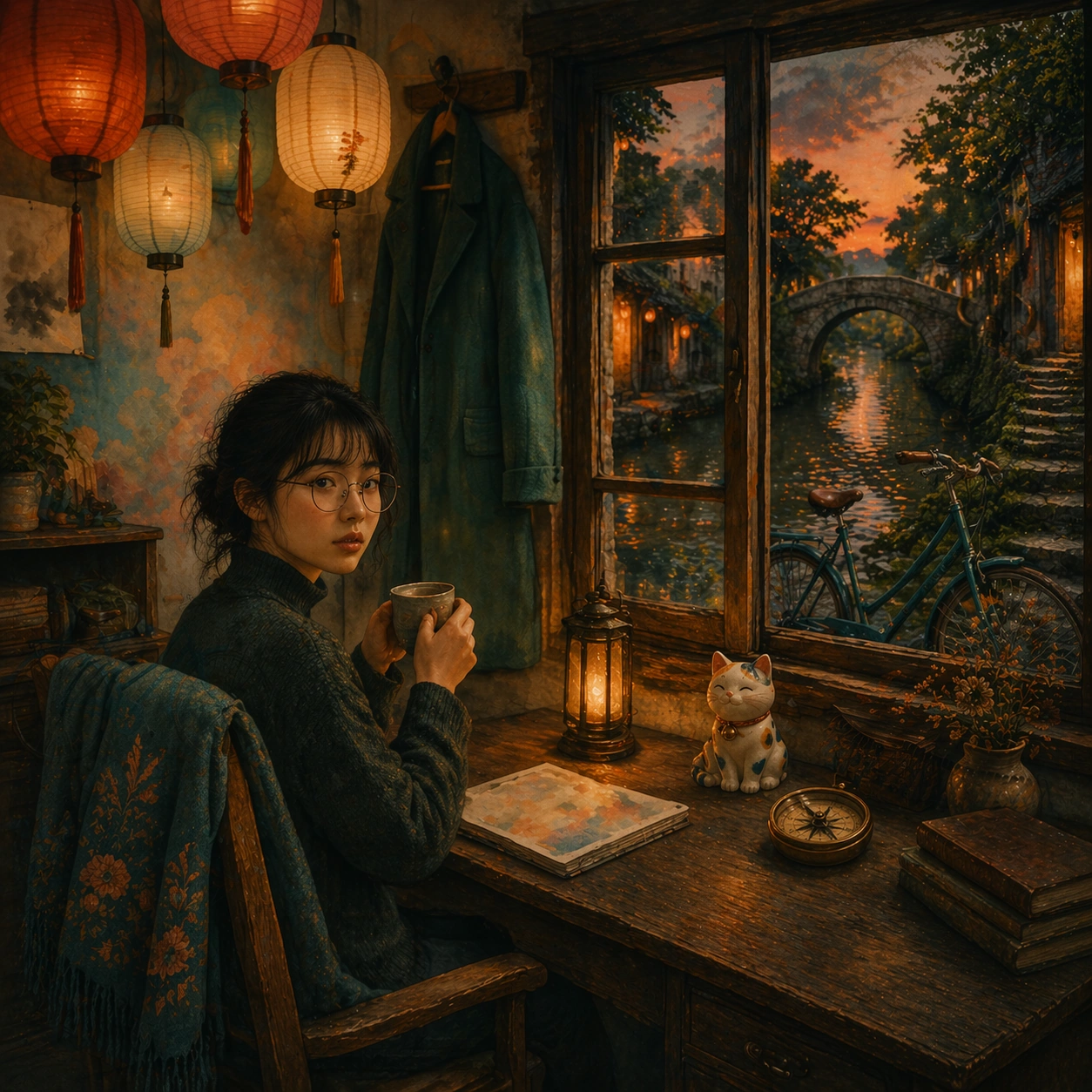
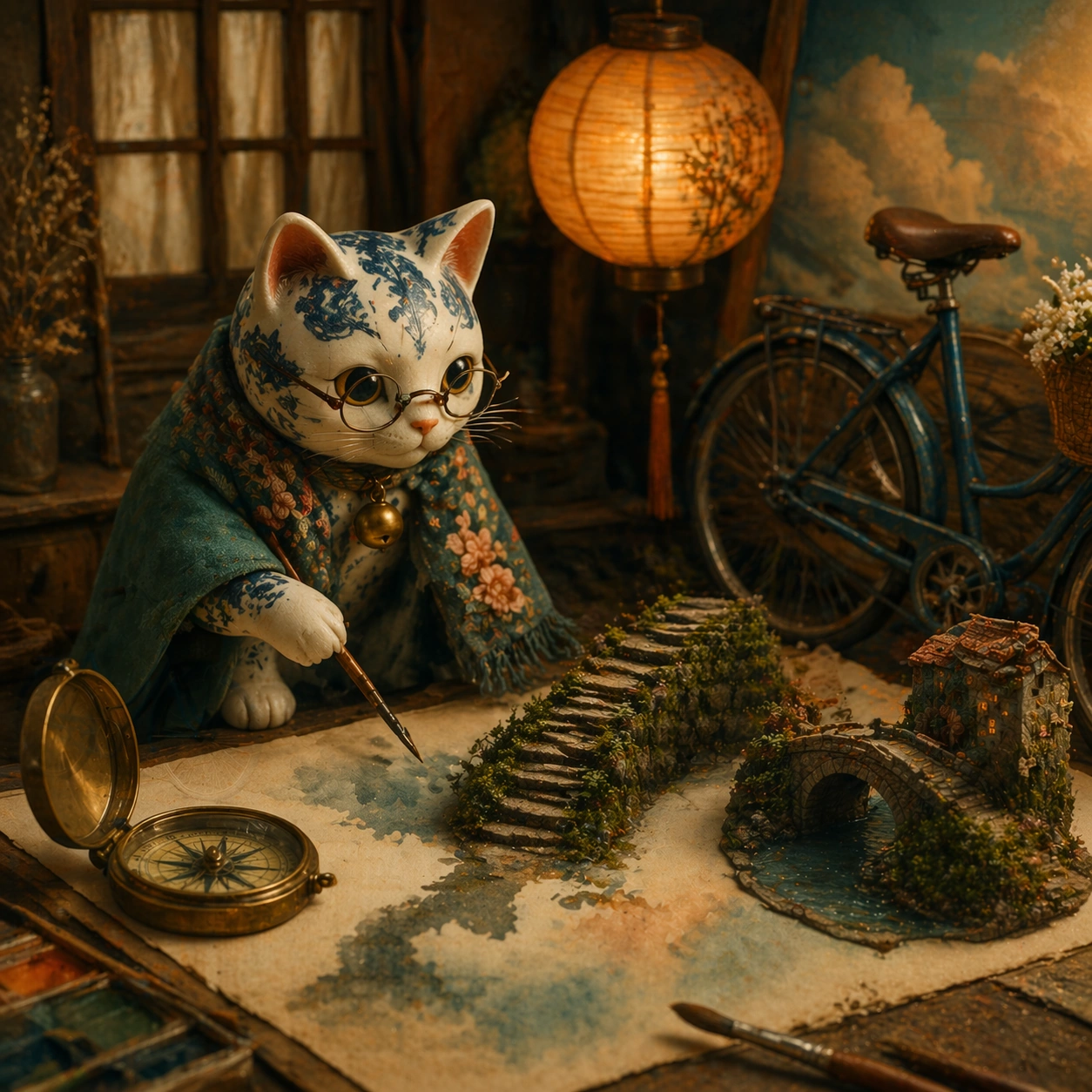
Sixteen source tiles: one portrait face with round glasses, one teal wool coat, one canal alley at dusk, one old brick bridge, one hand-painted sky background, one paper lantern cluster, one ceramic cat figurine, one brass compass, one blue bicycle, one ink wash cloud, one mossy stone stair, one embroidered scarf, one tiny food stall, one wooden window frame, one soft watercolor texture, and one warm film-grain color swatch. No tile contains readable text.

Important details:
Every tile should be visually distinct and memorable, with consistent square tile size and clean gutters. The reference board must make the sixteen cues easy to reuse: identity, outfit, place, props, materials, palette, and illustration style. Use tasteful analog texture, gentle color harmony, and high visual clarity.

Use case:
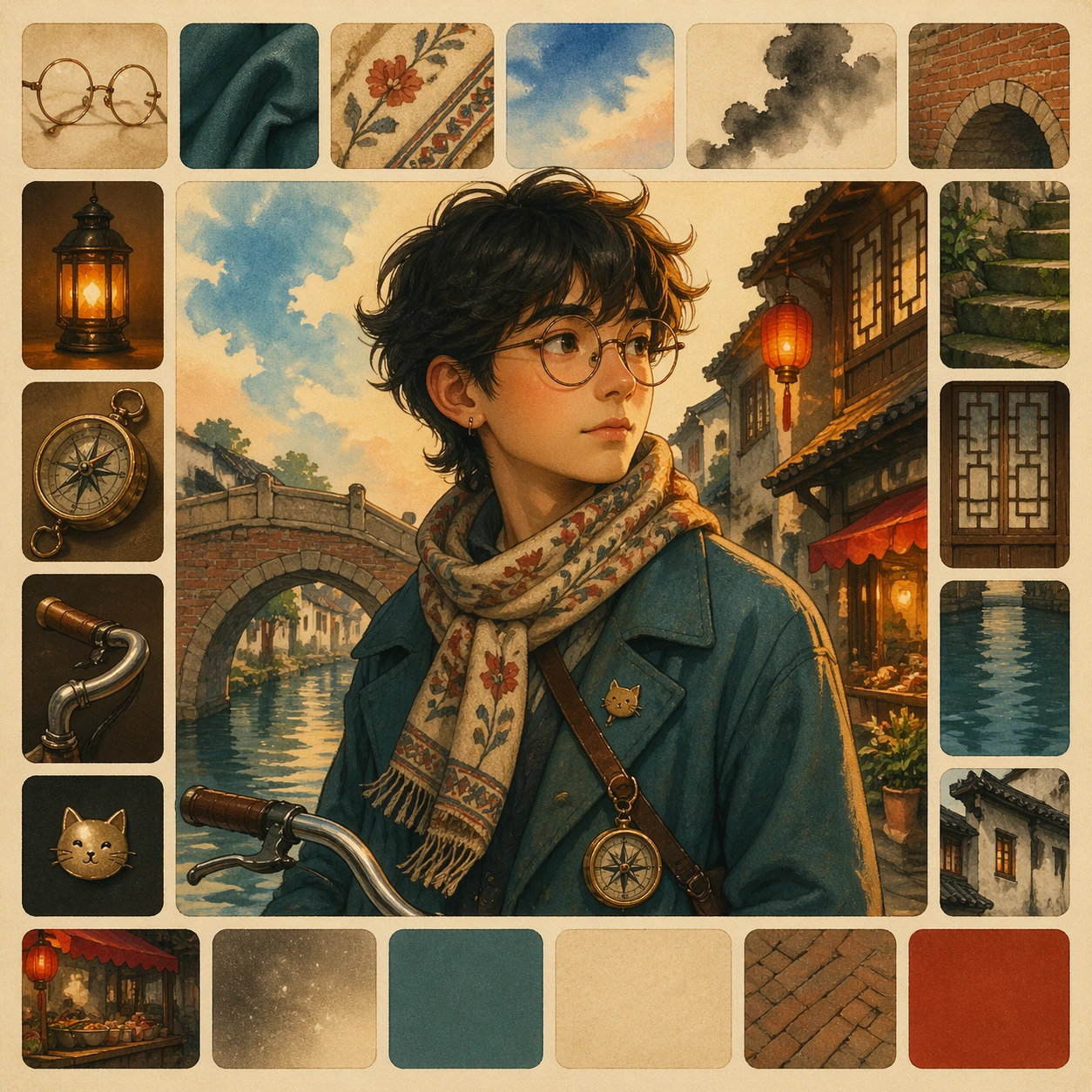
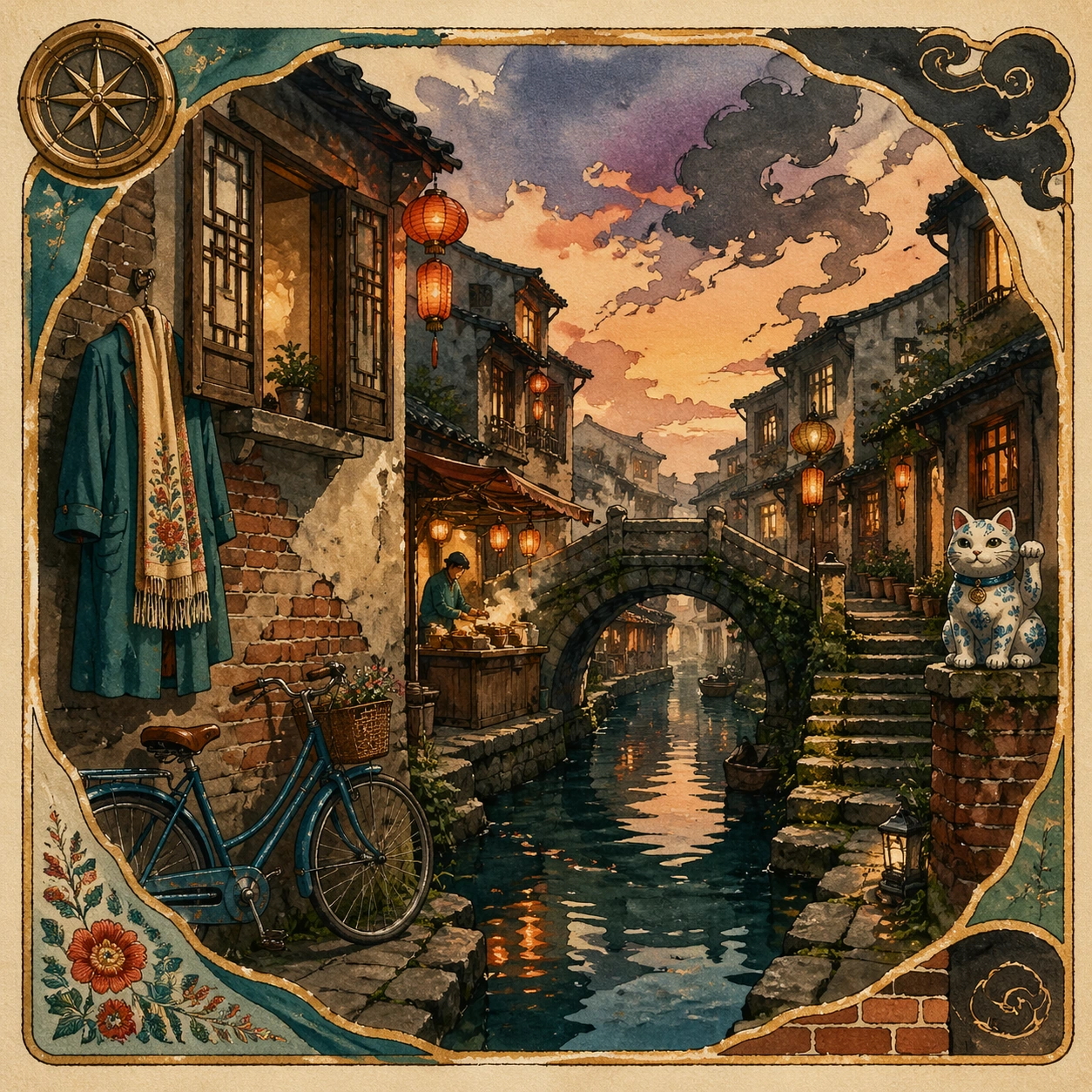
Root reference board for a sixteen-reference fusion series. Later images should use this board as --ref and synthesize its cues into coherent scenes rather than copying the grid layout.

Constraints:
Exactly sixteen tiles in a 4 by 4 grid, no readable text, no logos, no watermark, no real brands, no random extra tiles, no overlapping collage scraps, preserve exact 1:1 aspect ratio.
How to use
- Copy the complete original prompt, including any parameters.
- Replace the subject, text and composition with your own requirements.
- Use a compatible external tool; check its current access conditions and review the result.
Before you start
- Check whether a reference image is required. A compatible model label does not mean this example was generated with that model.
- Keep names, figures and visible text accurate; results can vary between model versions.