Original document
GPT Image 2 · en
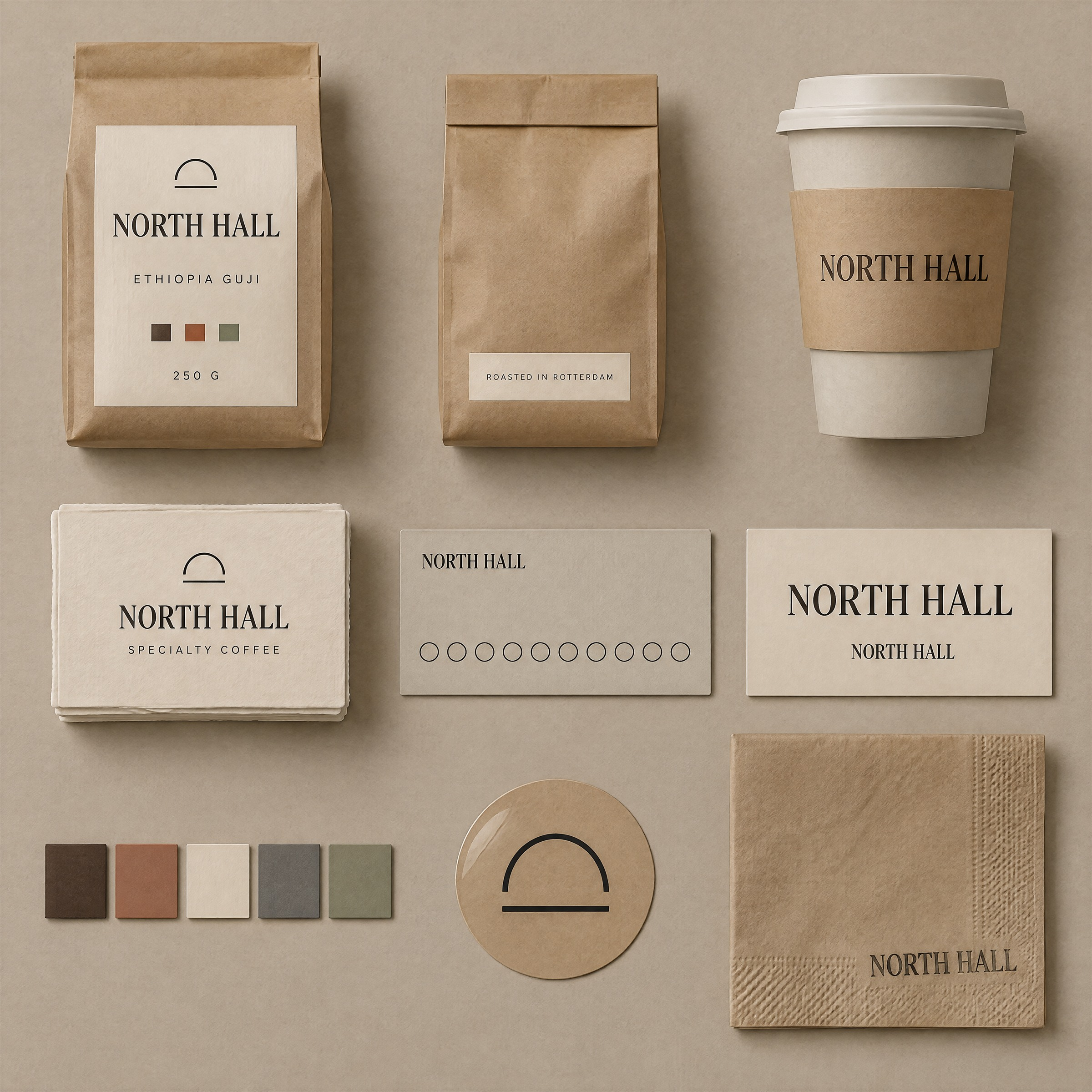
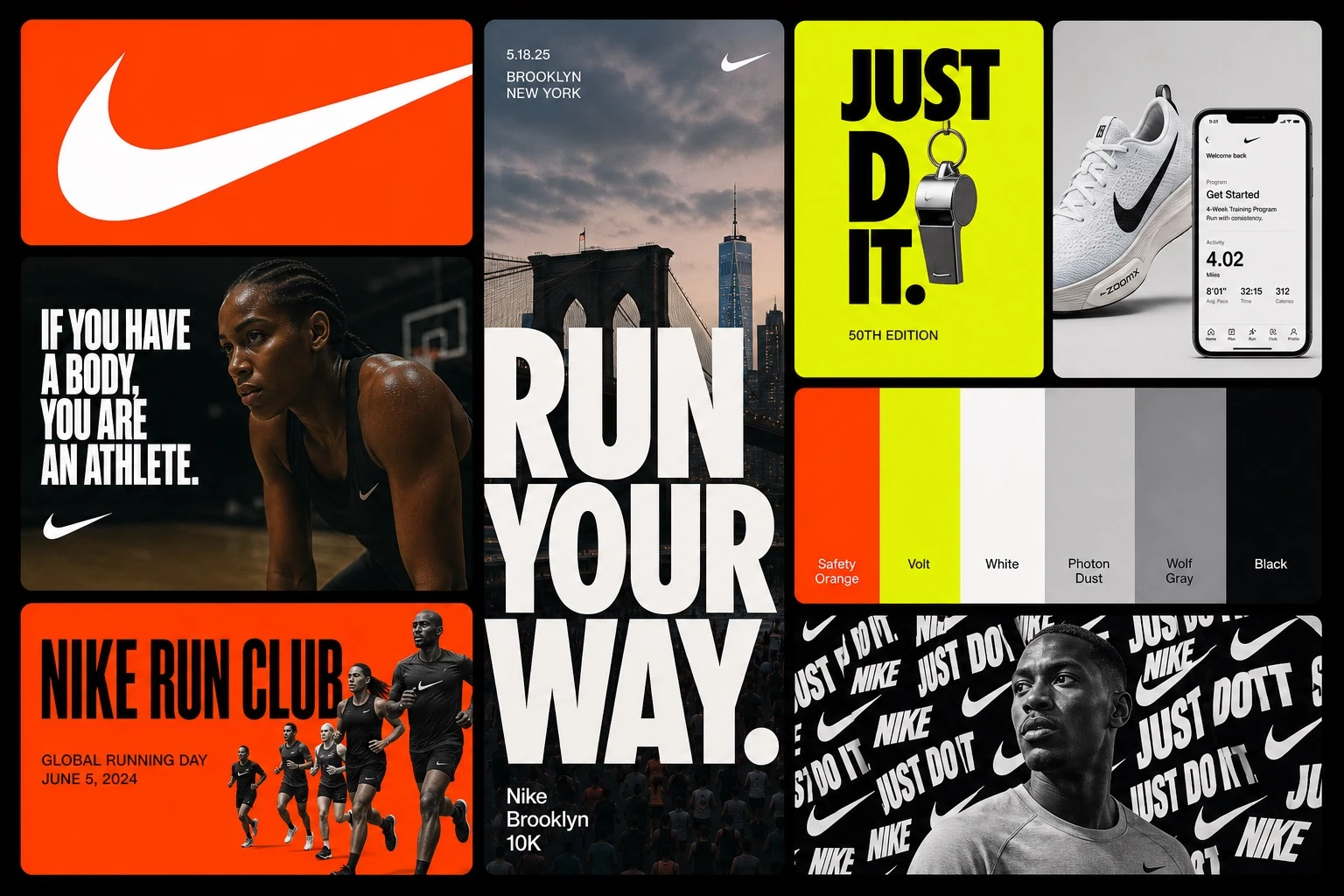
Full brand identity system for [BRAND] — Brand Identity Moodboard.

STEP 1 — DECODE THE BRAND
Extract from real brand guidelines only:
- Colors: full official palette (primary, secondary, neutrals, accents) — exact, no approximations.
- Type: weight, width, tracking, and capitalization style — applied identically across all cards.
- Copy: real slogans, campaigns, product names, manifesto phrases — zero invented text.
- World: the brand's domain (sport / tech / fashion / music / etc.) — all imagery stays inside it.

STEP 2 — OUTPUT
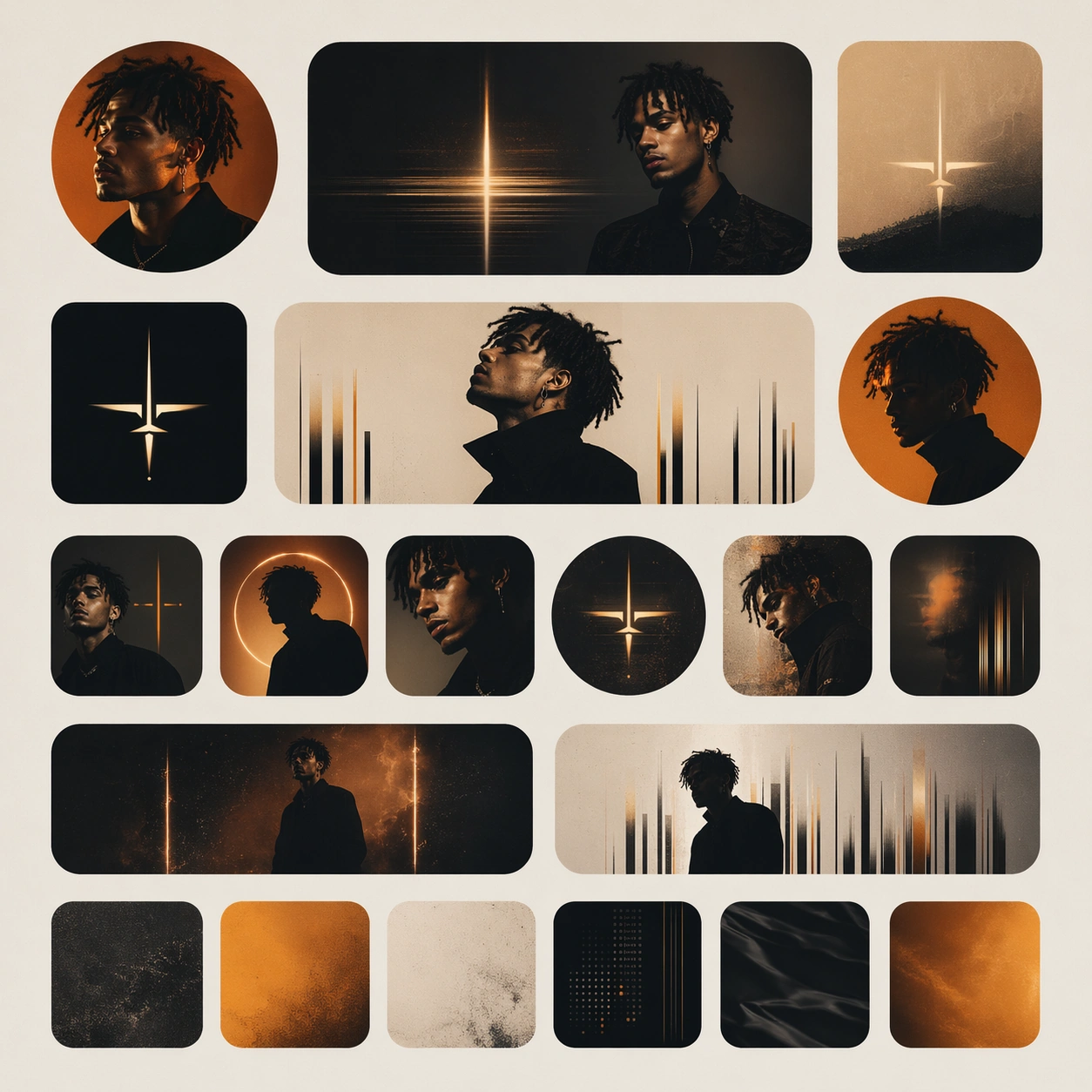
Single 16:9 flat image. Black (#000–#0A0A0A) background. 8 cards arranged in an asymmetric 3-column grid. Uniform 8–12px gaps. Rounded corners of 8–12px. Every card uses only the colors, type, and copy defined in Step 1.

CARDS — in order:
1. LOGO LOCKUP (wide, top-left) — brand-color background, official logo/wordmark, oversized cropped logo mark used as a structural graphic. No photo.
2. EDITORIAL PHOTO (mid-left) — dark photo from the brand's world, manifesto headline set in the brand's type over the image, wordmark small at the bottom.
3. CAMPAIGN BANNER (wide, bottom-left) — flat accent-color background, real event/campaign headline in bold condensed type on the left side, action photo cropped into the right side.
4. STORY FORMAT (tall, full-height, center) — full-bleed photo, oversized display type partially cropped by the edges, date/location detail at the top. Mobile story proportions.
5. TYPOGRAPHIC POSTER (upper center-right) — vivid accent background, campaign headline with one letter replaced by a real object from the brand's world, edition tag below.
6. COLOR PALETTE (center-right) — vertical equal stripes, one per brand color, color name labeled at the bottom of each stripe. No photo. Zero decoration.
7. PRODUCT MOCKUP (upper right) — studio photo of a real brand product or branded device/interface, neutral background, accurate logo/color/type placement.
8. TYPE PATTERN (lower right) — brand name/slogan repeated as an all-over pattern at varied sizes and angles, with an editorial photo overlaid and color-treated to integrate.

RULE: Someone familiar with this brand must immediately confirm that every card belongs to it.
Output quality: Behance brand identity case study / agency pitch deck level.
How to use
- Copy the complete original prompt, including any parameters.
- Replace the subject, text and composition with your own requirements.
- Use a compatible external tool; check its current access conditions and review the result.
Before you start
- Check whether a reference image is required. A compatible model label does not mean this example was generated with that model.
- Keep names, figures and visible text accurate; results can vary between model versions.