
Oryginalny dokument
GPT Image 2 · en
Scene:
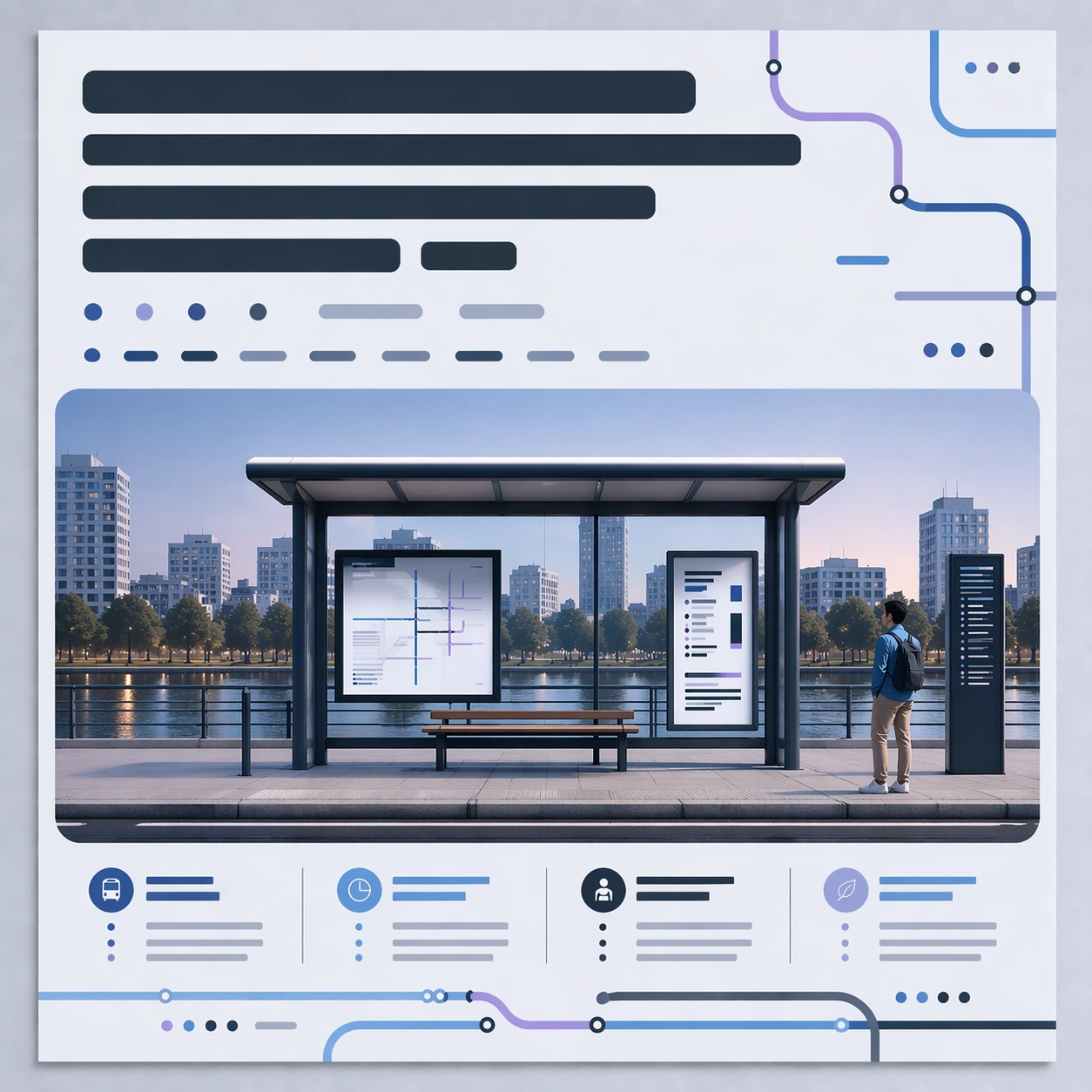
Square crop of the same transit campaign poster on the same neutral review wall, using the reference as the visual source. The image should look like the next conversational edit after the dusk and removal pass: still a flat poster, still straight-on, still carefully designed, but with a more prominent top heading zone and a cooler design temperature.

Subject:
Keep the dusk tram shelter scene, repaired empty left side, right pedestrian, central image panel, bottom abstract information blocks, margins, and poster identity from the reference. Enlarge the top abstract heading block so it occupies more vertical space and has stronger visual priority, while remaining unreadable and graphic. Shift the overall palette cooler: more blue, cyan, pale lavender, and graphite; less coral warmth. Preserve the warm horizon glow only as a subtle trace inside the illustrated scene.

Important details:
This edit tests whether a model can revise layout hierarchy without rebuilding the whole poster. The heading area should become bigger through careful reflow: nearby route shapes and abstract blocks adjust around it, but the composition stays balanced and recognizable. Avoid literal letters. The abstract heading can be thick bars, modular glyph-like marks, and poster-design shapes that imply larger text without being readable.

Use case:
Conversational Editing Workflow series study 3/8, showing a follow-up request that enlarges a nonreadable heading and cools the color system while preserving previous edits.

Constraints:
No readable text, no watermark, no logos, preserve exact 1:1 aspect ratio, no return of the removed left person, no hot orange redesign, no new poster topic, no visible editing handles, no distorted frame, no real transit map.
Jak używać
- Skopiuj cały oryginalny prompt wraz z parametrami.
- Dostosuj temat, tekst i kompozycję do swoich potrzeb.
- Użyj zgodnego narzędzia zewnętrznego; sprawdź warunki dostępu i wynik.
Przed rozpoczęciem
- Sprawdź, czy potrzebny jest obraz referencyjny. Zgodność nie potwierdza modelu użytego do przykładu.
- Sprawdź nazwy, liczby i napisy; wyniki zależą od wersji modelu.