Oryginalny dokument
GPT Image 2 · en
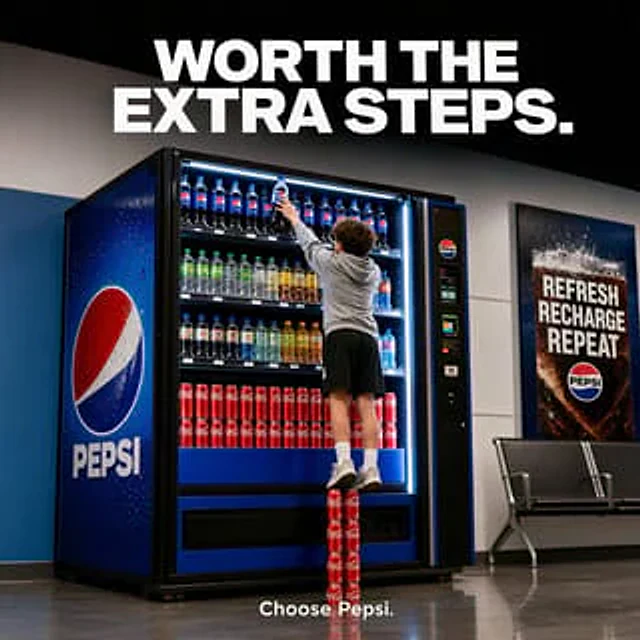
A sophisticated commercial photograph, set against the backdrop of a modern transportation hub or public waiting area, is shot from a frontal, slightly low angle. On the left and in the center of the frame is a giant, illuminated Pepsi vending machine. A young man in a light gray hoodie, black athletic shorts, white mid-calf socks, and white sneakers, with his back to the camera, stretches upwards, attempting to grab a bottle of Pepsi from the top shelf. He stands precariously on four red Coca-Cola cans stacked vertically on the floor, a visually humorous gesture conveying the message that "it's worth the extra steps for Pepsi." The vending machine has ample shelves, with bright, cool white lighting inside: the top shelf displays multiple bottles of Pepsi, the middle shelf showcases various clear, green, yellow, and amber bottled beverages, and the bottom shelf holds rows of red Coca-Cola cans. The vending machine is Pepsi blue, with a large Pepsi globe logo and the word "PEPSI" printed on the left panel, and a payment/control panel on the right. At the top of the image is a large, bold, white sans-serif headline.{argument name="headline text" default="WORTH THE EXTRA STEPS."} Center it on the dark-colored upper wall. Add a simple white sans-serif brand tagline at the bottom center.{argument name="tagline text" default="Choose Pepsi."} On the right wall hangs a framed Pepsi poster with the bold, stacked text "REFRESH RECHARGE REPEAT" and the Pepsi logo printed above it. A simple metal bench sits below the poster. The image employs a bright, reflective surface, sharp focus, a high-quality advertising photography feel, realistic proportions, high dynamic range, and a brand-safe composition that creates a strong contrast between Pepsi blue, Coca-Cola red, and neutral gray.Jak używać
- Skopiuj cały oryginalny prompt wraz z parametrami.
- Dostosuj temat, tekst i kompozycję do swoich potrzeb.
- Użyj zgodnego narzędzia zewnętrznego; sprawdź warunki dostępu i wynik.
Przed rozpoczęciem
- Sprawdź, czy potrzebny jest obraz referencyjny. Zgodność nie potwierdza modelu użytego do przykładu.
- Sprawdź nazwy, liczby i napisy; wyniki zależą od wersji modelu.