Oryginalny dokument
GPT Image 2 · en
Scene:
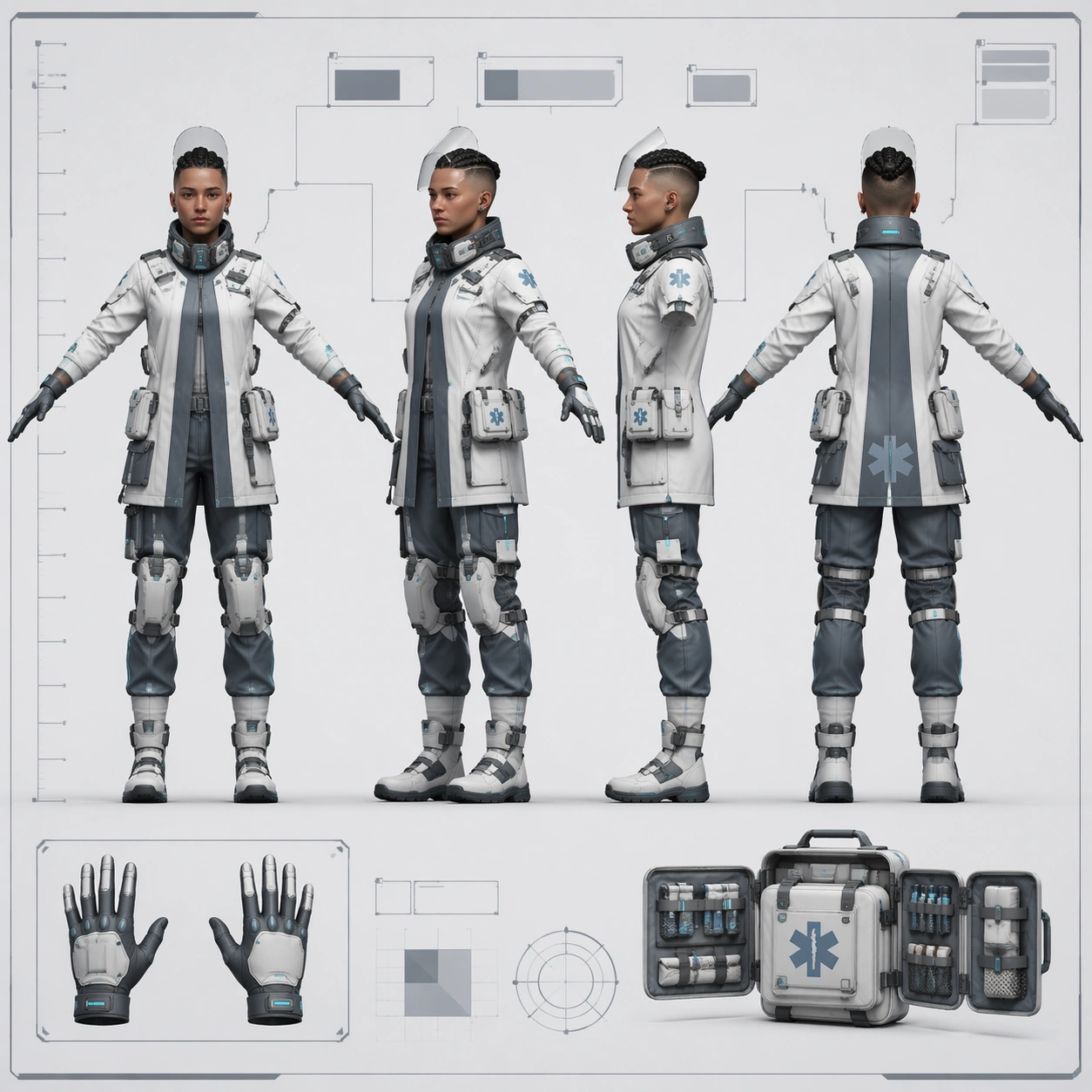
A square game-studio character turnaround sheet displayed as a pristine concept-art document on a pale clinical board. Lighting is even and cool, with crisp paper edges, faint guide lines, and clear negative space around the figures. The overall visual language is medical-industrial rather than cinematic, with quiet blue-gray tones and precise layout balance.

Subject:
Create one original arcology medic shown in four aligned full-body views on the same sheet: front, forty-five-degree, side, and back, all in a relaxed T-pose. The medic is a lean urban emergency specialist with shaved sides and a tightly braided crown, translucent face shield resting up, compact respirator collar, layered white and slate treatment jacket, soft cyan bio-monitor strips, articulated knee braces, and modular medical pouches distributed consistently around the waist. Include one or two secondary insets for gloved hands and a fold-out trauma kit, but keep the main four views dominant.

Important details:
This is a technical character sheet, so maintain exact identity and proportion consistency across all four views. Keep head size, shoulder width, coat seam placement, pouch count, brace geometry, and boot silhouette stable. Show believable material distinctions: wipe-clean fabric, translucent polymer visor, matte rubber seals, brushed clips, and reflective safety edging. Add a non-readable height ruler and abstract callout boxes with no letters. The sheet should feel ready for a production handoff, not like a poster or comic panel.

Use case:
Character Turnaround single study 5/8, testing a medical-industrial four-view sheet with strong technical-diagram discipline.

Constraints:
No readable text, no watermark, no logos, preserve exact 1:1 aspect ratio, no dramatic hospital background, no extra pose, no weapon, no floating hologram UI, no inconsistent pouch placement, no broken anatomy across views.
Jak używać
- Skopiuj cały oryginalny prompt wraz z parametrami.
- Dostosuj temat, tekst i kompozycję do swoich potrzeb.
- Użyj zgodnego narzędzia zewnętrznego; sprawdź warunki dostępu i wynik.
Przed rozpoczęciem
- Sprawdź, czy potrzebny jest obraz referencyjny. Zgodność nie potwierdza modelu użytego do przykładu.
- Sprawdź nazwy, liczby i napisy; wyniki zależą od wersji modelu.