原始文档
GPT Image 2 · en
Scene:
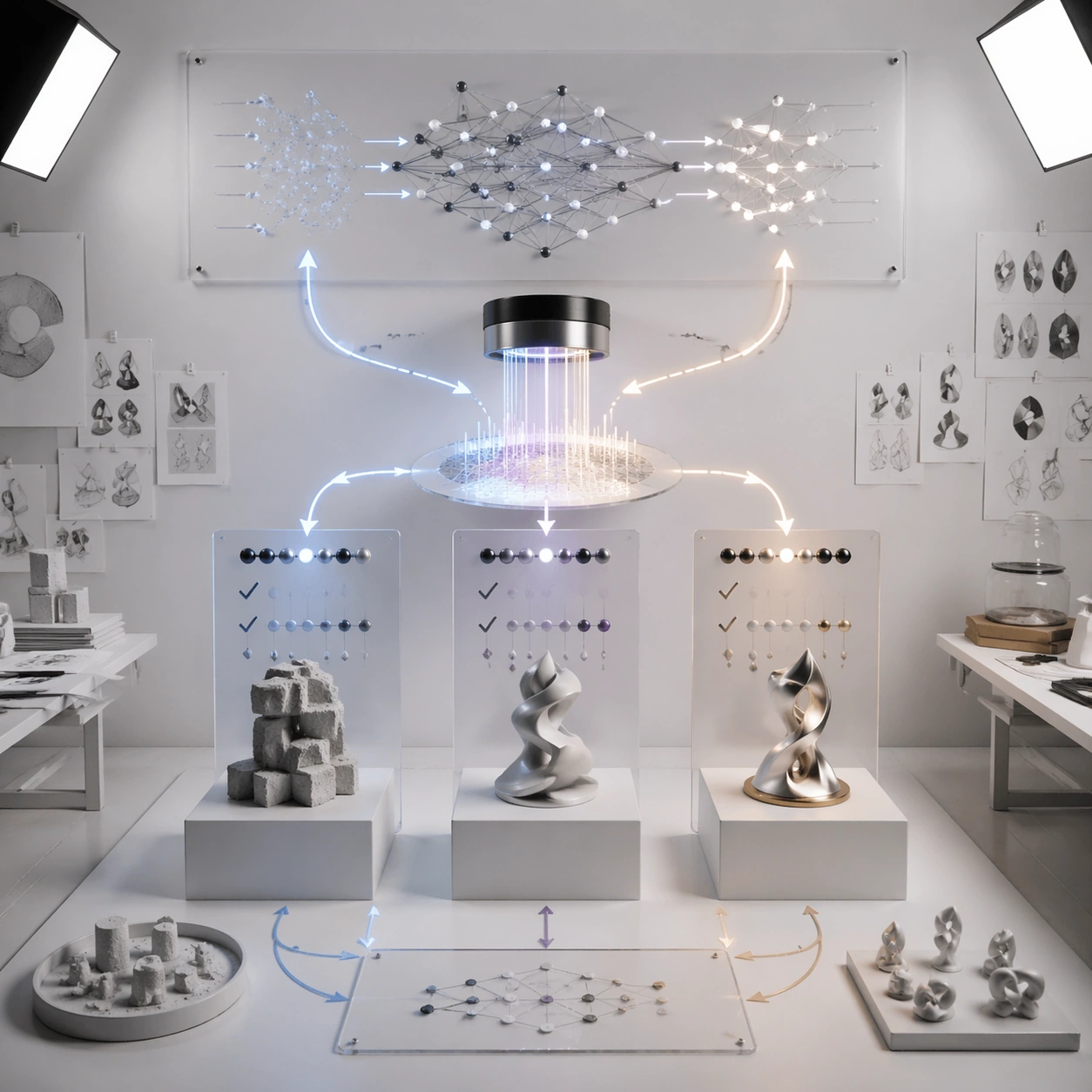
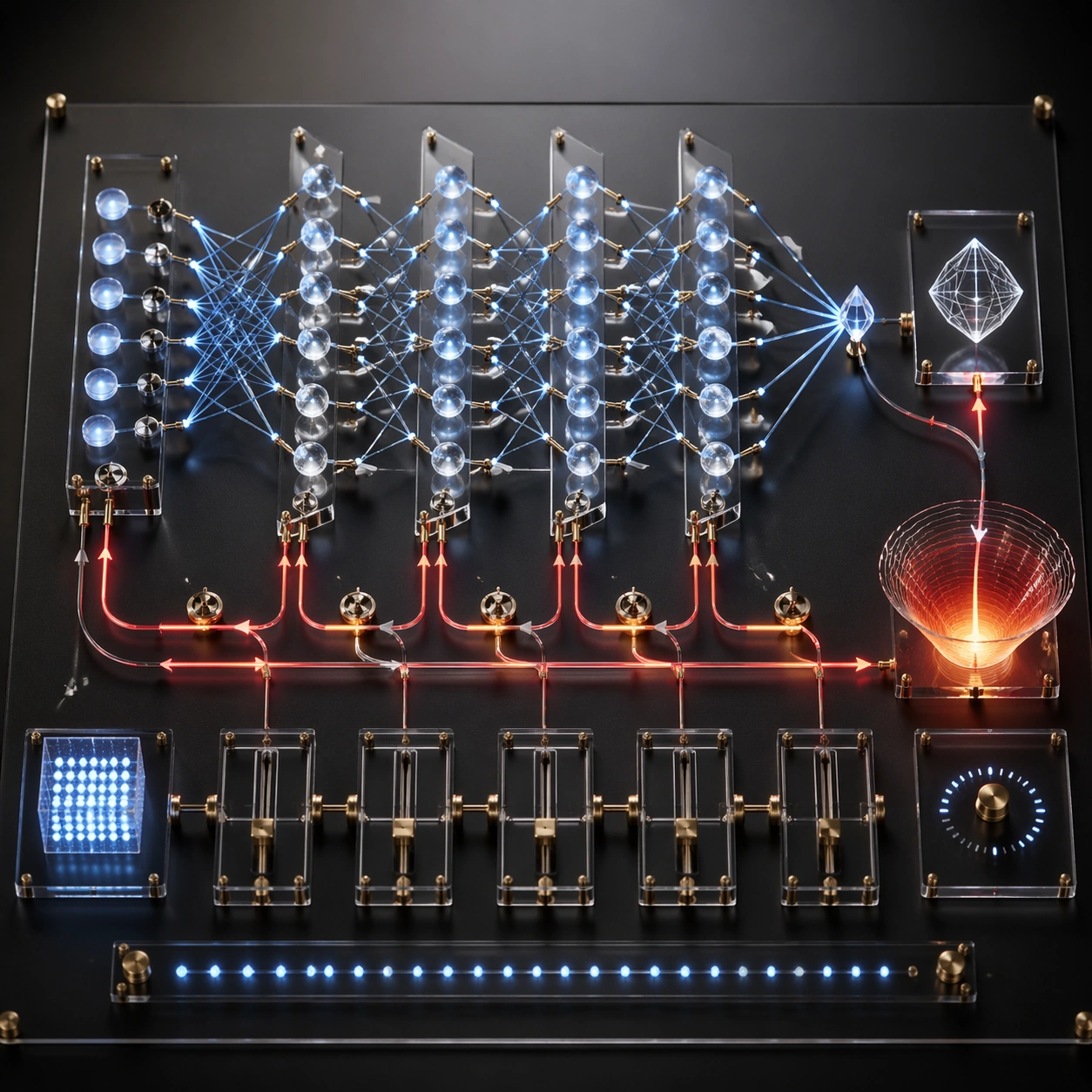
A square photoreal studio photograph of a technical workbench where a neural network explains how it learns. The surface is matte black with transparent acrylic layers, brass pins, fiber-optic lines, and precise shadows. Use controlled lab lighting, shallow depth of field, and a top-down three-quarter angle that keeps the full training loop visible.

Subject:
A physical backpropagation diagram built from miniature components. Forward activations travel left to right through stacked glass layers of nodes, producing a small output crystal. A red error signal returns right to left through thinner reverse paths, splitting into gradient arrows that adjust tiny weight dials between layers. Show loss as an abstract glowing basin, parameter updates as calibrated sliders, and learning progress as clean non-readable tick marks. The entire workbench should feel like the model has assembled a tabletop explanation of its own training cycle.

Important details:
The flow must be directional and coherent: inputs activate layers, output is compared to a target-like abstract shape, error propagates backward, gradients touch weights, and the next forward pass is implied. Use contrasting line styles for forward signal and backward correction. Keep nodes aligned in layers, avoid decorative circuitry, and make the weight adjustments physically attached to connections. The result should look rigorous but visually striking.

Use case:
Neural Network Self-Explanation single study 2/8, testing backpropagation as a physical workbench with forward activations and backward gradient flow.

Constraints:
No readable text, no watermark, no logos, preserve exact 1:1 aspect ratio, no real equations, no code, no brand hardware, no random circuit-board texture, no tangled arrows, no private chain-of-thought, no human hands, no disconnected update dials.
使用方法
- 复制完整原始提示词,并保留其中的参数。
- 按需求替换主体、文字和构图要求。
- 在兼容的外部工具中使用,核对当前使用条件并检查结果。
开始前需了解
- 先确认是否需要参考图。标注兼容模型,不代表该示例由这个模型生成。
- 核对名称、数字与画面文字;不同模型版本的结果可能不同。