
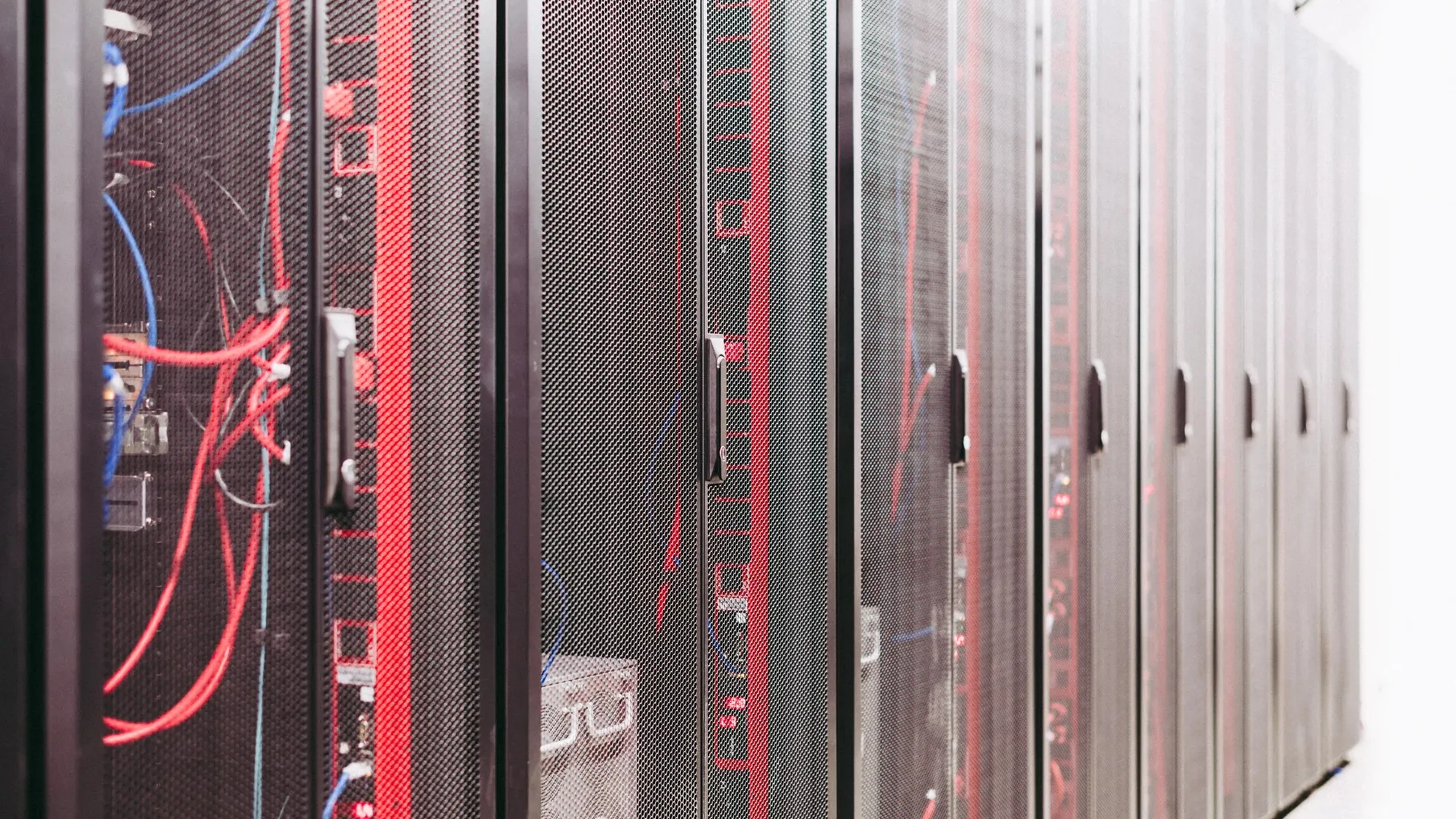
Accelsius announced a multi-megawatt upgrade to its Springdale laboratory in Austin on October 12, using the Open Compute Project Global Summit to position two-phase cooling for denser AI infrastructure. The company also plans another 18,000 square feet of leased space in January 2027. The expansion is intended to test complete racks and customer configurations, not merely individual components.
The commercial backdrop is a roadmap toward 600-kilowatt racks in 2027 and later megawatt-class racks or pods. Those are anticipated design requirements, not a description of the typical installed data center. Building a test facility ahead of that hardware can expose thermal and maintenance limits while customers still have time to change their buildings.
The published B200 comparison gives the story specific numbers
Accelsius described testing by a third-party systems integrator on an eight-GPU NVIDIA B200 server across roughly 40,000 operating points. The public summary did not name that integrator. Its results are therefore reported through the vendor and need to retain the tested configuration rather than become universal comparisons.
In one warm-water case, NeuCool reportedly kept B200 junction temperatures nine degrees Celsius below the original single-phase system. Accelsius also said it matched the single-phase system's performance at a 45°C water inlet while using a 54°C inlet. These describe specific thermal conditions, not a promise that every facility can raise its water temperature by nine degrees without other changes.
Increasing facility-water flow from 1.5 to 3.0 liters per minute reportedly expanded the temperature advantage to 14°C. The company said that arrangement supported supply water as warm as 59°C. Flow and configuration belong beside the temperature claim: omitting them can make unlike systems appear directly comparable.
Accelsius further says each one-degree increase in facility-water temperature can correspond to roughly four percent annual cooling-energy savings. That is a company claim whose actual outcome depends on weather, heat-rejection equipment, utilization and operating hours. It cannot be applied mechanically to the temperature differences above to calculate a guaranteed whole-data-center saving.
The competition and service problem extend beyond one lab
Two-phase cooling boils a refrigerant near the heat source and condenses it elsewhere. The latent-heat mechanism can support warm facility water, but pressure, fluid distribution and service requirements remain part of the system. Accelsius describes keeping water outside the IT rack; that does not make the whole facility free of a water loop.
Competing supplier ZutaCore worked with SoftBank and Foxconn on an NVIDIA H200 rack. The participating companies reported a partial power usage effectiveness of 1.03 in a 2025 demonstration and passage of NVIDIA NVQual temperature testing. Partial PUE and a demonstration are not equivalent to annual whole-facility efficiency or production availability.
Accelsius has announced an IR150 installation at the EdgeConneX Global Training Center in Houston. Training gives technicians a place to learn unfamiliar deployment and servicing, while a training site still differs from a cluster with continuous customer commitments. The company also describes its refrigerant as A1-classified with low global-warming potential; fluid documentation, supply and applicable handling requirements remain necessary.
Central Texas's summers above 100°F give the Austin facility a useful setting for hot-weather tests. The outstanding question is whether those trials produce disclosed, repeatable qualifications for real multi-rack installations. More laboratory power makes that work possible; it does not settle the outcome.
Separate the laboratory from the product rating
A laboratory power supply is not a commercial cooling rating. Accelsius's existing IR150 supports up to 150 kilowatts, while the MR250 supports more than 250 kilowatts per rack in supported configurations. The company has announced a 375-kilowatt-capable unit. Those figures should not be blended into a claim that an available product already handles a megawatt.
The distinction matters because a cold plate can succeed while the complete installation encounters flow, control or heat-rejection limits. Qualification must connect processors, refrigerant circuits, the coolant distribution unit and the facility water loop. It should also distinguish electrical load banks from representative operating servers.
Product specifications and qualification still leave gaps
Accelsius explicitly says the laboratory can power one rack above one megawatt or multiple racks at current high densities. That is a claimed test capability, not a commercially qualified product rating. The company has not disclosed the exact electrical ceiling, equipment list or test schedule.
The IR150 combines 42U of usable IT space and integrated liquid and vapor manifolds in an 800-millimeter-wide enclosure. Its stated support for facility water up to 45°C is a product specification distinct from the 54°C and 59°C conditions in the particular B200 comparisons. Those experiments do not automatically raise the product's supported rating.
The company calls its customer qualification program HyperStart and says several hyperscalers participate. It has not named them or disclosed the number, scale, duration or results of their evaluations. Confidential testing shows interest, not a committed production pipeline. These missing disclosures are why the expanded lab should be judged by transparent qualifications rather than electrical size alone.
Test failure and maintenance, not only peak heat
A useful qualification plan includes rapid workload changes, pump failure, sensor faults, blocked paths and partial shutdowns. Ask whether a problem stays within one rack or affects a shared row. Higher shared capacity may improve utilization while increasing the consequence of an outage.
Service requirements belong beside thermal figures. Buyers need replacement procedures, spares, training, alarm behavior and recovery times. They should also examine refrigerant safety, environmental properties, supply continuity and end-of-life handling. A dielectric fluid still requires disciplined containment and maintenance.
Anonymous hyperscaler evaluations and a training-center installation show interest but do not establish broad production reliability. Named reference designs, sustained multi-rack operation and disclosed service data provide stronger evidence.
The practical next step is a test protocol based on the buyer's intended servers, water temperatures and redundancy requirements. A larger lab is valuable when it exposes integration limits before construction choices become expensive. Its success should be judged by repeatable production qualification, rather than the size of the electrical connection alone.