
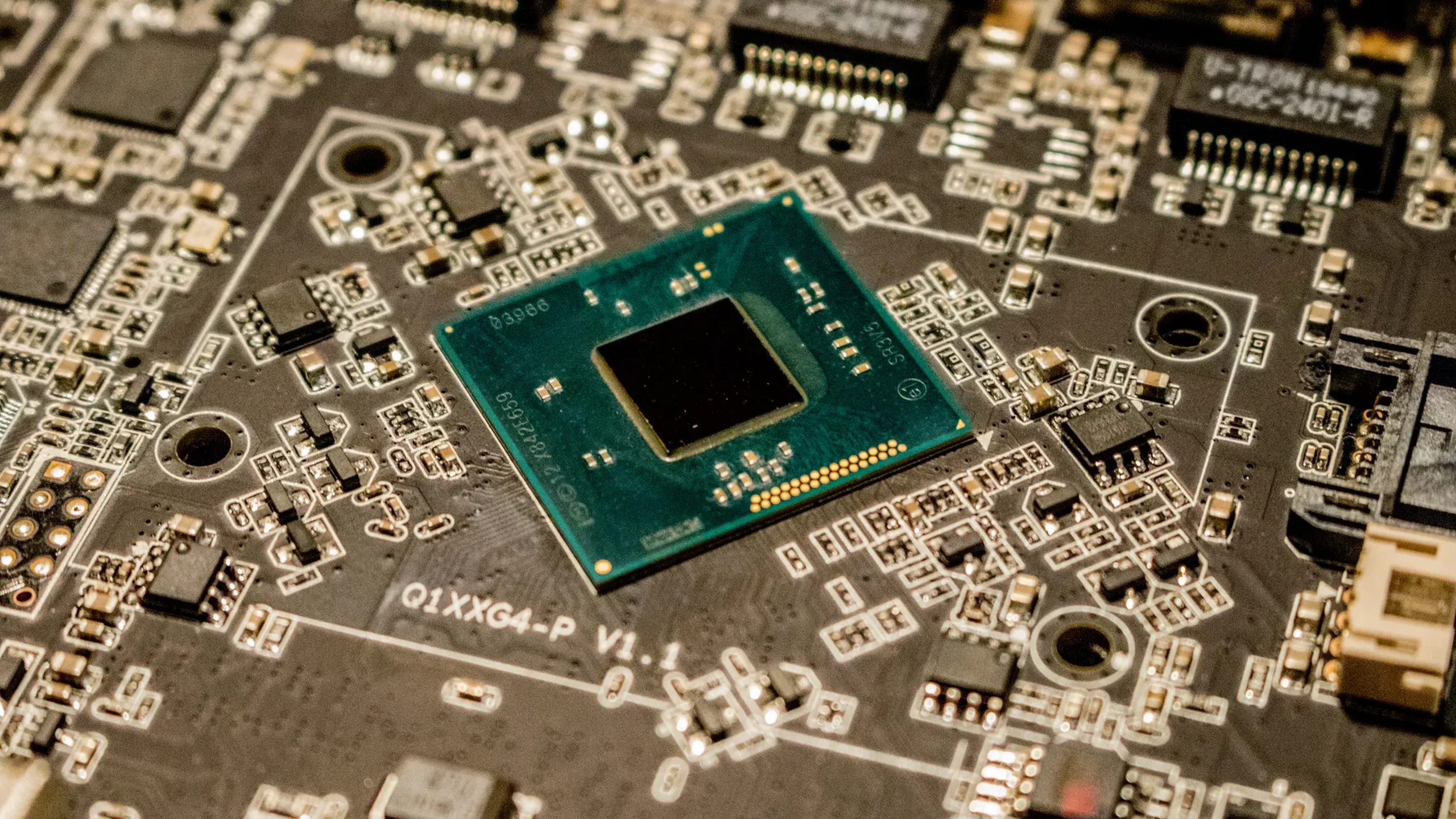
GlobalFoundries’ five-year agreement to make silicon interposers for TSMC adds a specific American manufacturing step beneath future AI accelerators. It does not move TSMC’s leading-edge processor production to GlobalFoundries, and it does not yet establish a complete domestic CoWoS chain.
The supplier will expand capacity at Malta, New York, with volume production scheduled to ramp in the first half of 2028. That leaves process transfer, qualification and yield improvement between the signed agreement and usable output. The location is strategically significant; the remaining schedule and integration details are equally important.
A processor fabricated in Arizona is still not a finished accelerator. It needs connections to high-bandwidth memory, a substrate, assembly, testing and customer qualification. The agreement addresses one of those requirements rather than making the rest disappear.
Why a piece of silicon can determine accelerator supply
An interposer sits beneath compute dies and memory stacks and provides dense, short electrical connections. AI accelerators depend on moving substantial data between processing engines and high-bandwidth memory, or HBM. Longer paths can increase both energy use and latency.
TSMC’s CoWoS—Chip on Wafer on Substrate—combines these components into a package. CoWoS-S uses a silicon interposer with dense routing and embedded capacitors. CoWoS-R and CoWoS-L use different combinations of redistribution layers and local silicon connections, as described in TSMC’s 3DFabric material. CoWoS is therefore a family, not one immutable interposer design.
GlobalFoundries’ announcement also identifies embedded deep-trench capacitor components, which support power delivery near densely packed dies. Its role is a specialized manufacturing input to that ecosystem, not fabrication of the main AI processor on TSMC’s most advanced node.
The company calls Malta the first American source of silicon interposers supporting advanced packaging and provides for capacity expansion with demand. A five-year relationship supports investment and qualification beyond a small demonstration. It does not disclose the usable wafer capacity, unit output or specific customer programs that will result.
A possible domestic route, with an unconfirmed final destination
TSMC’s first Arizona fab entered high-volume production in late 2024, according to its later reporting. Its wider US expansion includes further logic factories, two planned advanced packaging facilities and research capacity. The interposer agreement could connect an additional specialized supplier to that footprint.
Amkor is another part of the potential route. TSMC and Amkor have agreed to work together on advanced packaging and testing in Arizona, including CoWoS and Integrated Fan-Out for shared customers. The Commerce Department’s award for Amkor’s Peoria project connects advanced packaging with AI and high-performance computing demand.
Taken together, the projects suggest logic dies from Arizona, interposers from New York and assembly and testing in Arizona. That could reduce trans-Pacific movement between major stages. It is a plausible production chain, not a publicly confirmed allocation of every Malta interposer.
The local source reporting notes that the companies have not confirmed whether Malta output will specifically go to Arizona or exactly how TSMC and Amkor divide assembly work by customer or generation. New York parts could also supply TSMC’s global network. Both uses add capacity; only the domestic assembly route directly supports the strongest end-to-end US interpretation.
Even that route would not mean an entirely American bill of materials. HBM, substrates, tools, chemicals and other inputs remain globally sourced. SK hynix, Samsung and Micron participate in memory networks with substantial Asian manufacturing. The value is a second qualified geography and reduced concentration, not national origin for every input.
Cooperation between foundries with different strengths
The agreement looks unusual if foundries are viewed only as direct competitors. TSMC concentrates on advanced logic and its packaging ecosystem; GlobalFoundries emphasizes specialty technologies and established nodes. Interposers allow the latter to participate in valuable AI systems without manufacturing their main processor.
TSMC retains platform and customer relationships while sourcing a qualified component from an existing US factory. This differs from building every stage internally. Specialized equipment, workforce experience, manufacturing scale and customer validation can make a partnership more practical than duplicating them all.
It also differs from loose outsourcing. Electrical, thermal, reliability and yield requirements must remain consistent across organizational boundaries. Process compatibility, traceability, intellectual property and responsibility for failures become part of the operating system.
Intel’s EMIB and Foveros offer alternative chiplet-connection and stacking approaches, while Samsung combines memory, logic and packaging within one group. Those structures can argue for internal coordination. TSMC’s ecosystem approach argues for partner specialization and flexibility. Factory announcements alone cannot settle the comparison; completed packages delivered predictably will.
The 2028 start has to match the hardware arriving then
The time before the ramp is not idle. Package size, memory standards, power and routing density evolve with accelerator roadmaps. A qualified process must meet requirements in 2028, not merely reproduce a design that was sufficient when the deal was signed.
No particular Nvidia, AMD, cloud or custom-silicon program is confirmed as a customer. Their industry demand explains the opportunity, but it should not be converted into named participation. The same caution applies to assuming every CoWoS generation will use the same GlobalFoundries component.
Large interposers need thousands of reliable connections while managing mechanical and thermal stress. A defect in the completed package can waste valuable compute dies and several HBM stacks, making stable yield especially important. Equipment installation and nominal factory capacity do not establish that readiness.
Sampling, process qualification and repeatable output are stronger evidence. Capacity allocation also matters when multiple customers compete for supply: a framework for expansion does not explain priorities or guarantee that every requested package ships.
Domestic transport remains logistics. New York and Arizona are thousands of miles apart, requiring protected components, traceability and synchronized schedules. Avoiding ocean crossings does not eliminate movement risk. A supply agreement has to become a coordinated manufacturing process.
More optionality, not immediate cheaper AI
Current accelerator orders cannot move into capacity still being prepared. Future generations may gain geographic flexibility, supply assurance and a route relevant to sensitive or government procurement. Customers will still weigh lead times, package performance, reservation terms and yield, not location alone.
Packaging technology itself is also moving. Silicon bridges, redistribution-layer interposers, fan-out and panel-level approaches offer different compromises among density, size, cost and manufacturability. GlobalFoundries needs to remain useful as TSMC’s own CoWoS variants evolve.
More interposers would ease only one constraint. HBM, networking, power, cooling and data-center construction can still limit delivered AI infrastructure. The agreement therefore does not automatically reduce accelerator prices or change developers’ software capabilities today.
The next meaningful evidence is qualification progress, a disclosed assembly route and committed production demand. Named customers may remain confidential, but sampling, reservations or secured-demand statements can still clarify readiness. Expanded scope across later generations would indicate confidence; narrow supplemental output would imply a smaller strategic role.
The agreement gives American advanced packaging a more credible component map. Its decisive test is operational: whether interposers, logic, memory and assembly can work as one qualified system on the relevant schedule. Until then, the contract marks a route toward diversification rather than proof that the entire route is already running.