
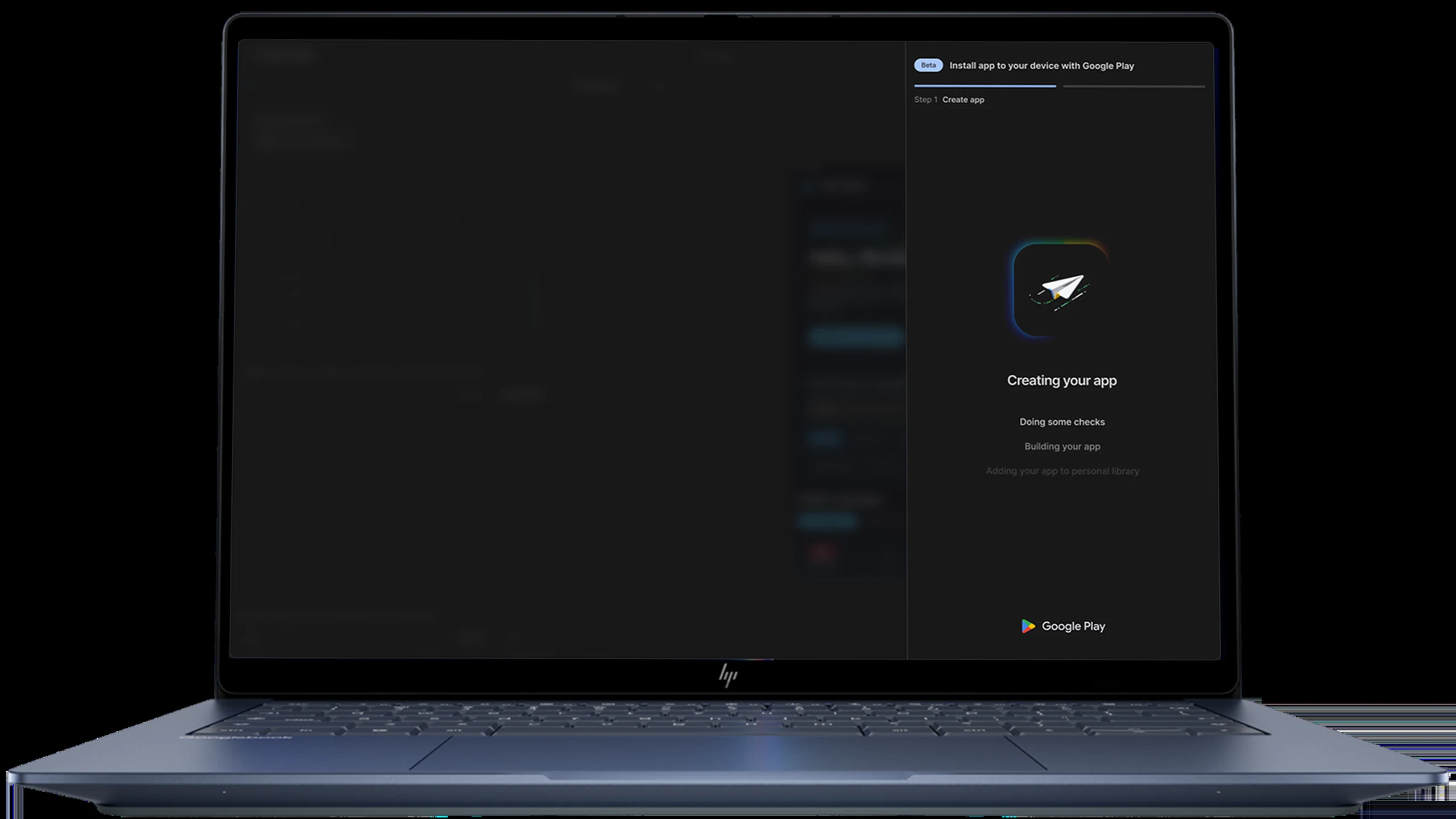
An app no longer needs a public audience to earn a place in Google Play. Announced October 13, Google's new personal-app route lets adults in selected markets build native Android software in Google AI Studio and launch it through Play with a standard Google account. A professional developer account is not required for this private use.
The important change is distribution rather than code generation. AI builders already made prototypes easy; signing, packaging, installation and release administration remained a separate obstacle. Google is separating the act of putting a useful tool on one person's phone from the decision to publish a product to strangers.
What the new route permits—and what it does not
The Play announcement describes apps held outside the searchable public catalog. Other Play users cannot discover or install the creator's private app. Initial availability is for people aged 18 and over in selected markets, including the United States; Google has not supplied a complete market list.
Sharing with a close circle of friends or family is planned for the coming months, not part of the initial capability. Wider public distribution requires graduation to a professional developer account and the usual trust, safety and quality reviews. The announcement therefore does not abolish public-store safeguards; it creates a different starting point before that boundary.
This builds on Google I/O's earlier AI Studio changes, including native Android generation and one-click publishing to Play's internal testing track for registered developers. The new consumer route removes that initial professional identity requirement. It is also distinct from managed organizational private apps, which use developer accounts and enterprise administration.
A personal calculator, collection inventory or classroom timer need not compete for search ranking, reviews or subscriptions. A caregiver's checklist can use one family's vocabulary; a travel tool may exist for one trip. The narrow audience is the purpose, not evidence of an unfinished mass-market product.
Native delivery challenges the browser's convenience advantage
Natural-language development works well for small web projects because a browser and private URL handle much of distribution across phones and computers. Native Android adds builds, signing, packages, installation and updates. Public release adds identity checks, testing, policy declarations and listing assets, even when only the creator wants the result.
Sideloading APK files can avoid a public launch but leaves users managing file transfers, warnings, signing choices and manual updates. Those burdens also risk making unfamiliar downloads feel routine to people who cannot inspect generated code. Play provides a familiar installation surface and an existing device relationship.
Native access can be valuable for notifications, offline storage, cameras and location. Reducing delivery friction changes the trade-off for personal tools that previously became websites mainly because publishing them was easier. It does not establish that every project benefits from native permissions or that a web builder has lost its cross-platform advantages.
Google gains a connected path: AI Studio creates the app, Android runs it, Play manages its arrival and a developer account can later support expansion. That integration is harder for browser-only builders to reproduce. It can also reveal where personal projects outgrow their original scope, although Google has not disclosed adoption targets or durable-use results.
Private describes reach, not confidentiality
An unlisted personal app can still contain exposed credentials, broken authentication, insecure storage, incomplete validation or placeholder behavior. A 2026 software-security study found that better models and prompts can reduce vulnerabilities without removing their underlying causes. AI assistance changes who writes implementation, not who bears its consequences.
A health diary may mishandle sensitive records; a household utility may request unnecessary contacts or location access; a finance tracker may leak account information. A single user limits the immediate number of people exposed, not the seriousness of the data involved. A standard Google account supplies an identity link, not proof of engineering competence.
Google says personal creations remain subject to Play policies, but its announcement does not fully detail the checks before a creator's private installation. Explicit full review at professional publication leaves questions about the earlier stage. Malware scanning, secret detection, permission restrictions and component checks are possible controls, not confirmed specifics of this rollout.
Nor does 'private' mean local-only processing. The term describes distribution visibility: the application could still send data to a cloud service or expose an API key. Google's other developer-verification requirements on unmanaged Play Protect-certified devices should not be assumed identical to this managed AI Studio route; the announcement supplies no full technical comparison.
Small-circle sharing changes who accepts the risk
Single-user software embodies its creator's assumptions and mistakes. Sharing with family, a club or a classroom brings in people who neither generated nor inspected it. Absence from public search can coexist with dozens of users and consequential information.
Trust in the sender may suppress the caution applied to an unfamiliar download. Clear descriptions of permissions, data destinations, authorship and review status become especially important. Google has not explained group-size limits, review triggers, permission boundaries or who must maintain updates when close-circle sharing begins.
Too much friction would recreate the professional publication burden; too little could turn trusted-group distribution into a bypass around public safeguards. The graduation boundary therefore needs to reflect reach and behavior, not merely whether an app appears in search. Google's account guidance, including testing requirements for newer personal developer accounts, already distinguishes creating software from proving it ready for production.
Professional engineering also remains necessary when a successful private tool grows. An implementation adequate for one person may need architectural changes, auditing, debugging and support before serving hundreds. AI Studio does not replace Android Studio's deeper engineering functions. A successful personal test is not evidence of production readiness.
The unanswered details decide whether convenience lasts
Google has not specified all storage limits, quotas, update behavior, supported permissions or the lifetime of inactive projects. Those details determine whether a personal app remains dependable after its first demonstration. Records of prompts, requirements, changes and tests can help later diagnosis, but documentation alone does not repair unsafe code.
The meaningful signals are repeated use rather than novelty, a clear sharing model and well-tested projects graduating to public release. Rapid abandonment or a flood of rejected submissions would expose the gap between generation and maintenance. Google has not published figures that settle those questions.
The immediate opportunity is narrower and useful: a verifiable, low-risk task can become installed software without first acquiring a mass-market rationale. Creators still need to test missing or malformed inputs, avoid unnecessary permissions and understand where data goes. Play installation is a delivery improvement—not certification that generated software is correct, confidential or ready for everyone.
Related reading on preserving working context: technical-document knowledge bases.