
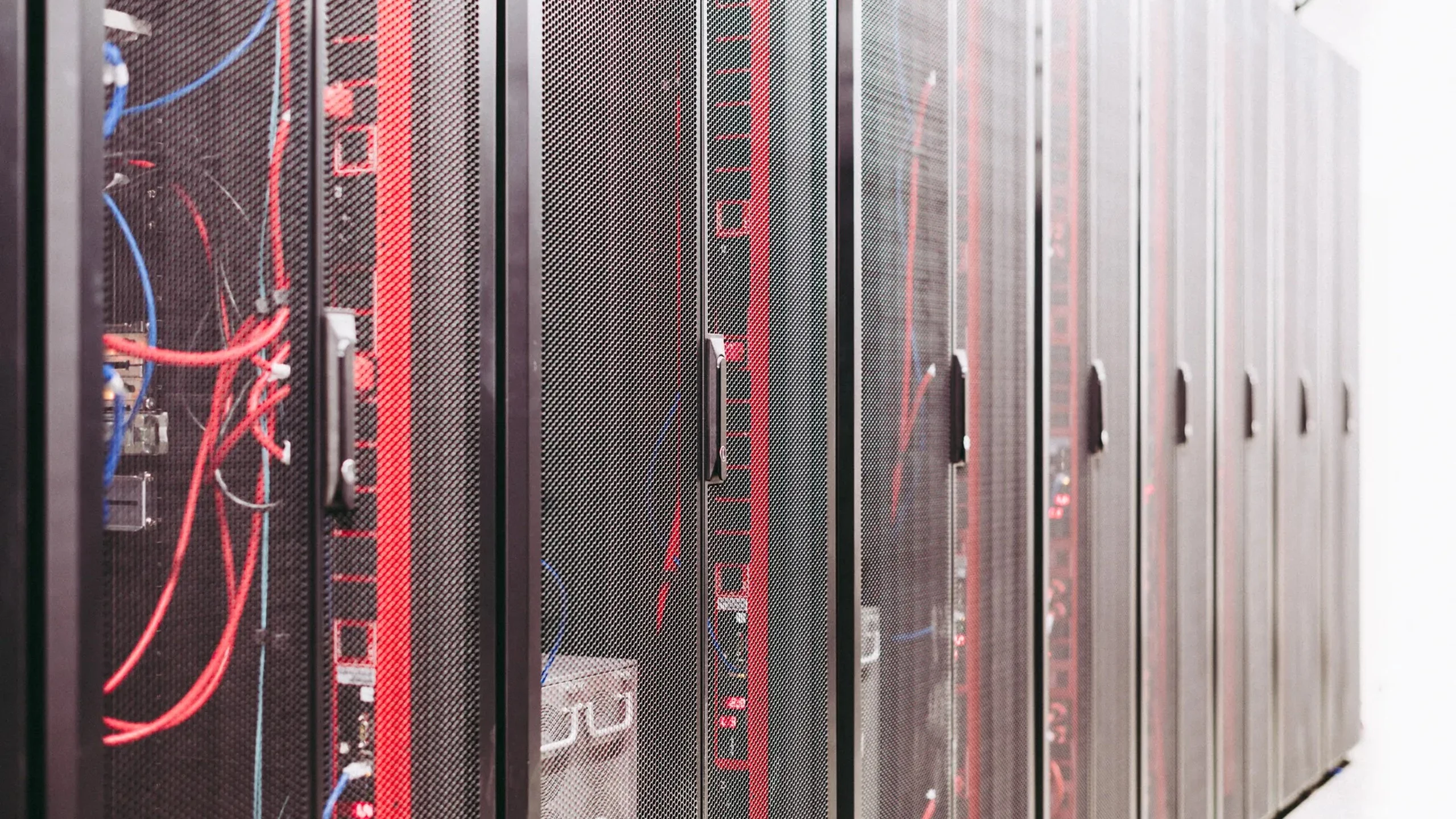
A cooling system can hold up an AI data center even after its servers arrive. LG Electronics is responding to that physical constraint with KRW 150 billion for a new chiller factory in Windsor, Virginia, and additional production lines in Pyeongtaek and Changwon, South Korea. The investment, announced October 1, 2026, puts manufacturing capacity behind the company’s ambition to supply the thermal path from processor to outdoor heat rejection.
Windsor is scheduled to begin making air-cooled chillers in the first half of 2027. LG describes roughly 30,000 square meters of floor space on a 170,000-square-meter site; the Korean announcement lists the building at 32,000 square meters. That disclosure difference should remain visible rather than being silently resolved. More importantly, neither the expanded network’s planned output nor customer commitments specifically tied to Virginia were disclosed. Capital committed is not demand secured.
Manufacturing closer to the load
Virginia offers proximity to a major concentration of data-center infrastructure. Shorter delivery routes could improve access to equipment, spares and technical support. Chillers must be coordinated with electrical capacity, water systems, rack density, controls and redundancy, rather than selected as interchangeable boxes after construction. Local production gives LG more influence over one delivery bottleneck, not control over the whole project.
The Korean sites are adding air-cooled chiller lines with conveyor-based production. Large industrial chillers have traditionally required extensive project-specific assembly and testing. A standardized sequence suggests LG expects repeatable orders, potentially spanning comparable systems across campuses. It also converts that expectation into factories, labor and capital that need productive utilization.
The North American timing is consequential. A first-half 2027 start leaves work to complete the facility, hire and train workers, install equipment, qualify products and stabilize quality from early shipments. A nearby assembly plant does not localize every compressor, motor, drive, heat exchanger, control, refrigerant or electrical component. Concentrated upstream supply can still extend lead times. Field-service engineers and commissioning teams must also scale with manufacturing.
Liquid at the chip does not make facility cooling disappear
An AI rack concentrates heat and electrical power around accelerators. A cold plate collects processor heat; a coolant distribution unit, or CDU, separates and controls facility water and the cleaner equipment loop. Pumps and heat exchangers carry the load onward. Chillers, dry coolers and outdoor rejection equipment ultimately send the heat away. Room air still handles environmental control and equipment whose heat density remains manageable.
LG calls its portfolio “Chip-to-Chiller,” spanning cold plates, CDUs, chillers and controls. Direct-to-chip liquid cooling can move concentrated heat more efficiently than pushing large amounts of conditioned air through a room, but collecting heat is not the same as removing it from the site. Conversely, warmer coolant and favorable weather may allow some designs to reject heat without conventional mechanical chilling. Neither liquid cooling nor chillers win universally across architectures.
Air-cooled chillers avoid the evaporative water requirement of a separate cooling tower. Water-cooled alternatives can be efficient but require towers and water treatment. Air-cooled performance varies with outdoor temperature, water temperatures, configuration and load, and may face efficiency pressure in hot weather. The practical balance includes water, electricity, capital, maintenance, climate, density and redundancy—not a blanket claim that one approach saves both resources everywhere.
LG’s September air-cooled centrifugal model illustrates the distinction between a component specification and site performance. The company says each unit delivers 1,750 kilowatts of cooling under specified data-center conditions and regains full cooling within three minutes after power returns. That is not three minutes from the beginning of an outage, and it only helps if pumps, controls, power and thermal buffers recover coherently.
Its oil-free magnetic-bearing compressor suspends rotating parts without conventional lubricated contact, reducing friction. Refrigerant free cooling can use favorable outdoor conditions to reduce compressor work. LG’s comparison with hydronic free cooling modeled lower annual energy use in Seoul’s climate, using internal simulations. It was not an independently verified savings figure across operating sites or climates.
LG also plans prefabricated hydronic modules containing pumps, a thermal-storage buffer tank and other components. Factory assembly can reduce on-site work and testing and allow phased additions as halls or clusters activate. Standard modules still need adaptation to weather, utility conditions, water quality, layouts and procedures. The Data Center Cooling Management system aims to coordinate assets, but disclosed field data are insufficient for a full comparison with established control platforms.
Poor control sequences can leave efficient hardware operating at unfavorable temperatures or loads. Power usage effectiveness compares total facility energy with computing-equipment energy; cooling can reduce the non-computing share. That ratio alone does not capture water use, redundancy, utilization, maintenance or workload patterns. System behavior, not the sum of attractive individual specifications, determines whether computing stays online.
The demand forecasts are not factory order books
The IEA estimates cooling at about 7% of electricity use in efficient hyperscale facilities and more than 30% in less-efficient enterprise data centers. Its energy analysis puts global data-center consumption around 415 TWh in 2024 and near 945 TWh in a 2030 base case. Those figures explain the industrial interest, but do not establish that every proposed campus will be built.
LG cites Omdia forecasts of global data-center capacity rising from 226 GW in 2026 to 420 GW in 2030, with 60% of added capacity in North America. The figures come through LG’s announcement rather than a publicly accessible Omdia report. They are a forecast supporting its investment case, not guaranteed capacity or contracted cooling sales.
The IEA also reported 17% growth in data-center electricity demand in 2025 and bottlenecks in transformers, gas turbines, approvals and grid connections. Five large technology companies spent more than $400 billion in capital in 2025; the agency expected another 75% increase in 2026. These totals extend beyond data centers, and spending plans can change.
Power, permits, financing, customers and server availability can delay a project after its cooling system is specified. Grid upgrades and substations can take years. Hardware efficiency and AI adoption add uncertainty: better models may reduce computing for a task, while lower costs can increase total use. Strong long-term interest therefore need not translate into orders on the timetable a new factory needs.
Integration faces well-established competitors
Schneider Electric’s acquisition of Motivair supports an end-to-end offer including cold plates, CDUs, rear-door heat exchangers, chillers and technology cooling loops, alongside power, automation and services. Vertiv similarly combines power distribution, thermal management, monitoring and deployment. Established service networks, specialist liquid-cooling vendors and hyperscalers’ own engineering all limit how much advantage LG can claim from portfolio breadth alone.
LG has evidence beyond a product catalogue. In July 2026 Nvidia validated its 600-kilowatt CDU, with LG saying evaluation covered more than 100 criteria related to Nvidia infrastructure standards. CDU performance affects pressure, temperature, flow, reliability and leak management. The validation reduces one procurement uncertainty, but does not certify every LG component or guarantee every facility design.
In Jakarta, LG is supplying cooling for a Sinar Mas Group hyperscale AI data center scheduled to operate in the second half of 2026. LG Electronics contributes thermal equipment and LG CNS contributes design, construction and operations capabilities. The “One LG” approach can combine cooling, batteries and infrastructure work around a facility; the scheduled project is not yet proof of repeatable operating performance across climates.
LG has supplied data-center cooling for more than a decade, building on industrial chiller experience in power plants, factories and commercial buildings. AI facilities nevertheless introduce rapid load changes, denser racks, evolving processors and demanding uptime requirements. Integrated responsibility could reduce finger-pointing between suppliers, but a wider contract also increases coordination risk across LG affiliates and outside contractors.
The company previously targeted annual chiller sales equivalent to $720 million and more than tripling data-center cooling orders over two years. Those remain targets, not confirmed future results. Chiller-only orders would support factory demand without demonstrating adoption of the whole thermal architecture. Contracts combining chillers, CDUs, controls and service would make the integration case stronger.
Windsor’s production schedule, named contracted projects and measured field performance will therefore carry more weight than the factory announcement alone. Delivered capacity, annual energy and water use, fault recovery, maintenance effort and computing uptime can show whether the system works. Three factories strengthen the supply side; turning that capacity into timely, maintainable installations is the competitive test still ahead.
Sources
LG’s three-factory announcement; IEA energy-demand analysis; Schneider Electric and Motivair portfolio; LG 600-kilowatt CDU validation; IEA electricity and bottleneck outlook; original reporting’s aggregation entry.