Original document
GPT Image 2 · en
Scene:
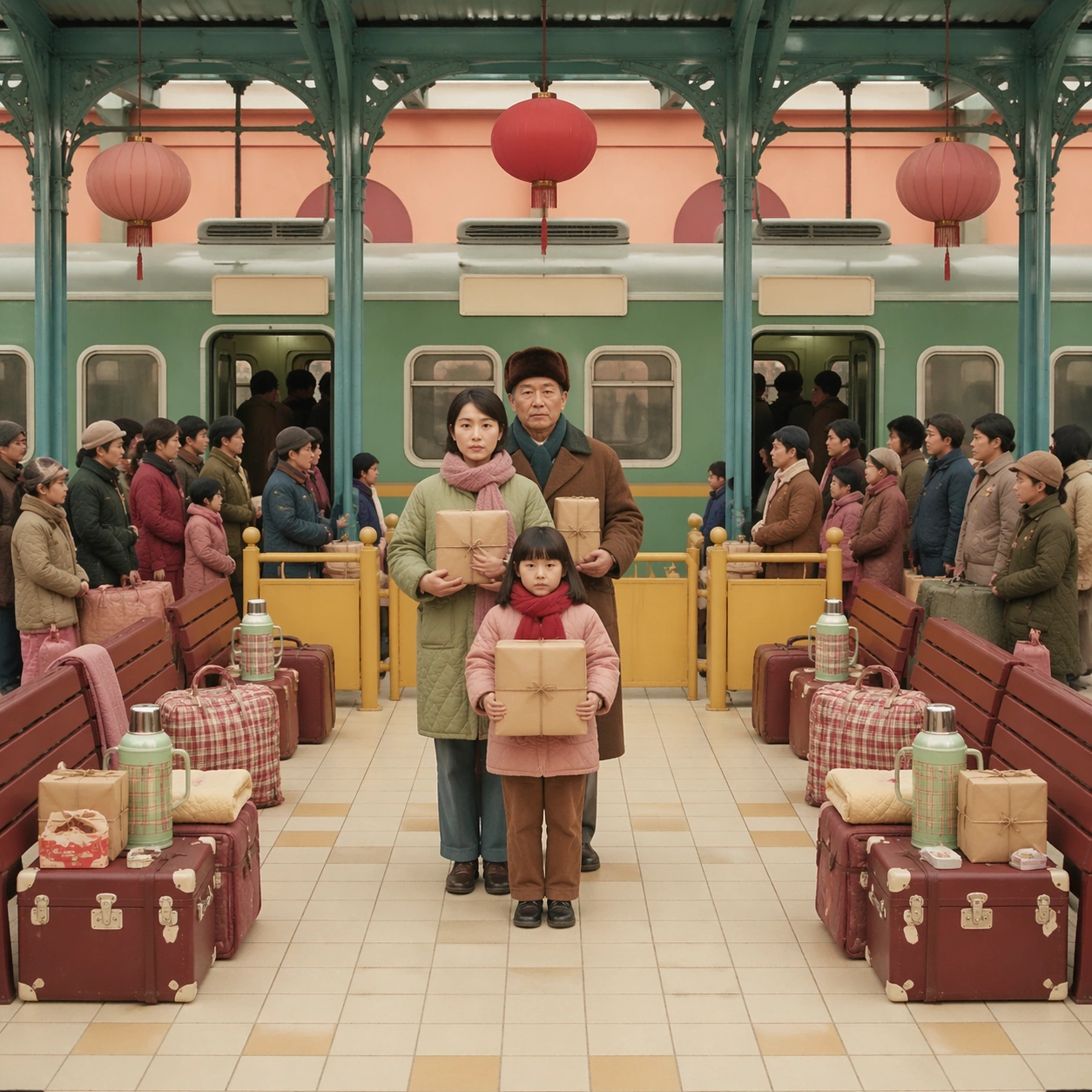
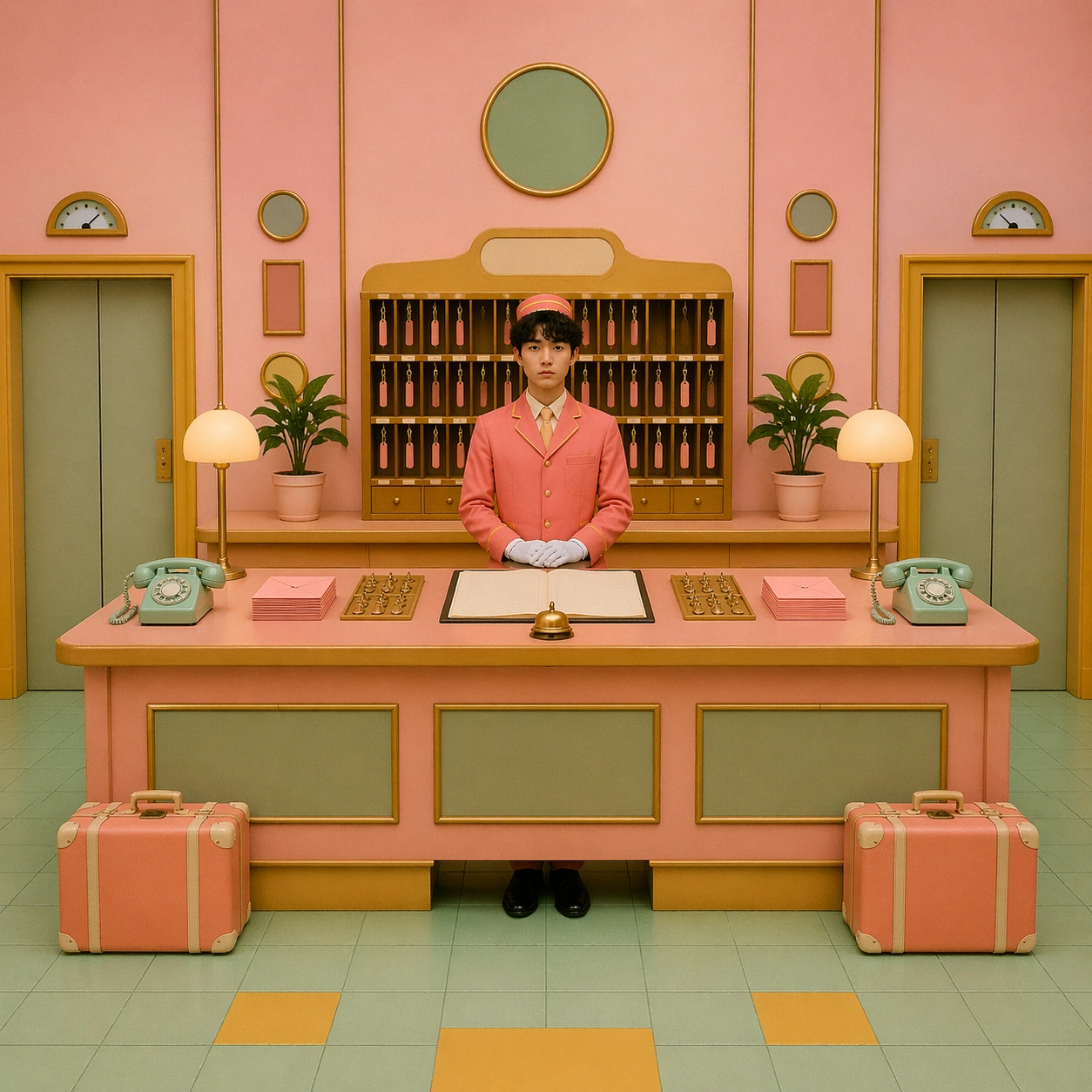
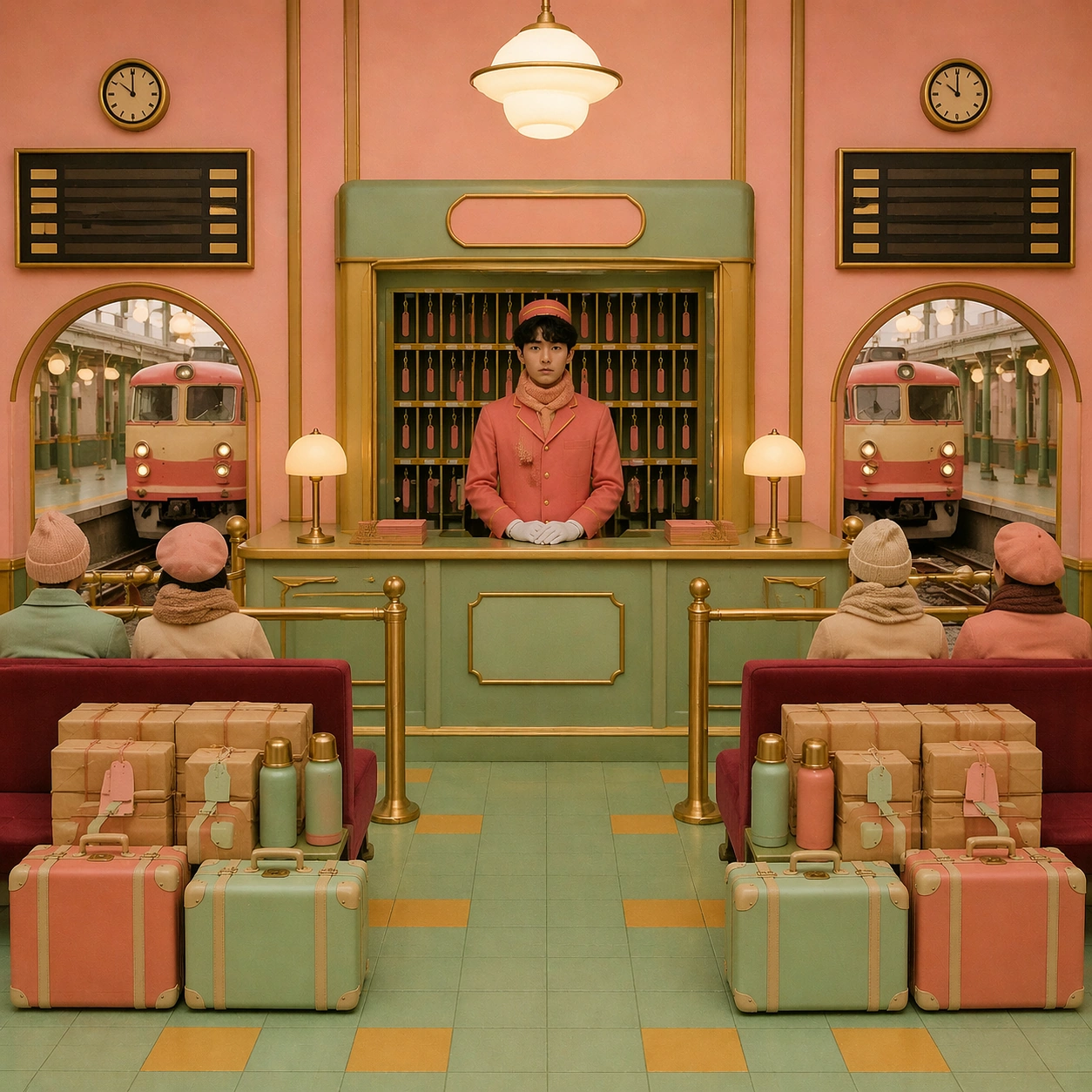
A square, straight-on ticket hall for an imaginary winter rail station during a peak travel season, staged like a handcrafted miniature set. The camera faces the counter head-on, with the centerline running through the clerk, ticket window, ceiling lamp, floor tile seam, and distant platform doorway. Use warm ivory lighting, dusty rose walls, celadon ticket counters, burgundy benches, brass railings, and neat rows of small luggage arranged as mirrored color blocks.

Subject:
The same central clerk from the reference image stands behind the ticket window, facing the viewer with the same neutral expression and compact posture. The coral uniform remains recognizable, now with a wool scarf and square cap suitable for a rail station. On both sides are paired travelers seen only as simplified seated silhouettes or partial shoulders, symmetrical stacks of parcels tied with string, matching thermos bottles, blank departure boards, and two arched platform doors framing a small train nose in the background.

Important details:
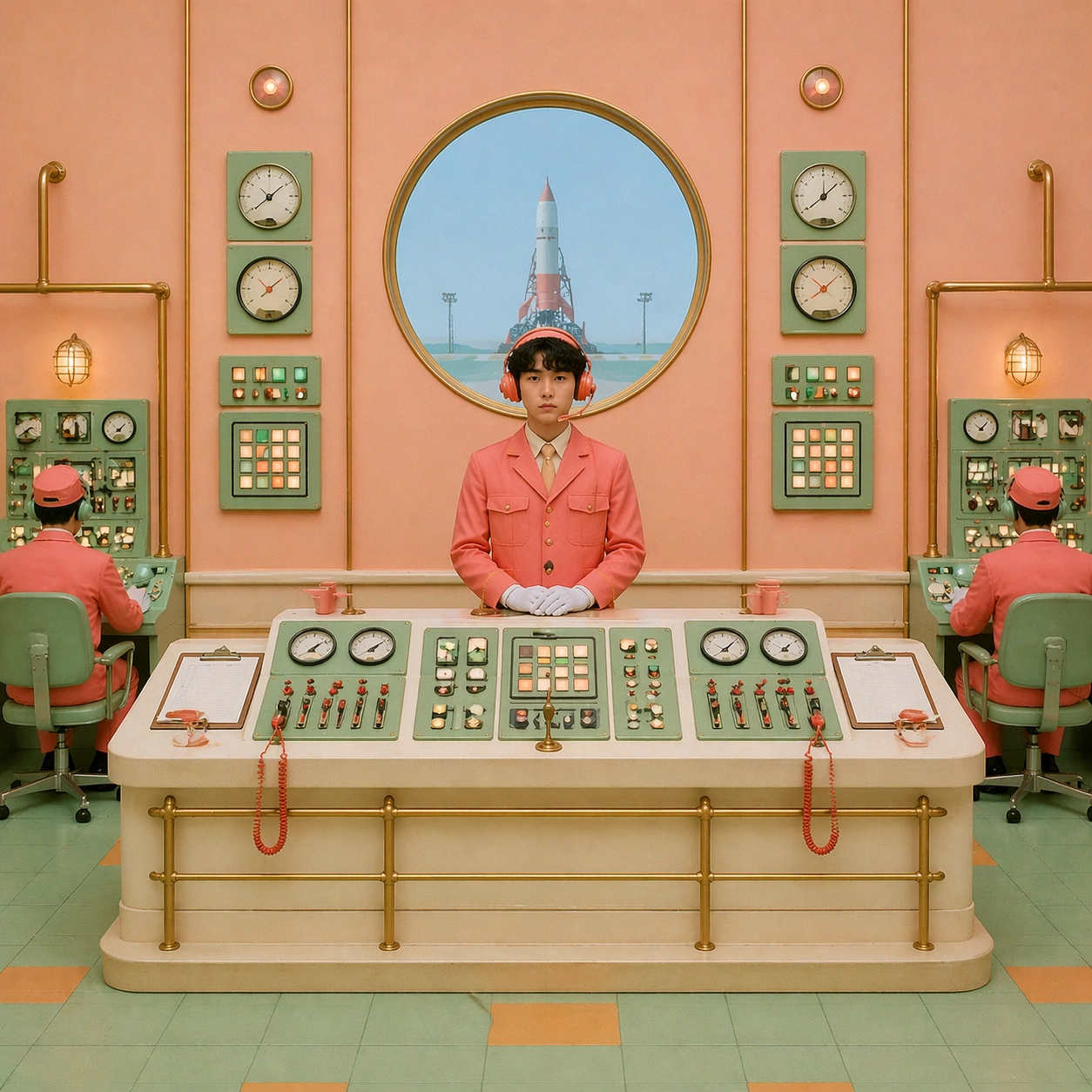
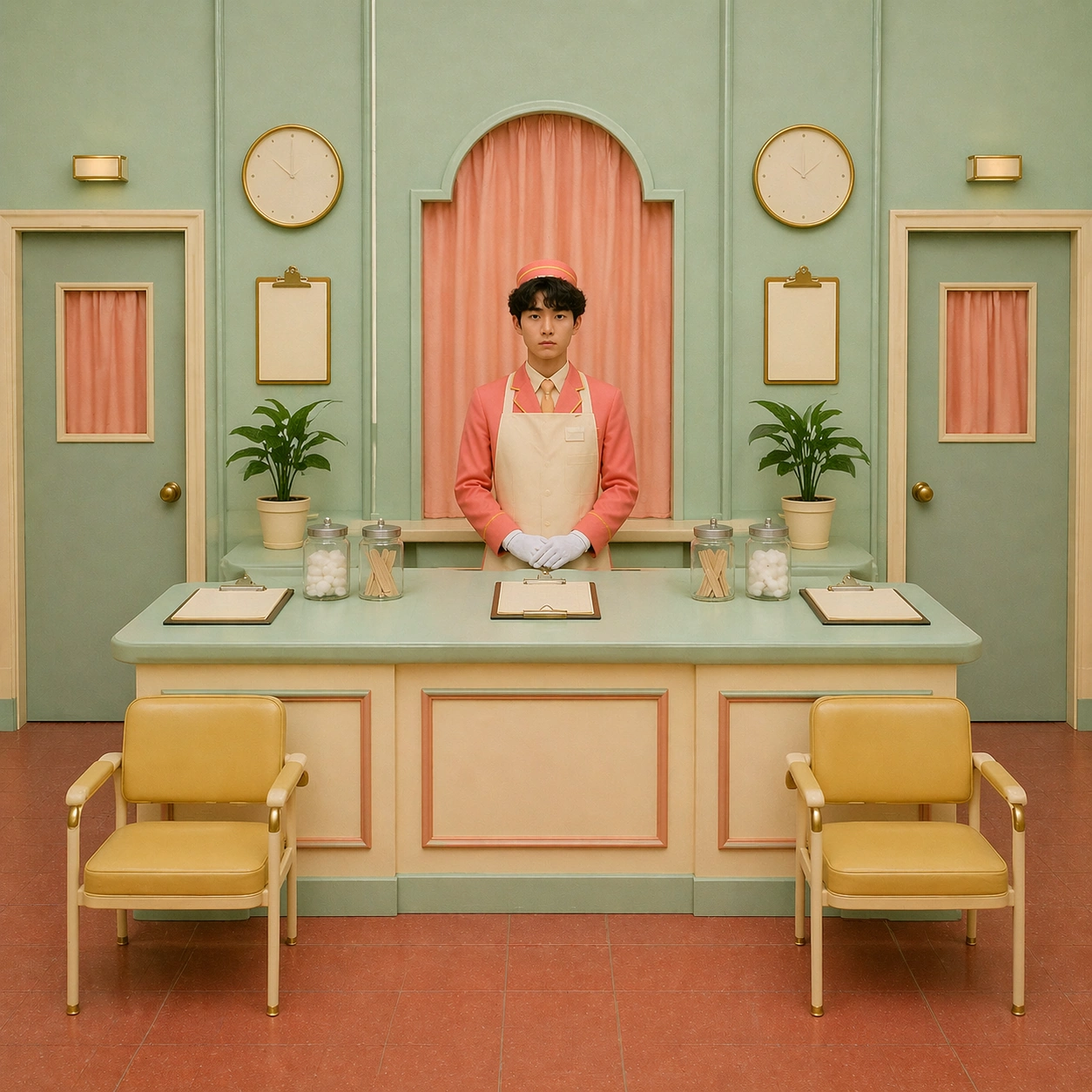
Use the reference image to preserve the central character identity, flat frontal staging, miniature prop rhythm, pastel discipline, and exact bilateral layout. The scene must evoke mass holiday travel through luggage density, queues, winter coats, and rail architecture, while remaining orderly and graphic rather than chaotic. Departure boards, tickets, parcel labels, and platform signs must contain only abstract bars or blank panels, not readable text.

Use case:
Wes Anderson Language series study 3/8, transferring the reference grammar into a spring travel rail station scene.

Constraints:
No readable text, no watermark, no logos, preserve exact 1:1 aspect ratio, no celebrity likeness, no named film references, no real railway branding, no overcrowded chaos, no photoreal news style, no diagonal perspective, no illegible extra signage.
How to use
- Copy the complete original prompt, including any parameters.
- Replace the subject, text and composition with your own requirements.
- Use a compatible external tool; check its current access conditions and review the result.
Before you start
- Check whether a reference image is required. A compatible model label does not mean this example was generated with that model.
- Keep names, figures and visible text accurate; results can vary between model versions.