Original document
GPT Image 2 · en
Scene:
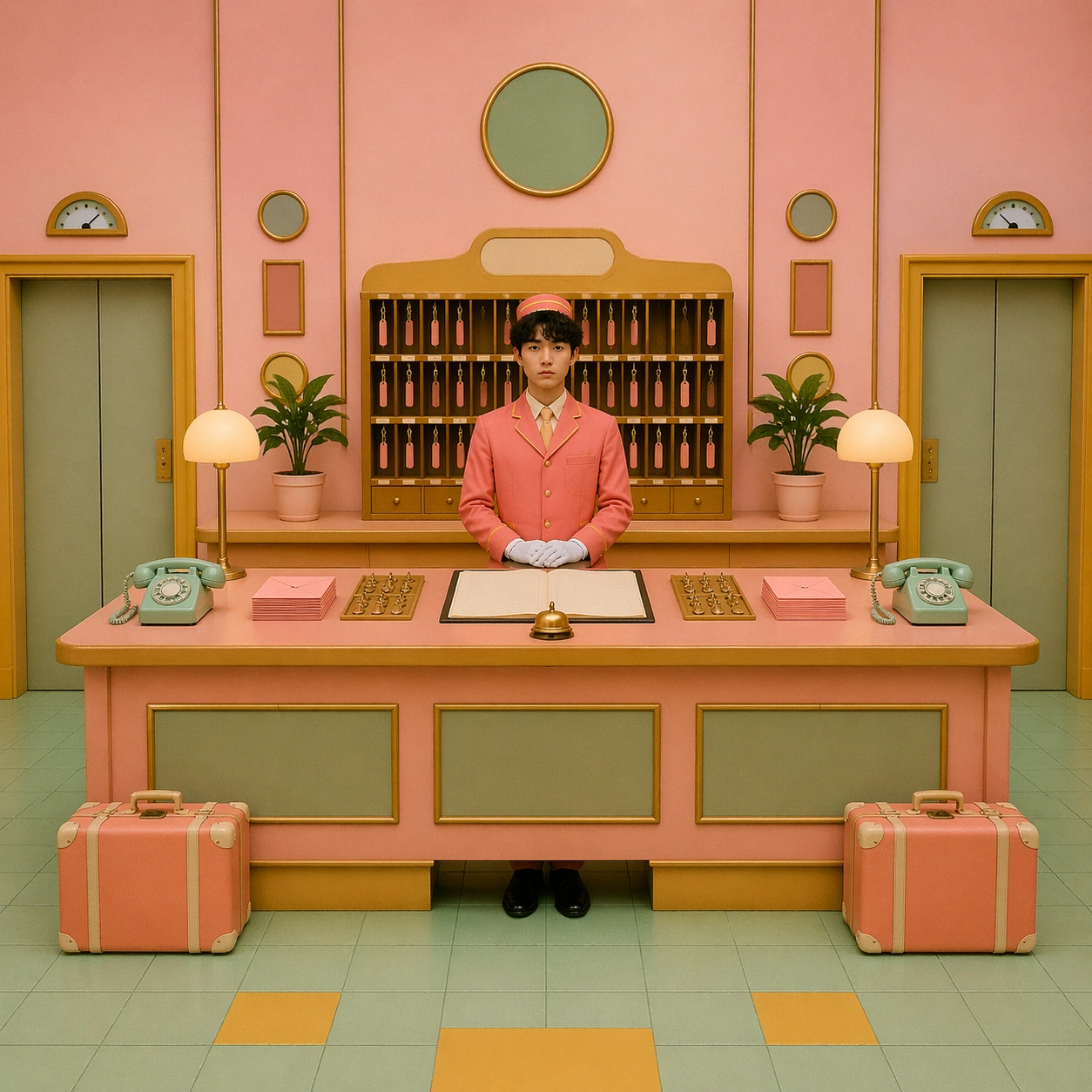
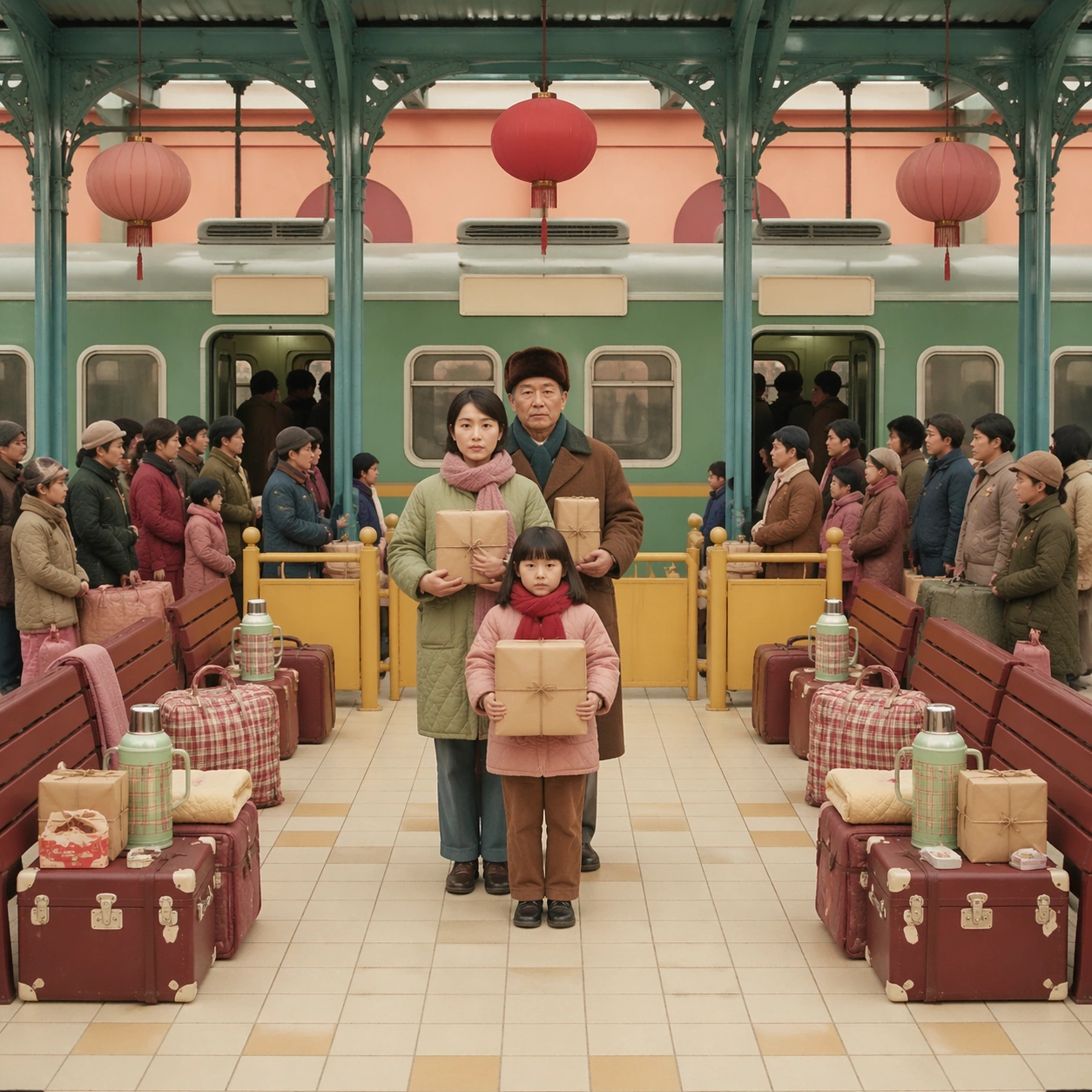
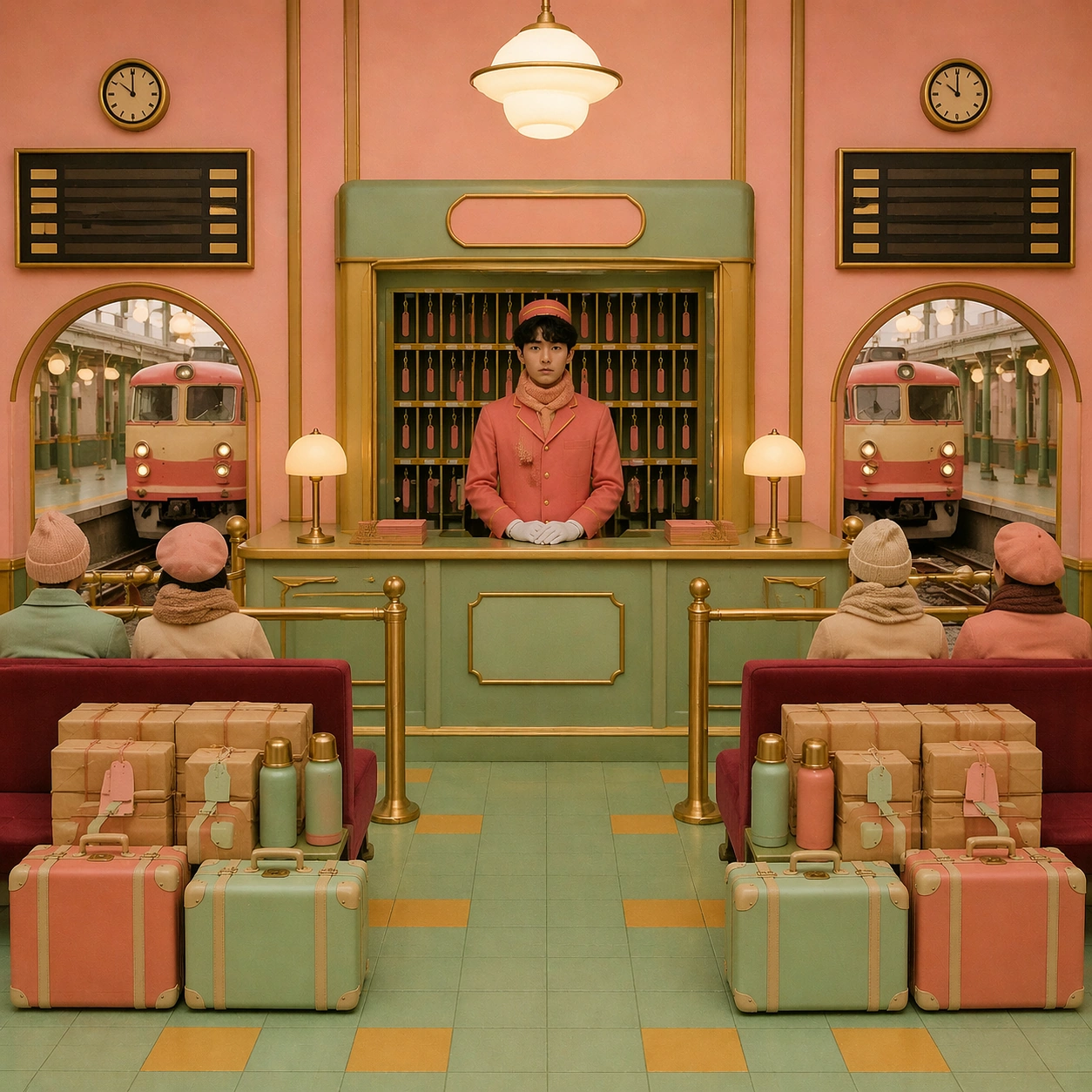
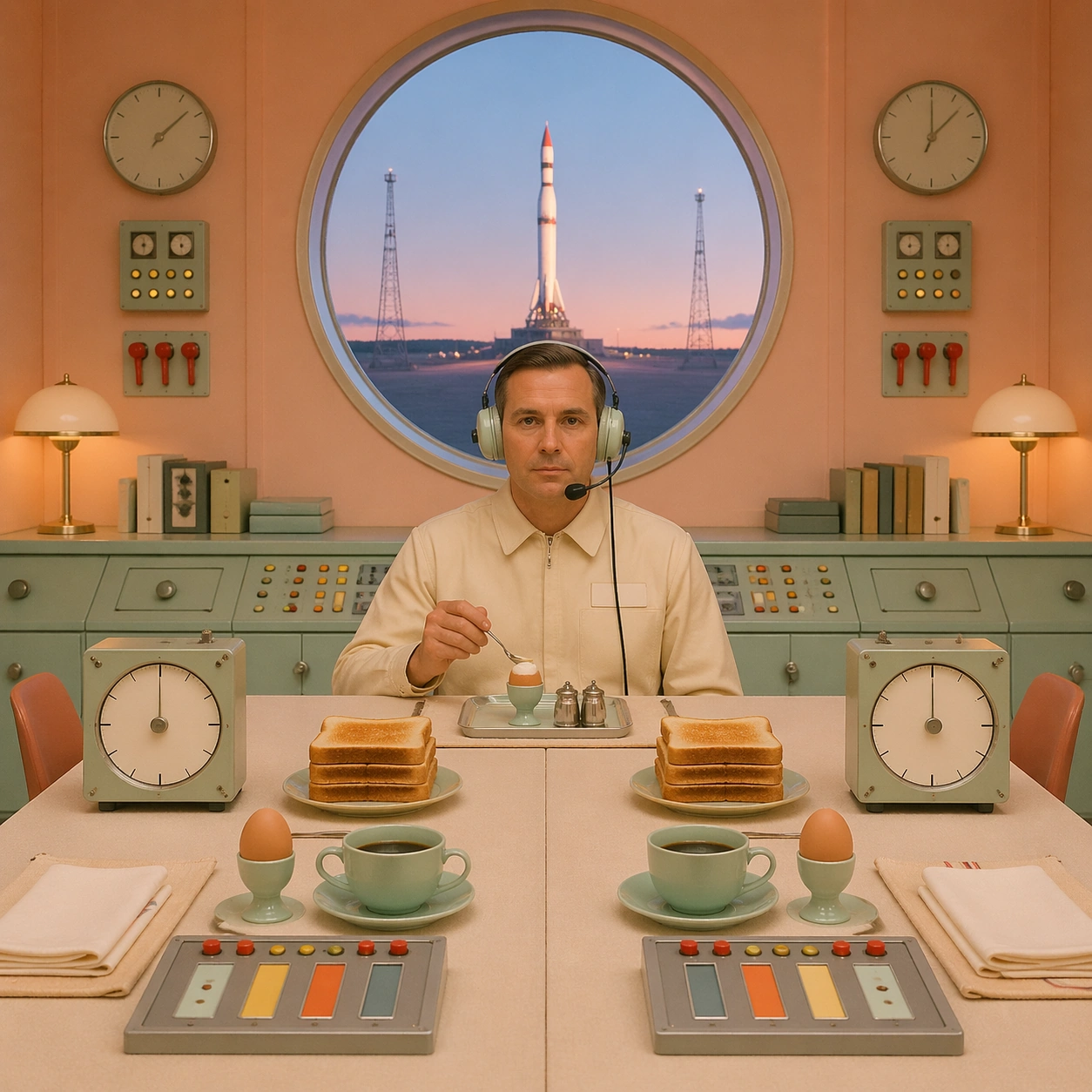
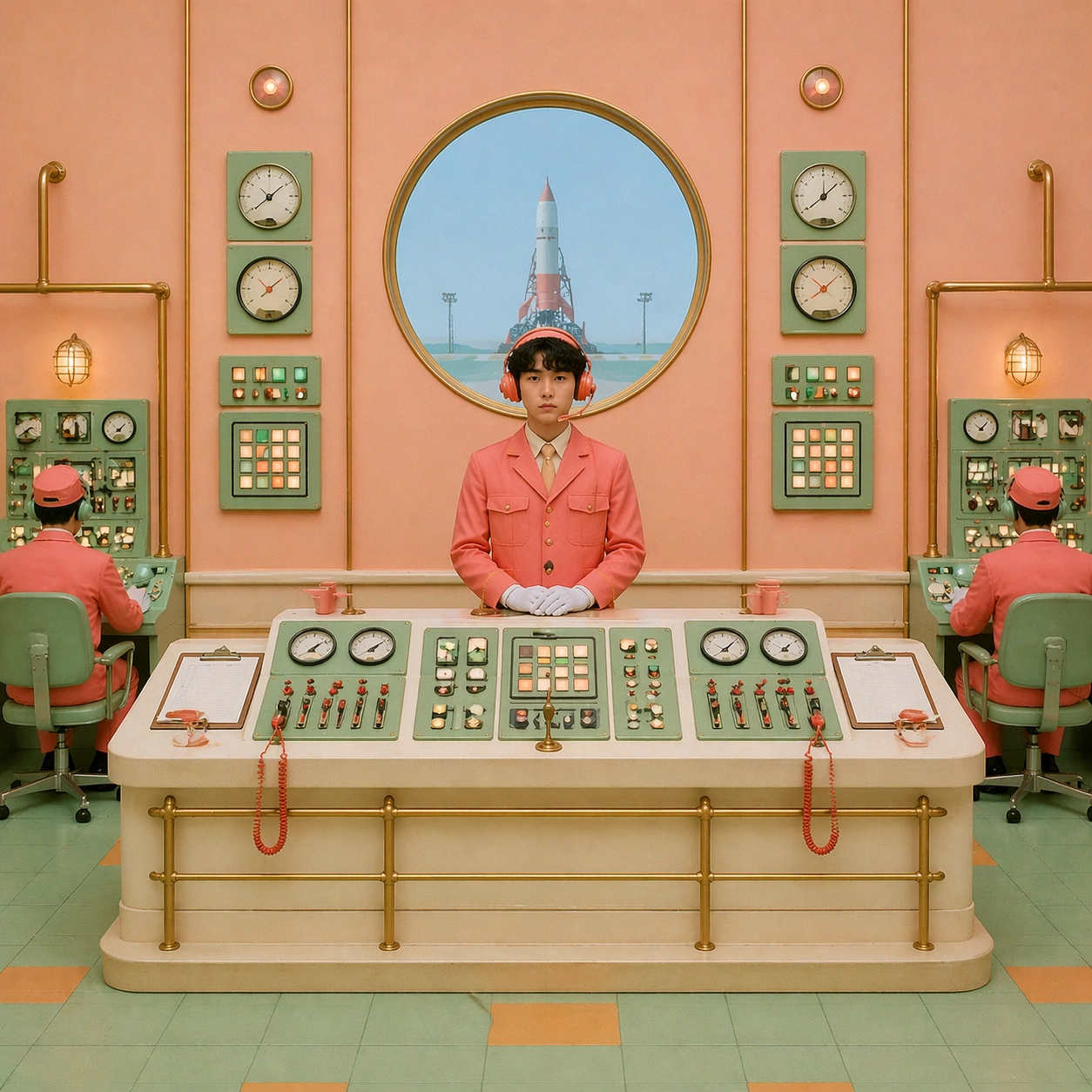
A square commercial archive shelf photographed straight-on like a miniature museum display, with perfect bilateral symmetry and flat catalog lighting. The shelf is divided into tidy cubbies painted dusty pink, mint, cream, and mustard. Each cubby contains a product-like object, but the display behaves more like a fictional film prop department than a real store: precise spacing, matte paper textures, tiny shadows, and a centered vertical axis.

Subject:
At the center stands a small uniformed shop archivist facing the camera from behind a waist-high display counter. Around the archivist are mirrored rows of fictional product packages: sardine tins, perfume boxes, seed packets, biscuit cartons, medicine bottles, matchboxes, and folded hotel towels. Every package has decorative color fields, stripes, borders, stamps, and blank label panels, but no readable text. Two brass desk lamps, two receipt spikes, two small ladders, and two potted plants complete the symmetrical product tableau.

Important details:
This is a commercial-mockup stress test for visual language transfer without typography: the image must look like a finished branded product shelf while avoiding actual words, logos, or real brands. Preserve central-axis staging, pastel palette, deadpan archivist portrait, handcrafted prop design, tidy grid layout, and subtle paper and tin material differences. The result should feel usable as a campaign visual or gallery poster, not a chaotic collection of packages.

Use case:
Wes Anderson Language single study 8/8, independent transfer into a commercial archive shelf mockup.

Constraints:
No readable text, no watermark, no logos, preserve exact 1:1 aspect ratio, no celebrity likeness, no named film references, no real brand packaging, no barcode, no price tag, no cluttered retail aisle, no distorted product grid.
How to use
- Copy the complete original prompt, including any parameters.
- Replace the subject, text and composition with your own requirements.
- Use a compatible external tool; check its current access conditions and review the result.
Before you start
- Check whether a reference image is required. A compatible model label does not mean this example was generated with that model.
- Keep names, figures and visible text accurate; results can vary between model versions.