Original document
GPT Image 2 · en
Scene:
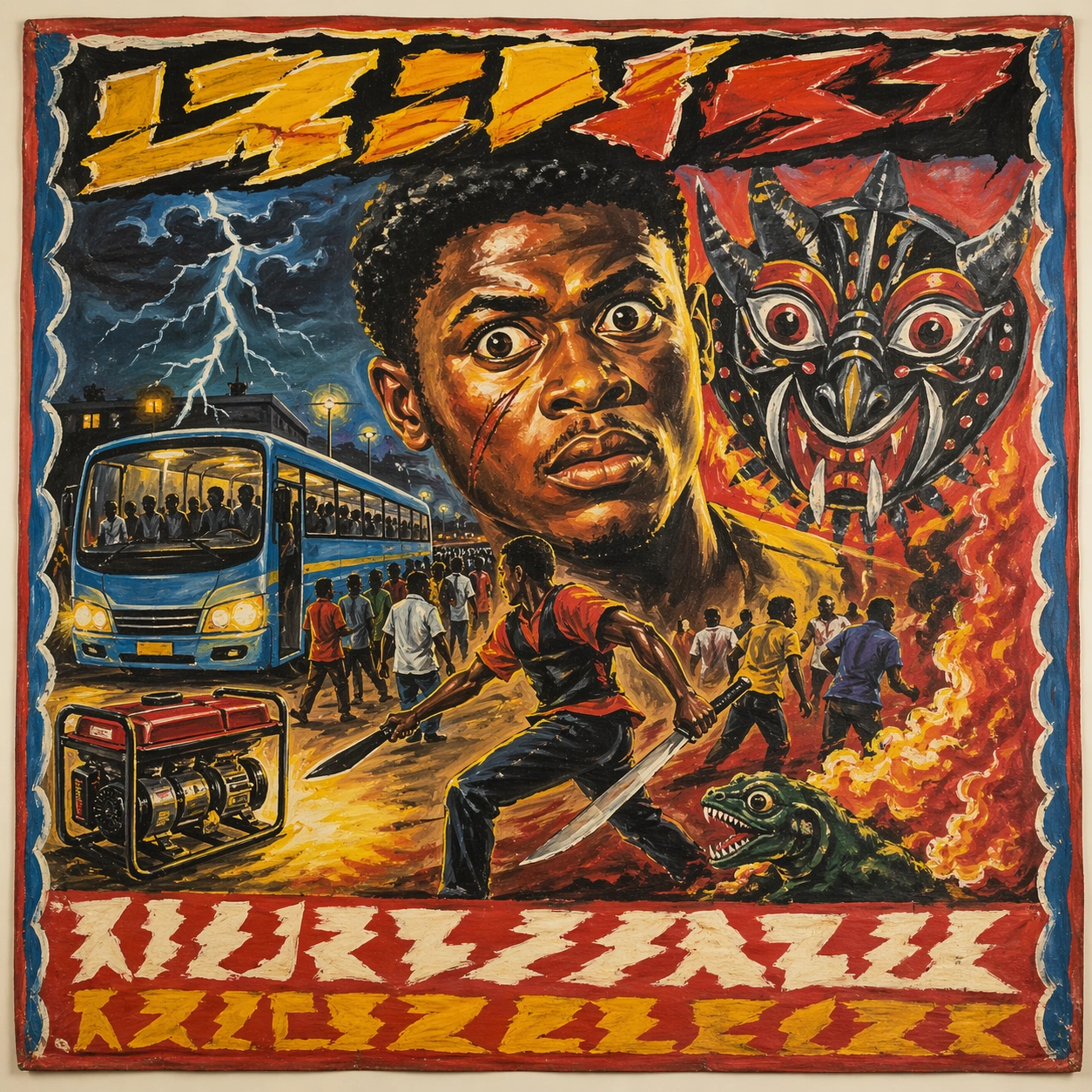
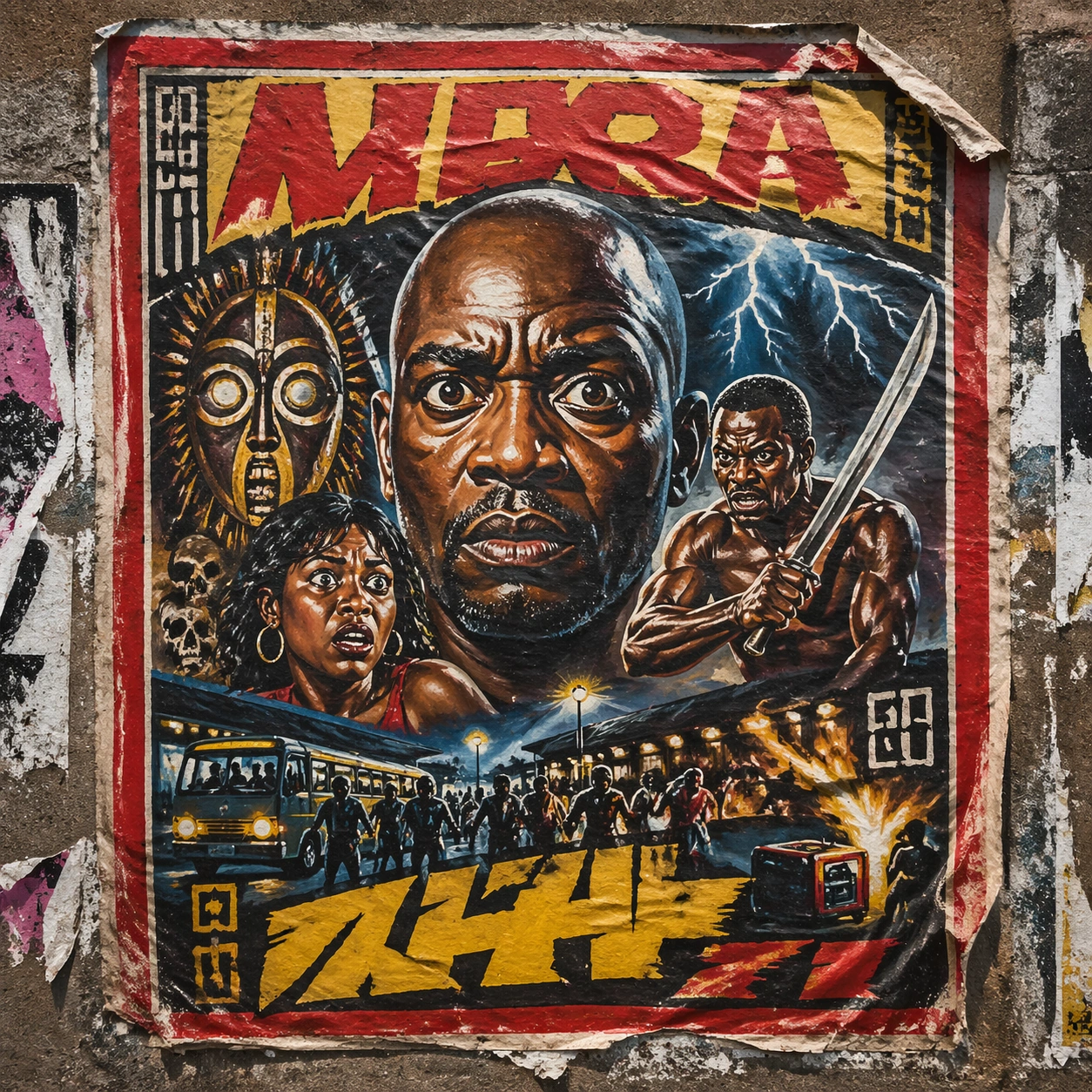
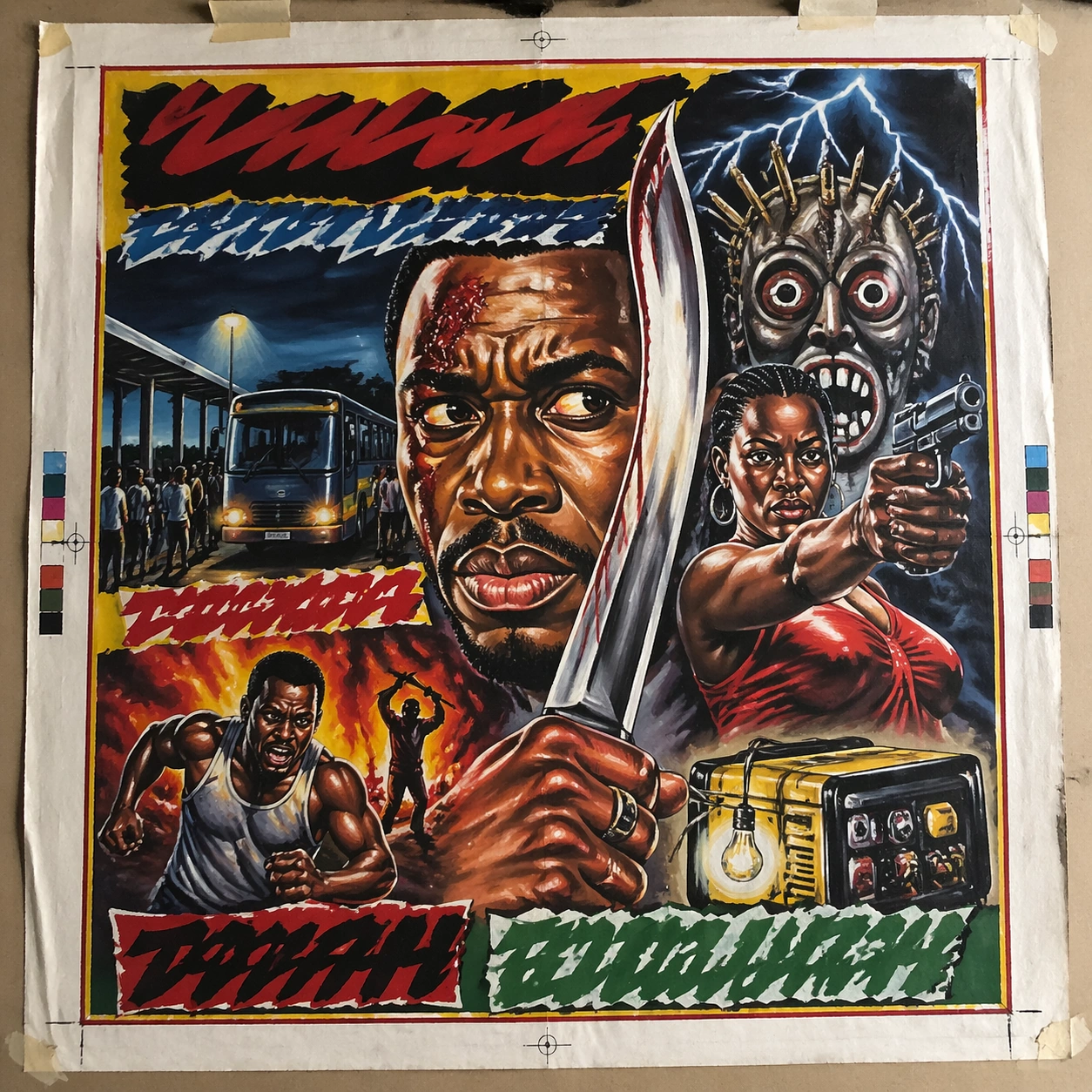
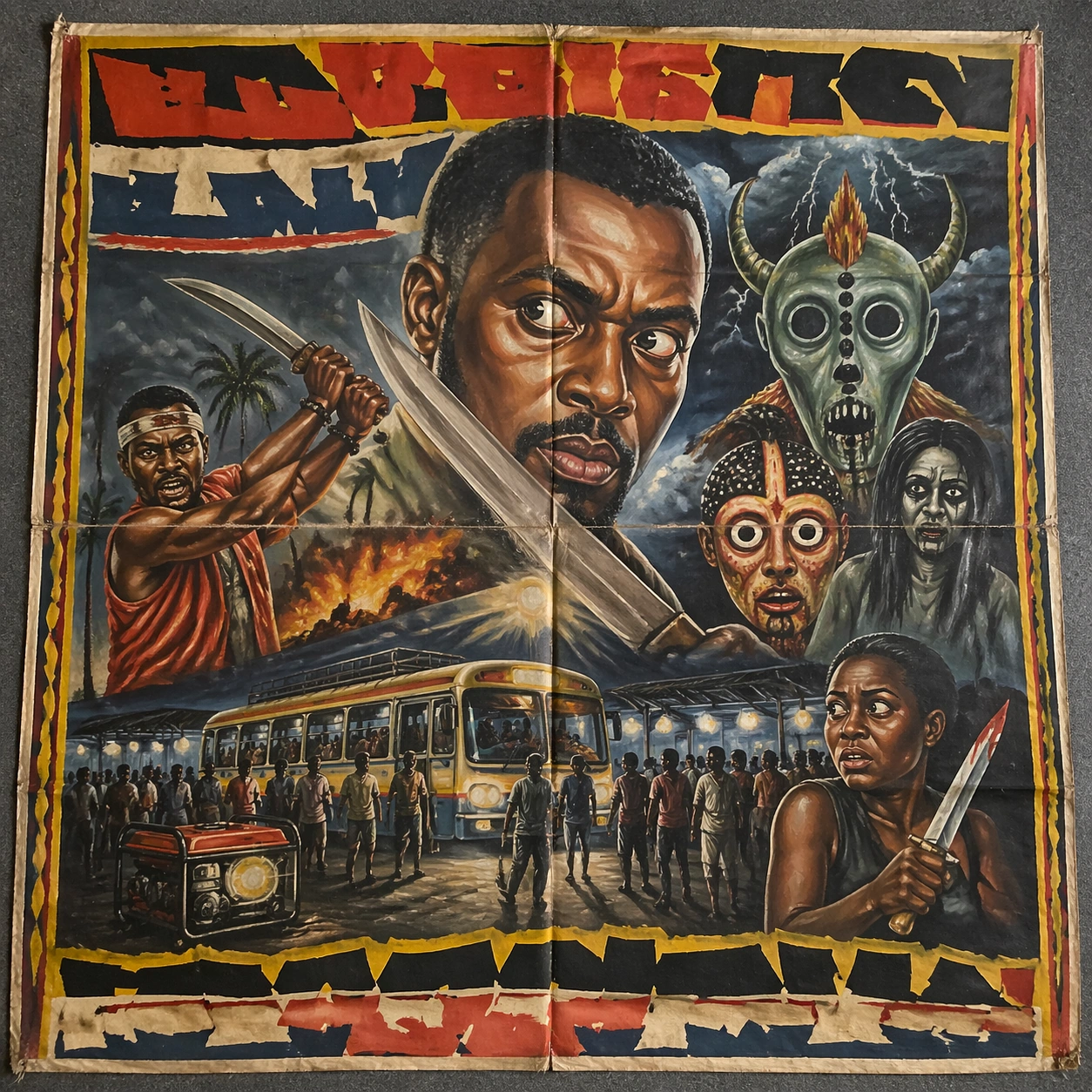
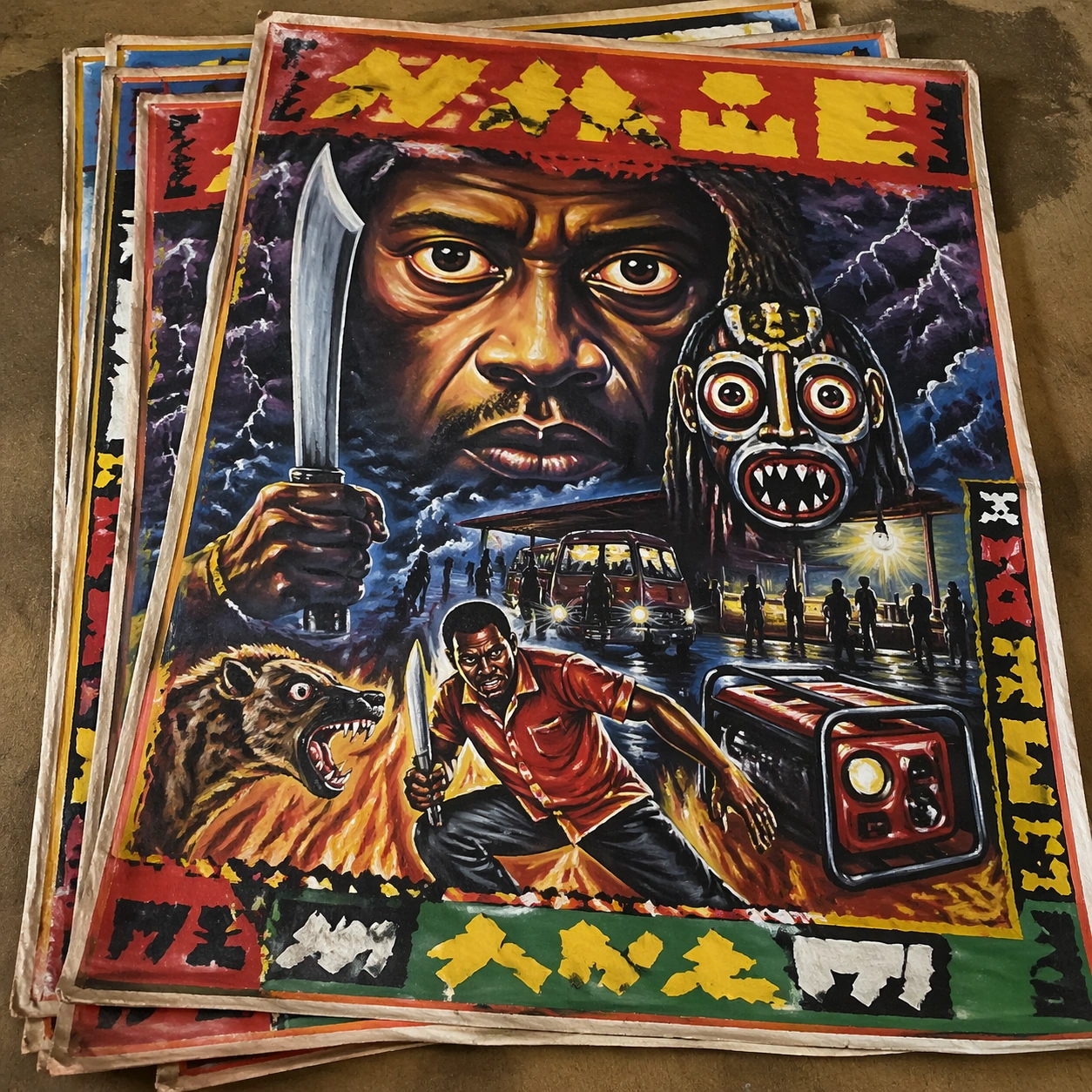
A square tabletop shot of several poster prints stacked and slightly fanned, with curled corners, offset edges, and soft directional light revealing paper thickness and ink behavior. The poster should express raw market-poster painting on rough cloth or board with fearless scale distortion and thick visible brushwork, using saturated red, yellow, green, blue, black, and sun-faded cloth neutrals and a tactile surface appropriate to the medium.

Subject:
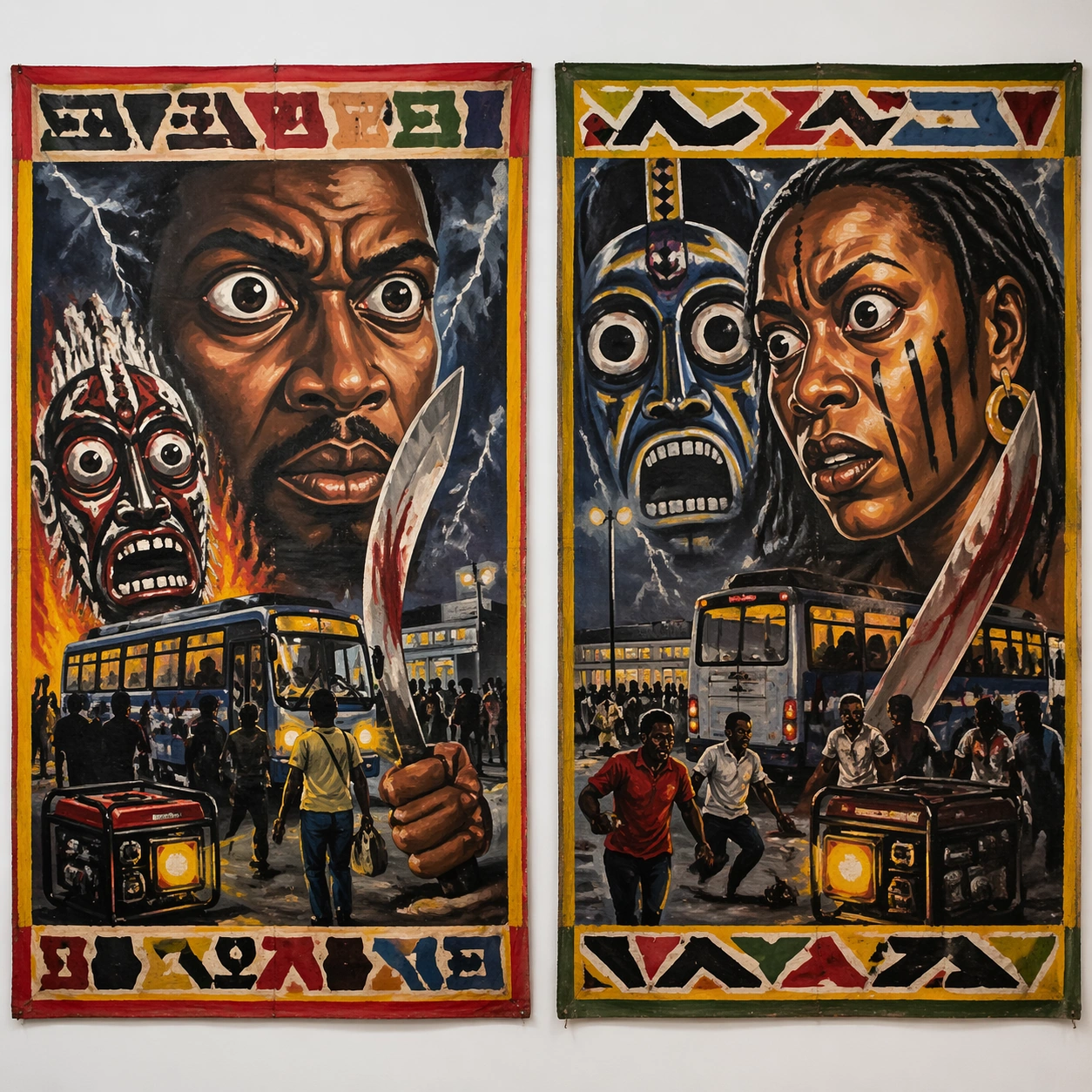
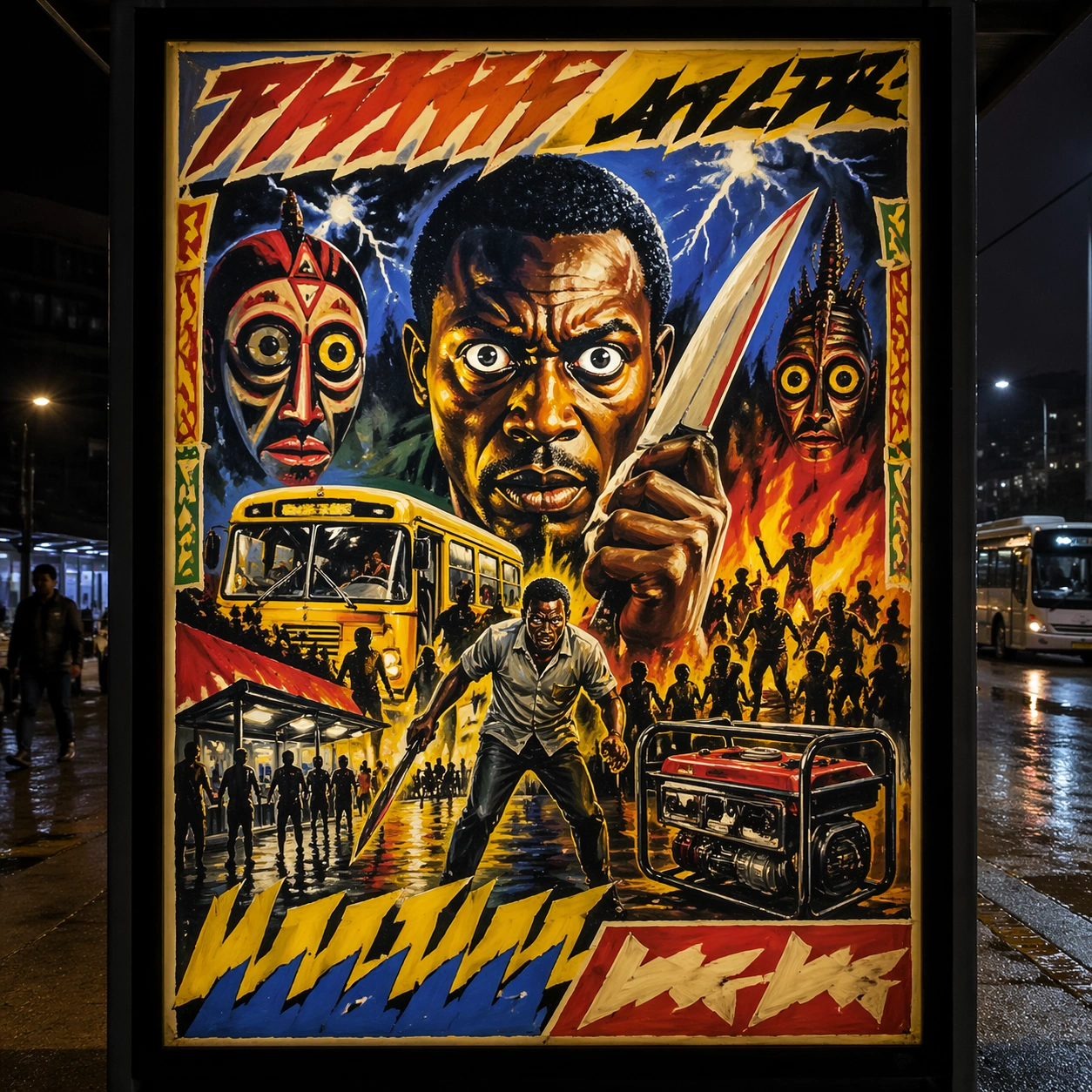
Design the top poster to dominate while nearby duplicate sheets echo the same composition, creating a tactile print-run scene rather than a single isolated sheet. Use giant eyes, action poses, storm skies, spirit masks, blades, creatures, flames, and hand-painted borders as the main visual ingredients, and organize them with brush-painted pseudo-titles and framing bands kept emphatic but unreadable. For the contemporary-subject axis, thread in a night bus station, generator glow, and urban hustle translated into a bold hand-painted thriller advertisement. The poster must feel like an original design object rather than a reproduction of any known work.

Important details:
Use the stack to emphasize production character: edge shadows, repeated motifs peeking from beneath, and subtle misalignment should enrich the material reading without changing the core design. Preserve oversized portrait dominance, uneven brush edges, hand-mixed paint, energetic anatomy distortion, and local-market immediacy. Keep every letterform abstract and non-readable, as if it were a typographic texture rather than language. Make the style unmistakable through composition, palette, surface behavior, and symbolic compression. no smooth digital airbrush, no clean vector geometry, no subtle luxury minimalism, no photographic polish.

Use case:
Ghana Hand-Painted single study 7/9, testing print-run tactility and repeat presence.

Constraints:
No readable text, no watermark, no logos, preserve exact 1:1 aspect ratio, no copyrighted characters, no real brand marks, no QR codes, no interface chrome, no accidental gibberish lettering.
How to use
- Copy the complete original prompt, including any parameters.
- Replace the subject, text and composition with your own requirements.
- Use a compatible external tool; check its current access conditions and review the result.
Before you start
- Check whether a reference image is required. A compatible model label does not mean this example was generated with that model.
- Keep names, figures and visible text accurate; results can vary between model versions.