Original document
GPT Image 2 · en
Scene:
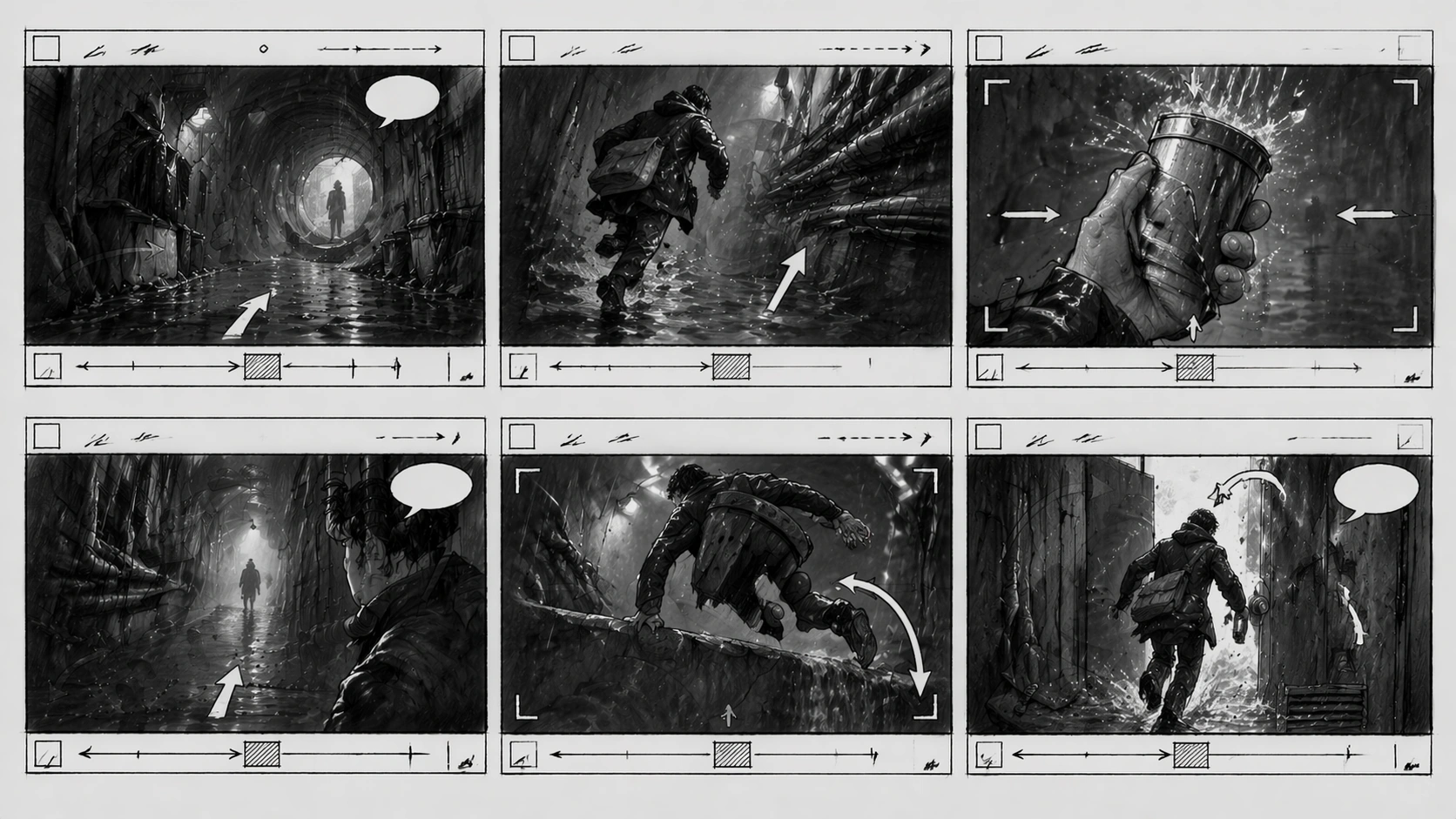
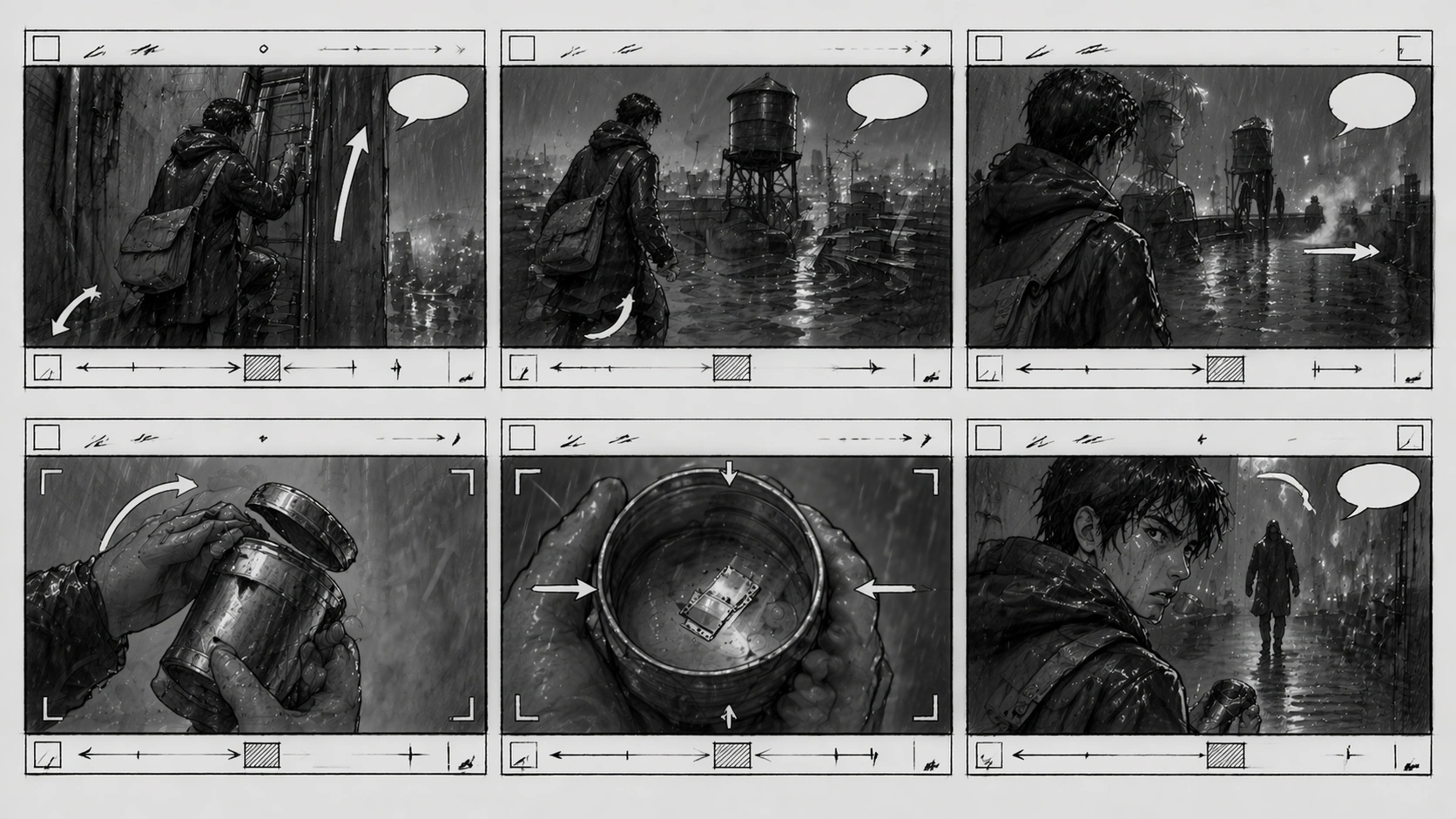
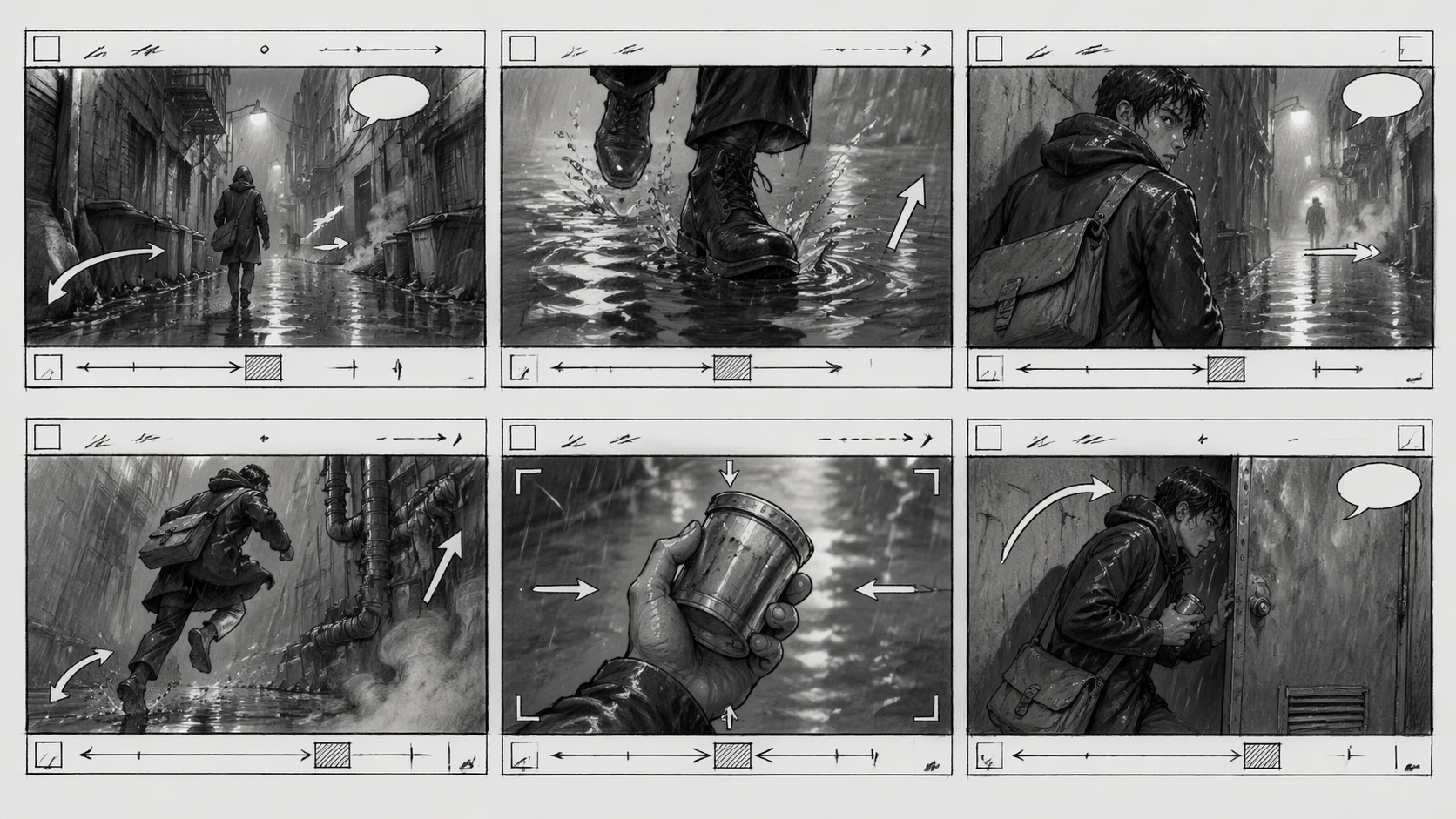
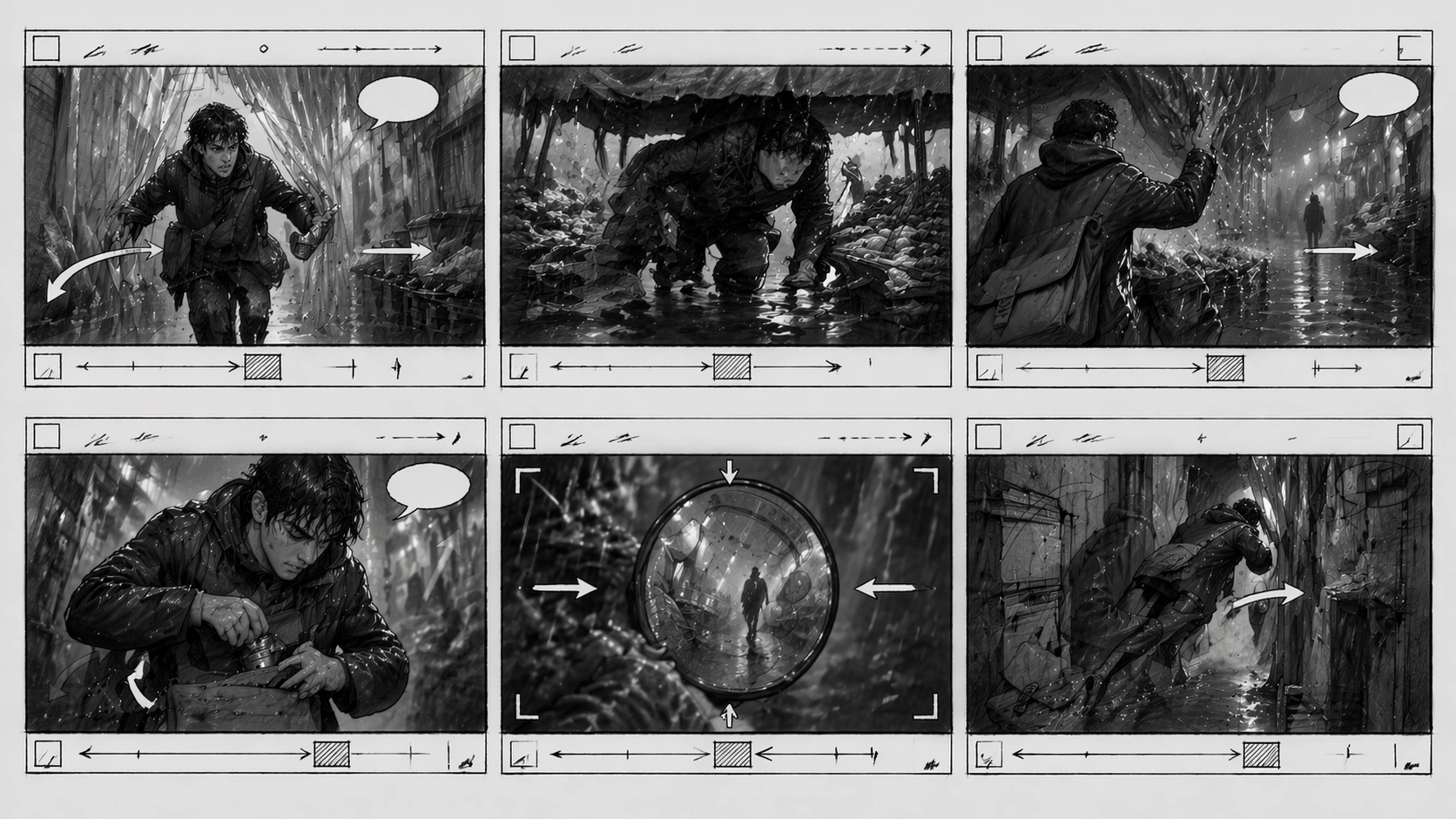
A horizontal 16:9 pencil-and-gray-marker storyboard sheet using the same six-panel 2 by 3 grid language as the reference image. The page has crisp gutters, paper grain, abstract header scribbles, blank lower notes bands, camera arrows, movement arrows, and a few empty speech balloons. The setting shifts from the alley into a covered night market under rain tarps, but the production-board style must remain identical.

Subject:
Use the reference as the primary guide for the same hooded courier, dark coat, messenger bag, wet hair, and small metal film canister. The six frames continue the pursuit: the courier bursts through plastic strip curtains, slides under a vegetable stall awning, knocks water from hanging tarps, hides the canister under the bag flap, spots the distant silhouette in a mirror, and dives into a narrow service passage. Vendors and shoppers appear only as rough background silhouettes, not new main characters.

Important details:
Preserve the protagonist identity, prop, rain physics, pencil linework, panel structure, arrow style, and unreadable production notation from image 01. The board should show coherent screen direction and camera logic: one panel for tracking movement, one for insert detail, one for reaction, one for overhead blocking, one for obstructed view, and one exit beat. Material behavior matters: wet plastic tarp, puddles, vegetable crates, steam, cloth coat, and metal canister reflections.

Use case:
Film Storyboard Sequence series study 2/8, testing continuity of character, prop, and storyboard language in a market-pursuit extension.

Constraints:
No readable text, no watermark, no logos, preserve exact 16:9 horizontal aspect ratio, no legible labels, no brand signs, no broken six-panel grid, no changed protagonist outfit, no full-color comic style.
How to use
- Copy the complete original prompt, including any parameters.
- Replace the subject, text and composition with your own requirements.
- Use a compatible external tool; check its current access conditions and review the result.
Before you start
- Check whether a reference image is required. A compatible model label does not mean this example was generated with that model.
- Keep names, figures and visible text accurate; results can vary between model versions.