PROMPTY · TWÓRCZE ODKRYWANIE

Galeria promptów

Odkrywaj prawdziwe prompty i wygenerowane przykłady. Znajdź inspirację do kolejnej twórczej misji i kopiuj pełne prompty bezpłatnie.

Przykłady
10,974
Modele
17
Źródła
1277
10 974 przykładów promptów · strona 11 z 229
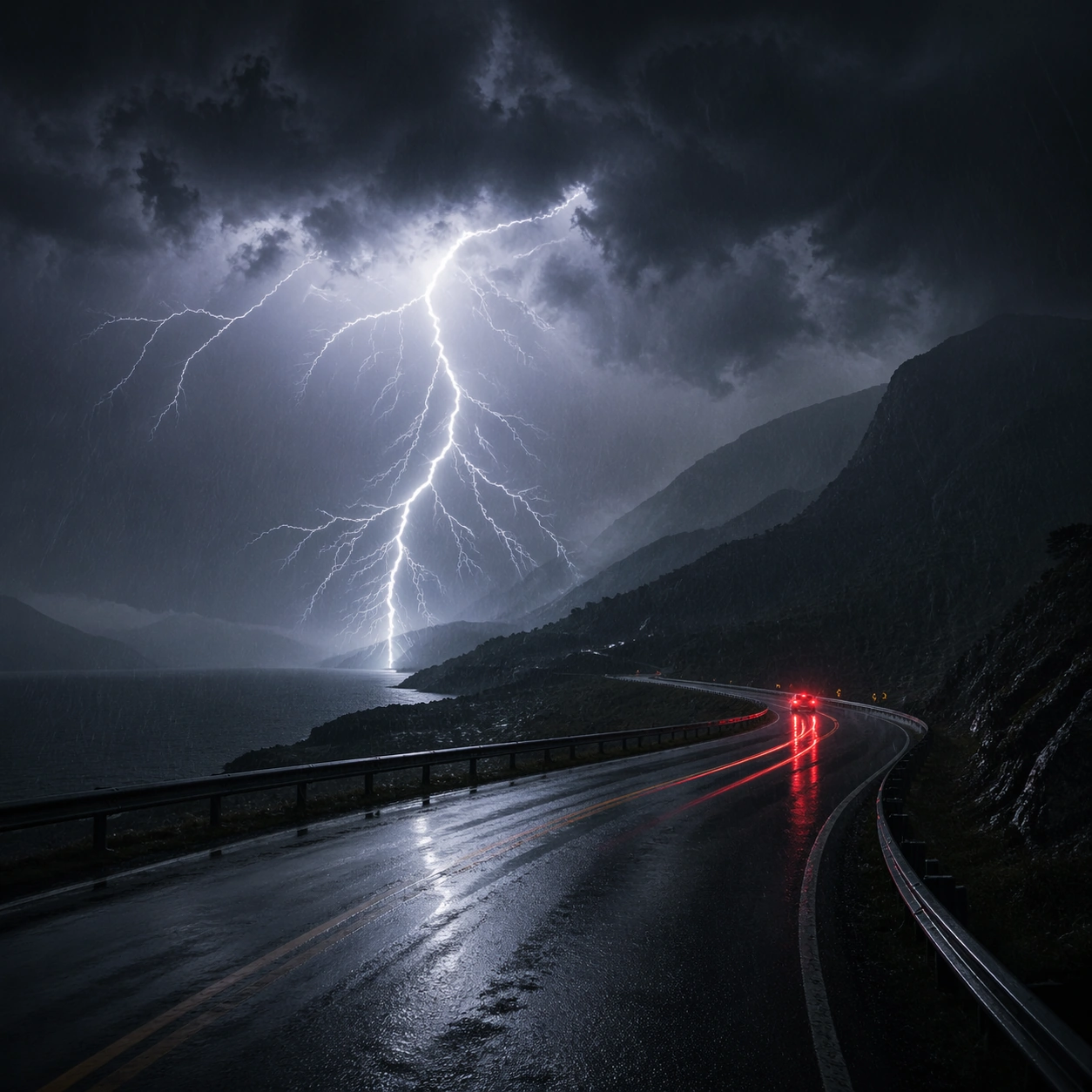
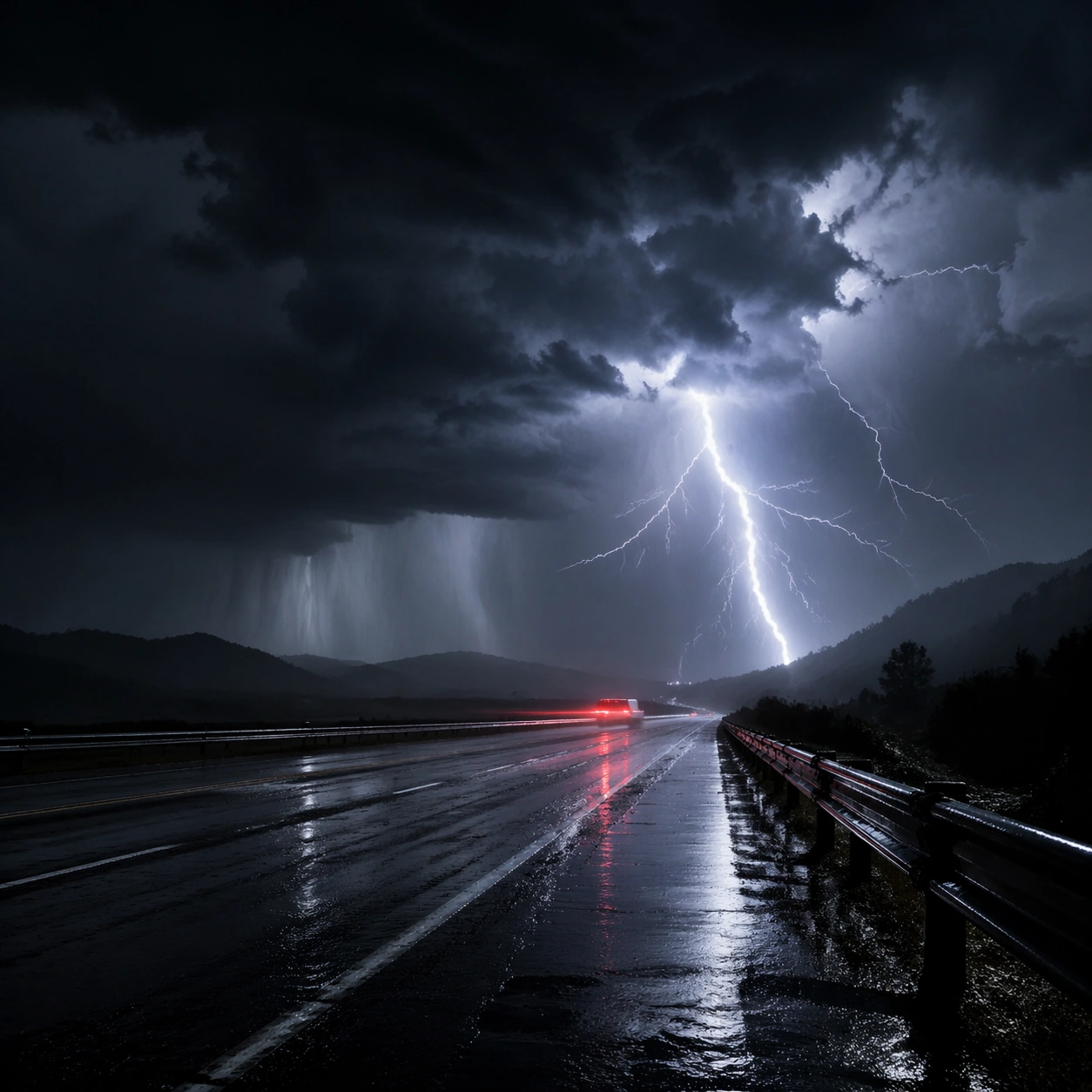
Example generated from “Thunderstorm Cinematic Strobe — Wide Study”
GPT Image 2en

Scene: Create a square cinematic still for Thunderstorm Cinematic Strobe. Use production-grade photoreal lighting, disciplined lens behavior, and a composition that feels like a finished key frame from an original film rather than a casual snapshot. A lonely wet highway at night is split open by a lightning flash, with black storm mass above, slick asphalt reflecting cold light, distant taillight streaks cutting red through the rain, and sheets of water visible in the air. Pull back enough to explain the broader geography or architectural envelope while keeping the square crop intentional and balanced. Subject: Build a coherent original scene whose emotional center comes from atmosphere, light physics, and spatial clarity. Avoid relying on celebrity likeness, franchise iconography, or stylized illustration shortcuts. The roadway, the lightning event, and one or two vehicles far enough away to remain anonymous should carry the image, with guardrails, lane geometry, and storm cloud depth staying legible under the strobe. The wider frame should reveal how the main light or weather phenomenon organizes the surrounding world and not just the immediate subject. Important details: Preserve a believable physical world with strong depth layering, careful color separation, and premium image discipline. Balance the feeling of a frozen lightning moment with believable long-exposure traces, crisp raindrops, internal cloud illumination, and directional reflections on the pavement so the weather feels physically dangerous and immediate. Make scale legible through spacing, horizon control, and foreground-to-background separation rather than through extra props. Use case: Thunderstorm Strobe single study 8/9. Constraints: No readable text, no watermark, no logos, preserve exact 1:1 aspect ratio, no city skyline, no readable road signs, no disaster-movie debris, no fantasy electric colors, no vehicle close-up hero shot.
Example generated from “Thunderstorm Cinematic Strobe — Afterglow Study”
GPT Image 2en

Scene: Create a square cinematic still for Thunderstorm Cinematic Strobe. Use production-grade photoreal lighting, disciplined lens behavior, and a composition that feels like a finished key frame from an original film rather than a casual snapshot. A lonely wet highway at night is split open by a lightning flash, with black storm mass above, slick asphalt reflecting cold light, distant taillight streaks cutting red through the rain, and sheets of water visible in the air. End on a quieter independent image that holds the residue of the topic atmosphere after its loudest moment has passed, while still feeling complete and exhibition-ready. Subject: Build a coherent original scene whose emotional center comes from atmosphere, light physics, and spatial clarity. Avoid relying on celebrity likeness, franchise iconography, or stylized illustration shortcuts. The roadway, the lightning event, and one or two vehicles far enough away to remain anonymous should carry the image, with guardrails, lane geometry, and storm cloud depth staying legible under the strobe. The frame should suggest memory, aftermath, or lingering presence through environment first and only secondarily through any figure or object. Important details: Preserve a believable physical world with strong depth layering, careful color separation, and premium image discipline. Balance the feeling of a frozen lightning moment with believable long-exposure traces, crisp raindrops, internal cloud illumination, and directional reflections on the pavement so the weather feels physically dangerous and immediate. Favor restraint, believable light decay, and subtle narrative closure over spectacle or decorative excess. Use case: Thunderstorm Strobe single study 9/9. Constraints: No readable text, no watermark, no logos, preserve exact 1:1 aspect ratio, no city skyline, no readable road signs, no disaster-movie debris, no fantasy electric colors, no vehicle close-up hero shot.

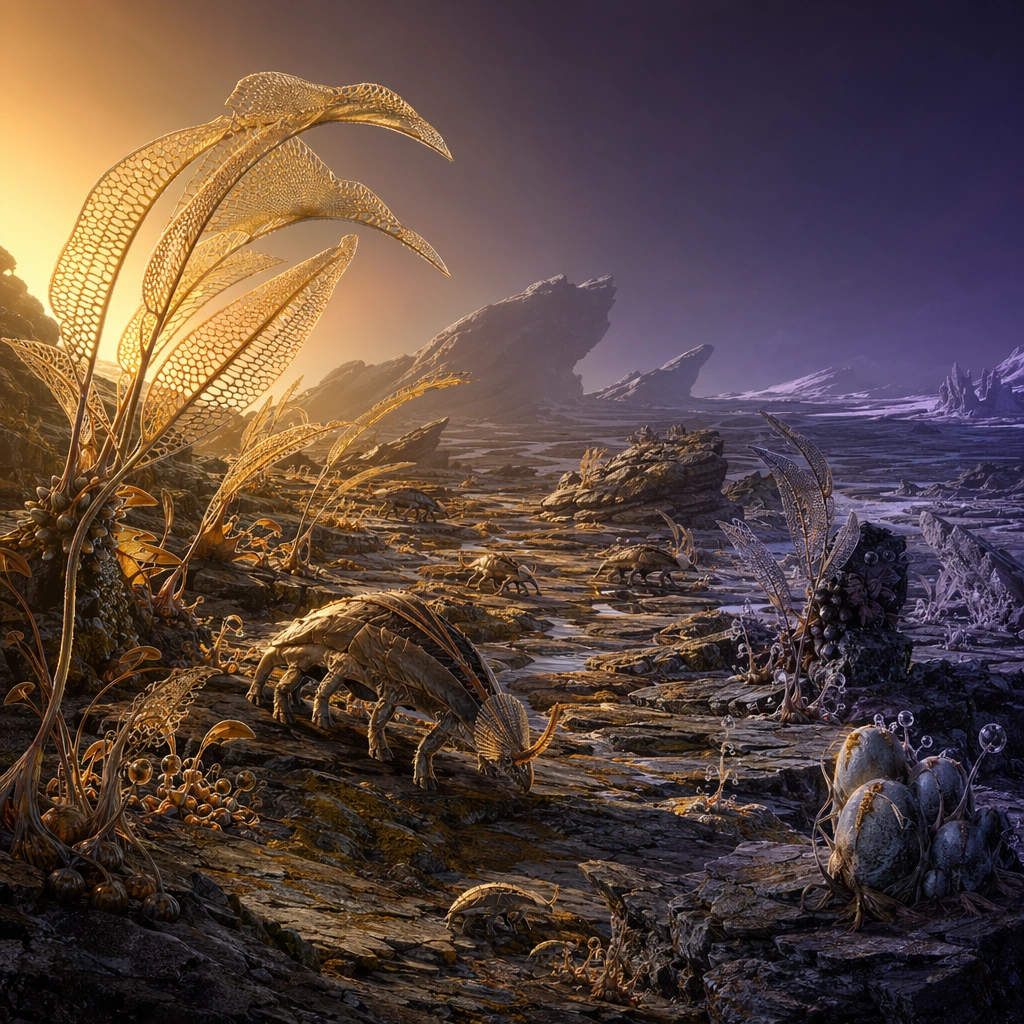
Example generated from “Tidal Locked Terminator Life — Horizon Balance Overview”
GPT Image 2en

Scene: Create a wide square landscape of the terminator zone where one side of the horizon glows warm amber from the permanent sunward edge while the opposite side fades into violet cold. The middle ground should remain in stable twilight with crisp terrain detail and no sense of day-night transition. Build the frame as a square natural history study with disciplined composition, believable lighting, and enough environmental evidence to explain how this organism or system functions without any caption. Keep the image polished, observational, and suitable for a research gallery rather than pulp fantasy spectacle. Subject: Show the biome as a directional system: plants leaning toward one constant light source, animals following thermal corridors, and landforms catching long lateral shadows. The ecosystem should feel settled into this permanent imbalance, not temporarily caught at sunset. Show the anatomy, habitat interaction, and scale cues clearly so the viewer can infer locomotion, feeding, reproduction, or ecological role from the visual alone. Every visible structure should feel evolved for a purpose, with layered foreground, midground, and background information that rewards close inspection. Important details: Assume the sun never changes position in the sky from this biome. Organisms should show enduring asymmetry, thermal management, and directional growth because the warm side and cold side of the world remain stable over evolutionary time. Orientation is everything. Use shadows, foliage angle, skin texture, and atmospheric color to make the one-sided world immediately legible. Keep the scene scientifically composed and avoid melodramatic fantasy skies. Favor coherent biology over decorative excess: tissues, shells, membranes, spores, tendrils, fins, silica lattices, or atmospheric sacs should all follow one material logic. Preserve a convincing relationship between the environment and the body plan, use restrained color hierarchy, and make the image feel like a serious speculative field record rather than a random monster concept. Use case: Tidal Locked Terminator Life single study 1/9. Constraints: No readable text, no watermark, no logos, preserve exact 1:1 aspect ratio, no rotating sunset implication, no Earth dusk skyline, no aurora overload, no human settlement lights, no accidental brand resemblance, no direct copy of known terrestrial species, no cartoon simplification.

Example generated from “Tidal Locked Terminator Life — Sunward Plant Ridge”
GPT Image 2en

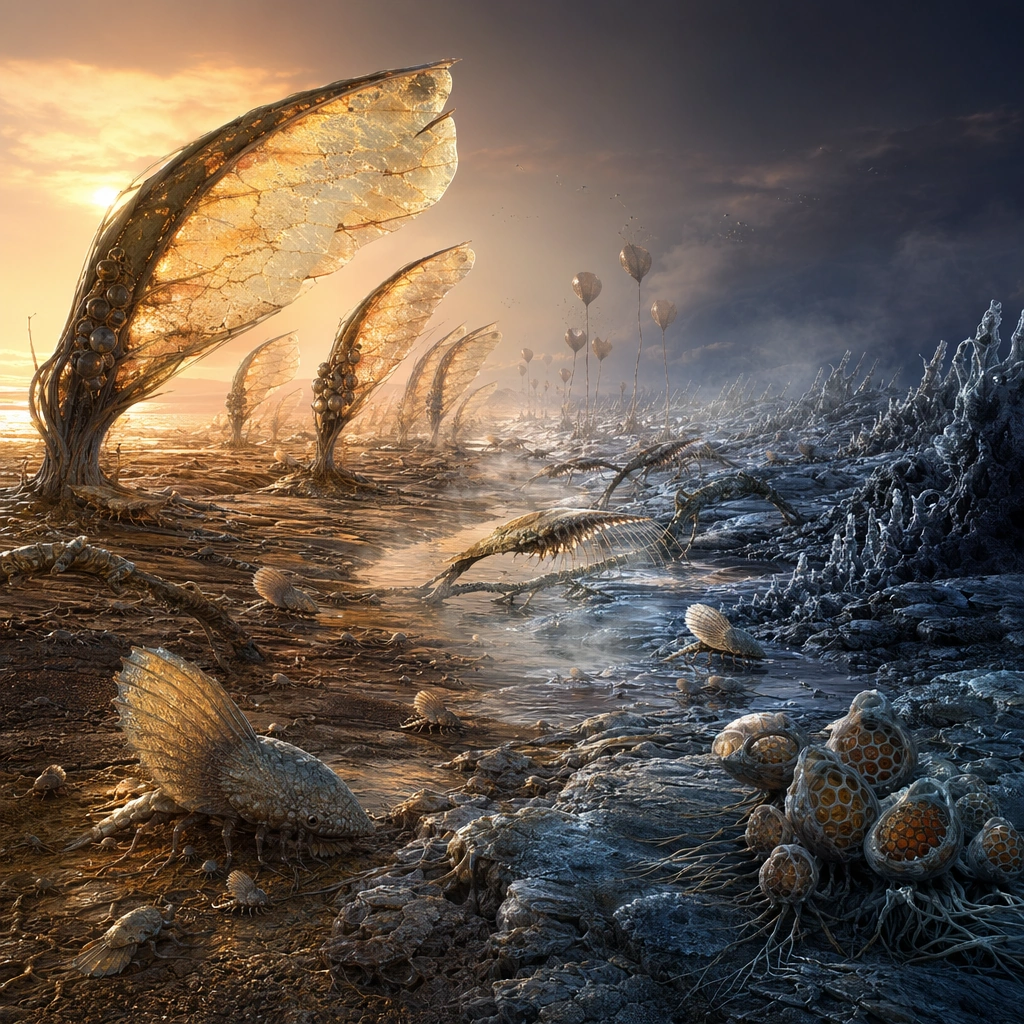
Scene: Frame a ridge-top botanical study under stable twilight, with the warm horizon just outside the frame casting long lateral light across the scene. Every plant should be visibly angled toward the same source, with reflective tissues on the warm side and insulated structures on the cold side. Build the frame as a square natural history study with disciplined composition, believable lighting, and enough environmental evidence to explain how this organism or system functions without any caption. Keep the image polished, observational, and suitable for a research gallery rather than pulp fantasy spectacle. Subject: Focus on several plant analogs with one-sided leaf fans, mirrored shadow surfaces, and root buttresses resisting constant wind and heat asymmetry. A few small grazers or pollinators can appear, but the plants should dominate the composition. Show the anatomy, habitat interaction, and scale cues clearly so the viewer can infer locomotion, feeding, reproduction, or ecological role from the visual alone. Every visible structure should feel evolved for a purpose, with layered foreground, midground, and background information that rewards close inspection. Important details: Assume the sun never changes position in the sky from this biome. Organisms should show enduring asymmetry, thermal management, and directional growth because the warm side and cold side of the world remain stable over evolutionary time. The plant anatomy should clearly encode environmental adaptation: sunward photosynthetic surfaces, leeward storage tissues, and asymmetric growth rings. Avoid Earth flowers or trees copied into a new sky; this is an evolved twilight flora. Favor coherent biology over decorative excess: tissues, shells, membranes, spores, tendrils, fins, silica lattices, or atmospheric sacs should all follow one material logic. Preserve a convincing relationship between the environment and the body plan, use restrained color hierarchy, and make the image feel like a serious speculative field record rather than a random monster concept. Use case: Tidal Locked Terminator Life single study 2/9. Constraints: No readable text, no watermark, no logos, preserve exact 1:1 aspect ratio, no bilateral symmetry in plant crowns, no flower-garden look, no tropical lushness, no readable signage, no accidental brand resemblance, no direct copy of known terrestrial species, no cartoon simplification.

Example generated from “Tidal Locked Terminator Life — Leeward Herd Crossing”
GPT Image 2en

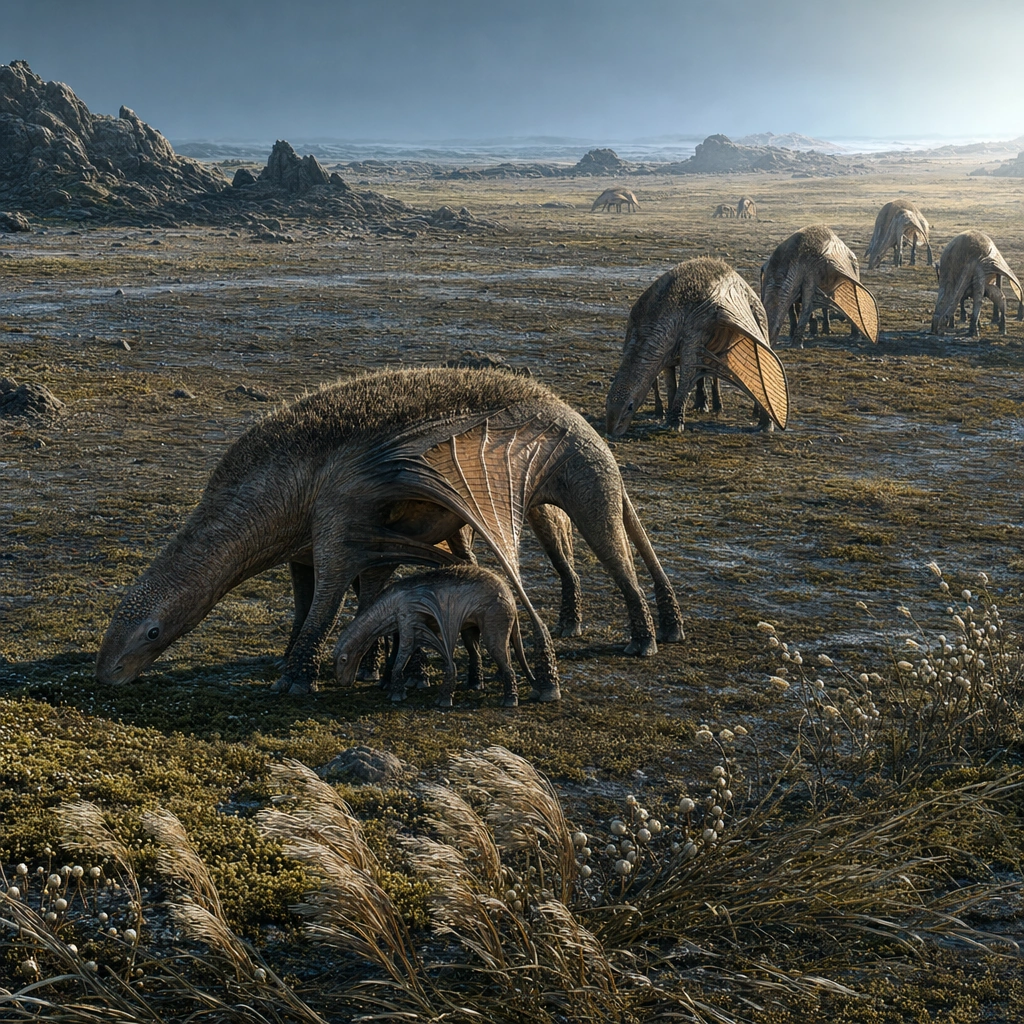
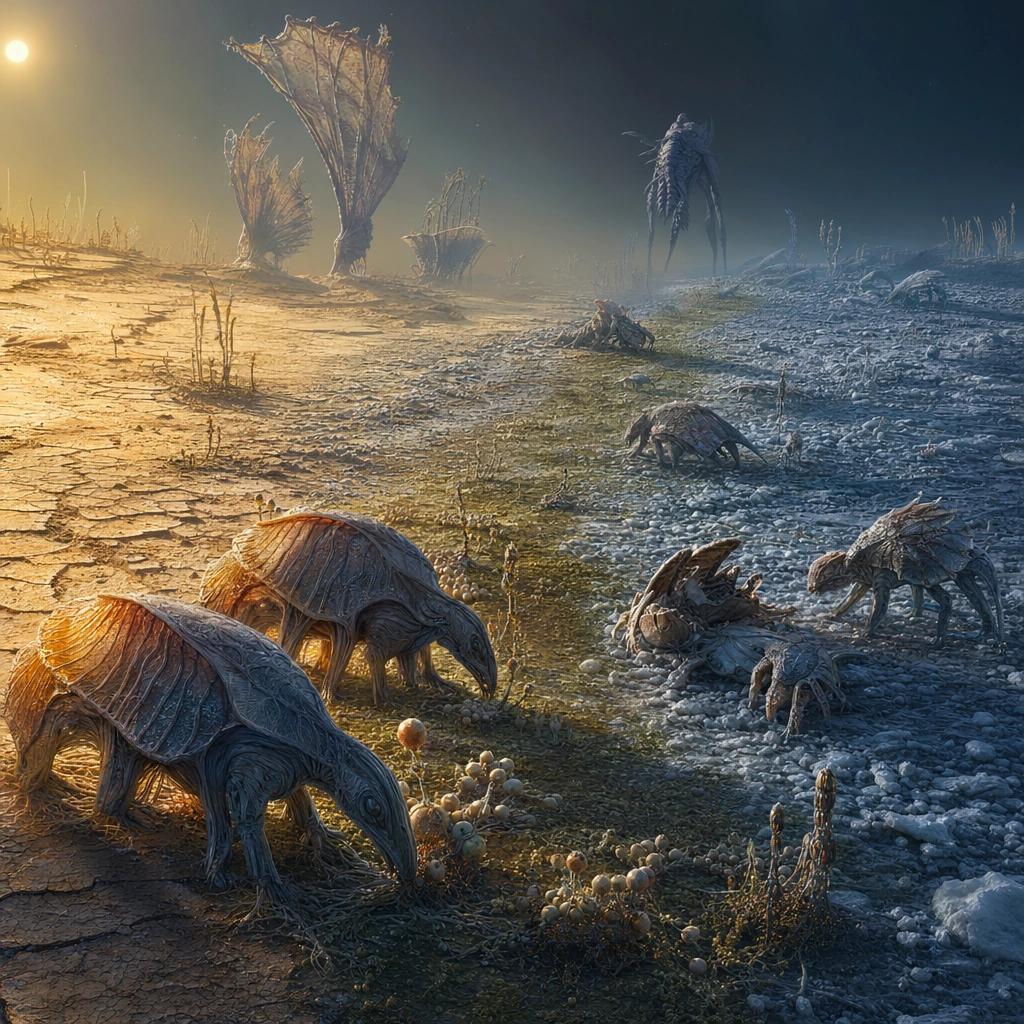
Scene: Set the scene on a broad plain where the colder side of the terminator belt is visible as bluish haze beyond dark stone outcrops. The light should come from one low permanent direction, creating long shadows that emphasize the herd’s movement across the terrain. Build the frame as a square natural history study with disciplined composition, believable lighting, and enough environmental evidence to explain how this organism or system functions without any caption. Keep the image polished, observational, and suitable for a research gallery rather than pulp fantasy spectacle. Subject: Show asymmetrical grazers with larger heat-shield fins on one flank, offset eye placement, and directional coat texture tuned to crosswinds. Their movement should follow a subtle thermal contour visible in vegetation and ground moisture. Show the anatomy, habitat interaction, and scale cues clearly so the viewer can infer locomotion, feeding, reproduction, or ecological role from the visual alone. Every visible structure should feel evolved for a purpose, with layered foreground, midground, and background information that rewards close inspection. Important details: Assume the sun never changes position in the sky from this biome. Organisms should show enduring asymmetry, thermal management, and directional growth because the warm side and cold side of the world remain stable over evolutionary time. Behavior and anatomy should reinforce each other. These animals do not wander randomly; they track stable climate bands across a world that never rotates into night or day. Make their asymmetry feel evolved, useful, and elegant. Favor coherent biology over decorative excess: tissues, shells, membranes, spores, tendrils, fins, silica lattices, or atmospheric sacs should all follow one material logic. Preserve a convincing relationship between the environment and the body plan, use restrained color hierarchy, and make the image feel like a serious speculative field record rather than a random monster concept. Use case: Tidal Locked Terminator Life single study 3/9. Constraints: No readable text, no watermark, no logos, preserve exact 1:1 aspect ratio, no zebra or antelope copy, no sunset safari look, no symmetrical horn crowns, no cinematic dust explosion, no accidental brand resemblance, no direct copy of known terrestrial species, no cartoon simplification.

Example generated from “Tidal Locked Terminator Life — Asymmetric Grazer Profile”
GPT Image 2en

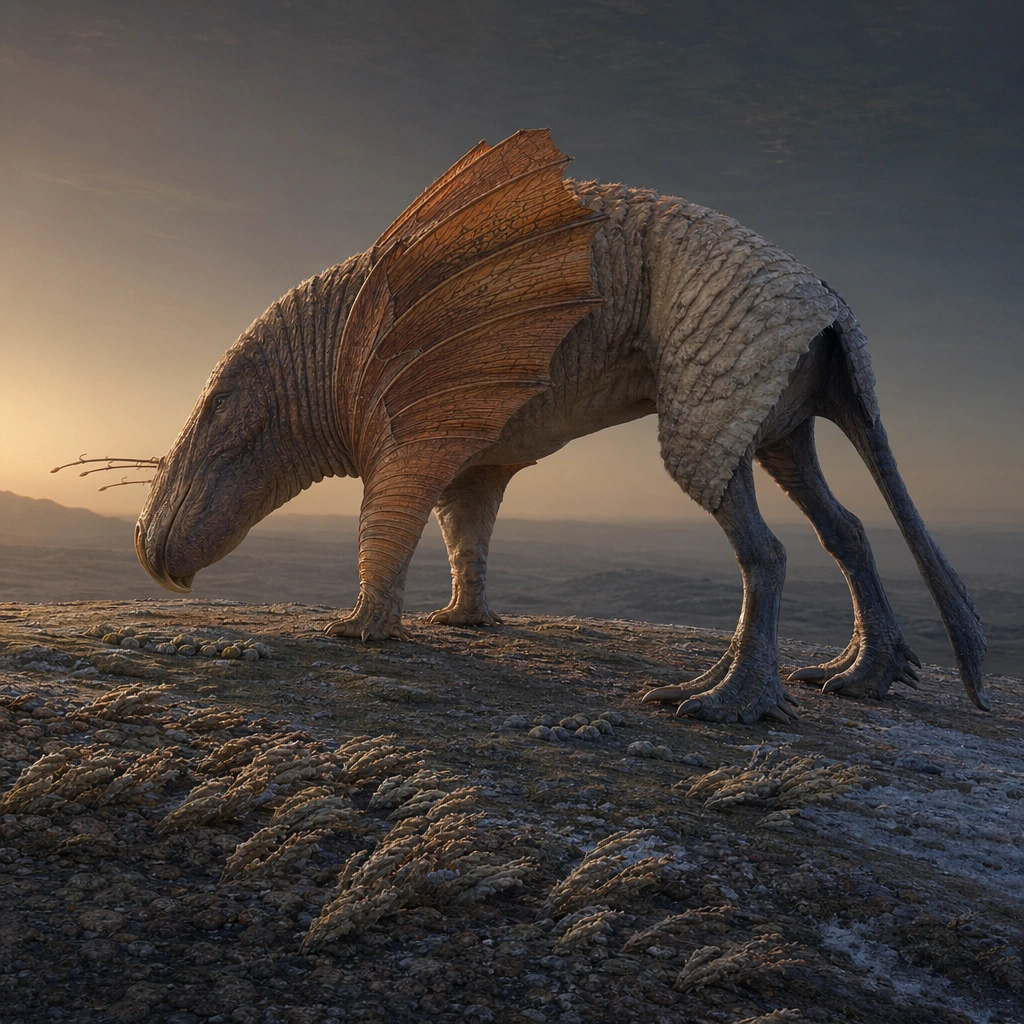
Scene: Build a clean profile study in the open terminator landscape with the animal standing on a low rise under steady lateral light. The square frame should keep background detail subdued so the body plan reads clearly against the perpetual twilight. Build the frame as a square natural history study with disciplined composition, believable lighting, and enough environmental evidence to explain how this organism or system functions without any caption. Keep the image polished, observational, and suitable for a research gallery rather than pulp fantasy spectacle. Subject: Center on one mature grazer whose warm-side anatomy differs visibly from the cold-side anatomy: expanded thermal fins, denser insulation, offset sensory organs, and a gait adapted to cross-slope travel. The animal should feel plausible and calm rather than monstrous. Show the anatomy, habitat interaction, and scale cues clearly so the viewer can infer locomotion, feeding, reproduction, or ecological role from the visual alone. Every visible structure should feel evolved for a purpose, with layered foreground, midground, and background information that rewards close inspection. Important details: Assume the sun never changes position in the sky from this biome. Organisms should show enduring asymmetry, thermal management, and directional growth because the warm side and cold side of the world remain stable over evolutionary time. This is a morphology image, so asymmetry must be precise and justified. Every uneven feature should suggest a role in temperature control, vision, or wind management within a world of permanent directional stress. Favor coherent biology over decorative excess: tissues, shells, membranes, spores, tendrils, fins, silica lattices, or atmospheric sacs should all follow one material logic. Preserve a convincing relationship between the environment and the body plan, use restrained color hierarchy, and make the image feel like a serious speculative field record rather than a random monster concept. Use case: Tidal Locked Terminator Life single study 4/9. Constraints: No readable text, no watermark, no logos, preserve exact 1:1 aspect ratio, no mirrored body halves, no fantasy chimera mixing, no heroic battle pose, no flat museum-cutout background, no accidental brand resemblance, no direct copy of known terrestrial species, no cartoon simplification.

Example generated from “Tidal Locked Terminator Life — Heat Fin Reflection Pool”
GPT Image 2en

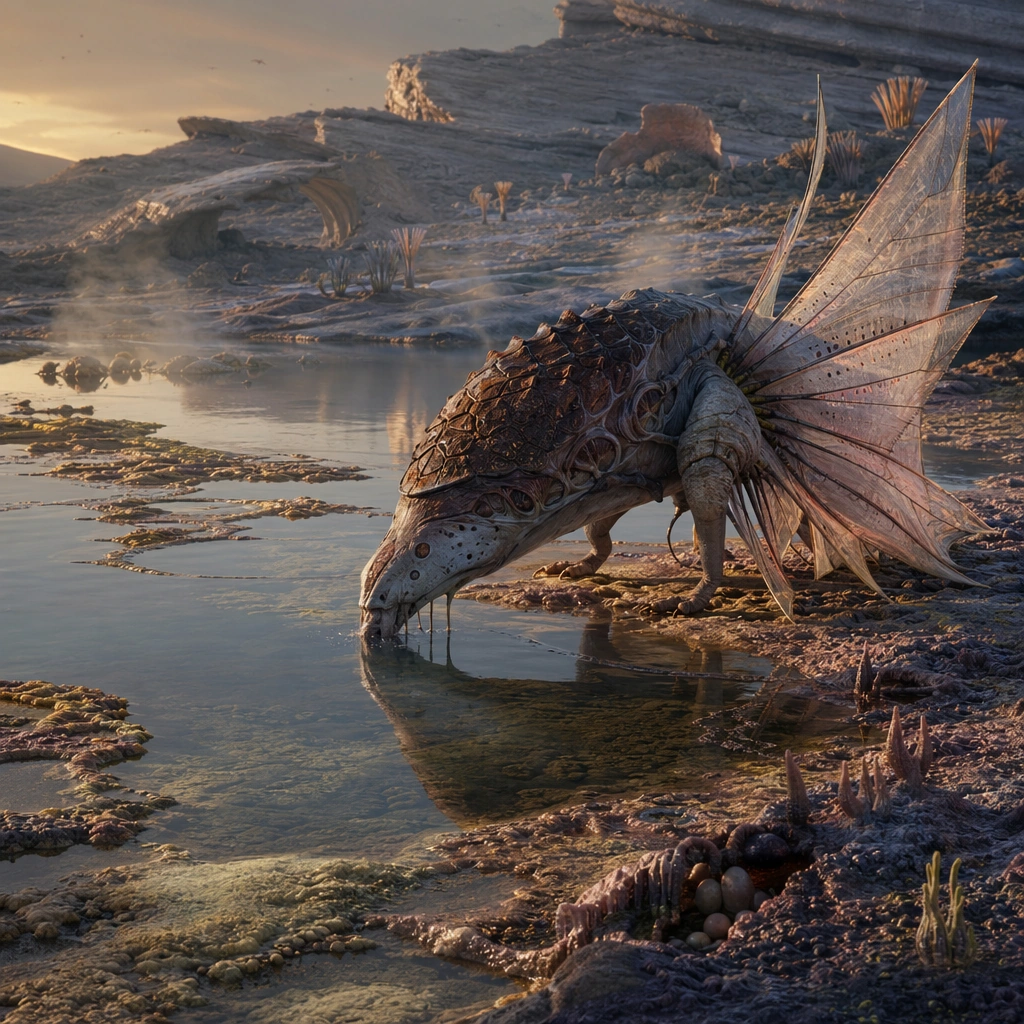
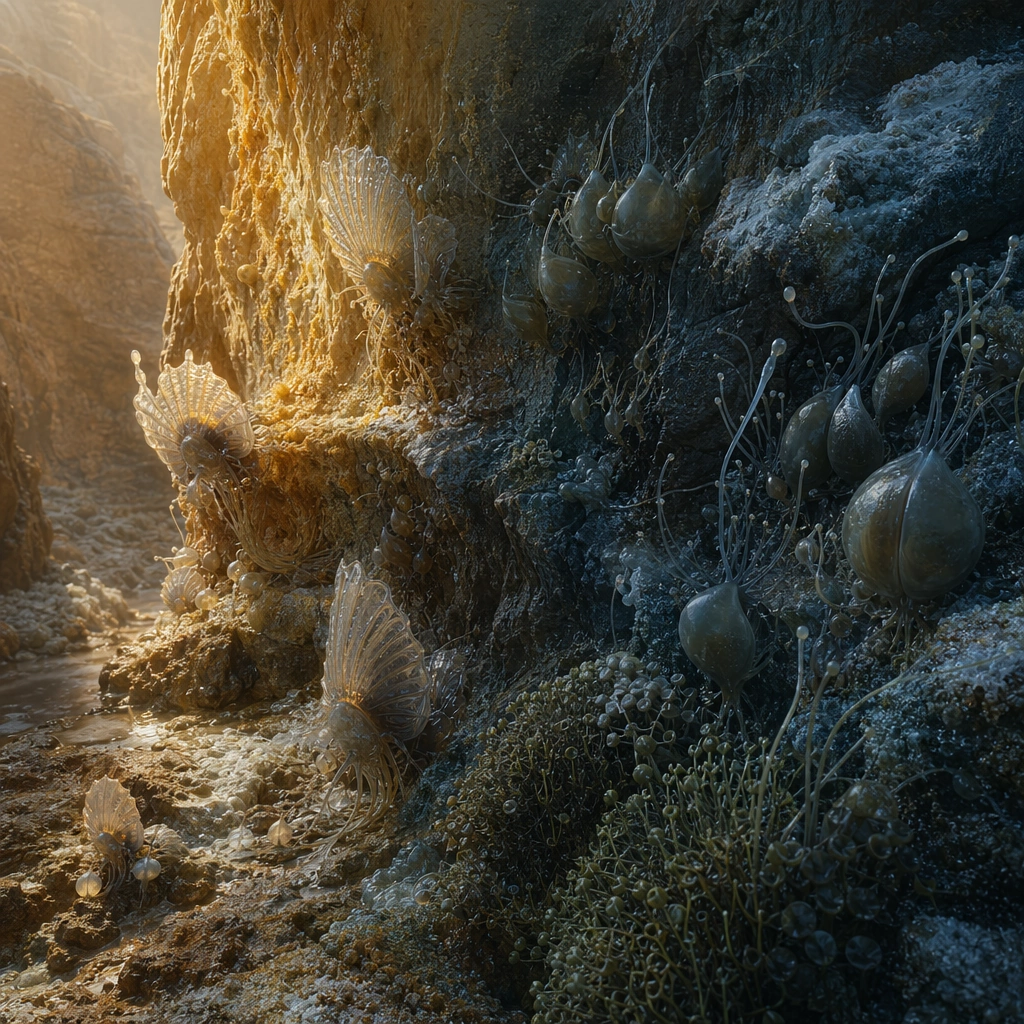
Scene: Compose the image around a shallow reflective pool in the twilight belt, where warm side-light skims across the water and makes the air shimmer just above the surface. Rock, mist, and long shadows should all point in the same unchanging direction. Build the frame as a square natural history study with disciplined composition, believable lighting, and enough environmental evidence to explain how this organism or system functions without any caption. Keep the image polished, observational, and suitable for a research gallery rather than pulp fantasy spectacle. Subject: Show a semi-aquatic or heat-stressed organism extending specialized cooling fins into the air while drinking or resting by the pool. The reflection should help clarify its asymmetrical body plan without turning the image into a mirror gimmick. Show the anatomy, habitat interaction, and scale cues clearly so the viewer can infer locomotion, feeding, reproduction, or ecological role from the visual alone. Every visible structure should feel evolved for a purpose, with layered foreground, midground, and background information that rewards close inspection. Important details: Assume the sun never changes position in the sky from this biome. Organisms should show enduring asymmetry, thermal management, and directional growth because the warm side and cold side of the world remain stable over evolutionary time. Use water as an ecological tool, not decorative scenery. The pool should read as a thermal refuge shaped by stable climate, and the animal’s behavior should feel adapted to repeated use of such refuges in permanent twilight. Favor coherent biology over decorative excess: tissues, shells, membranes, spores, tendrils, fins, silica lattices, or atmospheric sacs should all follow one material logic. Preserve a convincing relationship between the environment and the body plan, use restrained color hierarchy, and make the image feel like a serious speculative field record rather than a random monster concept. Use case: Tidal Locked Terminator Life single study 5/9. Constraints: No readable text, no watermark, no logos, preserve exact 1:1 aspect ratio, no sunset romance framing, no Earth flamingo or deer copy, no magical glowing water, no symmetrical reflection trickery, no accidental brand resemblance, no direct copy of known terrestrial species, no cartoon simplification.

Example generated from “Tidal Locked Terminator Life — Pollinator Crepuscular Cloud”
GPT Image 2en

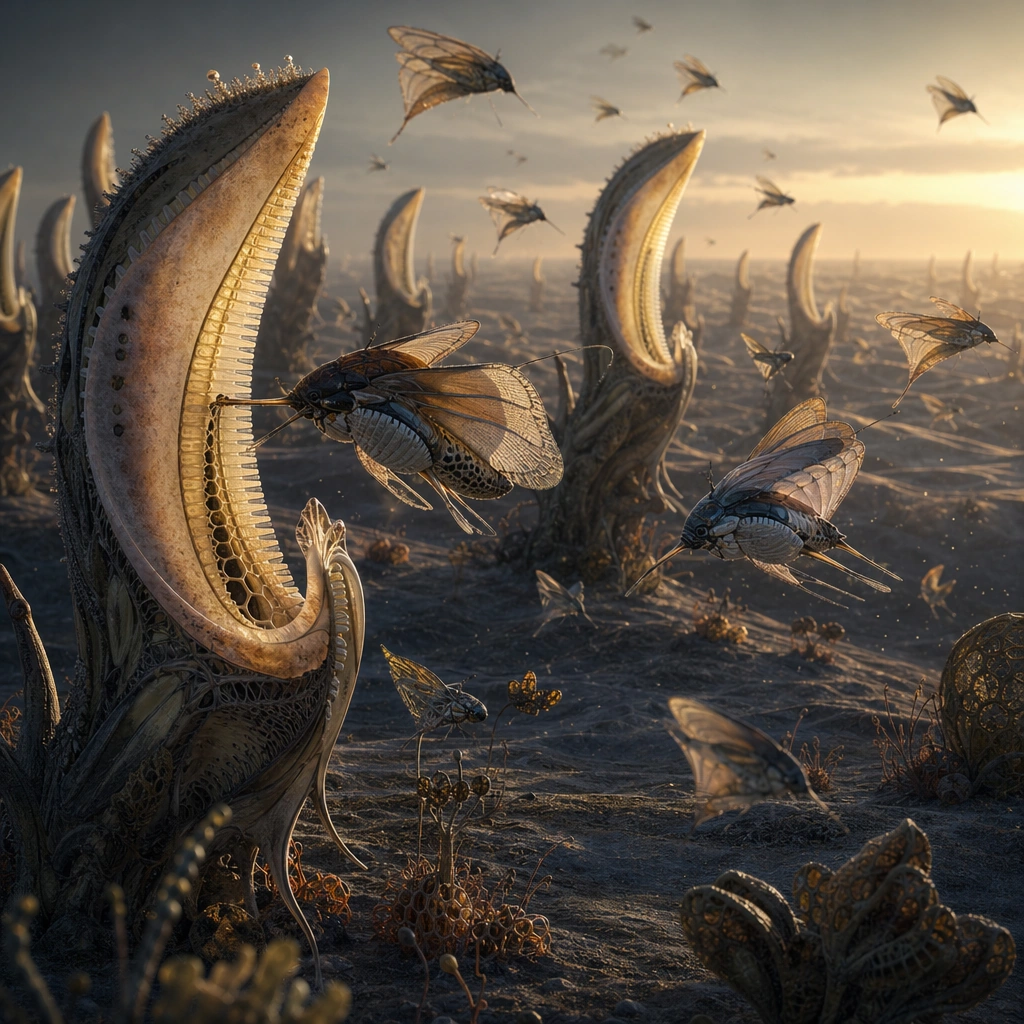
Scene: Create a hovering pollination scene in the calm core of the terminator zone, where rows of one-sided bloom structures face the same warm horizon. The light should be delicate but directional, with enough air haze to reveal movement without blurring the forms. Build the frame as a square natural history study with disciplined composition, believable lighting, and enough environmental evidence to explain how this organism or system functions without any caption. Keep the image polished, observational, and suitable for a research gallery rather than pulp fantasy spectacle. Subject: Feature a cloud of pollinator organisms whose bodies are shaped for the persistent crosswind and narrow temperature band of the twilight biome. Their interaction with the plant structures should suggest coevolution rather than generic insect behavior. Show the anatomy, habitat interaction, and scale cues clearly so the viewer can infer locomotion, feeding, reproduction, or ecological role from the visual alone. Every visible structure should feel evolved for a purpose, with layered foreground, midground, and background information that rewards close inspection. Important details: Assume the sun never changes position in the sky from this biome. Organisms should show enduring asymmetry, thermal management, and directional growth because the warm side and cold side of the world remain stable over evolutionary time. Keep the biology grounded: bloom geometry, landing surfaces, and pollinator flight mechanics should all reflect the world’s one-direction light and thermal asymmetry. The scene should feel alive, precise, and unlike an Earth meadow. Favor coherent biology over decorative excess: tissues, shells, membranes, spores, tendrils, fins, silica lattices, or atmospheric sacs should all follow one material logic. Preserve a convincing relationship between the environment and the body plan, use restrained color hierarchy, and make the image feel like a serious speculative field record rather than a random monster concept. Use case: Tidal Locked Terminator Life single study 6/9. Constraints: No readable text, no watermark, no logos, preserve exact 1:1 aspect ratio, no butterfly copy, no flower-field cliche, no glowing fairy dust, no bright noon lighting, no accidental brand resemblance, no direct copy of known terrestrial species, no cartoon simplification.

Example generated from “Tidal Locked Terminator Life — Canyon Shelter Colony”
GPT Image 2en

Scene: Set the viewpoint inside a canyon whose walls soften the direct thermal contrast of the open terminator plain. The square frame should use reflected warm light on one wall and cool shade on the other to show why the canyon serves as refuge. Build the frame as a square natural history study with disciplined composition, believable lighting, and enough environmental evidence to explain how this organism or system functions without any caption. Keep the image polished, observational, and suitable for a research gallery rather than pulp fantasy spectacle. Subject: Show clustered organisms occupying narrow ledges, thermal seep pockets, and sheltered vegetation niches. Different age groups or species can coexist here if the canyon naturally creates a more stable microclimate. Show the anatomy, habitat interaction, and scale cues clearly so the viewer can infer locomotion, feeding, reproduction, or ecological role from the visual alone. Every visible structure should feel evolved for a purpose, with layered foreground, midground, and background information that rewards close inspection. Important details: Assume the sun never changes position in the sky from this biome. Organisms should show enduring asymmetry, thermal management, and directional growth because the warm side and cold side of the world remain stable over evolutionary time. The refuge logic must be obvious through geology, light, and posture. Organisms should appear concentrated where conditions narrow the thermal stress between the world’s two permanent extremes. Favor coherent biology over decorative excess: tissues, shells, membranes, spores, tendrils, fins, silica lattices, or atmospheric sacs should all follow one material logic. Preserve a convincing relationship between the environment and the body plan, use restrained color hierarchy, and make the image feel like a serious speculative field record rather than a random monster concept. Use case: Tidal Locked Terminator Life single study 7/9. Constraints: No readable text, no watermark, no logos, preserve exact 1:1 aspect ratio, no fantasy cave settlement, no human torches, no dramatic lava fissure, no cathedral architecture, no accidental brand resemblance, no direct copy of known terrestrial species, no cartoon simplification.

Example generated from “Tidal Locked Terminator Life — Migratory Thermal Route”
GPT Image 2en

Scene: Use a slightly elevated vantage to reveal a narrow thermal corridor winding across the terrain like a living path. The warm side and cold side of the planet should remain legible in the sky and surface color, but the corridor itself should guide the eye through the square frame. Build the frame as a square natural history study with disciplined composition, believable lighting, and enough environmental evidence to explain how this organism or system functions without any caption. Keep the image polished, observational, and suitable for a research gallery rather than pulp fantasy spectacle. Subject: Show several species using the same route for different reasons: grazers, scavengers, and predators all taking advantage of a stable temperature band. Their spacing should imply a functioning food web rather than random crowding. Show the anatomy, habitat interaction, and scale cues clearly so the viewer can infer locomotion, feeding, reproduction, or ecological role from the visual alone. Every visible structure should feel evolved for a purpose, with layered foreground, midground, and background information that rewards close inspection. Important details: Assume the sun never changes position in the sky from this biome. Organisms should show enduring asymmetry, thermal management, and directional growth because the warm side and cold side of the world remain stable over evolutionary time. This image should explain movement ecology through landscape design. Ground texture, plant distribution, and body orientation should all reveal why this route persists over geological time on a tidally locked world. Favor coherent biology over decorative excess: tissues, shells, membranes, spores, tendrils, fins, silica lattices, or atmospheric sacs should all follow one material logic. Preserve a convincing relationship between the environment and the body plan, use restrained color hierarchy, and make the image feel like a serious speculative field record rather than a random monster concept. Use case: Tidal Locked Terminator Life single study 8/9. Constraints: No readable text, no watermark, no logos, preserve exact 1:1 aspect ratio, no road markings, no human caravan, no dust-storm action spectacle, no generic fantasy migration parade, no accidental brand resemblance, no direct copy of known terrestrial species, no cartoon simplification.

Example generated from “Tidal Locked Terminator Life — Twilight Biome Finale”
GPT Image 2en

Scene: Finish with a synthesis landscape that gathers the essential elements of the terminator zone into one coherent twilight view: directional plants, asymmetrical animals, warm and cool horizons, and a stable thermal corridor. The square frame should feel like a final atlas plate for this world. Build the frame as a square natural history study with disciplined composition, believable lighting, and enough environmental evidence to explain how this organism or system functions without any caption. Keep the image polished, observational, and suitable for a research gallery rather than pulp fantasy spectacle. Subject: Arrange multiple species and terrain cues so the viewer can read the biome as a whole system without losing realism. No single creature should dominate; the focus is the environmental logic that shapes all life here. Show the anatomy, habitat interaction, and scale cues clearly so the viewer can infer locomotion, feeding, reproduction, or ecological role from the visual alone. Every visible structure should feel evolved for a purpose, with layered foreground, midground, and background information that rewards close inspection. Important details: Assume the sun never changes position in the sky from this biome. Organisms should show enduring asymmetry, thermal management, and directional growth because the warm side and cold side of the world remain stable over evolutionary time. Preserve the permanent one-sidedness of the world in every visible choice. This image should read as a serious speculative exobiology scene, not a generic alien sunset landscape. Favor coherent biology over decorative excess: tissues, shells, membranes, spores, tendrils, fins, silica lattices, or atmospheric sacs should all follow one material logic. Preserve a convincing relationship between the environment and the body plan, use restrained color hierarchy, and make the image feel like a serious speculative field record rather than a random monster concept. Use case: Tidal Locked Terminator Life single study 9/9. Constraints: No readable text, no watermark, no logos, preserve exact 1:1 aspect ratio, no rotating-sun illusion, no city skyline, no fantasy monument, no abstract matte-painting blur, no accidental brand resemblance, no direct copy of known terrestrial species, no cartoon simplification.

Example generated from “Tilt Shift Miniature World — Street Corner”
GPT Image 2en

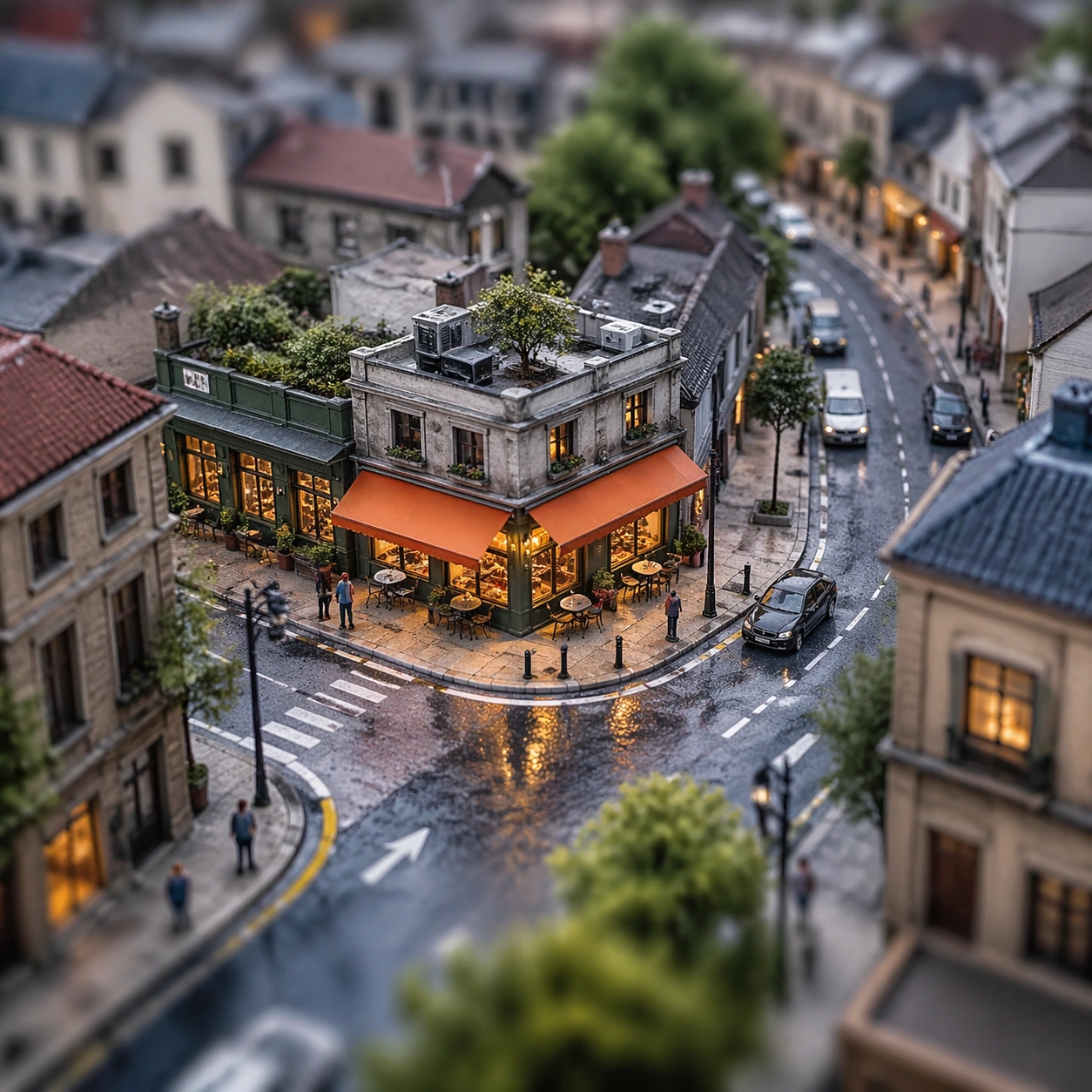
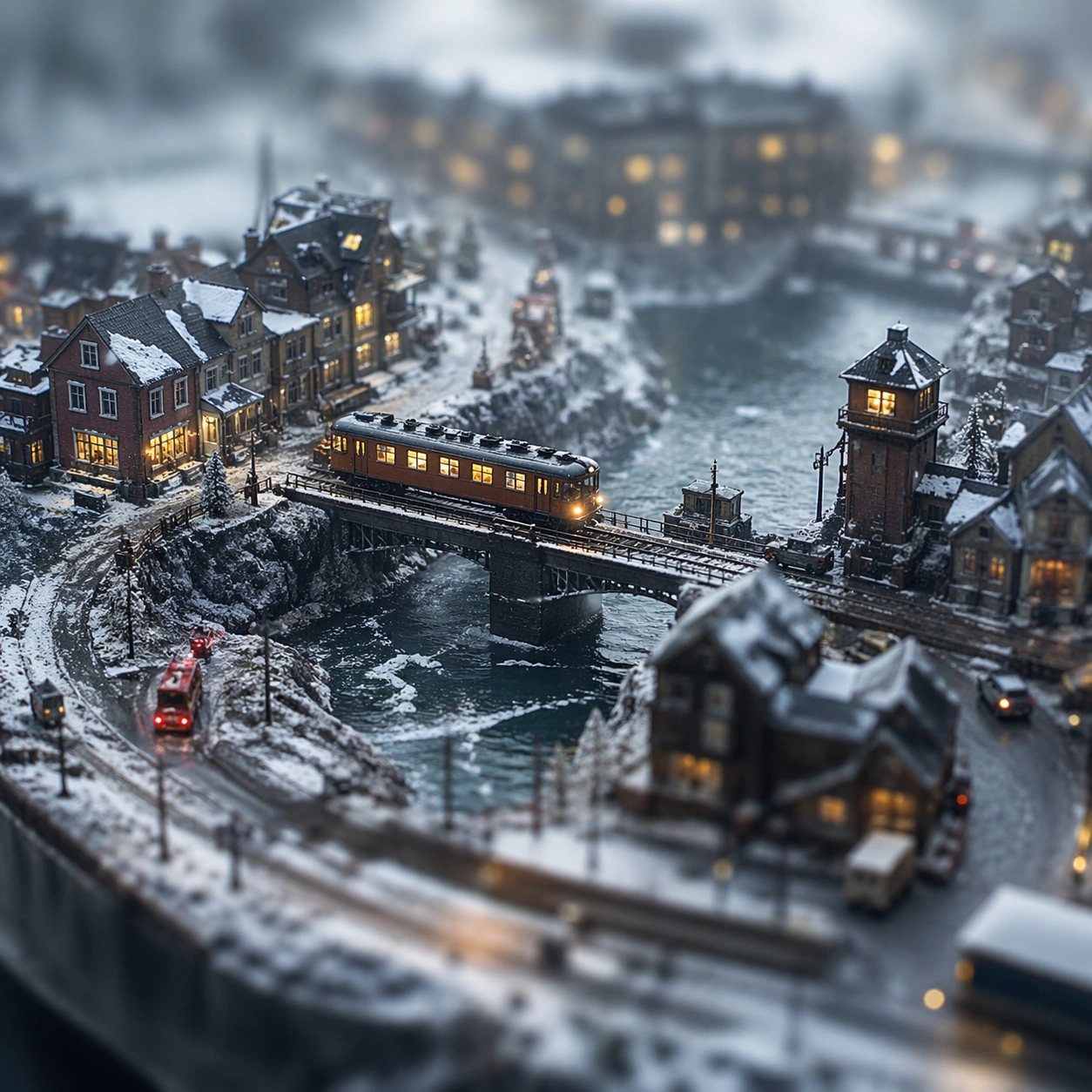
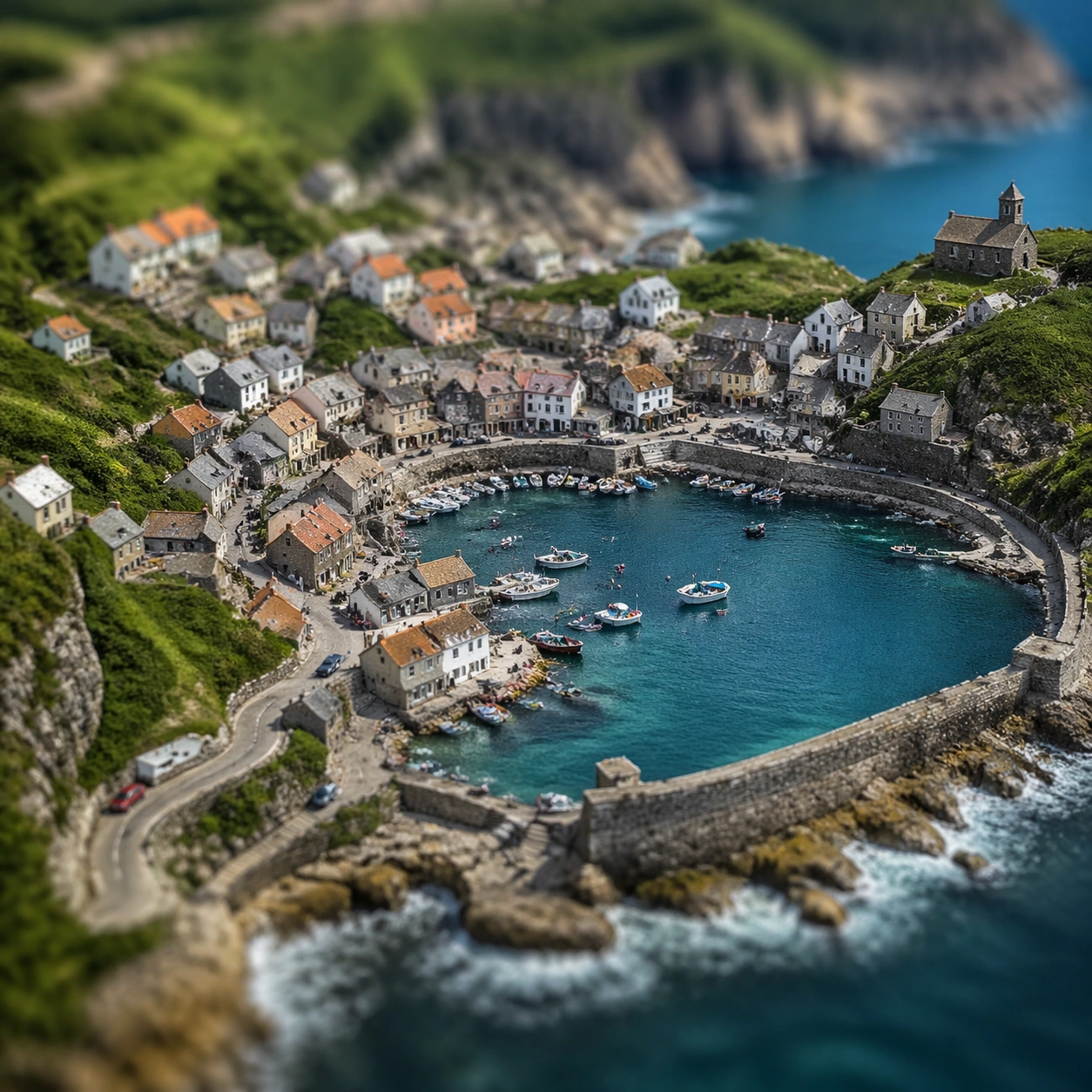
Scene: A square scene where miniature scale is believable through lens behavior, surface detail, and carefully staged environmental cues. Build the frame around a smaller urban or narrative vignette with dense hand-scale detail. Keep the lighting, camera distance, and spatial organization tuned for a high-signal research image rather than a casual snapshot. The image belongs to the Tilt-Shift Miniature World theme and should feel immediately legible as a prompt atlas theme for tilt-shift miniature world, testing photorealism, physics-materials, style-transfer with gpt image 2.. Subject: Center the study on a smaller urban or narrative vignette with dense hand-scale detail. Translate the theme into a concrete visual statement instead of an abstract mood board: the viewer should understand what kind of image this is, what is being tested, and why the composition is difficult. Use the slug idea of tilt shift miniature world as a literal guide for subject matter, materials, and staging. If helpful, borrow the broad visual cues suggested by tilt-shift, but keep the result original and specific to this study. Important details: The charm should come from credible micro-world logic: tiny infrastructure, scaled weathering, selective focus, and a clear sense of inhabited smallness. Preserve a disciplined square composition, clear focal hierarchy, and enough secondary information to make the image feel complete rather than underspecified. The image should look polished, novel, and exhibition-ready, with topic-specific credibility coming from the way surfaces, structure, and visual language reinforce Tilt-Shift Miniature World. Avoid generic filler elements that do not serve the main concept. Use case: Tilt-Shift Miniature World single study 2/8, testing photorealism, physics-materials, style-transfer through the street corner variation. Constraints: No readable text, no watermark, no logos, preserve exact 1:1 aspect ratio, no giant human hands, no obvious toy-store packaging, no random oversized props, no readable text, no flat diorama cuteness without realism, no muddy depth cues.
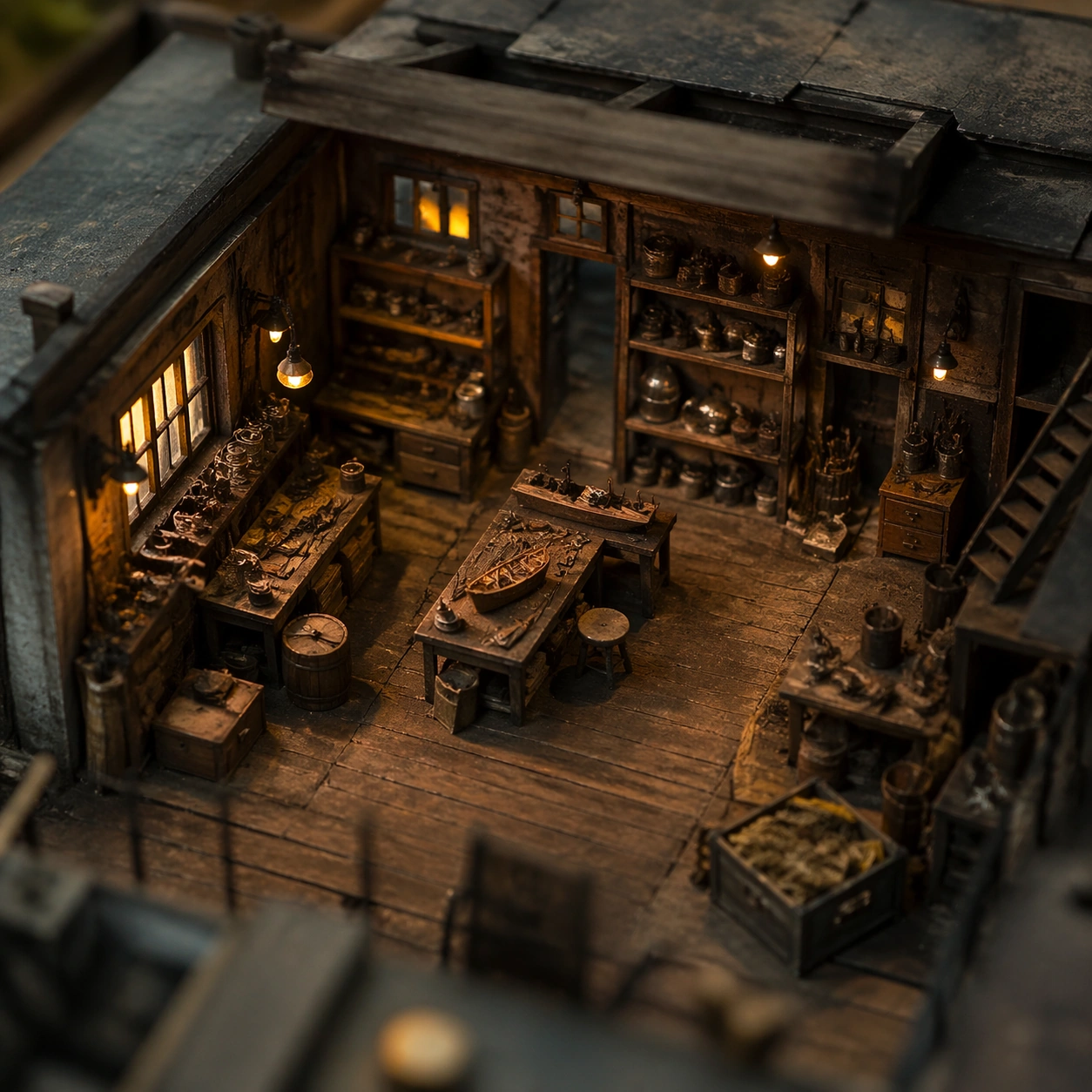
Example generated from “Tilt Shift Miniature World — Workshop Interior”
GPT Image 2en

Scene: A square scene where miniature scale is believable through lens behavior, surface detail, and carefully staged environmental cues. Build the frame around an intimate micro interior built with convincing tiny tools and materials. Keep the lighting, camera distance, and spatial organization tuned for a high-signal research image rather than a casual snapshot. The image belongs to the Tilt-Shift Miniature World theme and should feel immediately legible as a prompt atlas theme for tilt-shift miniature world, testing photorealism, physics-materials, style-transfer with gpt image 2.. Subject: Center the study on an intimate micro interior built with convincing tiny tools and materials. Translate the theme into a concrete visual statement instead of an abstract mood board: the viewer should understand what kind of image this is, what is being tested, and why the composition is difficult. Use the slug idea of tilt shift miniature world as a literal guide for subject matter, materials, and staging. If helpful, borrow the broad visual cues suggested by tilt-shift, but keep the result original and specific to this study. Important details: The charm should come from credible micro-world logic: tiny infrastructure, scaled weathering, selective focus, and a clear sense of inhabited smallness. Preserve a disciplined square composition, clear focal hierarchy, and enough secondary information to make the image feel complete rather than underspecified. The image should look polished, novel, and exhibition-ready, with topic-specific credibility coming from the way surfaces, structure, and visual language reinforce Tilt-Shift Miniature World. Avoid generic filler elements that do not serve the main concept. Use case: Tilt-Shift Miniature World single study 3/8, testing photorealism, physics-materials, style-transfer through the workshop interior variation. Constraints: No readable text, no watermark, no logos, preserve exact 1:1 aspect ratio, no giant human hands, no obvious toy-store packaging, no random oversized props, no readable text, no flat diorama cuteness without realism, no muddy depth cues.
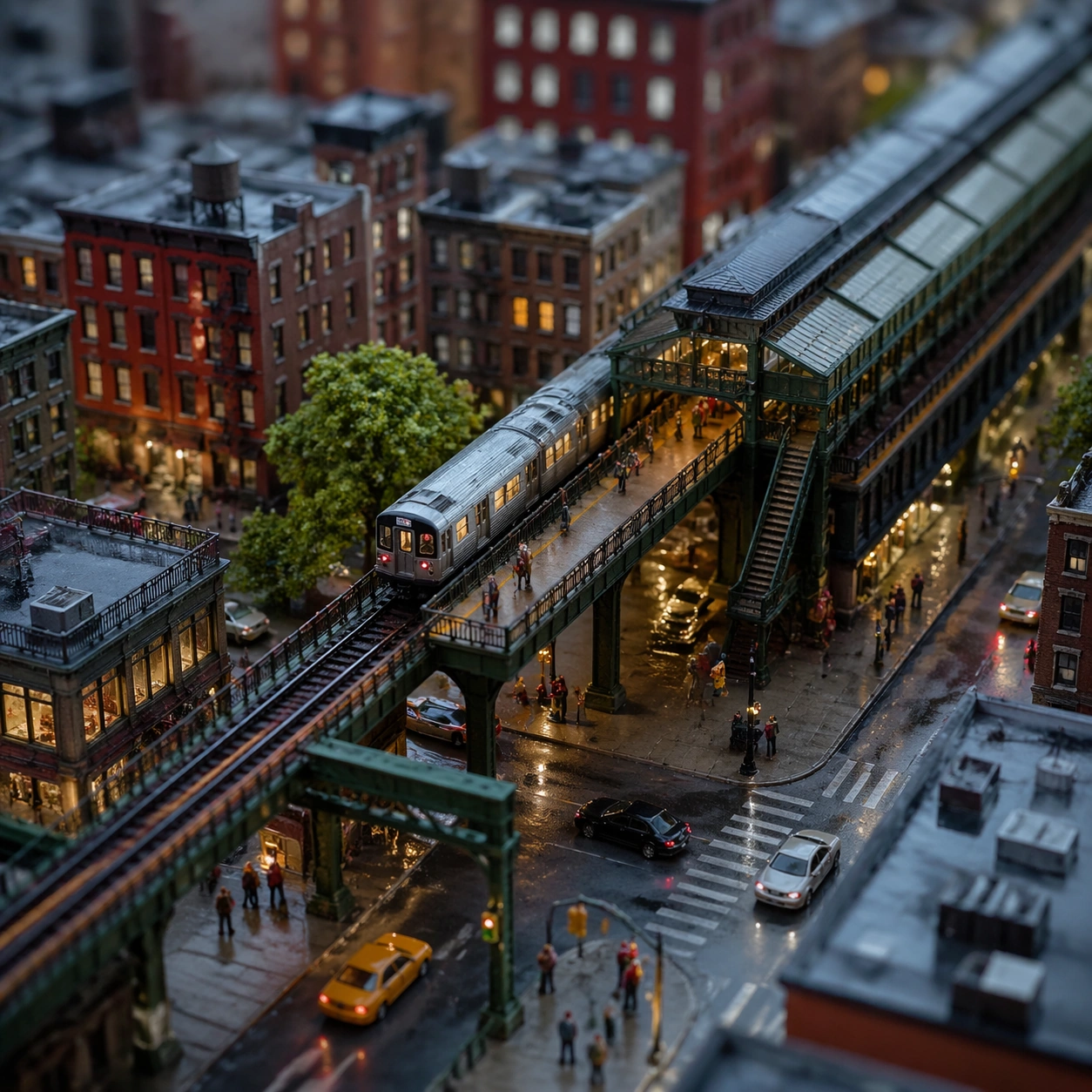
Example generated from “Tilt Shift Miniature World — Transit Snapshot”
GPT Image 2en

Scene: A square scene where miniature scale is believable through lens behavior, surface detail, and carefully staged environmental cues. Build the frame around movement or infrastructure that makes the small world feel functional. Keep the lighting, camera distance, and spatial organization tuned for a high-signal research image rather than a casual snapshot. The image belongs to the Tilt-Shift Miniature World theme and should feel immediately legible as a prompt atlas theme for tilt-shift miniature world, testing photorealism, physics-materials, style-transfer with gpt image 2.. Subject: Center the study on movement or infrastructure that makes the small world feel functional. Translate the theme into a concrete visual statement instead of an abstract mood board: the viewer should understand what kind of image this is, what is being tested, and why the composition is difficult. Use the slug idea of tilt shift miniature world as a literal guide for subject matter, materials, and staging. If helpful, borrow the broad visual cues suggested by tilt-shift, but keep the result original and specific to this study. Important details: The charm should come from credible micro-world logic: tiny infrastructure, scaled weathering, selective focus, and a clear sense of inhabited smallness. Preserve a disciplined square composition, clear focal hierarchy, and enough secondary information to make the image feel complete rather than underspecified. The image should look polished, novel, and exhibition-ready, with topic-specific credibility coming from the way surfaces, structure, and visual language reinforce Tilt-Shift Miniature World. Avoid generic filler elements that do not serve the main concept. Use case: Tilt-Shift Miniature World single study 4/8, testing photorealism, physics-materials, style-transfer through the transit snapshot variation. Constraints: No readable text, no watermark, no logos, preserve exact 1:1 aspect ratio, no giant human hands, no obvious toy-store packaging, no random oversized props, no readable text, no flat diorama cuteness without realism, no muddy depth cues.
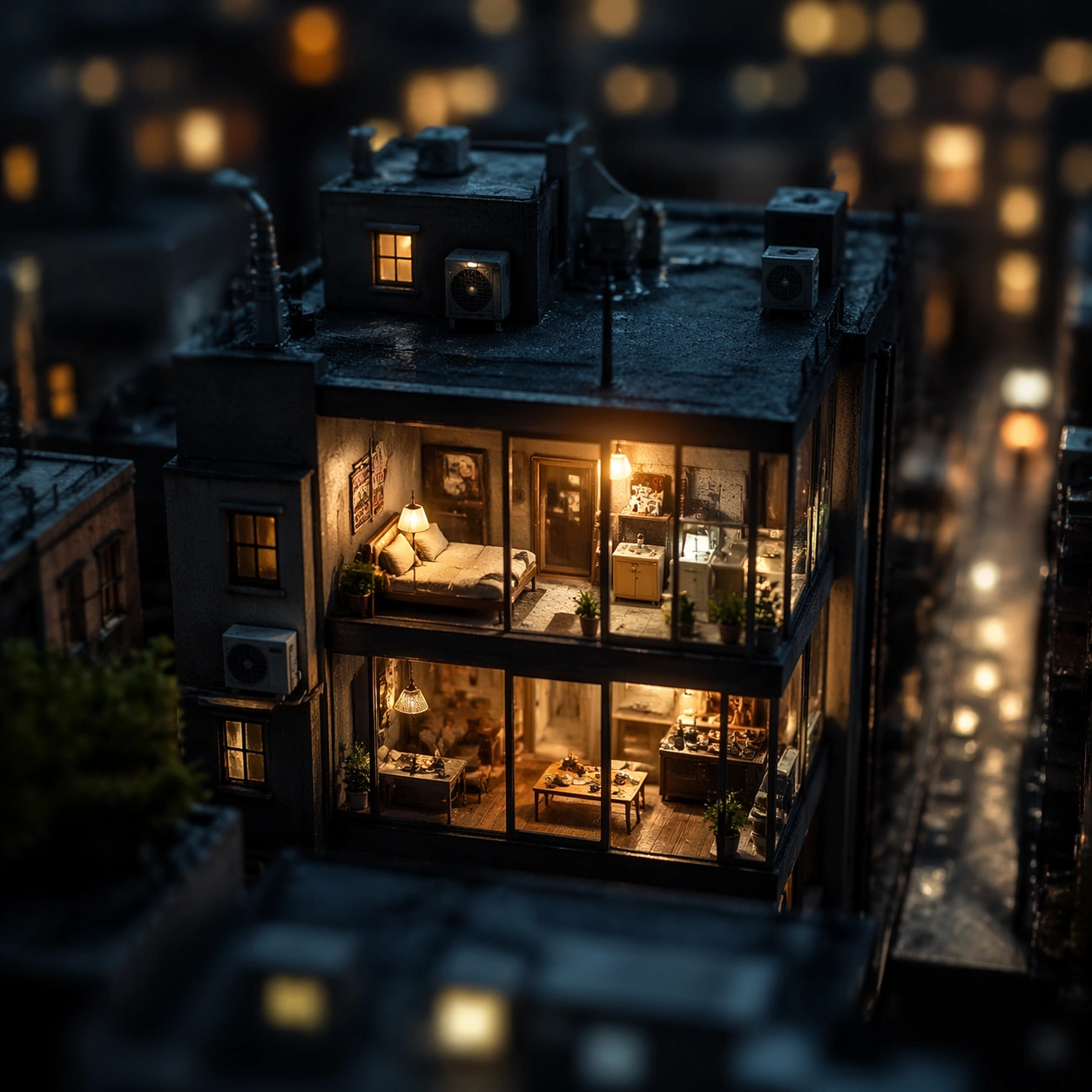
Example generated from “Tilt Shift Miniature World — Night Window”
GPT Image 2en

Scene: A square scene where miniature scale is believable through lens behavior, surface detail, and carefully staged environmental cues. Build the frame around small illuminated interiors that sell scale and atmosphere together. Keep the lighting, camera distance, and spatial organization tuned for a high-signal research image rather than a casual snapshot. The image belongs to the Tilt-Shift Miniature World theme and should feel immediately legible as a prompt atlas theme for tilt-shift miniature world, testing photorealism, physics-materials, style-transfer with gpt image 2.. Subject: Center the study on small illuminated interiors that sell scale and atmosphere together. Translate the theme into a concrete visual statement instead of an abstract mood board: the viewer should understand what kind of image this is, what is being tested, and why the composition is difficult. Use the slug idea of tilt shift miniature world as a literal guide for subject matter, materials, and staging. If helpful, borrow the broad visual cues suggested by tilt-shift, but keep the result original and specific to this study. Important details: The charm should come from credible micro-world logic: tiny infrastructure, scaled weathering, selective focus, and a clear sense of inhabited smallness. Preserve a disciplined square composition, clear focal hierarchy, and enough secondary information to make the image feel complete rather than underspecified. The image should look polished, novel, and exhibition-ready, with topic-specific credibility coming from the way surfaces, structure, and visual language reinforce Tilt-Shift Miniature World. Avoid generic filler elements that do not serve the main concept. Use case: Tilt-Shift Miniature World single study 5/8, testing photorealism, physics-materials, style-transfer through the night window variation. Constraints: No readable text, no watermark, no logos, preserve exact 1:1 aspect ratio, no giant human hands, no obvious toy-store packaging, no random oversized props, no readable text, no flat diorama cuteness without realism, no muddy depth cues.

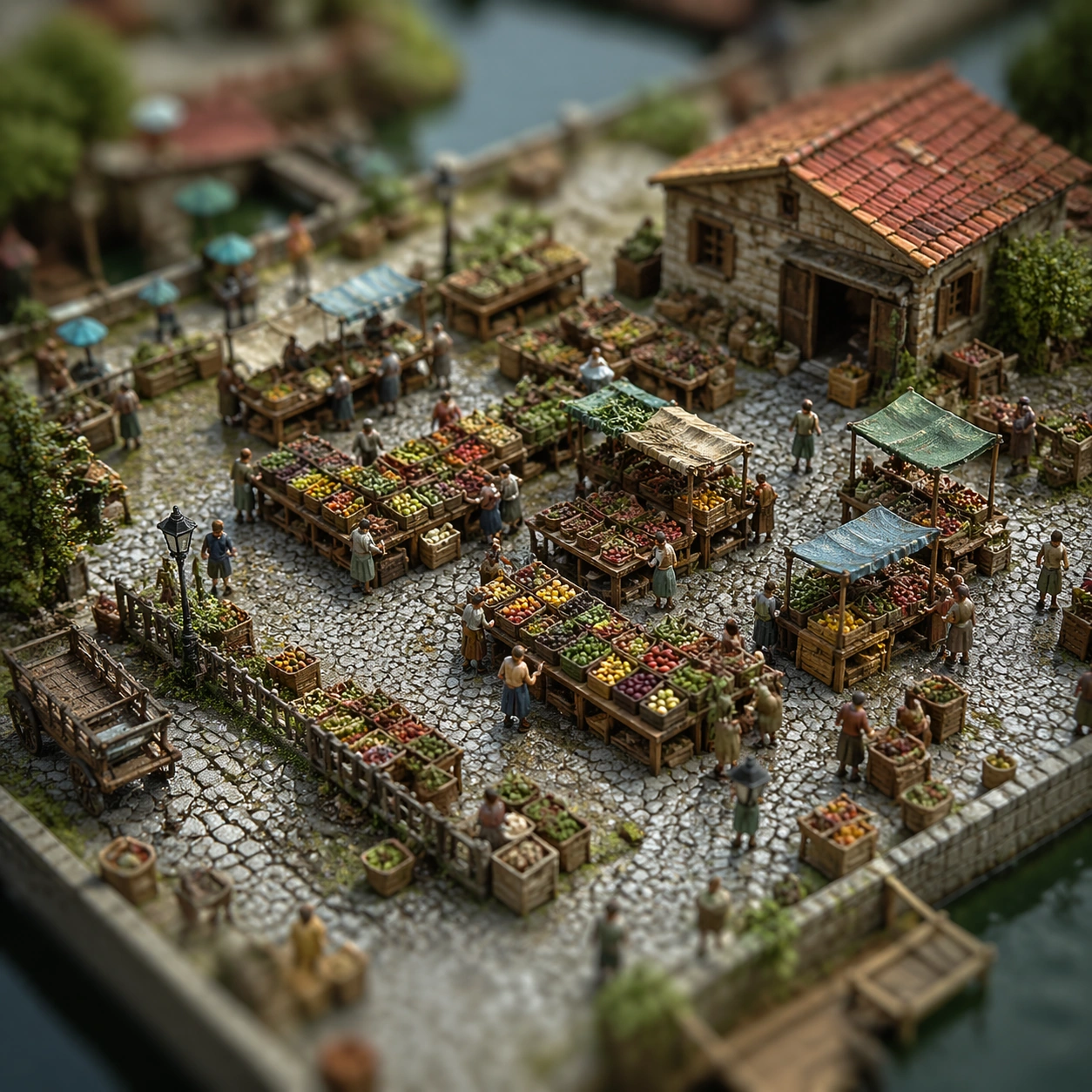
Example generated from “Tilt Shift Miniature World — Market Table”
GPT Image 2en

Scene: A square scene where miniature scale is believable through lens behavior, surface detail, and carefully staged environmental cues. Build the frame around a dense arrangement of tiny goods or activity zones. Keep the lighting, camera distance, and spatial organization tuned for a high-signal research image rather than a casual snapshot. The image belongs to the Tilt-Shift Miniature World theme and should feel immediately legible as a prompt atlas theme for tilt-shift miniature world, testing photorealism, physics-materials, style-transfer with gpt image 2.. Subject: Center the study on a dense arrangement of tiny goods or activity zones. Translate the theme into a concrete visual statement instead of an abstract mood board: the viewer should understand what kind of image this is, what is being tested, and why the composition is difficult. Use the slug idea of tilt shift miniature world as a literal guide for subject matter, materials, and staging. If helpful, borrow the broad visual cues suggested by tilt-shift, but keep the result original and specific to this study. Important details: The charm should come from credible micro-world logic: tiny infrastructure, scaled weathering, selective focus, and a clear sense of inhabited smallness. Preserve a disciplined square composition, clear focal hierarchy, and enough secondary information to make the image feel complete rather than underspecified. The image should look polished, novel, and exhibition-ready, with topic-specific credibility coming from the way surfaces, structure, and visual language reinforce Tilt-Shift Miniature World. Avoid generic filler elements that do not serve the main concept. Use case: Tilt-Shift Miniature World single study 6/8, testing photorealism, physics-materials, style-transfer through the market table variation. Constraints: No readable text, no watermark, no logos, preserve exact 1:1 aspect ratio, no giant human hands, no obvious toy-store packaging, no random oversized props, no readable text, no flat diorama cuteness without realism, no muddy depth cues.

Example generated from “Tilt Shift Miniature World — Weather Scene”
GPT Image 2en

Scene: A square scene where miniature scale is believable through lens behavior, surface detail, and carefully staged environmental cues. Build the frame around rain, fog, snow, or light used to prove physical scale. Keep the lighting, camera distance, and spatial organization tuned for a high-signal research image rather than a casual snapshot. The image belongs to the Tilt-Shift Miniature World theme and should feel immediately legible as a prompt atlas theme for tilt-shift miniature world, testing photorealism, physics-materials, style-transfer with gpt image 2.. Subject: Center the study on rain, fog, snow, or light used to prove physical scale. Translate the theme into a concrete visual statement instead of an abstract mood board: the viewer should understand what kind of image this is, what is being tested, and why the composition is difficult. Use the slug idea of tilt shift miniature world as a literal guide for subject matter, materials, and staging. If helpful, borrow the broad visual cues suggested by tilt-shift, but keep the result original and specific to this study. Important details: The charm should come from credible micro-world logic: tiny infrastructure, scaled weathering, selective focus, and a clear sense of inhabited smallness. Preserve a disciplined square composition, clear focal hierarchy, and enough secondary information to make the image feel complete rather than underspecified. The image should look polished, novel, and exhibition-ready, with topic-specific credibility coming from the way surfaces, structure, and visual language reinforce Tilt-Shift Miniature World. Avoid generic filler elements that do not serve the main concept. Use case: Tilt-Shift Miniature World single study 7/8, testing photorealism, physics-materials, style-transfer through the weather scene variation. Constraints: No readable text, no watermark, no logos, preserve exact 1:1 aspect ratio, no giant human hands, no obvious toy-store packaging, no random oversized props, no readable text, no flat diorama cuteness without realism, no muddy depth cues.

Example generated from “Tilt Shift Miniature World — Signature World”
GPT Image 2en

Scene: A square scene where miniature scale is believable through lens behavior, surface detail, and carefully staged environmental cues. Build the frame around the clearest and most memorable final miniature composition. Keep the lighting, camera distance, and spatial organization tuned for a high-signal research image rather than a casual snapshot. The image belongs to the Tilt-Shift Miniature World theme and should feel immediately legible as a prompt atlas theme for tilt-shift miniature world, testing photorealism, physics-materials, style-transfer with gpt image 2.. Subject: Center the study on the clearest and most memorable final miniature composition. Translate the theme into a concrete visual statement instead of an abstract mood board: the viewer should understand what kind of image this is, what is being tested, and why the composition is difficult. Use the slug idea of tilt shift miniature world as a literal guide for subject matter, materials, and staging. If helpful, borrow the broad visual cues suggested by tilt-shift, but keep the result original and specific to this study. Important details: The charm should come from credible micro-world logic: tiny infrastructure, scaled weathering, selective focus, and a clear sense of inhabited smallness. Preserve a disciplined square composition, clear focal hierarchy, and enough secondary information to make the image feel complete rather than underspecified. The image should look polished, novel, and exhibition-ready, with topic-specific credibility coming from the way surfaces, structure, and visual language reinforce Tilt-Shift Miniature World. Avoid generic filler elements that do not serve the main concept. Use case: Tilt-Shift Miniature World single study 8/8, testing photorealism, physics-materials, style-transfer through the signature world variation. Constraints: No readable text, no watermark, no logos, preserve exact 1:1 aspect ratio, no giant human hands, no obvious toy-store packaging, no random oversized props, no readable text, no flat diorama cuteness without realism, no muddy depth cues.

Example generated from “Time Folded Urban Spectacle — Street Bent Skyward”
GPT Image 2en

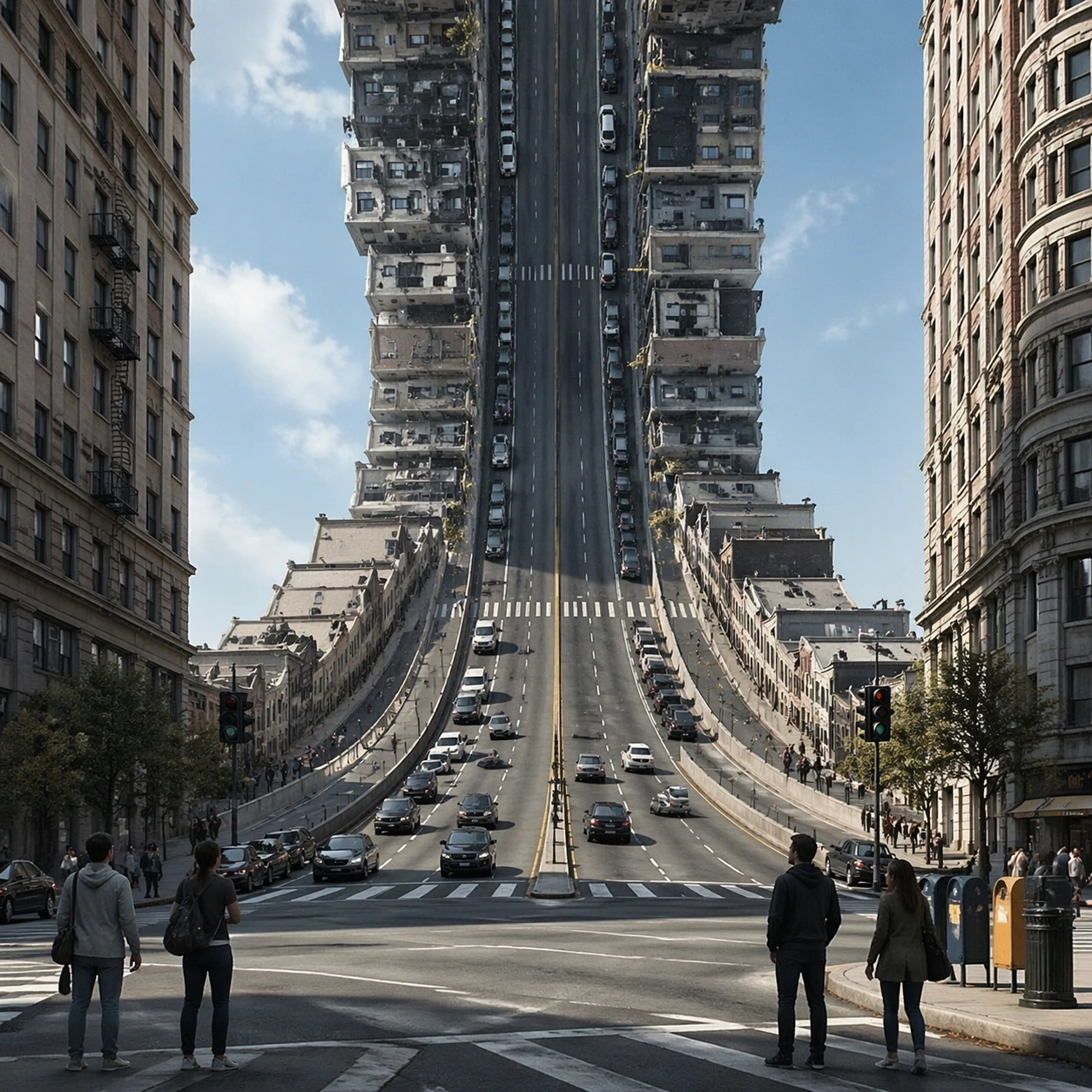
Scene: A square large-format city spectacle where architecture bends, folds, loops, or stacks while remaining physically convincing enough to feel like a photographed event. Use broad daylight or clear night atmosphere, dense urban material detail, and a sense of immense scale achieved through believable streets, facades, traffic patterns, and tiny witnesses. Show a broad boulevard rising vertically at the far end until storefronts and parked cars become a standing wall against the sky. Subject: The subject is the city itself as a time-distorted machine, with roads, bridges, towers, or plazas curling into impossible but coherent formations. Human figures should remain small, secondary, and practical, acting only as scale markers for the urban transformation. Pedestrians in the foreground stop beside crosswalk paint and newspaper boxes, staring upward at the folded street plane. Important details: The signature rule is to make the impossible read as engineered reality rather than fantasy painting. Preserve concrete, glass, asphalt, railings, shadows, and structural rhythm with enough discipline that the folded geometry feels like a captured phenomenon. Avoid cartoon simplification, magical particles, or decorative sci-fi ornament. The fold must feel clean, weighty, and infrastructural, with real curb lines, drainage channels, and traffic lights continuing into the vertical section. Use case: Time-Folded Urban Spectacle single study 1/9. Constraints: No readable text, no watermark, no logos, preserve exact 1:1 aspect ratio, no fantasy castle shapes, no random levitating debris without structure, no superhero cues, no branded billboards, no unreadable poster text, no broken anatomy, no low-detail background, no accidental text fragments.

Example generated from “Time Folded Urban Spectacle — Subway Loop Plaza”
GPT Image 2en

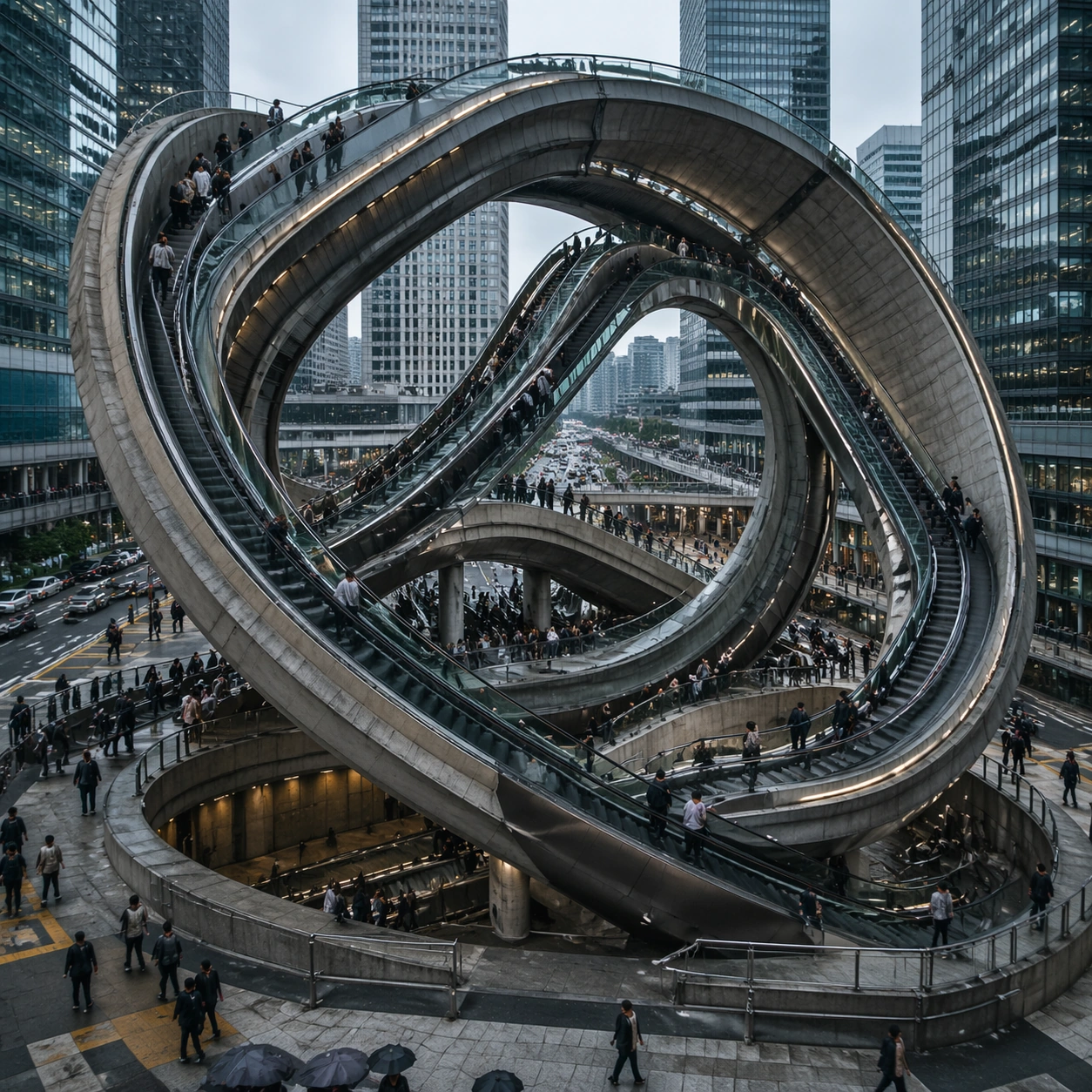
Scene: A square large-format city spectacle where architecture bends, folds, loops, or stacks while remaining physically convincing enough to feel like a photographed event. Use broad daylight or clear night atmosphere, dense urban material detail, and a sense of immense scale achieved through believable streets, facades, traffic patterns, and tiny witnesses. Build an open civic plaza where subway entrances spiral into a visible loop of platforms and staircases above ground, like a transit knot turned inside out. Subject: The subject is the city itself as a time-distorted machine, with roads, bridges, towers, or plazas curling into impossible but coherent formations. Human figures should remain small, secondary, and practical, acting only as scale markers for the urban transformation. Commuters with umbrellas and satchels remain tiny around the edges while the looped infrastructure dominates the center. Important details: The signature rule is to make the impossible read as engineered reality rather than fantasy painting. Preserve concrete, glass, asphalt, railings, shadows, and structural rhythm with enough discipline that the folded geometry feels like a captured phenomenon. Avoid cartoon simplification, magical particles, or decorative sci-fi ornament. Keep the railings, escalator housings, and stone paving plausible so the spectacle feels architectural rather than abstract. Use case: Time-Folded Urban Spectacle single study 2/9. Constraints: No readable text, no watermark, no logos, preserve exact 1:1 aspect ratio, no fantasy castle shapes, no random levitating debris without structure, no superhero cues, no branded billboards, no unreadable poster text, no broken anatomy, no low-detail background, no accidental text fragments.

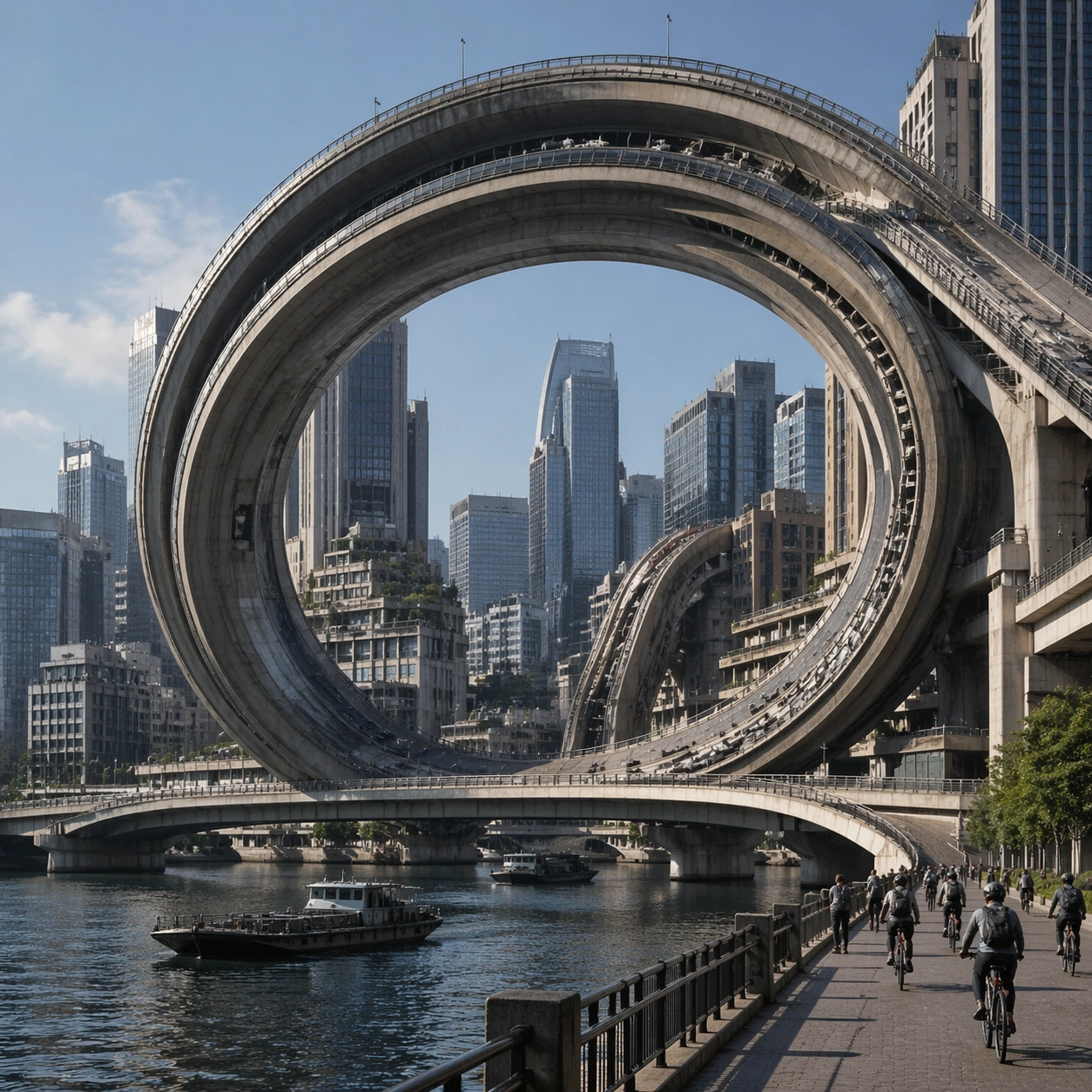
Example generated from “Time Folded Urban Spectacle — River Ring Overpass”
GPT Image 2en

Scene: A square large-format city spectacle where architecture bends, folds, loops, or stacks while remaining physically convincing enough to feel like a photographed event. Use broad daylight or clear night atmosphere, dense urban material detail, and a sense of immense scale achieved through believable streets, facades, traffic patterns, and tiny witnesses. Place the camera near a river embankment where bridges and elevated roads arc into a giant ring crossing above the water. Subject: The subject is the city itself as a time-distorted machine, with roads, bridges, towers, or plazas curling into impossible but coherent formations. Human figures should remain small, secondary, and practical, acting only as scale markers for the urban transformation. Small service boats and a line of cyclists keep the scene grounded while the overpass circle frames the skyline. Important details: The signature rule is to make the impossible read as engineered reality rather than fantasy painting. Preserve concrete, glass, asphalt, railings, shadows, and structural rhythm with enough discipline that the folded geometry feels like a captured phenomenon. Avoid cartoon simplification, magical particles, or decorative sci-fi ornament. The structure should show guardrails, lane markings, expansion joints, and shadow logic that make the ring read as buildable mass. Use case: Time-Folded Urban Spectacle single study 3/9. Constraints: No readable text, no watermark, no logos, preserve exact 1:1 aspect ratio, no fantasy castle shapes, no random levitating debris without structure, no superhero cues, no branded billboards, no unreadable poster text, no broken anatomy, no low-detail background, no accidental text fragments.

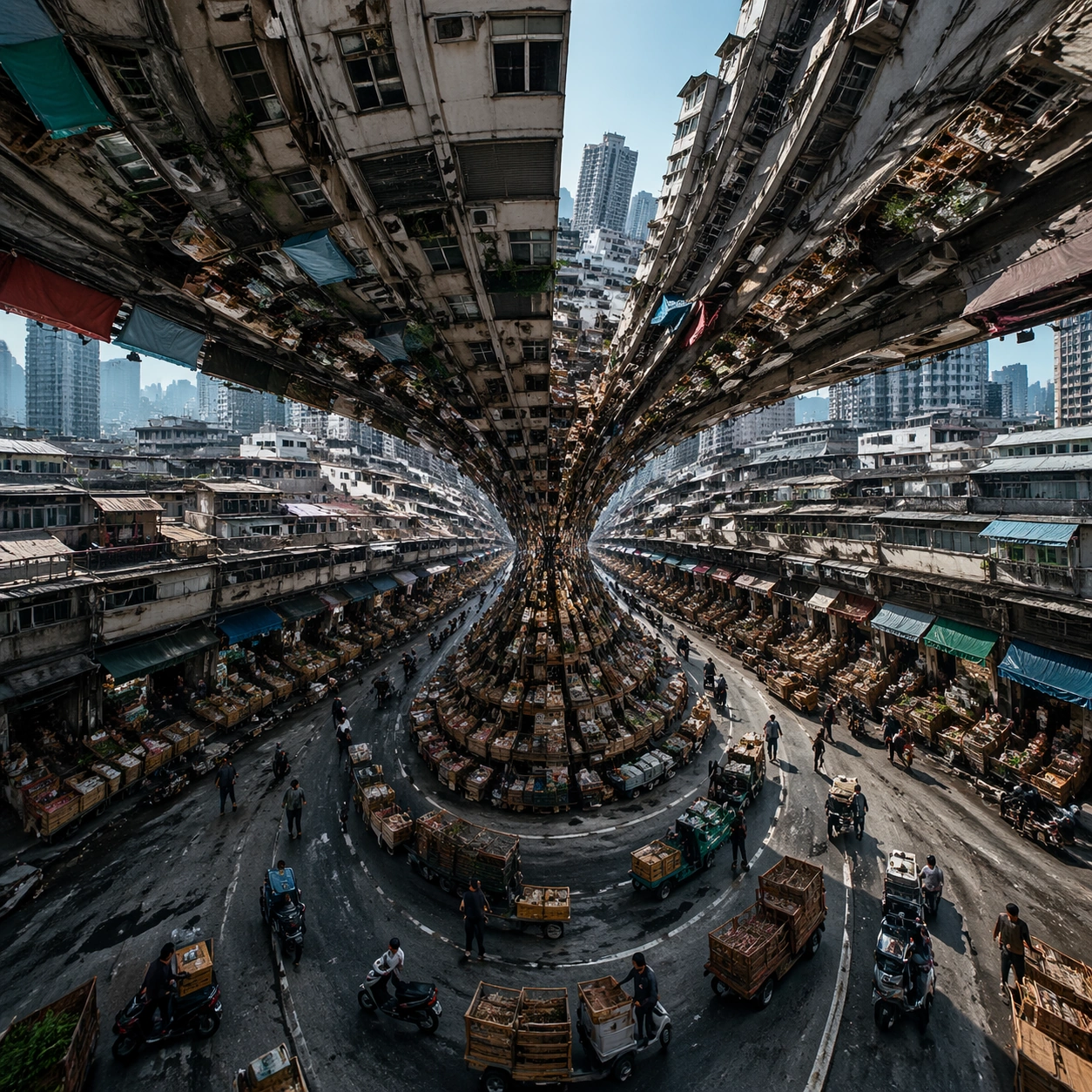
Example generated from “Time Folded Urban Spectacle — Market Hourglass”
GPT Image 2en

Scene: A square large-format city spectacle where architecture bends, folds, loops, or stacks while remaining physically convincing enough to feel like a photographed event. Use broad daylight or clear night atmosphere, dense urban material detail, and a sense of immense scale achieved through believable streets, facades, traffic patterns, and tiny witnesses. Show an old wholesale market square compressed into an hourglass pinch in the middle, with stalls and balconies bending toward a narrow temporal throat. Subject: The subject is the city itself as a time-distorted machine, with roads, bridges, towers, or plazas curling into impossible but coherent formations. Human figures should remain small, secondary, and practical, acting only as scale markers for the urban transformation. Merchants, crates, and scooters remain small and ordinary, intensifying the scale of the impossible spatial squeeze. Important details: The signature rule is to make the impossible read as engineered reality rather than fantasy painting. Preserve concrete, glass, asphalt, railings, shadows, and structural rhythm with enough discipline that the folded geometry feels like a captured phenomenon. Avoid cartoon simplification, magical particles, or decorative sci-fi ornament. Use believable awnings, cables, and masonry so the hourglass effect feels like the city has obeyed a hidden force instead of dissolving into fantasy. Use case: Time-Folded Urban Spectacle single study 4/9. Constraints: No readable text, no watermark, no logos, preserve exact 1:1 aspect ratio, no fantasy castle shapes, no random levitating debris without structure, no superhero cues, no branded billboards, no unreadable poster text, no broken anatomy, no low-detail background, no accidental text fragments.

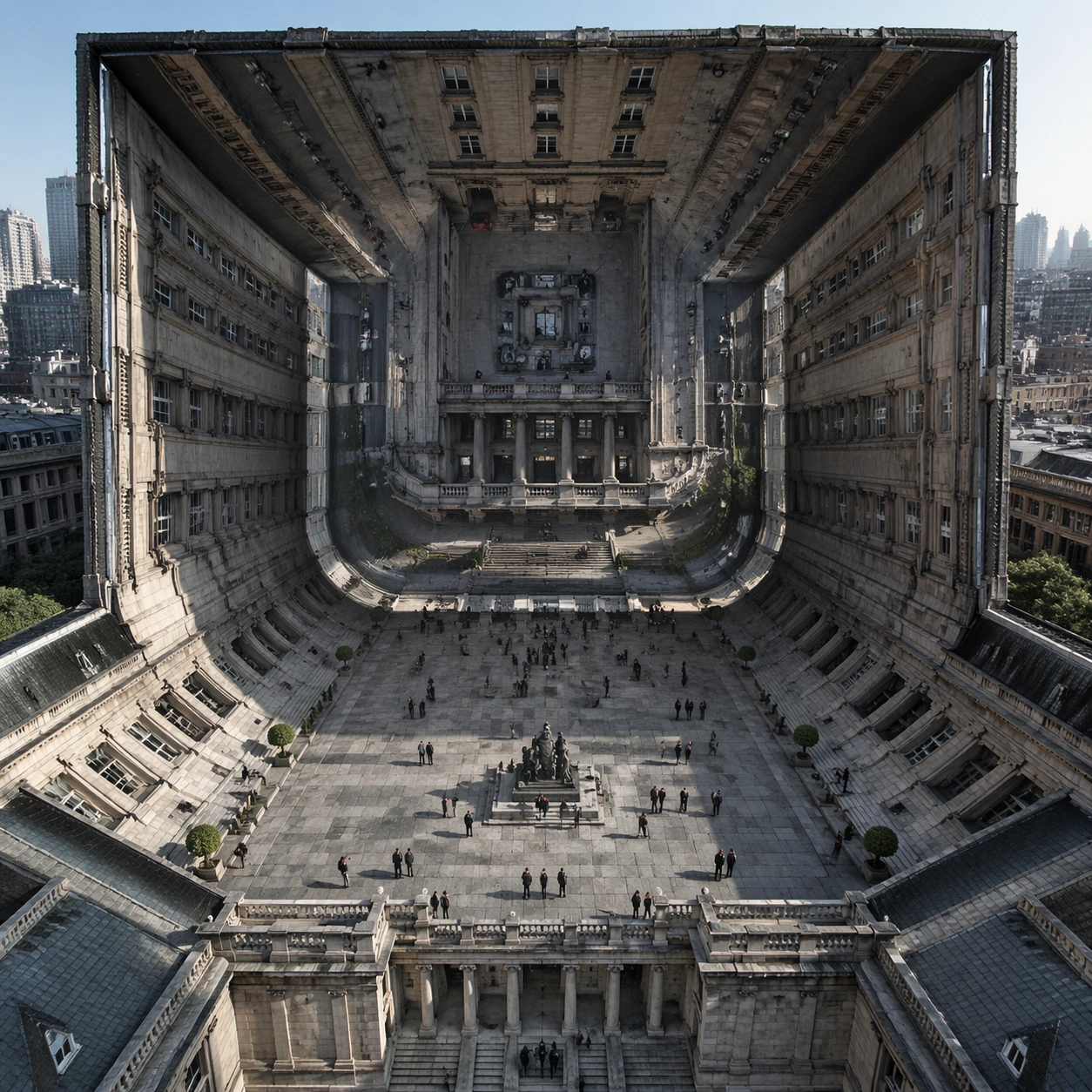
Example generated from “Time Folded Urban Spectacle — Museum Courtyard Fold”
GPT Image 2en

Scene: A square large-format city spectacle where architecture bends, folds, loops, or stacks while remaining physically convincing enough to feel like a photographed event. Use broad daylight or clear night atmosphere, dense urban material detail, and a sense of immense scale achieved through believable streets, facades, traffic patterns, and tiny witnesses. Compose a stone museum courtyard whose four sides hinge upward into a partial cube, leaving the central paving exposed like a lidless box. Subject: The subject is the city itself as a time-distorted machine, with roads, bridges, towers, or plazas curling into impossible but coherent formations. Human figures should remain small, secondary, and practical, acting only as scale markers for the urban transformation. Visitors stand around a sculpture plinth at the bottom center, appearing minute beneath the lifted walls. Important details: The signature rule is to make the impossible read as engineered reality rather than fantasy painting. Preserve concrete, glass, asphalt, railings, shadows, and structural rhythm with enough discipline that the folded geometry feels like a captured phenomenon. Avoid cartoon simplification, magical particles, or decorative sci-fi ornament. Keep the stone cornices, windows, and shadow angles consistent so the upward hinge reads as one continuous architectural event. Use case: Time-Folded Urban Spectacle single study 5/9. Constraints: No readable text, no watermark, no logos, preserve exact 1:1 aspect ratio, no fantasy castle shapes, no random levitating debris without structure, no superhero cues, no branded billboards, no unreadable poster text, no broken anatomy, no low-detail background, no accidental text fragments.

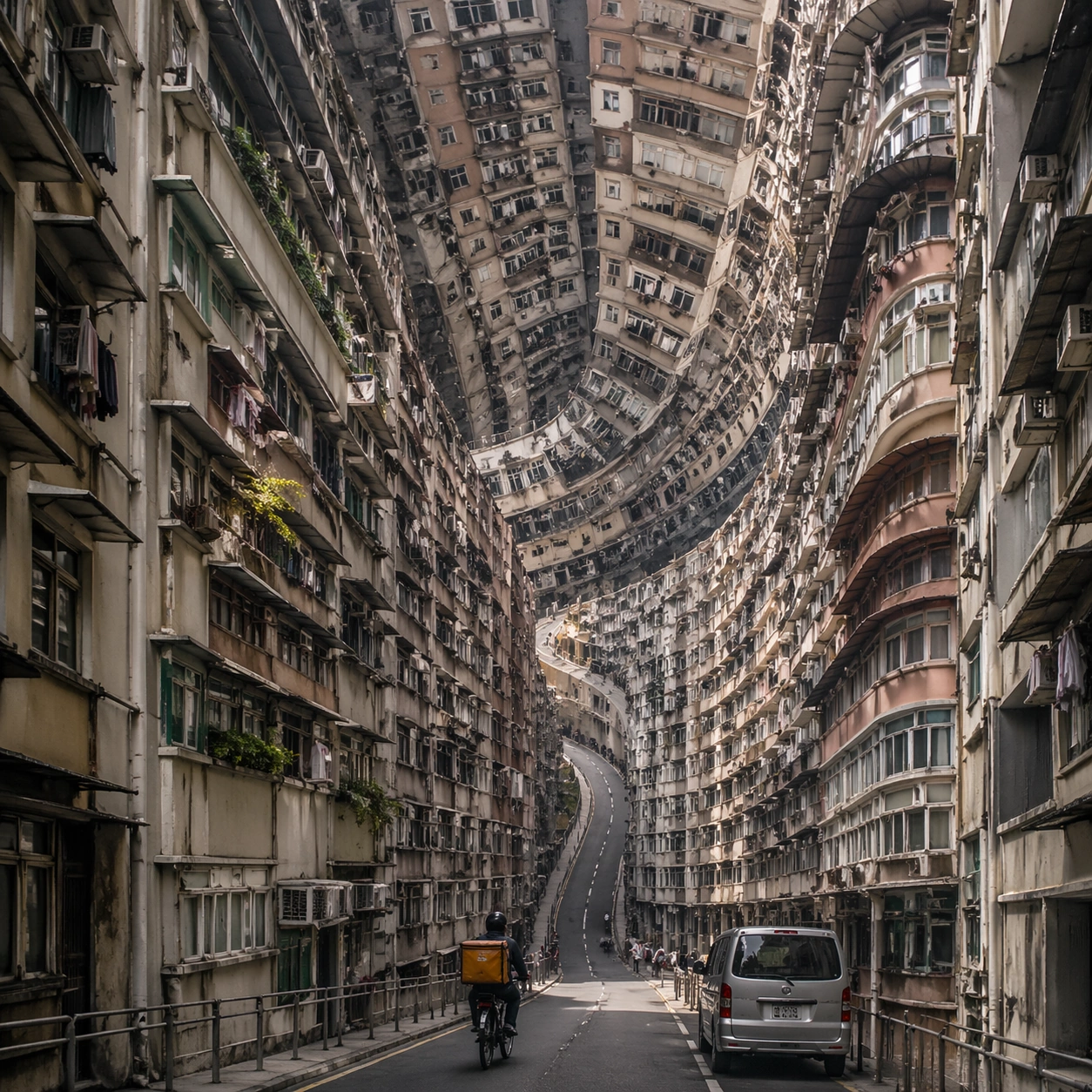
Example generated from “Time Folded Urban Spectacle — Residential Canyon Twist”
GPT Image 2en

Scene: A square large-format city spectacle where architecture bends, folds, loops, or stacks while remaining physically convincing enough to feel like a photographed event. Use broad daylight or clear night atmosphere, dense urban material detail, and a sense of immense scale achieved through believable streets, facades, traffic patterns, and tiny witnesses. Use a canyon of apartment towers twisting around a narrow street, with laundry balconies and window grids spiraling but not collapsing. Subject: The subject is the city itself as a time-distorted machine, with roads, bridges, towers, or plazas curling into impossible but coherent formations. Human figures should remain small, secondary, and practical, acting only as scale markers for the urban transformation. A delivery cyclist and a parked van give the street a humble everyday scale at the center bottom. Important details: The signature rule is to make the impossible read as engineered reality rather than fantasy painting. Preserve concrete, glass, asphalt, railings, shadows, and structural rhythm with enough discipline that the folded geometry feels like a captured phenomenon. Avoid cartoon simplification, magical particles, or decorative sci-fi ornament. The twist should preserve believable structural rhythm, plumbing stacks, window spacing, and weathered facade detail. Use case: Time-Folded Urban Spectacle single study 6/9. Constraints: No readable text, no watermark, no logos, preserve exact 1:1 aspect ratio, no fantasy castle shapes, no random levitating debris without structure, no superhero cues, no branded billboards, no unreadable poster text, no broken anatomy, no low-detail background, no accidental text fragments.

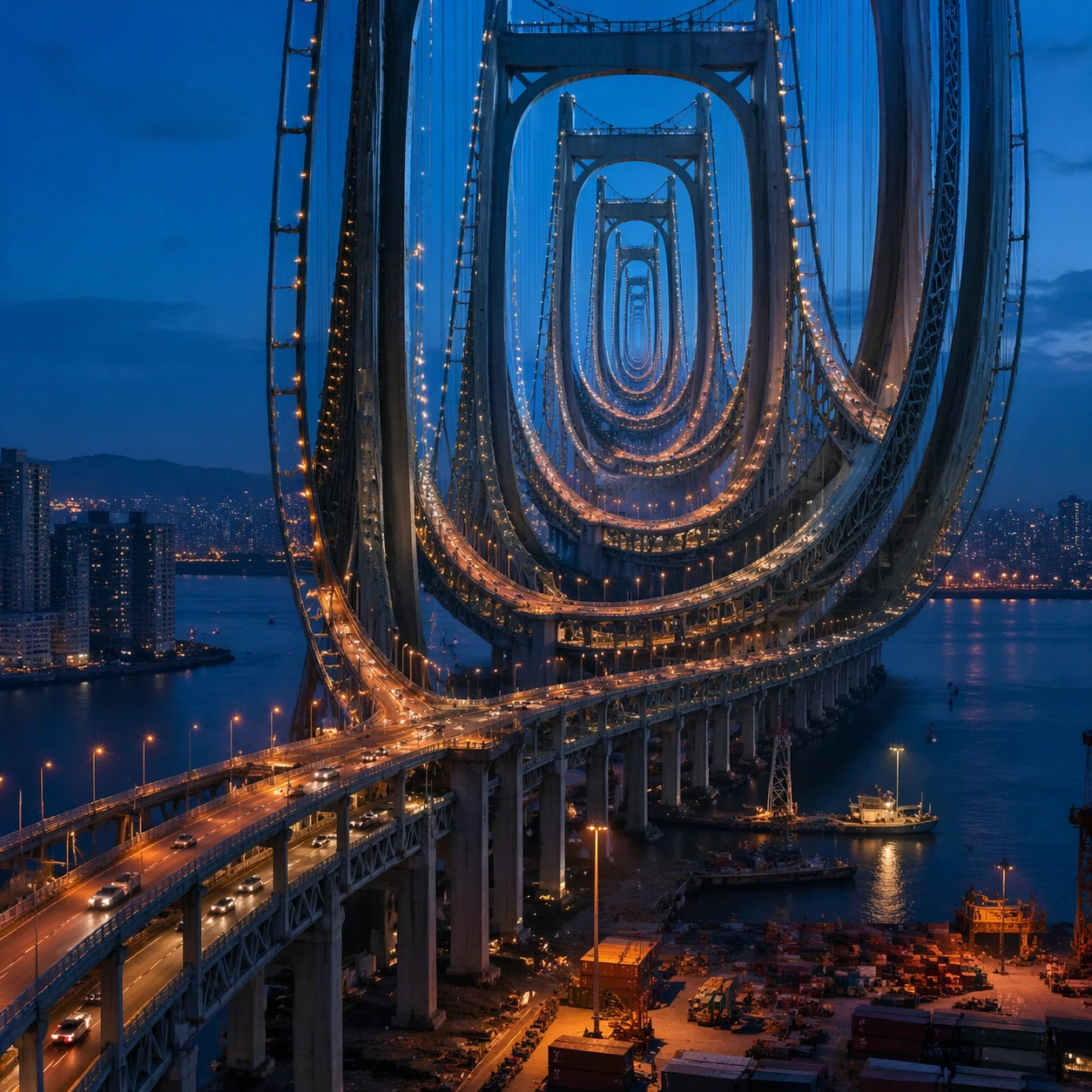
Example generated from “Time Folded Urban Spectacle — Night Bridge Recursion”
GPT Image 2en

Scene: A square large-format city spectacle where architecture bends, folds, loops, or stacks while remaining physically convincing enough to feel like a photographed event. Use broad daylight or clear night atmosphere, dense urban material detail, and a sense of immense scale achieved through believable streets, facades, traffic patterns, and tiny witnesses. Set the scene at blue hour with a suspension bridge repeating into itself in nested arcs over a dark harbor. Subject: The subject is the city itself as a time-distorted machine, with roads, bridges, towers, or plazas curling into impossible but coherent formations. Human figures should remain small, secondary, and practical, acting only as scale markers for the urban transformation. Harbor workers, sodium lights, and freight containers remain tiny and practical under the recursive bridge loops. Important details: The signature rule is to make the impossible read as engineered reality rather than fantasy painting. Preserve concrete, glass, asphalt, railings, shadows, and structural rhythm with enough discipline that the folded geometry feels like a captured phenomenon. Avoid cartoon simplification, magical particles, or decorative sci-fi ornament. Use real steel members, cable tension patterns, and atmospheric haze so the recursion feels like a giant engineered echo. Use case: Time-Folded Urban Spectacle single study 7/9. Constraints: No readable text, no watermark, no logos, preserve exact 1:1 aspect ratio, no fantasy castle shapes, no random levitating debris without structure, no superhero cues, no branded billboards, no unreadable poster text, no broken anatomy, no low-detail background, no accidental text fragments.

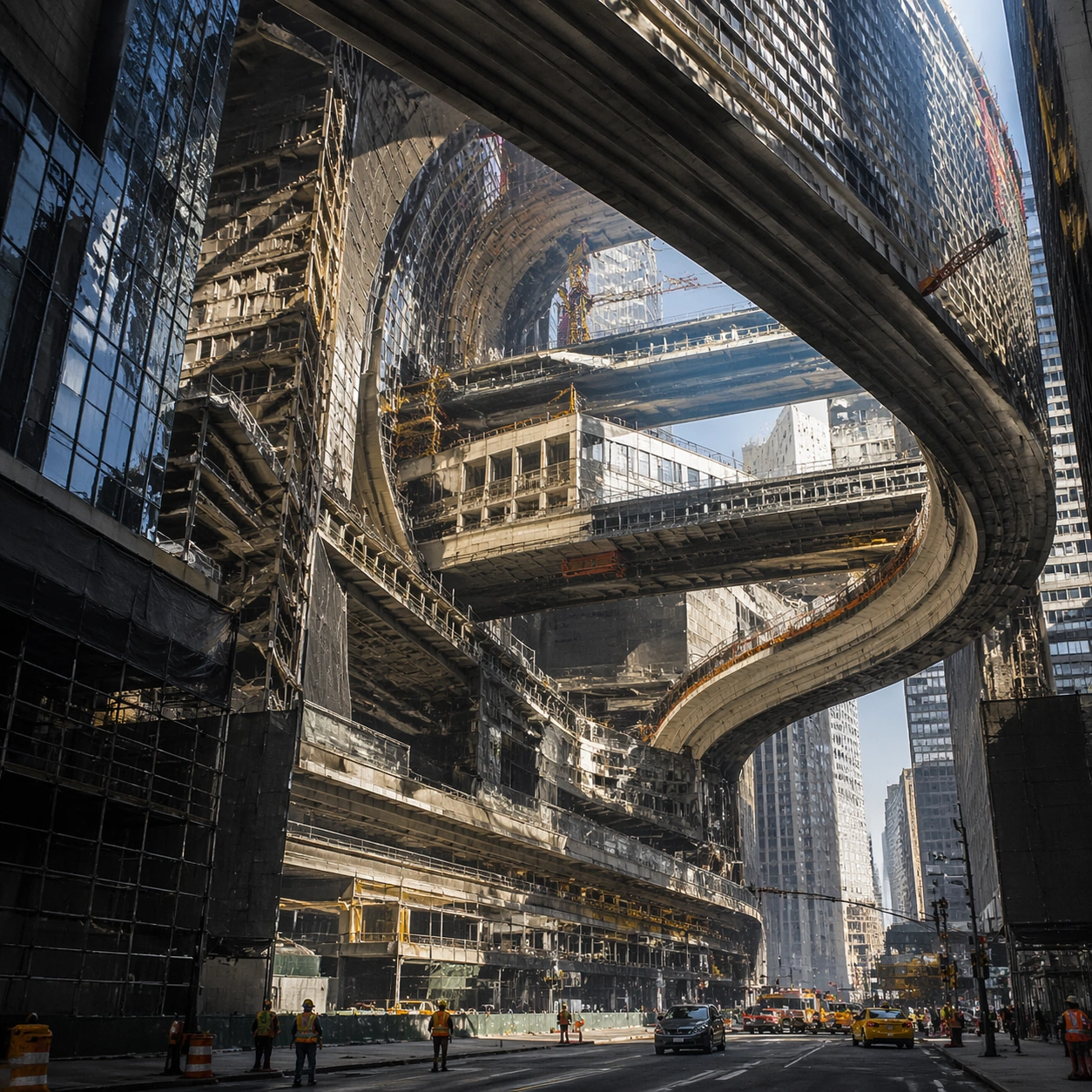
Example generated from “Time Folded Urban Spectacle — Scaffold City Vault”
GPT Image 2en

Scene: A square large-format city spectacle where architecture bends, folds, loops, or stacks while remaining physically convincing enough to feel like a photographed event. Use broad daylight or clear night atmosphere, dense urban material detail, and a sense of immense scale achieved through believable streets, facades, traffic patterns, and tiny witnesses. Build a downtown renovation zone where scaffolding, cranes, and office towers rise into a vaulted urban canopy over the street. Subject: The subject is the city itself as a time-distorted machine, with roads, bridges, towers, or plazas curling into impossible but coherent formations. Human figures should remain small, secondary, and practical, acting only as scale markers for the urban transformation. Construction workers and orange cones stay tiny at ground level, reinforcing the megastructure above. Important details: The signature rule is to make the impossible read as engineered reality rather than fantasy painting. Preserve concrete, glass, asphalt, railings, shadows, and structural rhythm with enough discipline that the folded geometry feels like a captured phenomenon. Avoid cartoon simplification, magical particles, or decorative sci-fi ornament. The vault should feel assembled from practical urban systems such as scaffold tubes, netting, temporary lights, and tower cores. Use case: Time-Folded Urban Spectacle single study 8/9. Constraints: No readable text, no watermark, no logos, preserve exact 1:1 aspect ratio, no fantasy castle shapes, no random levitating debris without structure, no superhero cues, no branded billboards, no unreadable poster text, no broken anatomy, no low-detail background, no accidental text fragments.

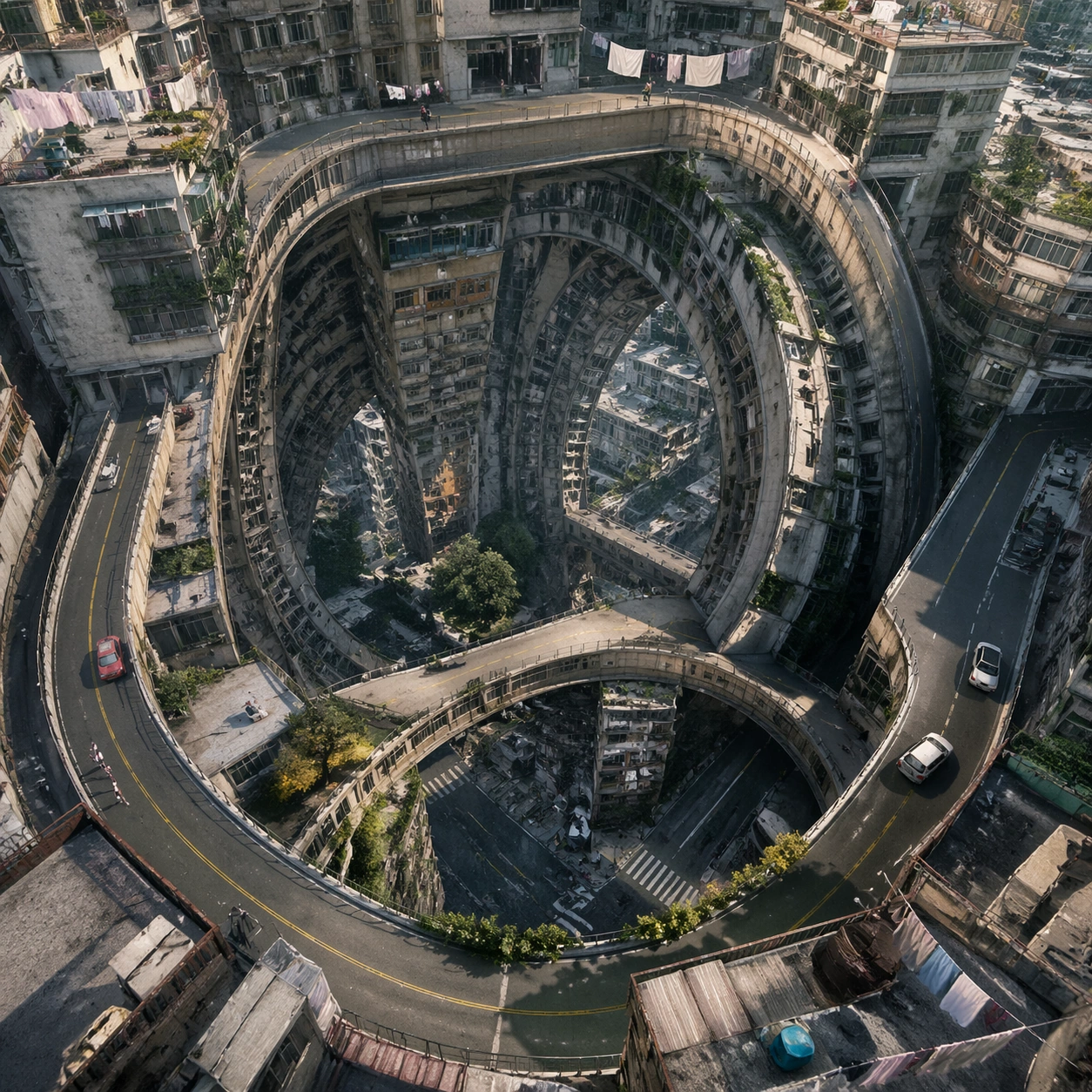
Example generated from “Time Folded Urban Spectacle — Rooftop Time Maze”
GPT Image 2en

Scene: A square large-format city spectacle where architecture bends, folds, loops, or stacks while remaining physically convincing enough to feel like a photographed event. Use broad daylight or clear night atmosphere, dense urban material detail, and a sense of immense scale achieved through believable streets, facades, traffic patterns, and tiny witnesses. Look across rooftops where terraces, stair towers, and sky bridges fold into a layered maze around a central void. Subject: The subject is the city itself as a time-distorted machine, with roads, bridges, towers, or plazas curling into impossible but coherent formations. Human figures should remain small, secondary, and practical, acting only as scale markers for the urban transformation. Laundry lines, rooftop gardens, and a lone maintenance worker keep the city tactile and inhabited. Important details: The signature rule is to make the impossible read as engineered reality rather than fantasy painting. Preserve concrete, glass, asphalt, railings, shadows, and structural rhythm with enough discipline that the folded geometry feels like a captured phenomenon. Avoid cartoon simplification, magical particles, or decorative sci-fi ornament. Preserve waterproof membranes, vents, railings, and shadow breaks so the maze feels like a captured urban anomaly, not a video-game environment. Use case: Time-Folded Urban Spectacle single study 9/9. Constraints: No readable text, no watermark, no logos, preserve exact 1:1 aspect ratio, no fantasy castle shapes, no random levitating debris without structure, no superhero cues, no branded billboards, no unreadable poster text, no broken anatomy, no low-detail background, no accidental text fragments.

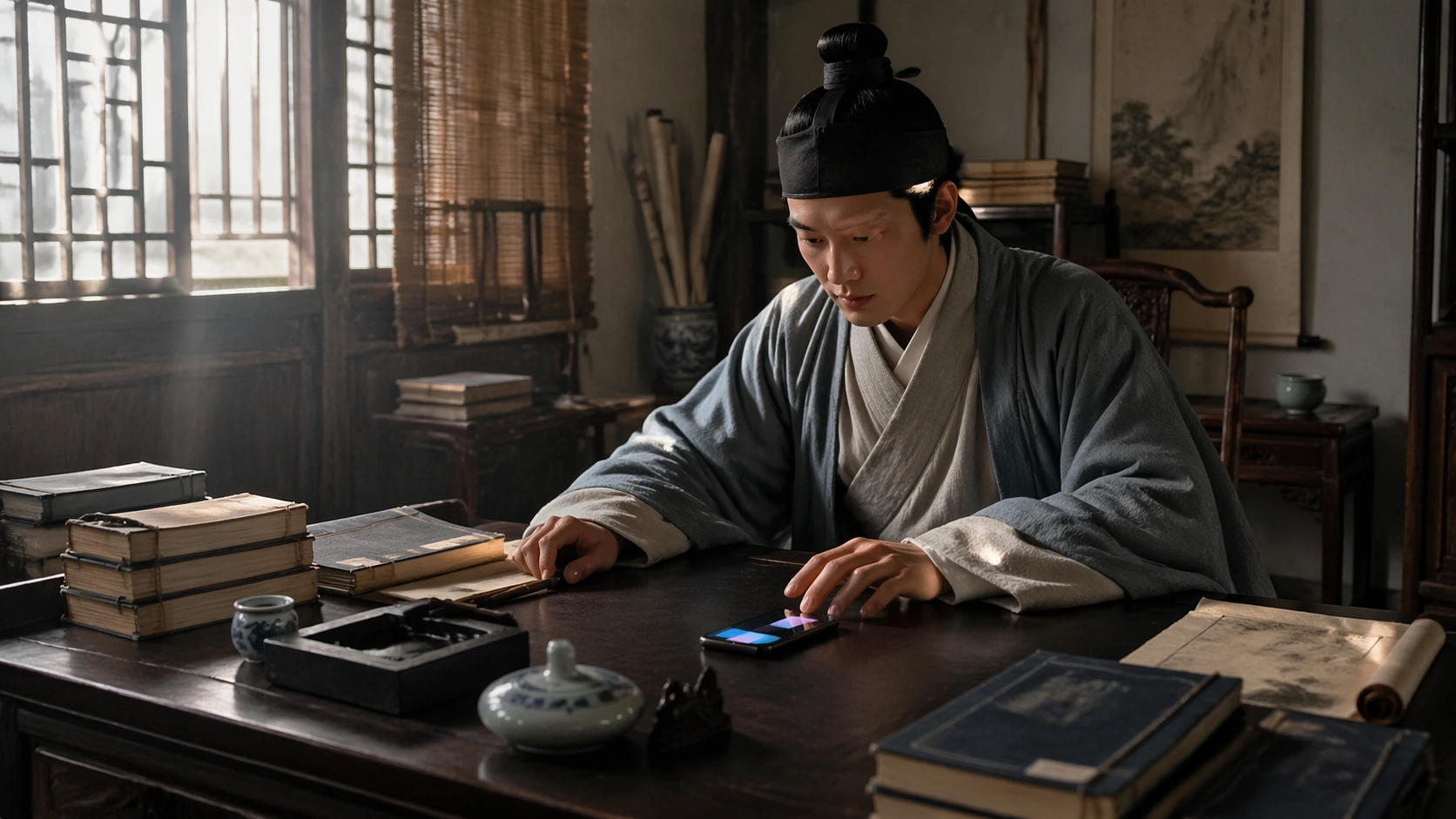
Example generated from “Time Space Contrast — Reference Scholar Desk”
GPT Image 2en

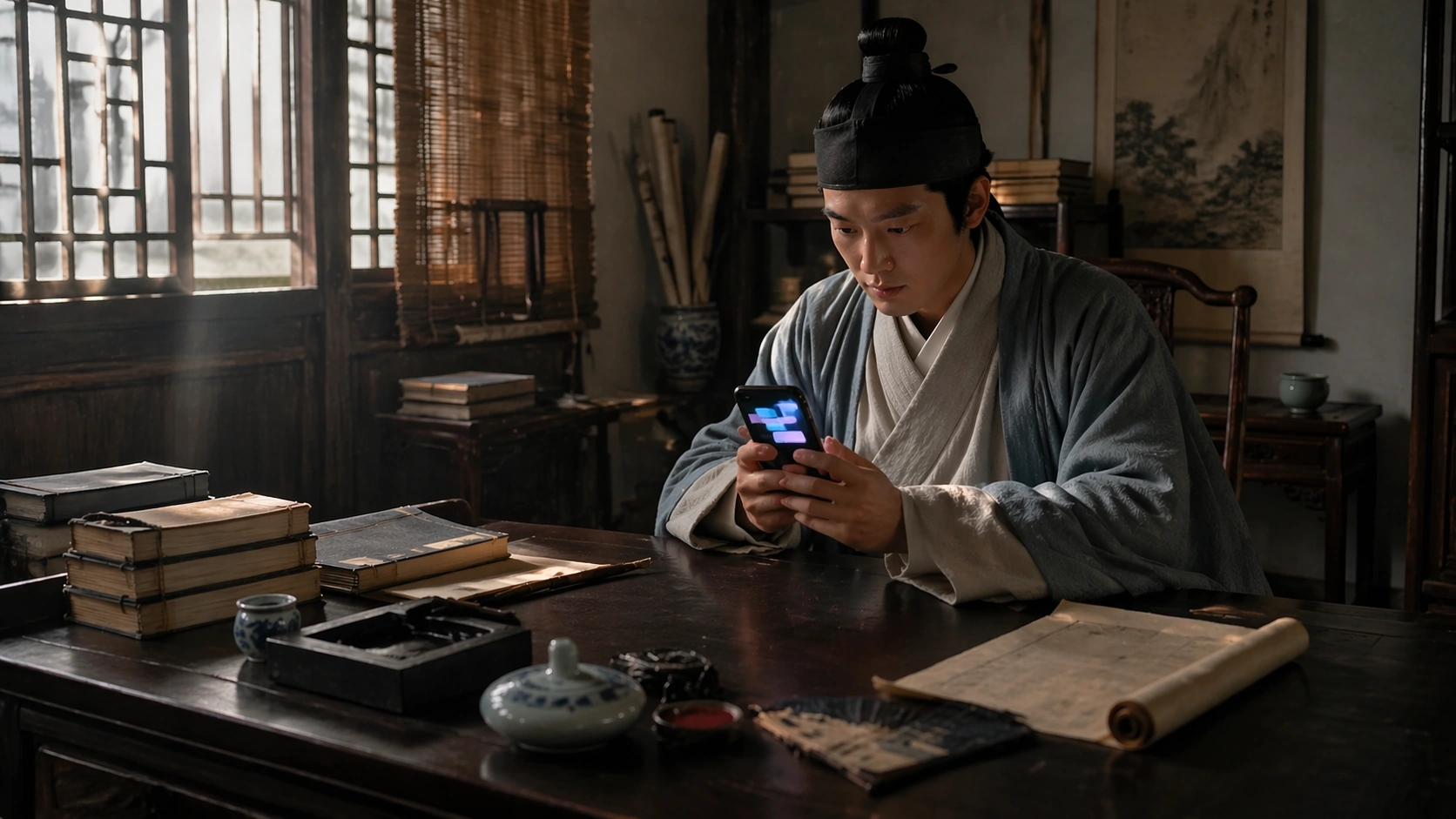
Scene: A horizontal 16:9 cinematic photograph inside a late imperial Chinese scholar's study, viewed from a low three-quarter angle across a dark wooden desk. Morning light enters through carved lattice windows and catches suspended dust, bamboo blinds, stacked thread-bound books, inkstone, brush rest, porcelain water dropper, and a plain modern black smartphone lying on the desk. The image should feel real, richly textured, and immediately legible as a time-space collision. Subject: A young historical scholar in layered pale linen and blue-gray silk robes sits at the desk, hair tied in a simple topknot under a soft black cloth cap. He leans forward with calm curiosity, one hand resting beside a brush and the other hovering near the glowing phone. His expression is thoughtful rather than comedic. The room contains period-accurate furniture, scroll storage tubes, a low screen, ceramic tea cup, worn floorboards, and no modern objects except the phone. Important details: This is the reference image for a continuity series. Establish the scholar's face, robe color, desk layout, window position, light direction, and exact room geometry clearly enough for later images to preserve them. The smartphone screen may glow with abstract colored blocks only, never readable text or logos. Balance historical material accuracy with photoreal modern technology, avoiding fantasy costume cues or stage-prop flatness. Use case: Time-Space Contrast series study 1/8, establishing the scholar identity and study reference for later modern-tech interactions. Constraints: No readable text, no watermark, no logos, preserve exact 16:9 horizontal aspect ratio, no brand marks, no extra modern objects, no anachronistic clothing fasteners, no caricature expression, no fantasy palace styling.

Example generated from “Time Space Contrast — Pocket Glass Message”
GPT Image 2en

Scene: A horizontal 16:9 cinematic image in the same late imperial scholar's study as the reference, keeping the desk, lattice windows, bamboo blinds, floorboards, scroll tubes, and morning light direction consistent. The camera remains low and slightly off-center, looking across the desk toward the scholar. The mood is quiet, realistic, and charged by the contrast between old paper culture and a modern pocket glass device. Subject: Use the reference as the primary identity and room guide. The same young scholar, with the same face, cloth cap, blue-gray silk robe, pale inner layers, and thoughtful demeanor, now holds the smartphone upright in both hands as if receiving an impossible message. Beside him are an inkstone, brush, seal paste box, folded fan, tea cup, and a half-unrolled blank scroll. The phone screen glows softly with abstract speech-bubble shapes and color blocks, but no readable characters. Important details: Preserve the scholar's identity, robe palette, desk layout, window placement, and period material accuracy from image 01. The modern object should look genuinely manufactured: glass reflections, thin black bezel, slight fingerprints, and cool screen light falling onto his fingers. The historical props must not become generic fantasy décor. The image should make the time-space contrast instantly clear without relying on labels, comedy, or obvious branding. Use case: Time-Space Contrast series study 2/8, testing reference-based identity and space continuity while changing the scholar's modern-tech interaction. Constraints: No readable text, no watermark, no logos, preserve exact 16:9 horizontal aspect ratio, no brand marks, no changed scholar face, no extra modern devices, no malformed hands, no neon sci-fi room lighting, no costume inaccuracies.

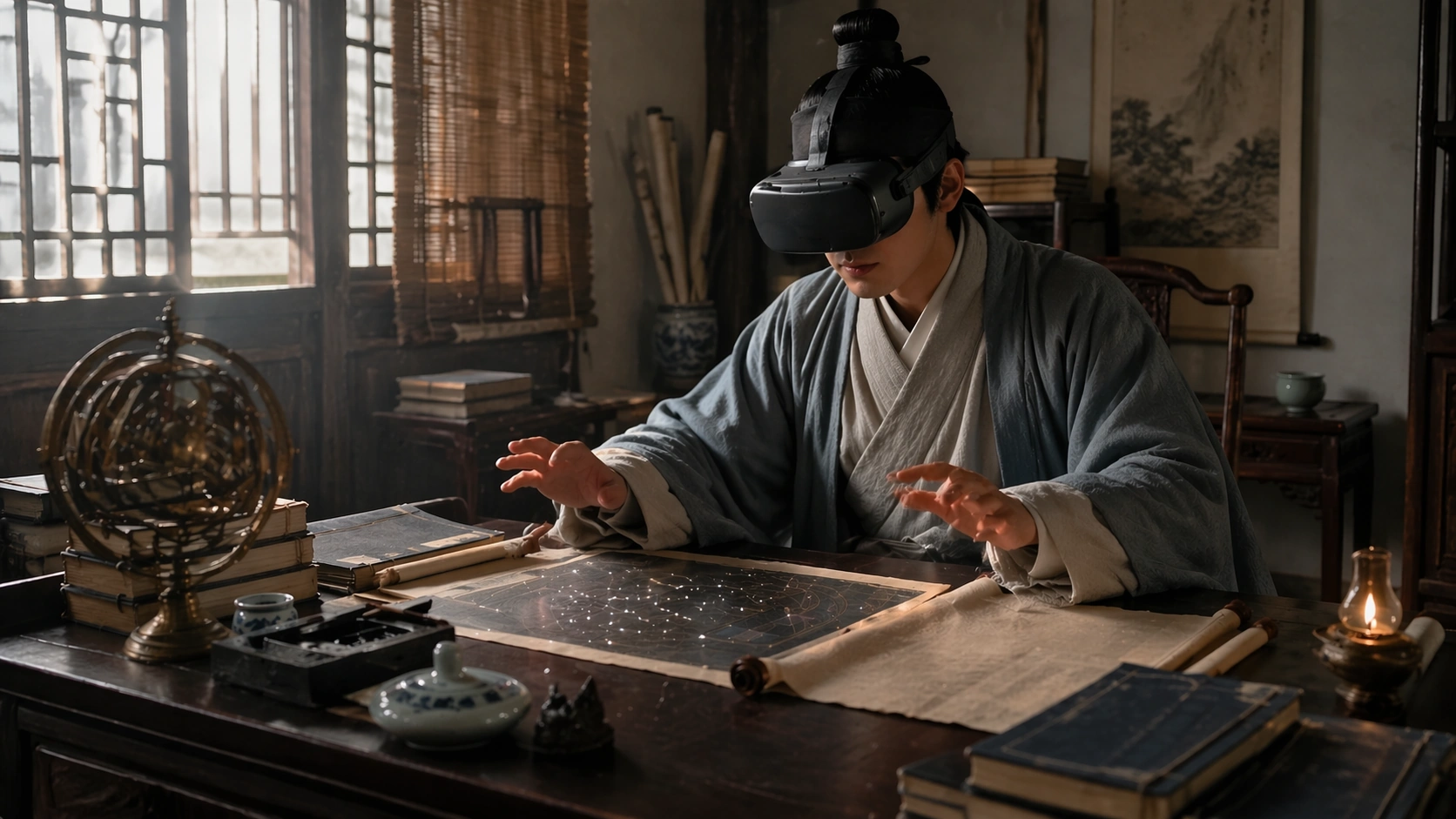
Example generated from “Time Space Contrast — VR Astronomy Lesson”
GPT Image 2en

Scene: A horizontal 16:9 cinematic photograph in the same preserved scholar's study, with the same carved window wall, desk angle, morning light, books, ink tools, porcelain cup, and muted wood tones from the reference image. The room remains historically grounded, but a subtle modern glow creates a second light source. The frame should feel like a serious museum-quality period drama disrupted by one contemporary device. Subject: Use the reference as the primary guide for the same scholar's face, robe colors, cap, posture language, desk placement, and room geometry. The scholar now wears a plain matte black VR headset over his eyes while seated at the desk. His hands hover above a star chart and blank scroll, as if he is comparing traditional astronomy diagrams with an invisible digital sky. Around him are a bronze armillary-sphere-like study model, brush tray, folded books, and a small oil lamp. Important details: The VR headset must be clearly modern but unbranded: smooth plastic shell, soft strap, glassy sensor areas, no labels. Keep the historical props plausible and tactile, with silk robe folds, worn wooden desk edges, hand-ground ink, and dust in sunlight. The contrast should come from accurate old-world scholarship meeting modern immersion, not from fantasy holograms. If any projected light appears, it must be abstract constellations with no readable symbols. Use case: Time-Space Contrast series study 3/8, testing continuity of scholar identity and room setting during a VR astronomy anachronism. Constraints: No readable text, no watermark, no logos, preserve exact 16:9 horizontal aspect ratio, no brand marks, no changed robe colors, no extra modern furniture, no sci-fi armor, no floating captions, no inconsistent window or desk geometry.

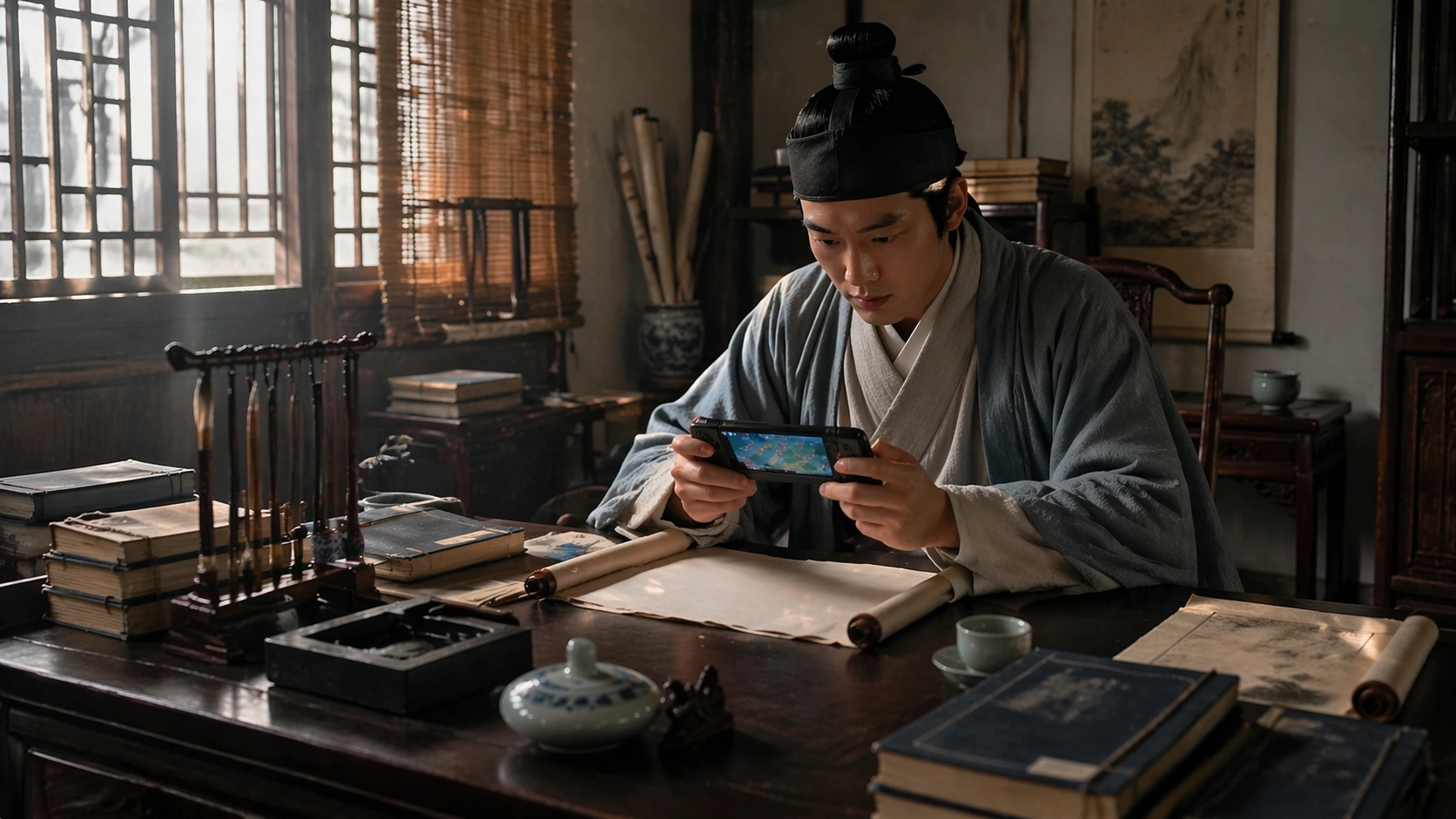
Example generated from “Time Space Contrast — Handheld Battle Game”
GPT Image 2en

Scene: A horizontal 16:9 cinematic photograph in the same late imperial scholar's study, preserving the reference image's room layout, desk position, lattice-window light, bamboo blinds, muted wood surfaces, book stacks, ink tools, and realistic dust. The frame should be wide enough to show the period setting clearly while focusing on the scholar's hands and modern device. The mood is concentrated, slightly tense, and visually witty without becoming parody. Subject: Use the reference as the primary guide for the same scholar's identity, robe layers, cap, face shape, posture, and desk environment. The scholar now holds a small unbranded handheld gaming console above a blank practice scroll. His brows are gently furrowed in strategic focus. The screen shows a colorful abstract battle-map interface made of shapes, lanes, and tiny icons, but no readable text, no numbers, and no recognizable game branding. Brushes, seal stones, a tea cup, and thread-bound books surround the device. Important details: Keep the historical costume and props accurate: cloth cap, silk robe folds, wooden brush rack, inkstone sheen, ceramic glaze, and natural window light. The gaming device should have believable plastic, glass, joysticks, buttons, reflections, and cool screen spill on fingers. The time-space joke must come from the disciplined contrast between scholarly ritual and modern play, not from exaggerated cartoon expressions or cluttered neon effects. Use case: Time-Space Contrast series study 4/8, testing reference continuity while introducing a handheld battle-game anachronism. Constraints: No readable text, no watermark, no logos, preserve exact 16:9 horizontal aspect ratio, no brand marks, no changed scholar identity, no extra players, no fantasy weapons, no illegible hands, no inconsistent room layout.

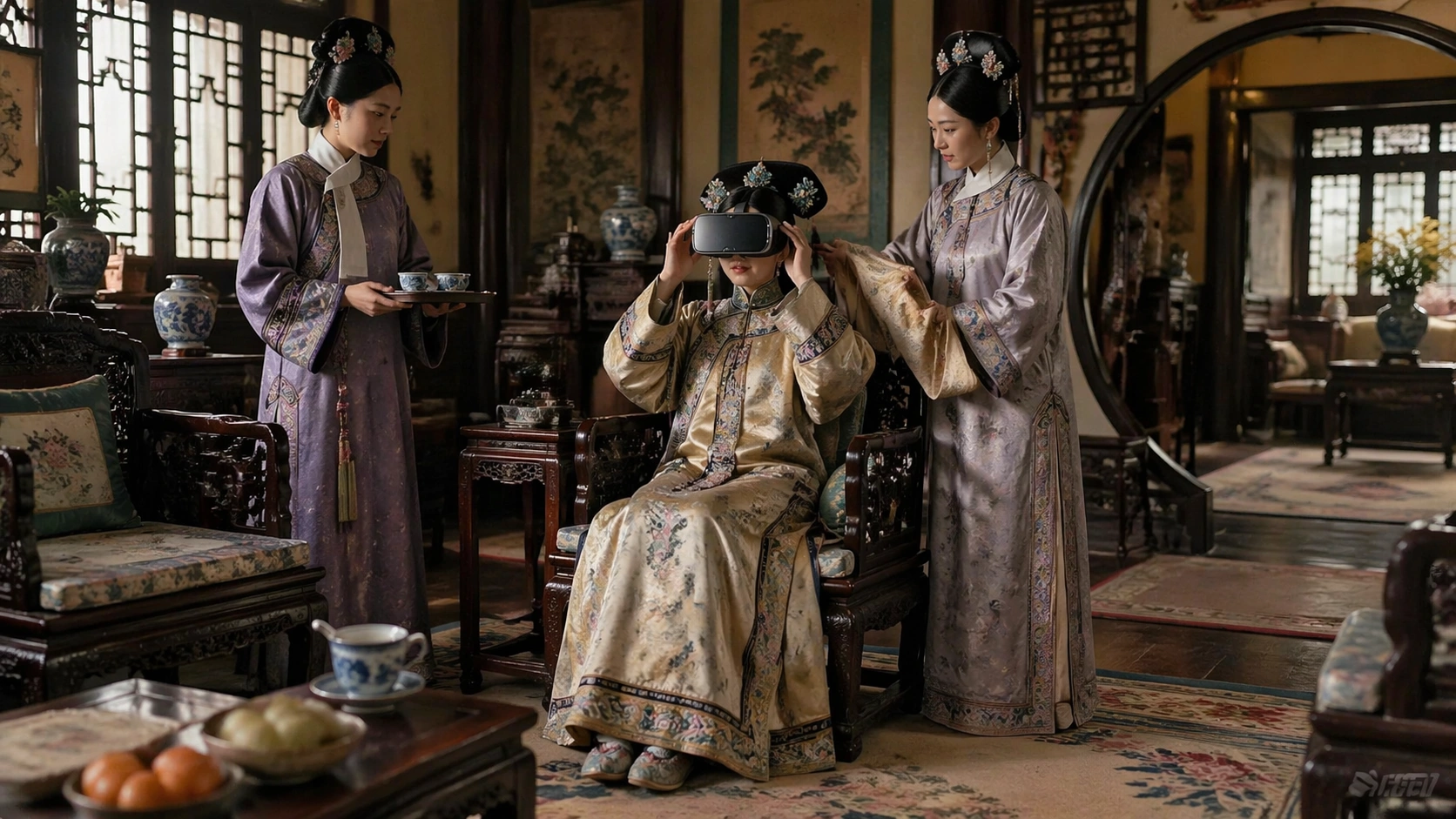
Example generated from “Time Space Contrast — Qing VR Parlor”
GPT Image 2en

Scene: A horizontal 16:9 photoreal interior of a Qing dynasty upper-class parlor, composed like a still from a prestige period film. The room has dark carved hardwood furniture, embroidered seat cushions, blue-and-white porcelain, a lacquer side table, silk wall hangings with abstract floral motifs, a moon-gate doorway, and soft afternoon light filtered through paper windows. The wide frame should leave enough space to compare historical domestic detail with one modern object. Subject: A Qing-era noblewoman sits upright on a carved chair wearing layered silk robes with cloud collar details, a formal headdress, embroidered shoes, and restrained jewelry. She wears a plain black VR headset over her eyes, holding the side straps carefully with both hands as if being fitted for an impossible court entertainment. Two attendants in period dress stand nearby with reserved curiosity, one holding a tray with tea cups, the other lifting a folded silk sleeve away from the headset cable-free device. Important details: Keep the scene culturally grounded: accurate robe layering, Manchu-inspired court silhouette, polished wood furniture, porcelain scale, and domestic etiquette. The VR headset must look modern but unbranded, with matte plastic, soft padding, and subtle reflections. The humor should come from precise contradiction between formal historical composure and futuristic immersion. Do not turn the parlor into cyberpunk; modern technology is limited to the headset. Use case: Time-Space Contrast single study 5/8, an independent Qing parlor VR collision testing photoreal world knowledge. Constraints: No readable text, no watermark, no logos, preserve exact 16:9 horizontal aspect ratio, no brand marks, no fantasy palace armor, no neon holograms, no inaccurate modern furniture, no exaggerated comedy faces, no extra devices.

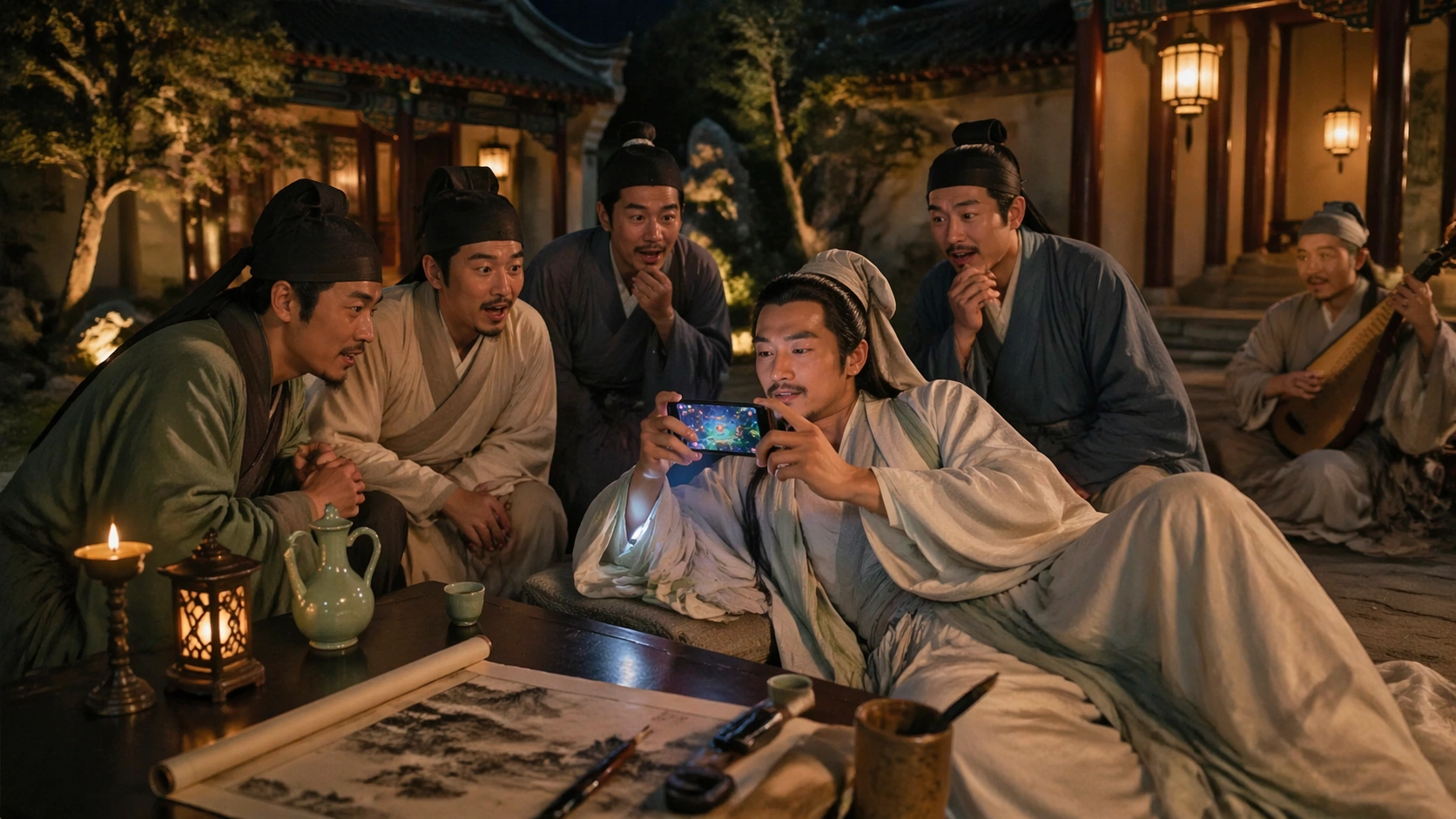
Example generated from “Time Space Contrast — Tang Poet Mobile Game”
GPT Image 2en

Scene: A horizontal 16:9 photoreal night scene in a Tang dynasty wine house courtyard, with lantern light, painted wooden beams, stone paving, low tables, ceramic wine cups, musical instruments, and distant garden rocks. The frame is cinematic and balanced: the historical environment occupies most of the image, while one modern phone creates the unmistakable time-space contrast. Warm lanterns mix with the cool glow of the screen. Subject: A Tang poet figure inspired by the romantic image of a wandering literary celebrity reclines beside a low table in flowing white and pale green robes, loose hair under a soft cloth wrap, wine cup nearby, and brush materials pushed aside. He holds a modern smartphone horizontally with both hands, absorbed in a colorful mobile battle game. Several companions in Tang dress lean in, amused and astonished, while a musician pauses mid-performance. Important details: Keep the Tang setting plausible: robe shapes, table height, wine vessels, lantern structure, courtyard architecture, and social posture should feel researched rather than generic fantasy. The smartphone must be unbranded with realistic glass, black bezel, finger reflections, and a screen showing abstract game lanes and colored hero-like shapes but no readable text, logos, or recognizable game interface. The joke should be instantly legible: ancient poetry culture collides with competitive mobile play. Use case: Time-Space Contrast single study 6/8, an independent Tang poet gaming scene for historical-modern fusion. Constraints: No readable text, no watermark, no logos, preserve exact 16:9 horizontal aspect ratio, no brand marks, no named game UI, no fantasy armor, no inaccurate plastic props beyond the phone, no distorted hands, no crowded unreadable composition.

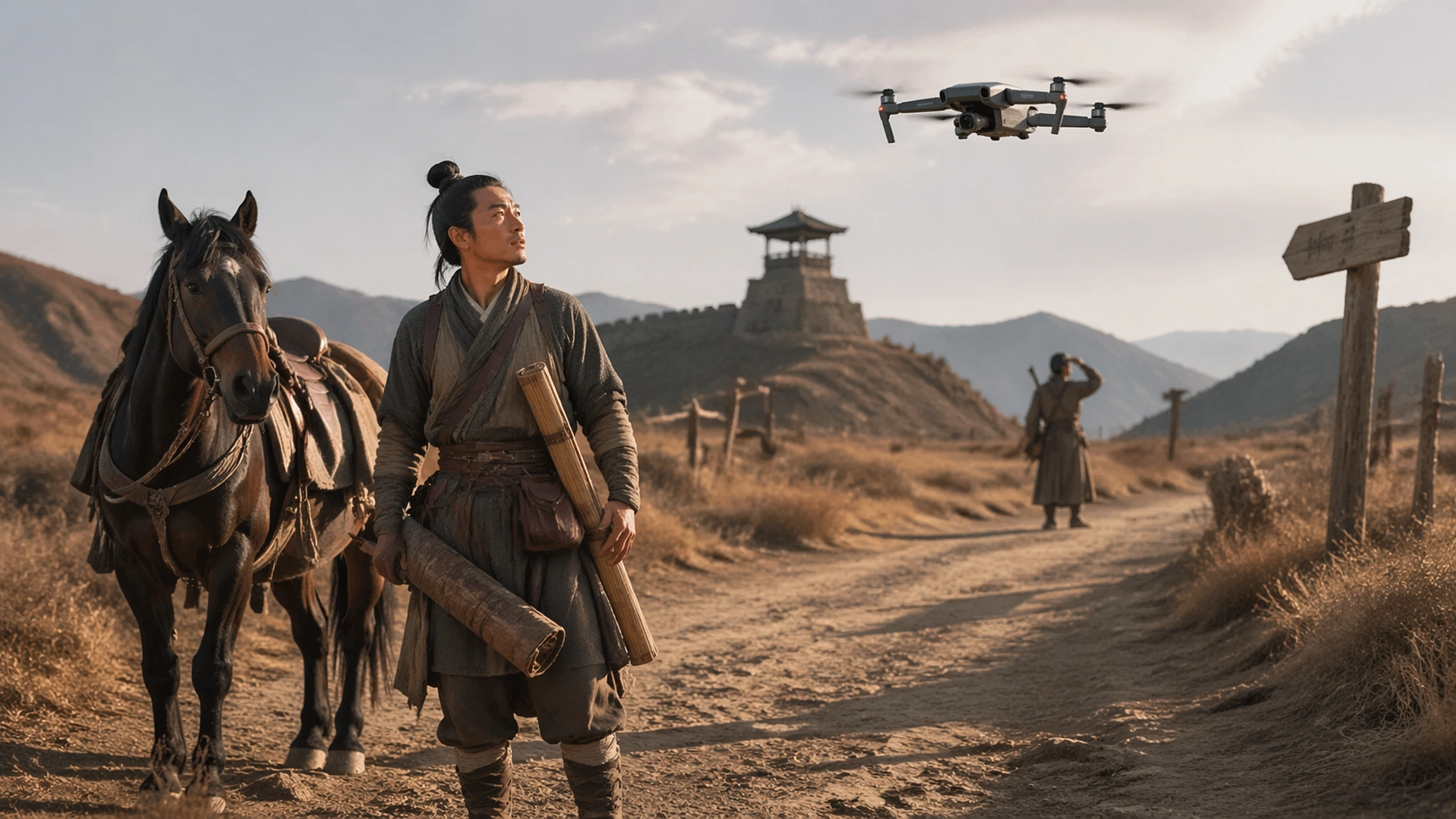
Example generated from “Time Space Contrast — Han Courier Drone”
GPT Image 2en

Scene: A horizontal 16:9 photoreal image on a Han dynasty frontier road, with packed earth, beacon-tower silhouette, low mountains, dry grass, wooden signposts without readable marks, and late golden light. The composition is wide and spacious, allowing a horse courier, period equipment, and a hovering modern drone to occupy distinct zones. The atmosphere should feel like serious historical reportage interrupted by one impossible machine. Subject: A Han courier in layered hemp and wool travel garments stands beside a saddled horse, carrying a bamboo document tube, leather belt pouch, wrapped bow case, and practical boots. He looks upward with alert professional focus as a compact quadcopter drone hovers at eye level, its camera gimbal facing him. The horse is calm but attentive. A second courier farther back shields his eyes from dust and light, grounding the scale of the road. Important details: The historical details should be plausible: frontier clothing, horse tack, beacon architecture, document tubes, road dust, and weathered materials. The drone must be modern, small, unbranded, with four rotors, camera lens, gray plastic body, and subtle motion blur on blades. No sci-fi weaponry or fantasy armor. The time-space contrast should read as logistics meeting logistics: ancient messenger network confronted by aerial delivery and surveillance technology. Use case: Time-Space Contrast single study 7/8, an independent Han courier and drone scene for world-knowledge composition. Constraints: No readable text, no watermark, no logos, preserve exact 16:9 horizontal aspect ratio, no brand marks, no futuristic city, no fantasy military armor, no oversized drone, no duplicated horses, no illegible dust cloud hiding the main interaction.

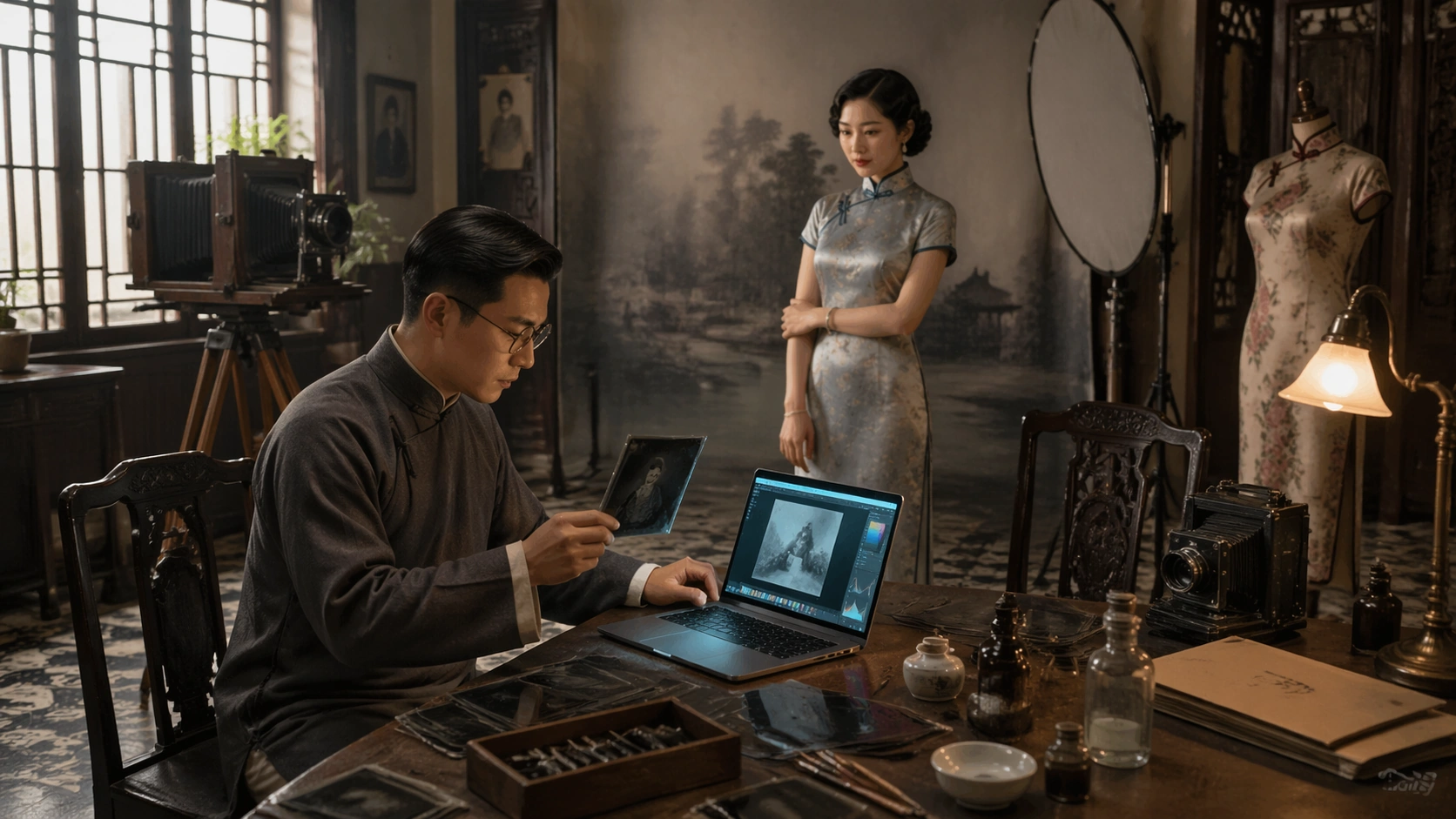
Example generated from “Time Space Contrast — Republican Laptop Studio”
GPT Image 2en

Scene: A horizontal 16:9 photoreal interior of a 1930s Shanghai-style portrait photography studio, with painted backdrop, patterned tile floor, wooden camera tripod, fabric reflector, carved chair, qipao display mannequin, and soft window light mixed with a small practical lamp. The composition should be elegant, restrained, and historically grounded, with one modern laptop creating a precise time-space rupture inside an otherwise period-correct room. Subject: A Republican-era studio photographer in a long gown and round spectacles sits at a wooden worktable, comparing glass-plate negatives with a slim modern laptop. A fashionable woman in a silk qipao waits near the backdrop, watching the glowing screen with composed curiosity. The laptop is open but unbranded, showing abstract image-editing panels as colored blocks and tonal curves without readable text. Period cameras, chemical bottles, retouching brushes, and paper envelopes sit around it. Important details: Keep the 1930s setting plausible: studio furniture, camera technology, textile patterns, hairstyle, spectacles, qipao cut, and photographic workflow should feel researched. The laptop must be the only modern object and should cast a cool reflection on nearby negatives. The scene tests editing-workflow contrast without displaying actual UI words. The viewer should understand old photographic craft meeting digital postproduction instantly from the objects and gestures. Use case: Time-Space Contrast single study 8/8, an independent early-modern photo studio and laptop editing collision. Constraints: No readable text, no watermark, no logos, preserve exact 16:9 horizontal aspect ratio, no brand marks, no modern office furniture, no neon cyberpunk lighting, no inaccurate costumes, no readable software interface, no clutter that hides the laptop interaction.

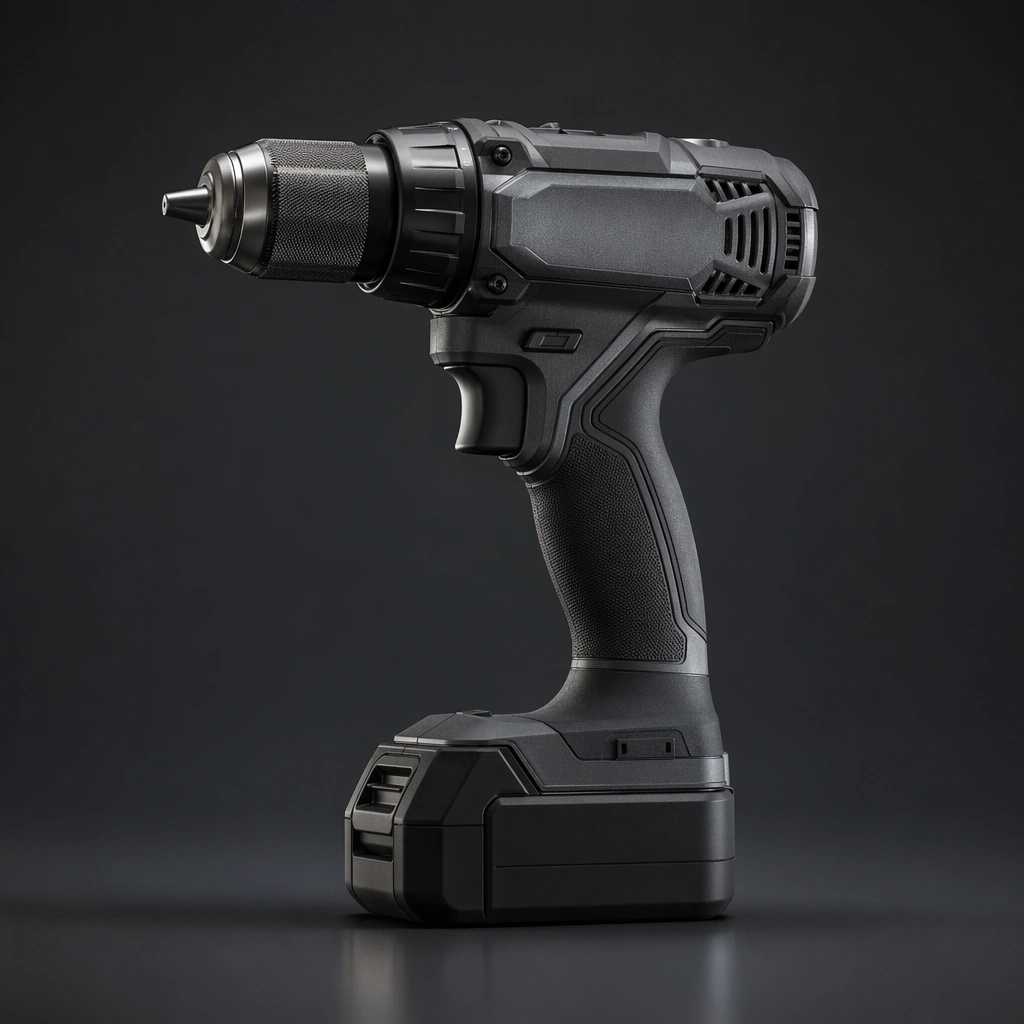
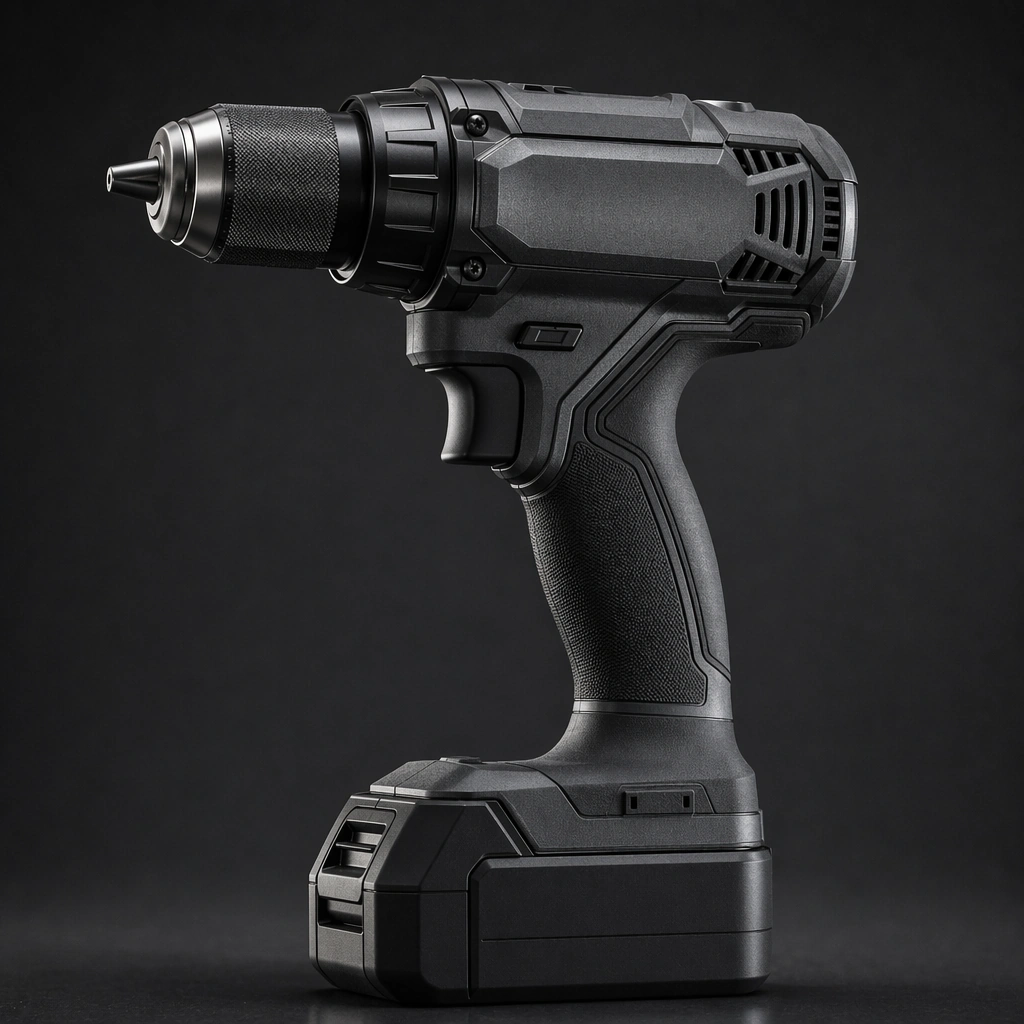
Example generated from “Tool And Device Hero Render System — Tool Hero”
GPT Image 2en

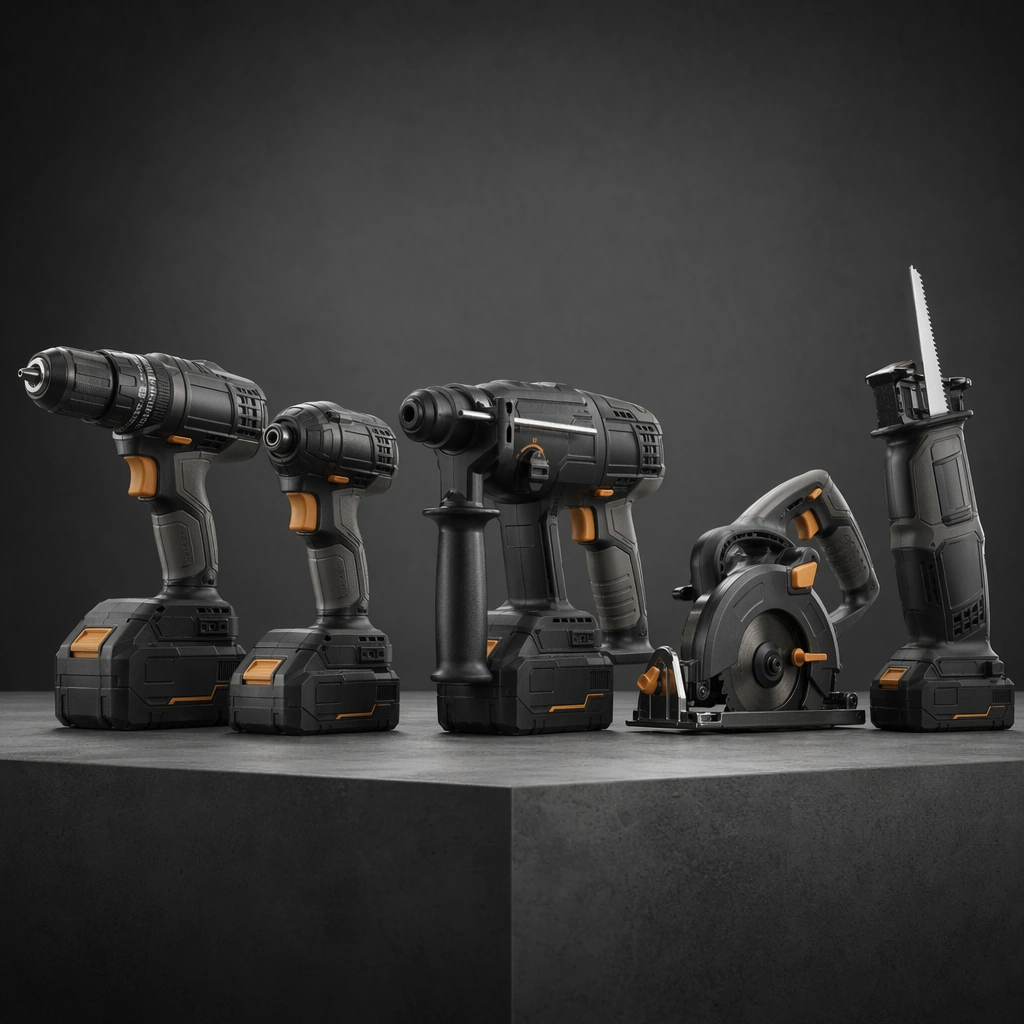
Scene: A square premium studio scene with subtle floor reflection, soft shadow, and controlled key light over a dark neutral gradient. Compose the frame as a square key visual with disciplined camera placement, premium lighting control, and believable real-world scale. The tonal range should feel polished and intentional, with enough atmosphere to create depth without obscuring form. Keep contrast calibrated for launch, catalog, or research presentation use rather than casual snapshot aesthetics. Subject: Center an original cordless precision drill-driver with a magnesium frame, rubber grip overmold, satin metal chuck, compact battery base, and carefully resolved vent geometry. Make the subject feel original, production-aware, and clearly grounded in Tool and Device Hero Render System. For this series image, preserve exact core subject identity, proportions, base geometry, and material language from the reference image whenever continuity matters. The focal hierarchy should be immediate: primary form first, then material behavior, then supporting environmental cues that clarify use context and difficulty. Important details: Show the full tool clearly with precise grip, chuck, battery, metallic finish, and ergonomically believable proportions. The result should feel like a catalog hero approved for launch use. Preserve exact tool silhouette, grip shape, chuck design, battery geometry, vent pattern, and color blocking across the series. Materials must look tactile and production-ready rather than toy-like or over-stylized. Use believable materials, engineering logic, and professional composition discipline. Reflections, shadows, edge breaks, texture scale, interface density, and small physical joints must all support realism. Avoid filler props, vague mood-board clutter, or any element that weakens the sense of a purpose-built industrial or automotive image. Use case: Tool Renders series study 1/9 for Tool and Device Hero Render System, built as image 01-reference-anchor. Constraints: No readable text, no watermark, no logos, preserve exact 1:1 aspect ratio, no brand logos, no readable labels, no workshop mess, no sparks, no impossible tool bits, no sci-fi glow.

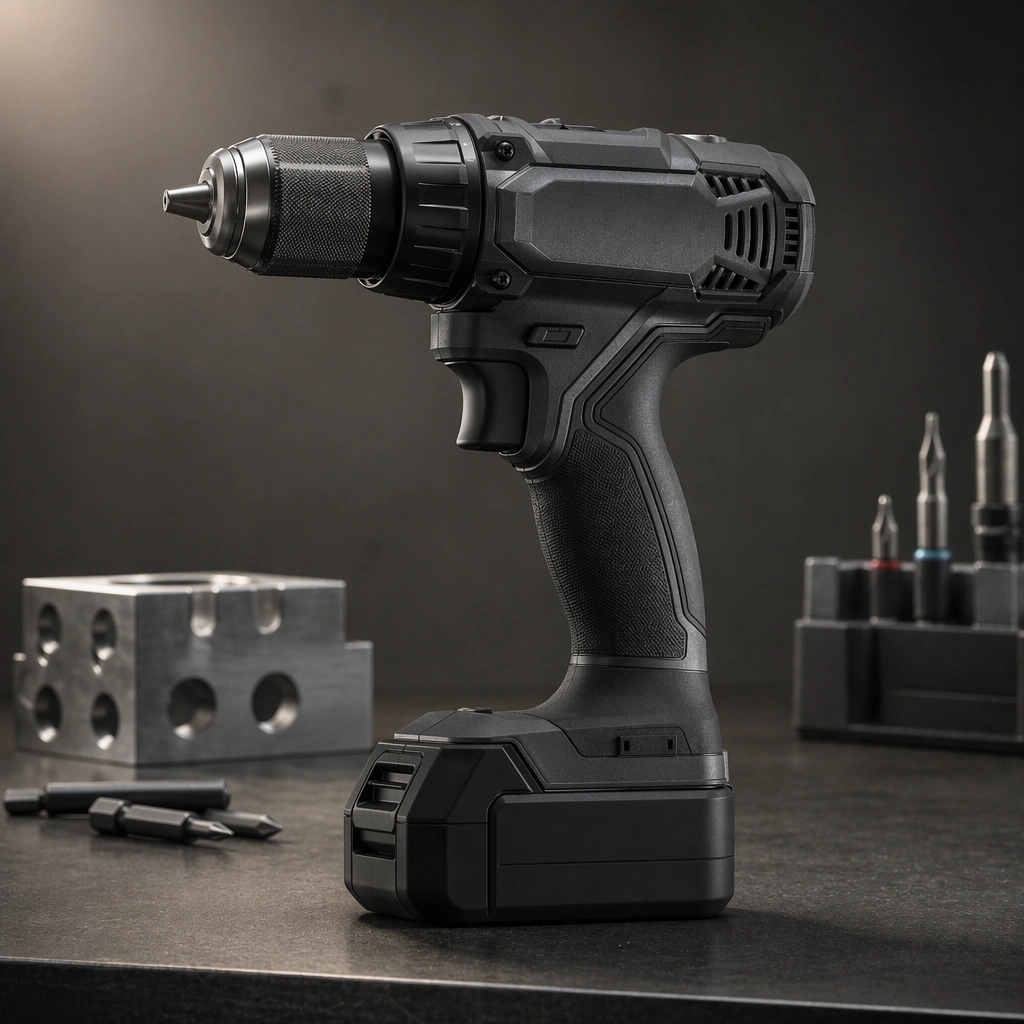
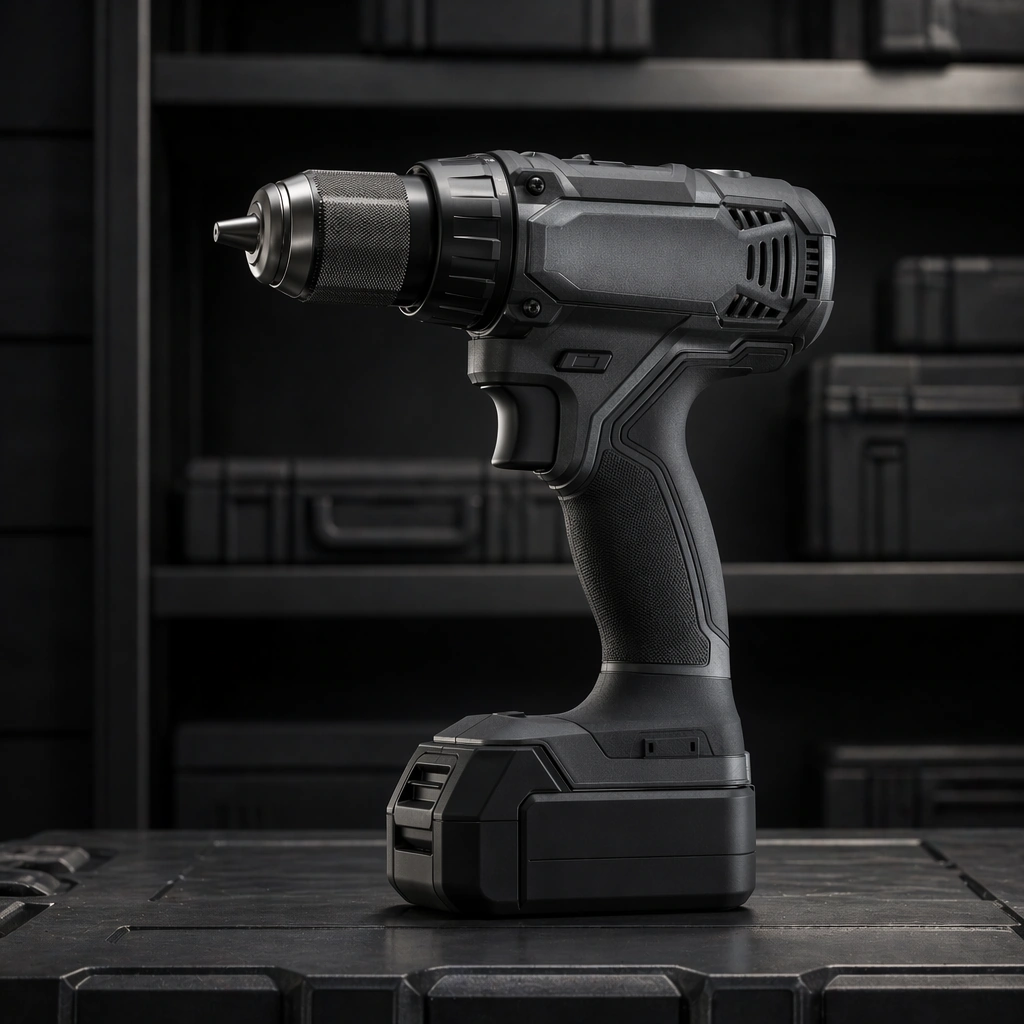
Example generated from “Tool And Device Hero Render System — Bench Context”
GPT Image 2en

Scene: A square clean workbench setup with directional industrial light, shallow contextual depth, and highly controlled supporting objects. Compose the frame as a square key visual with disciplined camera placement, premium lighting control, and believable real-world scale. The tonal range should feel polished and intentional, with enough atmosphere to create depth without obscuring form. Keep contrast calibrated for launch, catalog, or research presentation use rather than casual snapshot aesthetics. Subject: Center an original cordless precision drill-driver with a magnesium frame, rubber grip overmold, satin metal chuck, compact battery base, and carefully resolved vent geometry. Make the subject feel original, production-aware, and clearly grounded in Tool and Device Hero Render System. For this series image, preserve exact core subject identity, proportions, base geometry, and material language from the reference image whenever continuity matters. The focal hierarchy should be immediate: primary form first, then material behavior, then supporting environmental cues that clarify use context and difficulty. Important details: Keep the exact same tool identity while using bench materials and accessory hints to add use context. The image should stay polished and market-ready, not gritty or documentary. Preserve exact tool silhouette, grip shape, chuck design, battery geometry, vent pattern, and color blocking across the series. Materials must look tactile and production-ready rather than toy-like or over-stylized. Use believable materials, engineering logic, and professional composition discipline. Reflections, shadows, edge breaks, texture scale, interface density, and small physical joints must all support realism. Avoid filler props, vague mood-board clutter, or any element that weakens the sense of a purpose-built industrial or automotive image. Use case: Tool Renders series study 2/9 for Tool and Device Hero Render System, built as image 02-context-shift. Constraints: No readable text, no watermark, no logos, preserve exact 1:1 aspect ratio, no brand logos, no readable labels, no workshop mess, no sparks, no impossible tool bits, no sci-fi glow.

Example generated from “Tool And Device Hero Render System — Material Pass”
GPT Image 2en

Scene: A square close product shot with grazing light, high tactile realism, and careful specular control across multiple materials. Compose the frame as a square key visual with disciplined camera placement, premium lighting control, and believable real-world scale. The tonal range should feel polished and intentional, with enough atmosphere to create depth without obscuring form. Keep contrast calibrated for launch, catalog, or research presentation use rather than casual snapshot aesthetics. Subject: Center an original cordless precision drill-driver with a magnesium frame, rubber grip overmold, satin metal chuck, compact battery base, and carefully resolved vent geometry. Make the subject feel original, production-aware, and clearly grounded in Tool and Device Hero Render System. For this series image, preserve exact core subject identity, proportions, base geometry, and material language from the reference image whenever continuity matters. The focal hierarchy should be immediate: primary form first, then material behavior, then supporting environmental cues that clarify use context and difficulty. Important details: Push rubber, metal, plastic, seams, and tolerances without losing the recognizable object identity. The crop should sell physical quality and manufacturing maturity. Preserve exact tool silhouette, grip shape, chuck design, battery geometry, vent pattern, and color blocking across the series. Materials must look tactile and production-ready rather than toy-like or over-stylized. Use believable materials, engineering logic, and professional composition discipline. Reflections, shadows, edge breaks, texture scale, interface density, and small physical joints must all support realism. Avoid filler props, vague mood-board clutter, or any element that weakens the sense of a purpose-built industrial or automotive image. Use case: Tool Renders series study 3/9 for Tool and Device Hero Render System, built as image 03-surface-study. Constraints: No readable text, no watermark, no logos, preserve exact 1:1 aspect ratio, no brand logos, no readable labels, no workshop mess, no sparks, no impossible tool bits, no sci-fi glow.

Example generated from “Tool And Device Hero Render System — Retail Display”
GPT Image 2en

Scene: A square retail display environment with a premium packout surface, clean shelving rhythm, and focused lighting that isolates the hero object. Compose the frame as a square key visual with disciplined camera placement, premium lighting control, and believable real-world scale. The tonal range should feel polished and intentional, with enough atmosphere to create depth without obscuring form. Keep contrast calibrated for launch, catalog, or research presentation use rather than casual snapshot aesthetics. Subject: Center an original cordless precision drill-driver with a magnesium frame, rubber grip overmold, satin metal chuck, compact battery base, and carefully resolved vent geometry. Make the subject feel original, production-aware, and clearly grounded in Tool and Device Hero Render System. For this series image, preserve exact core subject identity, proportions, base geometry, and material language from the reference image whenever continuity matters. The focal hierarchy should be immediate: primary form first, then material behavior, then supporting environmental cues that clarify use context and difficulty. Important details: Keep the same tool unmistakably intact while showing how it can anchor a sellable display concept. The overall image should feel polished, practical, and product-driven. Preserve exact tool silhouette, grip shape, chuck design, battery geometry, vent pattern, and color blocking across the series. Materials must look tactile and production-ready rather than toy-like or over-stylized. Use believable materials, engineering logic, and professional composition discipline. Reflections, shadows, edge breaks, texture scale, interface density, and small physical joints must all support realism. Avoid filler props, vague mood-board clutter, or any element that weakens the sense of a purpose-built industrial or automotive image. Use case: Tool Renders series study 4/9 for Tool and Device Hero Render System, built as image 04-presentation-master. Constraints: No readable text, no watermark, no logos, preserve exact 1:1 aspect ratio, no brand logos, no readable labels, no workshop mess, no sparks, no impossible tool bits, no sci-fi glow.

Example generated from “Tool And Device Hero Render System — Camera Device Hero”
GPT Image 2en

Scene: A square dark-neutral studio with concentrated top light, crisp reflections, and soft shadow falloff around one object. Compose the frame as a square key visual with disciplined camera placement, premium lighting control, and believable real-world scale. The tonal range should feel polished and intentional, with enough atmosphere to create depth without obscuring form. Keep contrast calibrated for launch, catalog, or research presentation use rather than casual snapshot aesthetics. Subject: Center an original compact professional device with lens surfaces, metal dials, textured grip, and clean assembly lines. Make the subject feel original, production-aware, and clearly grounded in Tool and Device Hero Render System. Treat this as an independent study that must feel complete and coherent without relying on any external reference image. The focal hierarchy should be immediate: primary form first, then material behavior, then supporting environmental cues that clarify use context and difficulty. Important details: Prioritize real materials and control placement over nostalgia or branding. The result should feel expensive, deliberate, and fit for hard-surface product marketing. The visual language should still feel native to Tool and Device Hero Render System, using disciplined industrial or campaign composition instead of generic stock photography. Use believable materials, engineering logic, and professional composition discipline. Reflections, shadows, edge breaks, texture scale, interface density, and small physical joints must all support realism. Avoid filler props, vague mood-board clutter, or any element that weakens the sense of a purpose-built industrial or automotive image. Use case: Tool Renders single study 5/9 for Tool and Device Hero Render System, built as image support-one. Constraints: No readable text, no watermark, no logos, preserve exact 1:1 aspect ratio, no logos, no readable labels, no workshop clutter, no toy aesthetics, no fake interface text, no cartoon gloss.

Example generated from “Tool And Device Hero Render System — Speaker Material Study”
GPT Image 2en

Scene: A square product-table scene with soft side light, deep tactile contrast, and tightly controlled negative space. Compose the frame as a square key visual with disciplined camera placement, premium lighting control, and believable real-world scale. The tonal range should feel polished and intentional, with enough atmosphere to create depth without obscuring form. Keep contrast calibrated for launch, catalog, or research presentation use rather than casual snapshot aesthetics. Subject: Center an original desktop speaker object with perforated grille, anodized shell, rubber base, and discreet interface elements. Make the subject feel original, production-aware, and clearly grounded in Tool and Device Hero Render System. Treat this as an independent study that must feel complete and coherent without relying on any external reference image. The focal hierarchy should be immediate: primary form first, then material behavior, then supporting environmental cues that clarify use context and difficulty. Important details: Make the object feel premium, quiet, and precisely manufactured. The image should read as industrial product communication, not home decor styling. The visual language should still feel native to Tool and Device Hero Render System, using disciplined industrial or campaign composition instead of generic stock photography. Use believable materials, engineering logic, and professional composition discipline. Reflections, shadows, edge breaks, texture scale, interface density, and small physical joints must all support realism. Avoid filler props, vague mood-board clutter, or any element that weakens the sense of a purpose-built industrial or automotive image. Use case: Tool Renders single study 6/9 for Tool and Device Hero Render System, built as image support-two. Constraints: No readable text, no watermark, no logos, preserve exact 1:1 aspect ratio, no logos, no readable labels, no workshop clutter, no toy aesthetics, no fake interface text, no cartoon gloss.

Example generated from “Tool And Device Hero Render System — Tool Family Lineup”
GPT Image 2en

Scene: A square lineup stage with neutral backdrop, disciplined spacing, and even premium lighting across multiple objects. Compose the frame as a square key visual with disciplined camera placement, premium lighting control, and believable real-world scale. The tonal range should feel polished and intentional, with enough atmosphere to create depth without obscuring form. Keep contrast calibrated for launch, catalog, or research presentation use rather than casual snapshot aesthetics. Subject: Center an original family of drill, driver, and compact cutting tools arranged by scale and category. Make the subject feel original, production-aware, and clearly grounded in Tool and Device Hero Render System. Treat this as an independent study that must feel complete and coherent without relying on any external reference image. The focal hierarchy should be immediate: primary form first, then material behavior, then supporting environmental cues that clarify use context and difficulty. Important details: Focus on family coherence, color blocking, ergonomic credibility, and shared detailing cues. The lineup should feel like a deliberate product platform. The visual language should still feel native to Tool and Device Hero Render System, using disciplined industrial or campaign composition instead of generic stock photography. Use believable materials, engineering logic, and professional composition discipline. Reflections, shadows, edge breaks, texture scale, interface density, and small physical joints must all support realism. Avoid filler props, vague mood-board clutter, or any element that weakens the sense of a purpose-built industrial or automotive image. Use case: Tool Renders single study 7/9 for Tool and Device Hero Render System, built as image support-three. Constraints: No readable text, no watermark, no logos, preserve exact 1:1 aspect ratio, no logos, no readable labels, no workshop clutter, no toy aesthetics, no fake interface text, no cartoon gloss.

Example generated from “Tool And Device Hero Render System — Charging Dock Mockup”
GPT Image 2en

Scene: A square countertop display scene with calm retail lighting, premium reflections, and soft architectural support in the background. Compose the frame as a square key visual with disciplined camera placement, premium lighting control, and believable real-world scale. The tonal range should feel polished and intentional, with enough atmosphere to create depth without obscuring form. Keep contrast calibrated for launch, catalog, or research presentation use rather than casual snapshot aesthetics. Subject: Center an original device docked into a sculpted charging base with accessories and support surfaces arranged nearby. Make the subject feel original, production-aware, and clearly grounded in Tool and Device Hero Render System. Treat this as an independent study that must feel complete and coherent without relying on any external reference image. The focal hierarchy should be immediate: primary form first, then material behavior, then supporting environmental cues that clarify use context and difficulty. Important details: Keep the scene minimal, sellable, and physically plausible. The dock should feel purpose-built, not like a generic consumer charging puck. The visual language should still feel native to Tool and Device Hero Render System, using disciplined industrial or campaign composition instead of generic stock photography. Use believable materials, engineering logic, and professional composition discipline. Reflections, shadows, edge breaks, texture scale, interface density, and small physical joints must all support realism. Avoid filler props, vague mood-board clutter, or any element that weakens the sense of a purpose-built industrial or automotive image. Use case: Tool Renders single study 8/9 for Tool and Device Hero Render System, built as image support-four. Constraints: No readable text, no watermark, no logos, preserve exact 1:1 aspect ratio, no logos, no readable labels, no workshop clutter, no toy aesthetics, no fake interface text, no cartoon gloss.

Example generated from “Tool And Device Hero Render System — Accessory Breakdown Board”
GPT Image 2en

Scene: A square technical-product board with clean spacing, crisp neutral light, and subtle support shadows around arranged components. Compose the frame as a square key visual with disciplined camera placement, premium lighting control, and believable real-world scale. The tonal range should feel polished and intentional, with enough atmosphere to create depth without obscuring form. Keep contrast calibrated for launch, catalog, or research presentation use rather than casual snapshot aesthetics. Subject: Center an original tool ecosystem of bits, chargers, cases, clamps, and mounts presented in ordered layers. Make the subject feel original, production-aware, and clearly grounded in Tool and Device Hero Render System. Treat this as an independent study that must feel complete and coherent without relying on any external reference image. The focal hierarchy should be immediate: primary form first, then material behavior, then supporting environmental cues that clarify use context and difficulty. Important details: Make the board feel catalog-ready and serious, with clear ecosystem logic and no readable labeling. Every component should appear useful and intentional. The visual language should still feel native to Tool and Device Hero Render System, using disciplined industrial or campaign composition instead of generic stock photography. Use believable materials, engineering logic, and professional composition discipline. Reflections, shadows, edge breaks, texture scale, interface density, and small physical joints must all support realism. Avoid filler props, vague mood-board clutter, or any element that weakens the sense of a purpose-built industrial or automotive image. Use case: Tool Renders single study 9/9 for Tool and Device Hero Render System, built as image support-five. Constraints: No readable text, no watermark, no logos, preserve exact 1:1 aspect ratio, no logos, no readable labels, no workshop clutter, no toy aesthetics, no fake interface text, no cartoon gloss.

Example generated from “Tour Merch And Ticket Drop System — Reference Drop Poster”
GPT Image 2en

Scene: A square collector-style tour drop poster photographed or rendered as a premium printed surface pinned against a dark wall, lit with soft raking light so paper texture, ink richness, and metallic accents show clearly. The composition should feel like the master graphic source for an entire merch and ticket launch. Subject: The subject is a single owned graphic system: an invented portrait cue or symbolic character fragment, one abstract emblem shape, modular bars for future information, and a deep premium palette of black, silver, and one ember accent. This first image must lock the exact emblem geometry, portrait cue, palette, and spacing logic that later product surfaces preserve. Important details: Think like a limited tour merch drop with design discipline. The poster should feel collectible, contemporary, and music-specific, with enough shape clarity to migrate onto apparel, tickets, and accessories. Avoid literal readable tour names; the system ownership should come from symbols, material feel, and composition. Use case: Tour Merch series study 1/9 for the Tour Merch and Ticket Drop System Prompt Atlas theme. Constraints: No readable text, no watermark, no logos, preserve exact 1:1 aspect ratio, no readable dates, no sponsor logos, no cheap clip-art mascot, no crowded collage, no product clutter around the poster

Example generated from “Tour Merch And Ticket Drop System — Ticket Pack Variant”
GPT Image 2en

Scene: A square product composition of layered ticket stubs, passes, and sleeves arranged on a dark matte surface with soft directional light. The objects should feel collectible and tactile, while the overall design remains visibly derived from the reference poster identity. Subject: Preserve the exact same emblem geometry, portrait cue, palette, and spacing logic from the reference image. The subject now becomes a ticket pack, but it must still clearly belong to the same tour drop language rather than a different campaign. Important details: Use realistic paper stock, foil accents, die cuts, and subtle shadows to create desirability. The ticket surfaces should feel premium and music-specific, with empty information zones represented only as abstract modules. The root poster identity must remain obvious across every object. Use case: Tour Merch series study 2/9 for the Tour Merch and Ticket Drop System Prompt Atlas theme. Constraints: No readable text, no watermark, no logos, preserve exact 1:1 aspect ratio, preserve the same emblem and palette from the reference; no readable seat numbers, no barcodes, no sponsor marks, no unrelated packaging filler, no bright souvenir-shop colors

Example generated from “Tour Merch And Ticket Drop System — Shirt Fold Variant”
GPT Image 2en

Scene: A square product shot of a folded shirt on a dark textured surface with controlled top light and faint shadow, photographed like a premium merch release asset. The print area should be visible enough to carry the master graphic while the surrounding styling stays minimal. Subject: Preserve the exact same emblem geometry, portrait cue, palette, and spacing logic from the reference image. The design must migrate naturally onto the shirt fold, proving that the root drop identity can survive on apparel without needing readable typography. Important details: The garment should feel premium and believable: thick cotton, subtle fabric texture, and restrained styling. The point is system transfer, not fashion editorial excess. Keep the visual identity consistent and the product shot clean enough to feel ready for launch-week merchandising. Use case: Tour Merch series study 3/9 for the Tour Merch and Ticket Drop System Prompt Atlas theme. Constraints: No readable text, no watermark, no logos, preserve exact 1:1 aspect ratio, preserve the same emblem and palette from the reference; no model wearing the shirt, no brand tags, no price sticker, no bright packaging, no retail shelf environment

Example generated from “Tour Merch And Ticket Drop System — Tote Bag Display”
GPT Image 2en

Scene: A square studio product shot of a tote bag hanging from a simple hook or leaning against a dark wall under soft directional light. The bag should feel premium and design-led, with enough surface visibility to communicate the tour identity clearly. Subject: The subject is the soft-good translation of a music merch drop: one strong graphic cue, controlled palette, and collector-grade mood carried onto a tote bag with minimal styling. The bag should feel like part of a limited live-tour bundle, not generic retail fashion. Important details: Use fabric texture, print finish, and negative space carefully. The image should feel ready for release-week commerce and social promo, with no readable branding or price information. Keep styling restrained so the design system stays central. Use case: Tour Merch single study 5/9 for the Tour Merch and Ticket Drop System Prompt Atlas theme. Constraints: No readable text, no watermark, no logos, preserve exact 1:1 aspect ratio, no model, no fashion lookbook scene, no bright retail packaging, no brand tags, no busy environment