詳しい説明
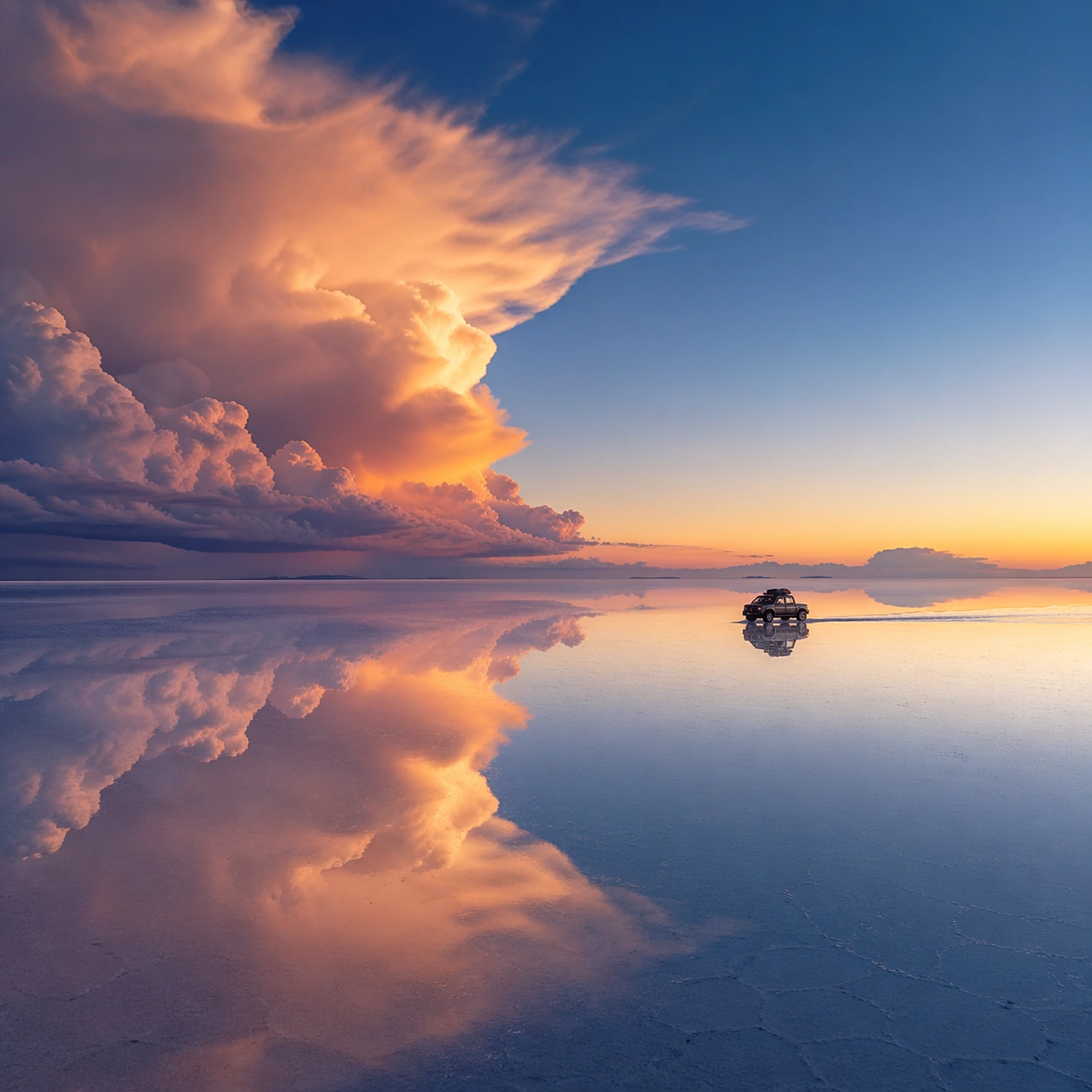
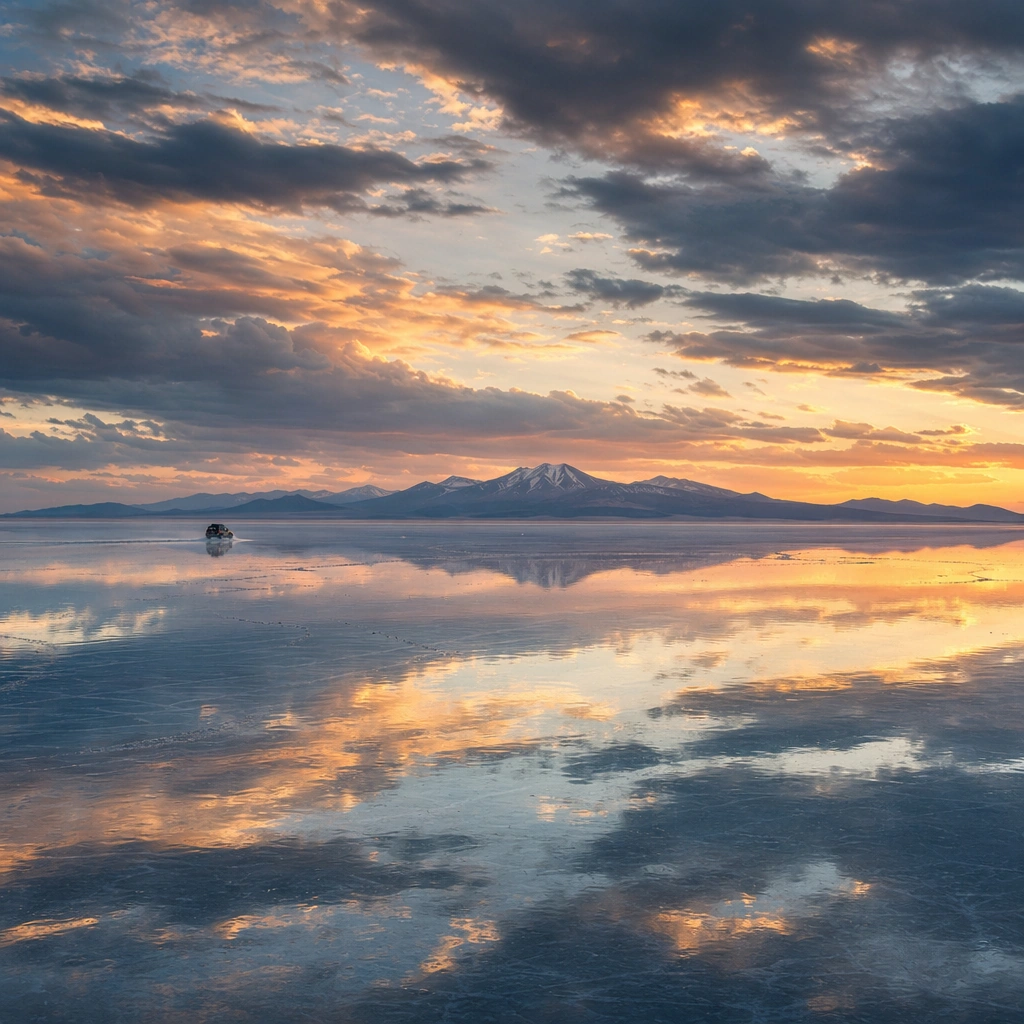
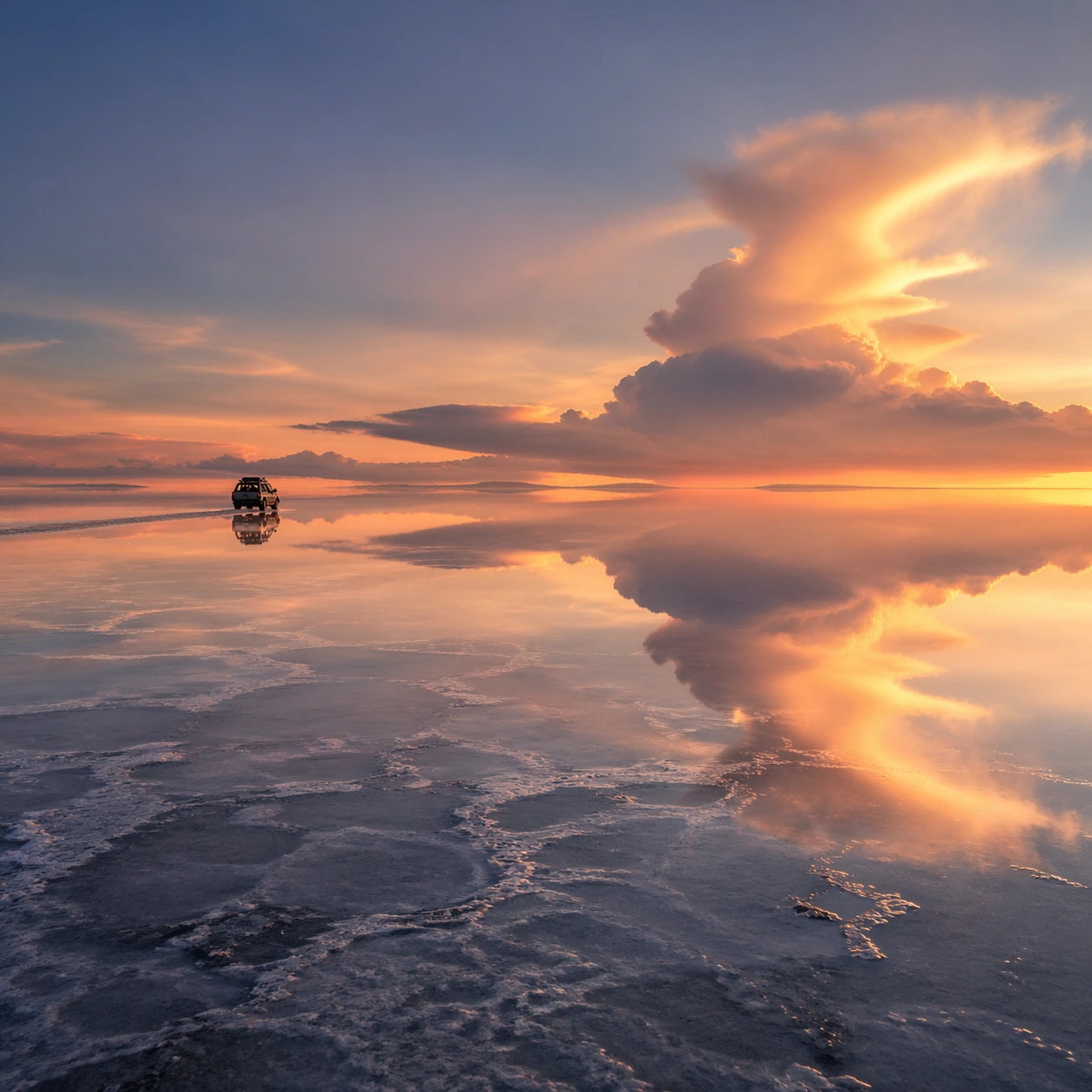
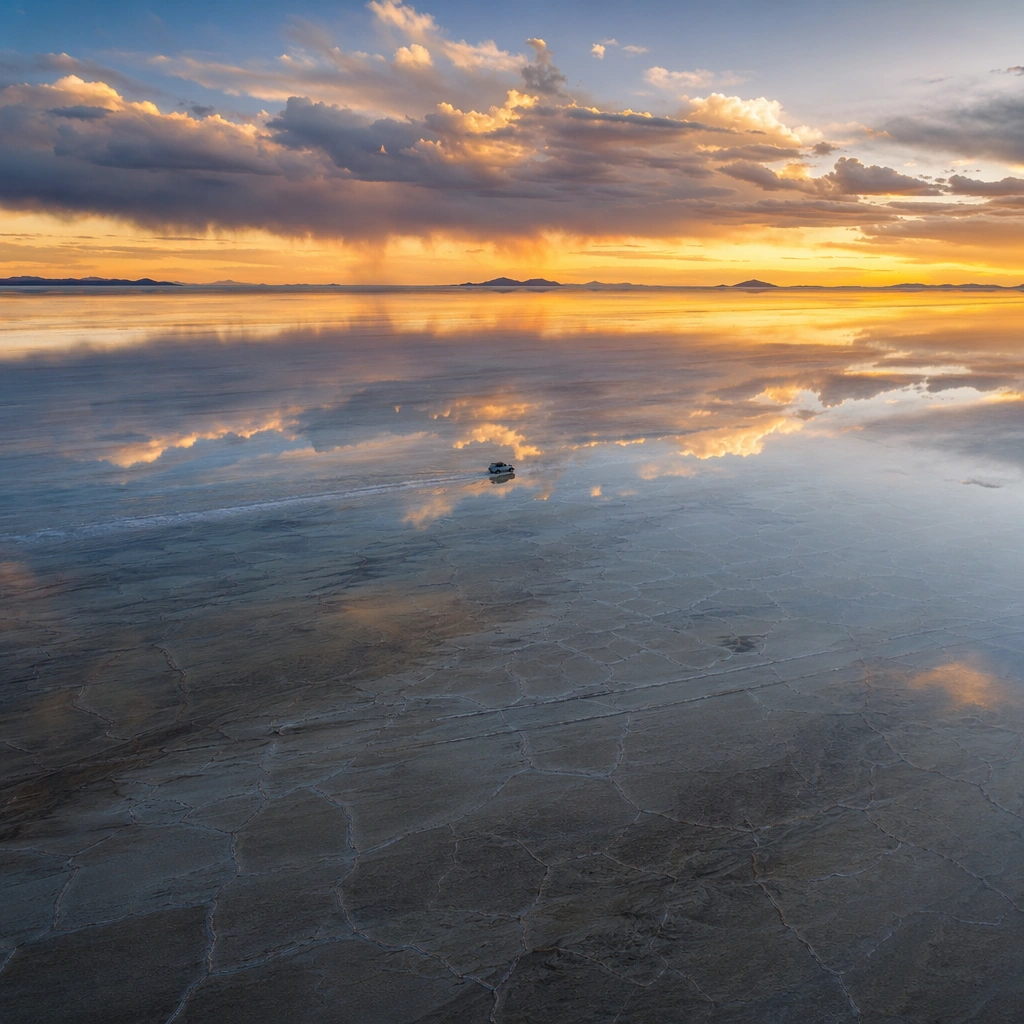
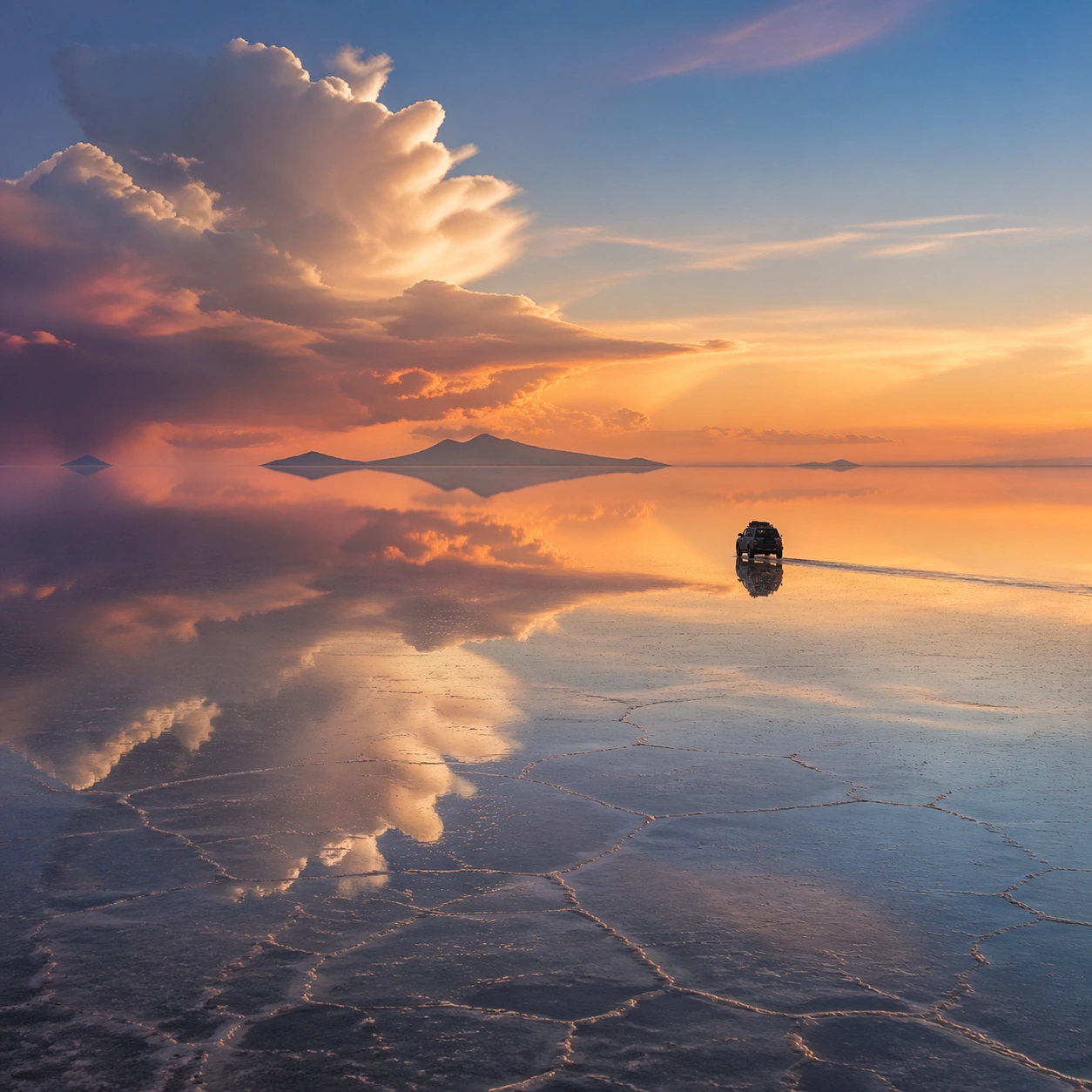
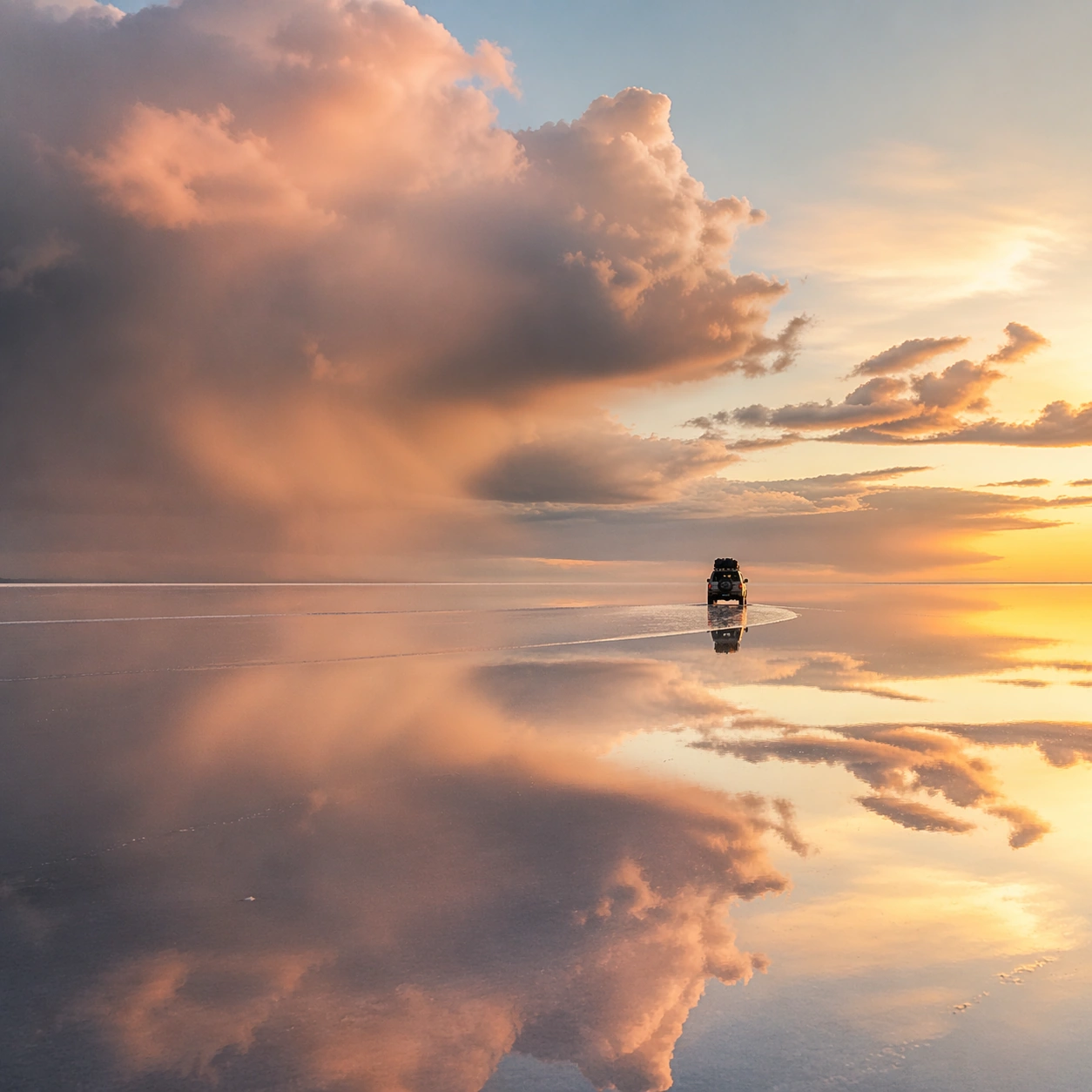
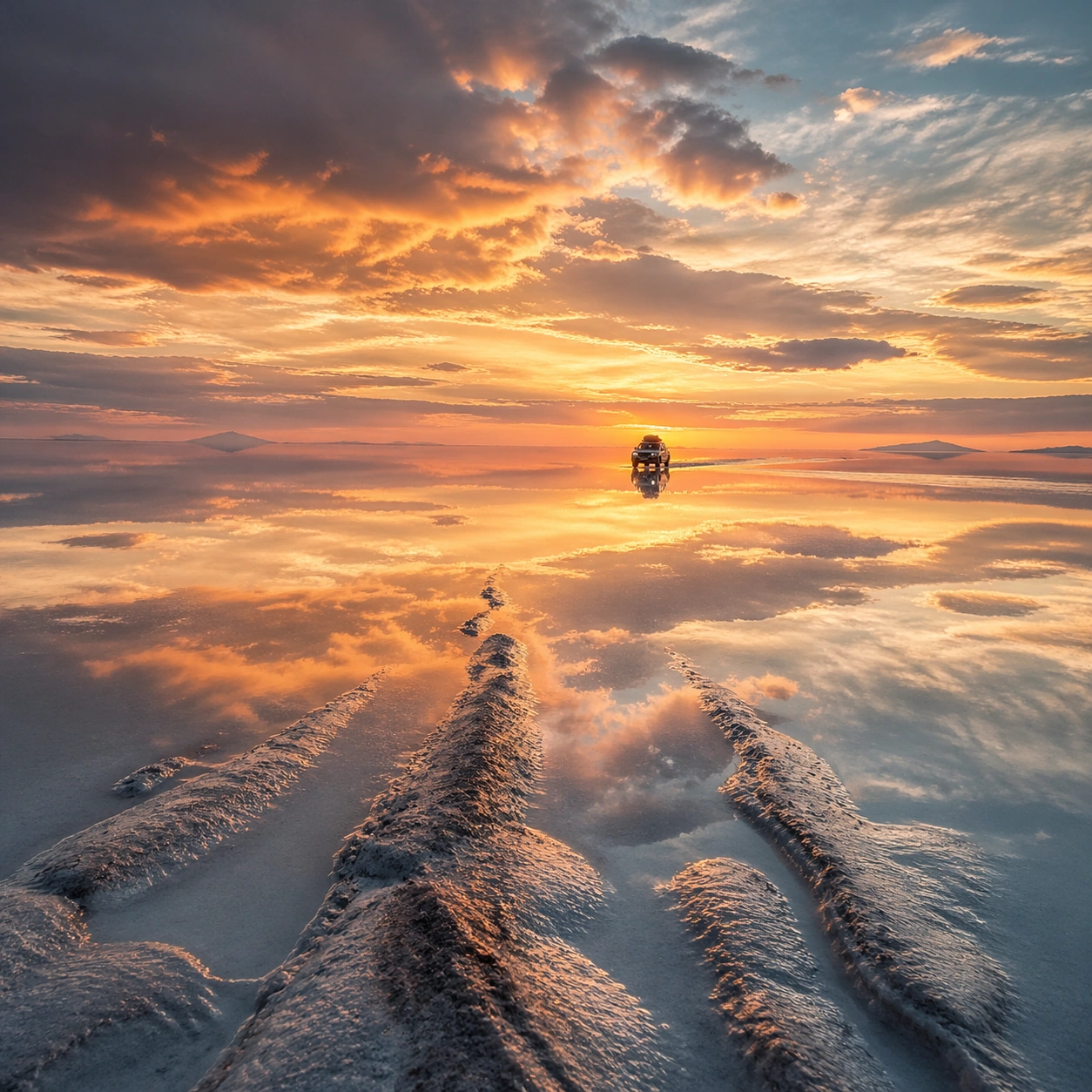
このプロンプトは、水をたたえたボリビアの塩原を夕暮れの風景コンセプトとして描きます。地面に近い視点を使い、手前の質感のある轍などを画面への入口にします。その線が水面、反射する雲、遠くの地形へ視線を導き、ごく小さな四輪駆動車がスケールを伝えます。目立つ物を増やすよりも、近景から遠景への重なりが重要です。空と鏡面の間に静かな領域を残すことで、薄い地平線と細かな地表の両方が働きます。
公開プレビューでは、盛り上がった二本の轍が車の方向へ収束し、暖かな夕日の色が浅い水面に呼応しています。書き換える際は、こうした見える関係を保つことが重要です。視点、地面、空、スケールの手掛かりを一緒に調整し、地名だけを置き換えないようにします。元の指示は文字やロゴを含めず、1:1の正方形にするものです。プレビューは生成されたコンセプト作品であり、実写、現地の天候、実地調査を裏付ける資料ではありません。
用意するもの
- Scene、Subject、細部、制約を含む完全な元プロンプト。
- 一貫して調整する場面の設定、光、前景の要素。
- 必要な画像表現に対応した利用環境。この記録には必須の参照画像入力は宣言されていない。
得られるもの
- 前景の導線と鏡面の光で奥行きを作る、正方形の生成風景コンセプト。
- 形の関係、尺度、物の数、空と反射の整合性を点検できる画像。
使い方
- 元の全文を読み、前景の線、水面、地平線、小さな尺度の手掛かりの位置を把握する。
- 場面を変えるときはSceneとSubjectを同時に調整し、地面の素材、水面、大気の奥行きまで合わせる。
- この変形例を再現するなら1:1と一台の小さな車を維持し、矛盾する物や風景を圧迫する追加物を取り除く。
- 轍と車を拡大し、空と水面を比較してから、地平線や余分な文字を確認する。
制約と確認事項
- 前景の線が自然な奥行きにつながるか確認し、入口の遮りや構成に関係のない空白を避ける。
- 雲の位置、光の向き、反射の形を照合し、空と水面が同じ場面に属するようにする。
- 車の台数、大きさ、反射を確認し、余分な車、人、道具が加わっていないか見る。
- 正方形のプレビューは公開素材の一バージョンであり、新しい出力の画素数や品質を保証しない。シリーズ番号は参照画像の入力条件ではない。
よくある質問
シリーズのほかの画像も入力する必要がありますか?
元資料では全九点中の二番目ですが、この記録に必須の参照画像は宣言されていません。全文は前景で奥行きを作るこの変形例として読めます。シリーズの位置づけと入力条件は分けて考えます。
構図で最も重要な選択は何ですか?
低い視点と質感のある手前の轍によって、鏡のような遠景へ視線を導く点です。車はスケールを示すために小さく置き、風景全体を主役にします。
横長に変更してもそのまま使えますか?
原文は1:1を指定しています。横長にする場合は前景の導線、地平線、尺度を示す物の位置を再検討する必要があり、単なる切り抜きで同じ効果を保てるとは限りません。
原文
GPT Image 2 · en
Scene:
Create a square, photoreal landscape study of bolivian salt flat mirror. Compose it as a ground-level entry path that pulls the viewer into the terrain, using a lower vantage with a strong foreground element such as a ridge line, shoreline, stream, boot track, or wet surface leading inward. Let the foreground remain tactile and detailed while the distance opens gradually Keep the frame cinematic but disciplined, with a clear foreground, middle distance, and far mass so the viewer can measure real depth. The image should feel like a field photograph made with patience, precision, and sublime restraint rather than a fantasy matte painting.

Subject:
Show a flooded Bolivian salt flat at sunset with a near-perfect mirror surface reflecting cloud towers, a vanishing horizon, and a single jeep sending one subtle ripple across the water film. This variation should emphasize foreground-led composition. The main landform must dominate the composition, but secondary elements should quietly explain how the place works: water paths, sediment lines, snow bands, surf, ash, wind streaks, stars, or human traces where appropriate. Everything in the image should support the same idea of scale and climate, so the scene reads as one coherent environment rather than a stack of spectacular details.

Important details:
Preserve horizon loss, razor-thin water over salt, exact mirror behavior, soft sunset color mirrored above and below, and a clean sense of infinite horizontal space. The image should reward close looking through layered depth cues rather than pure spectacle alone. Keep geology, weather, and atmosphere physically believable. Use subtle micro-texture, tonal separation, and air perspective to reinforce distance. If a human, vehicle, tent, caravan, bird, or boat appears, it must remain tiny and subordinate to the landscape, functioning only as a scale witness. The composition should feel original, severe, and elegant, with no decorative filler and no imitation of any copyrighted visual property.

Use case:
Bolivian Salt Flat Mirror single study 2/9, exploring the foreground-led composition variation.

Constraints:
No readable text, no watermark, no logos, preserve exact 1:1 aspect ratio, no extra vehicles, no crowd of tourists, no giant props, no surreal floating islands, no blocked foreground, no random props, no awkward dead zone in the lower third, no kitsch color grading, no artificial border, no split-panel treatment.