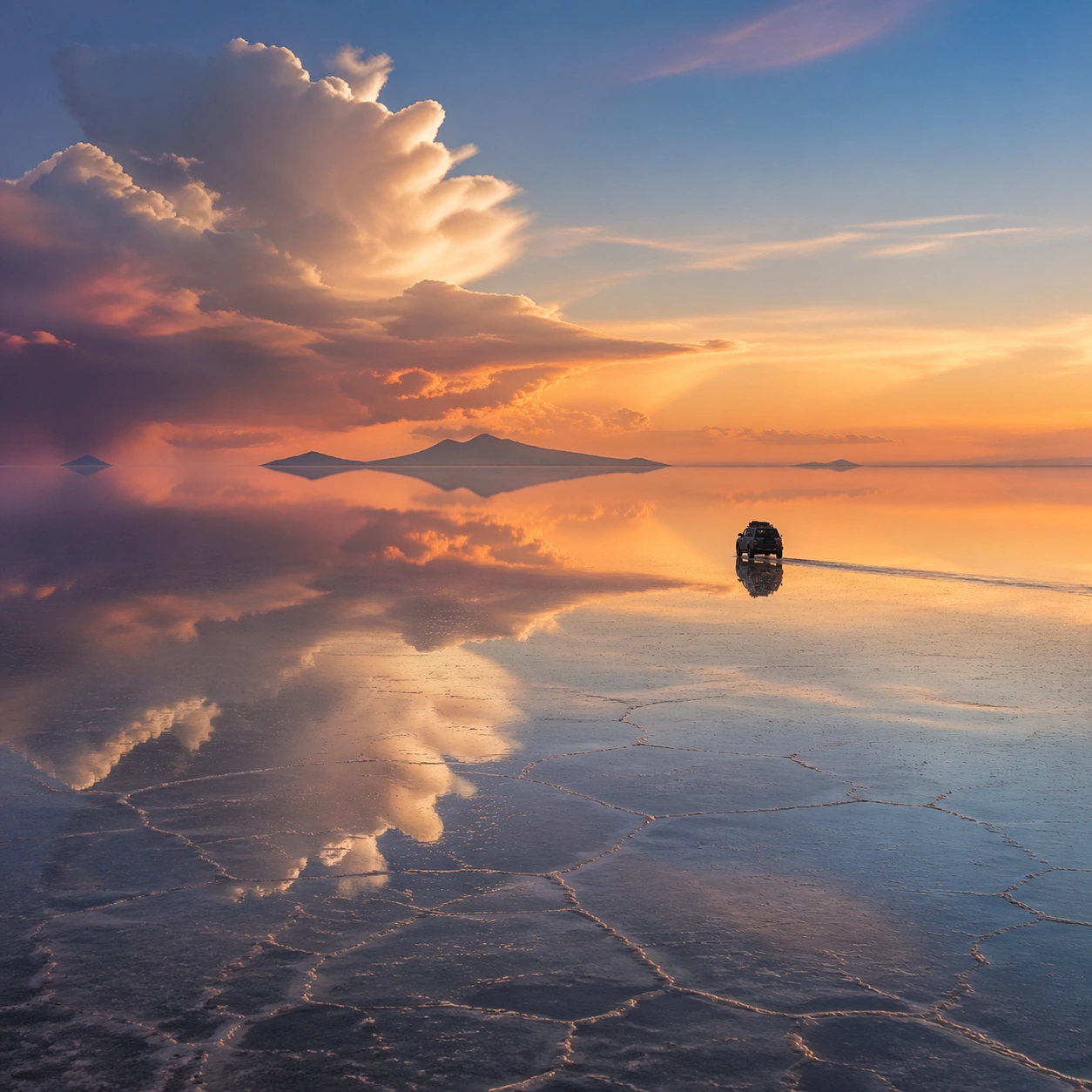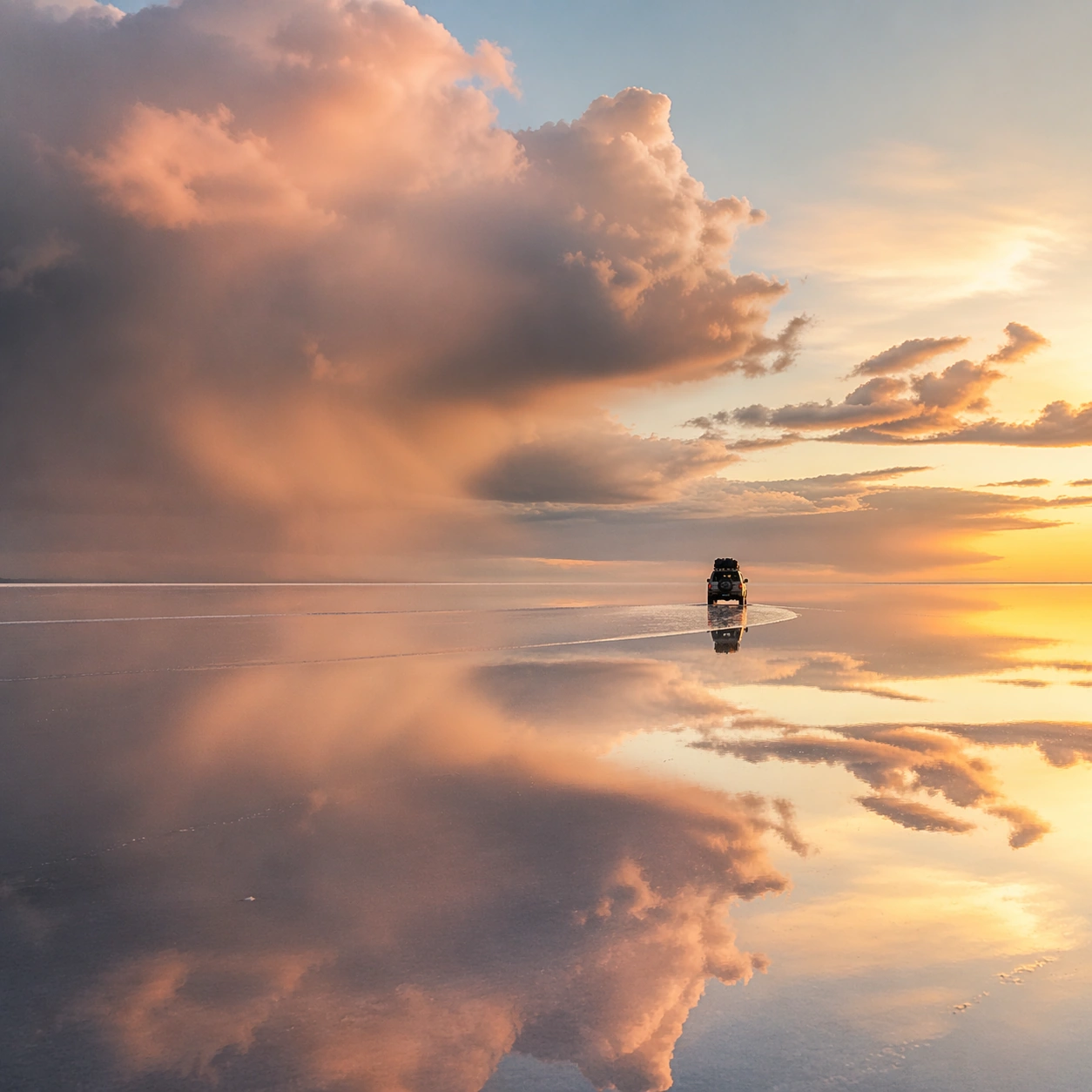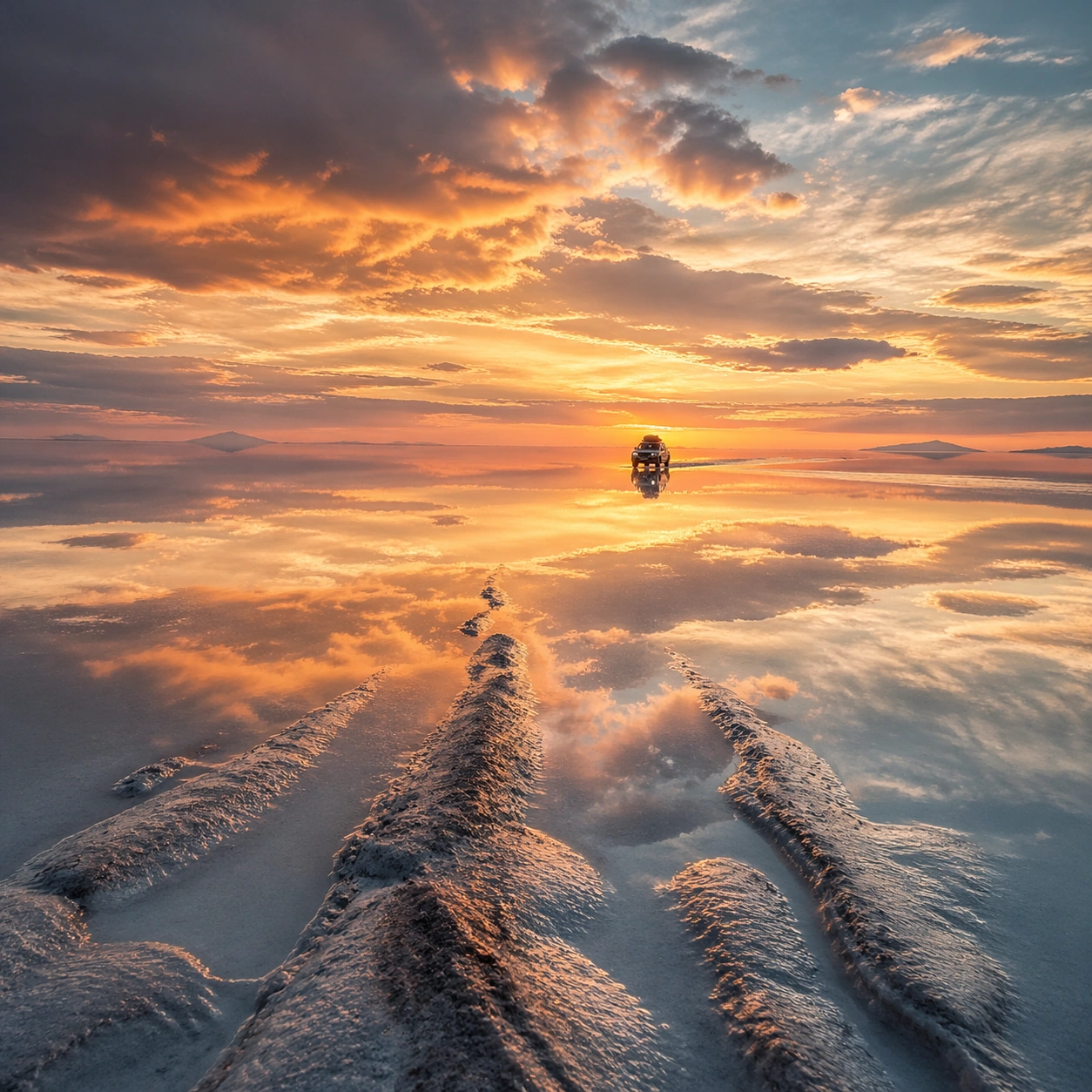
자세한 설명
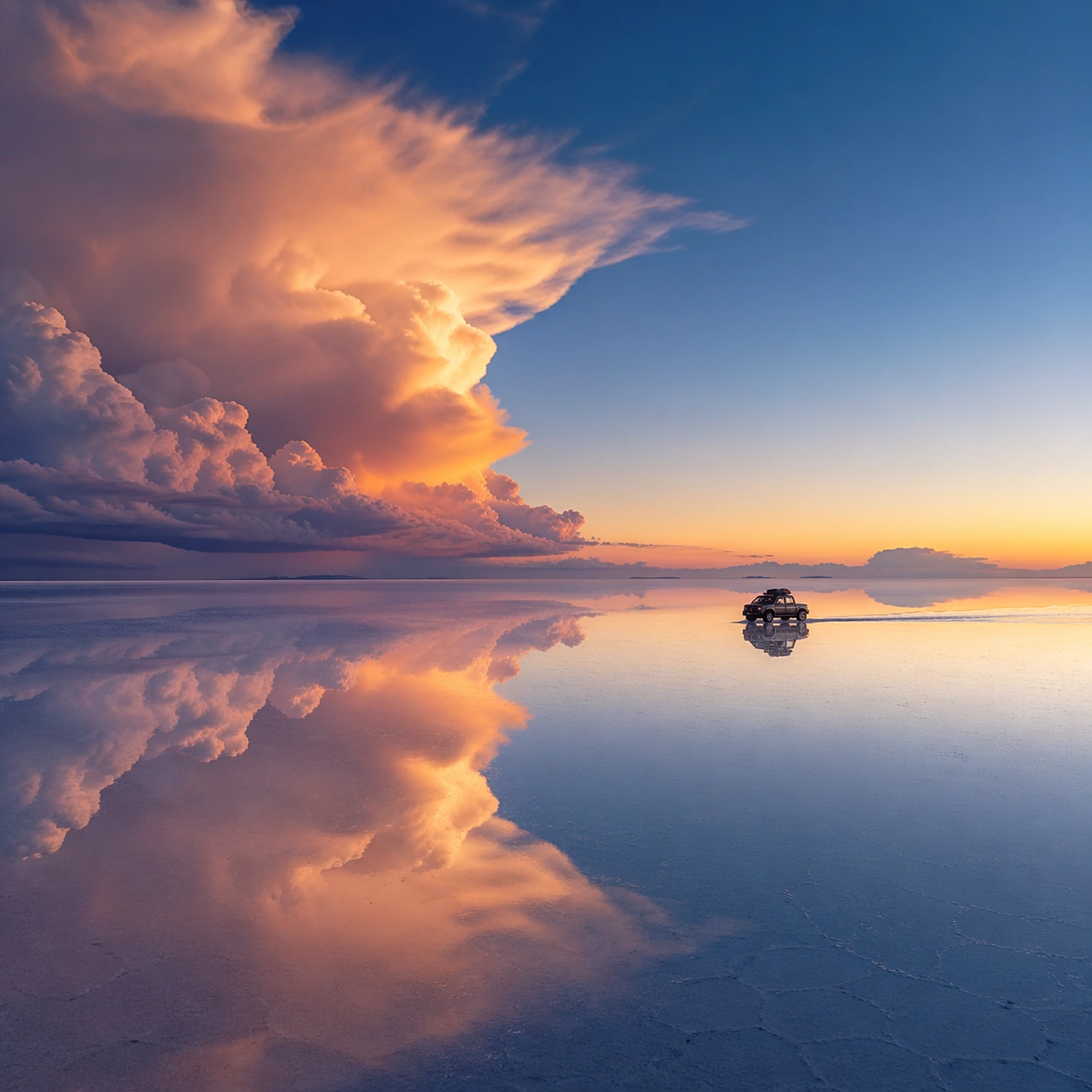
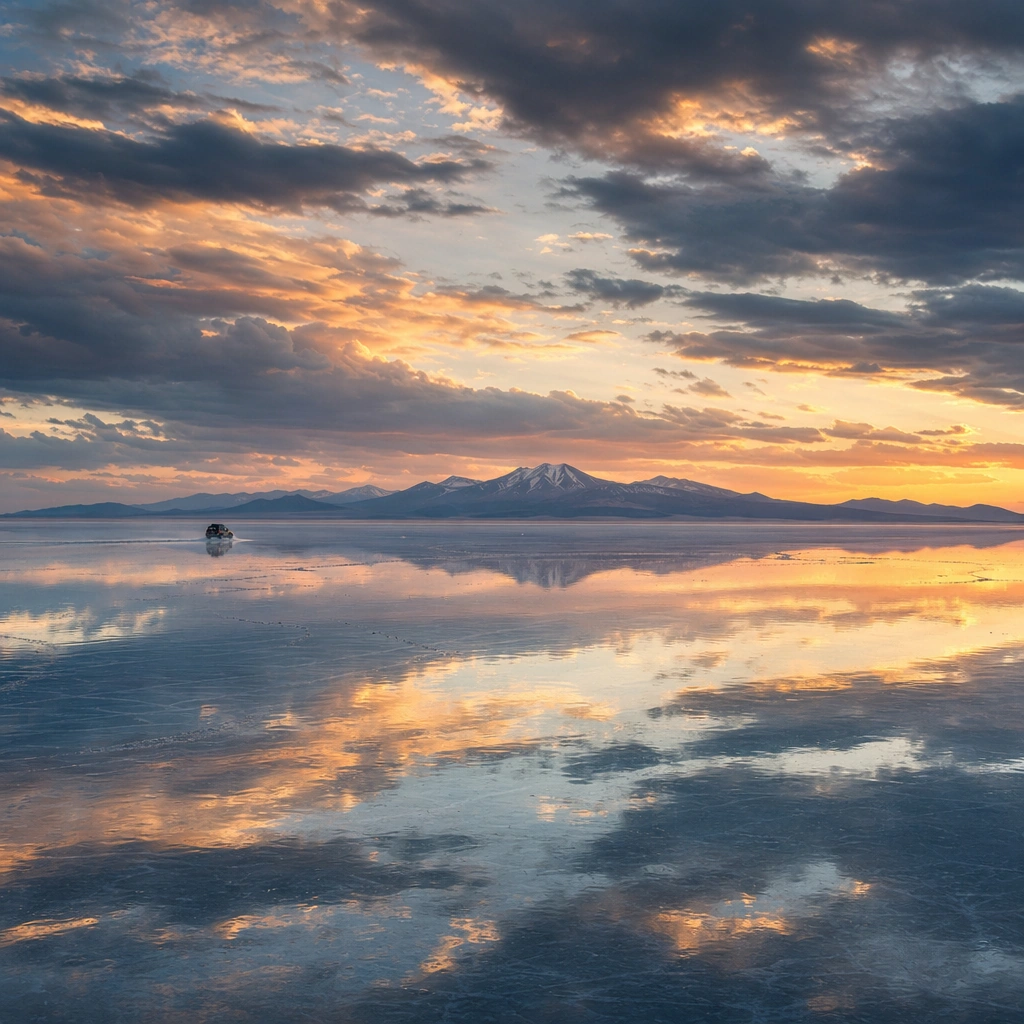
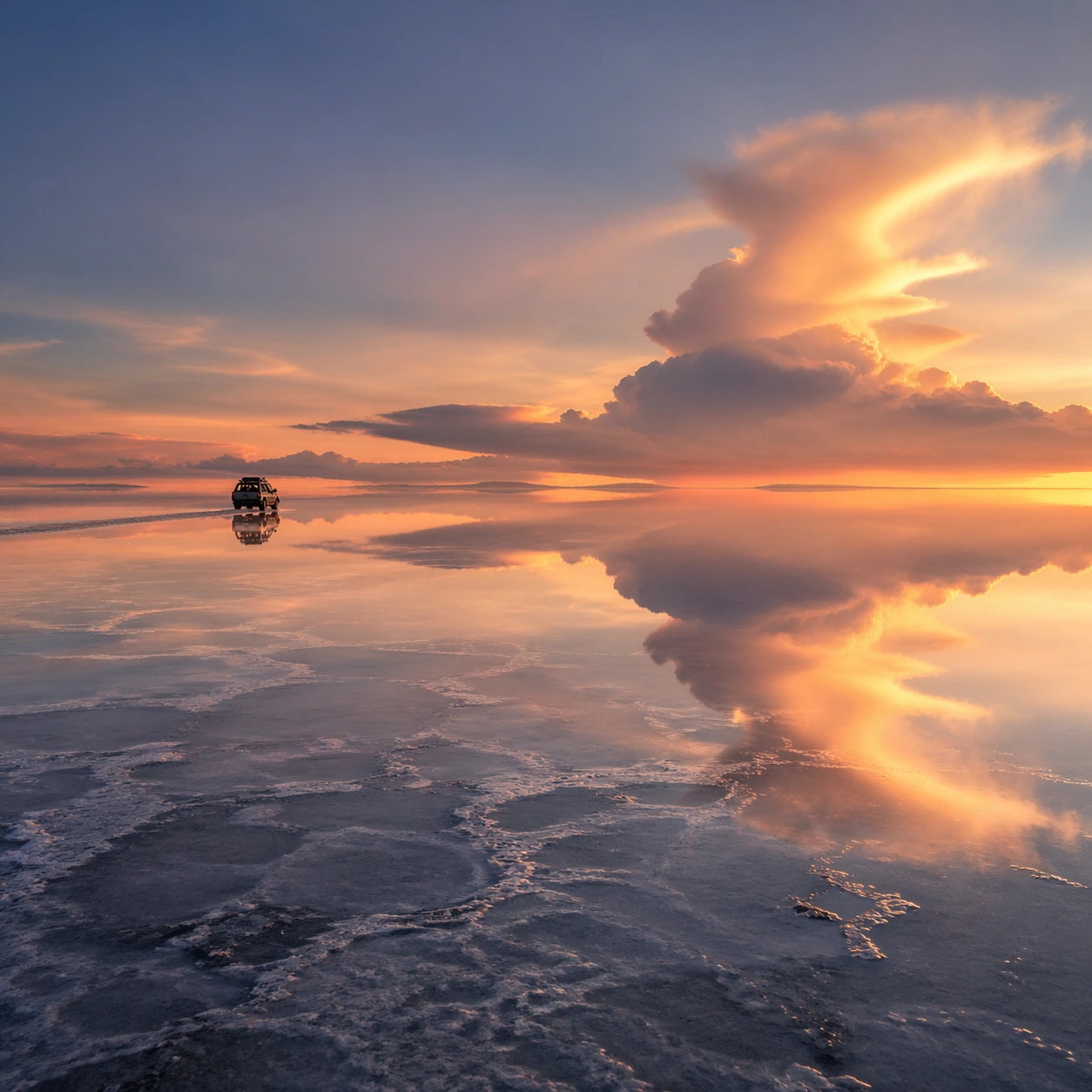
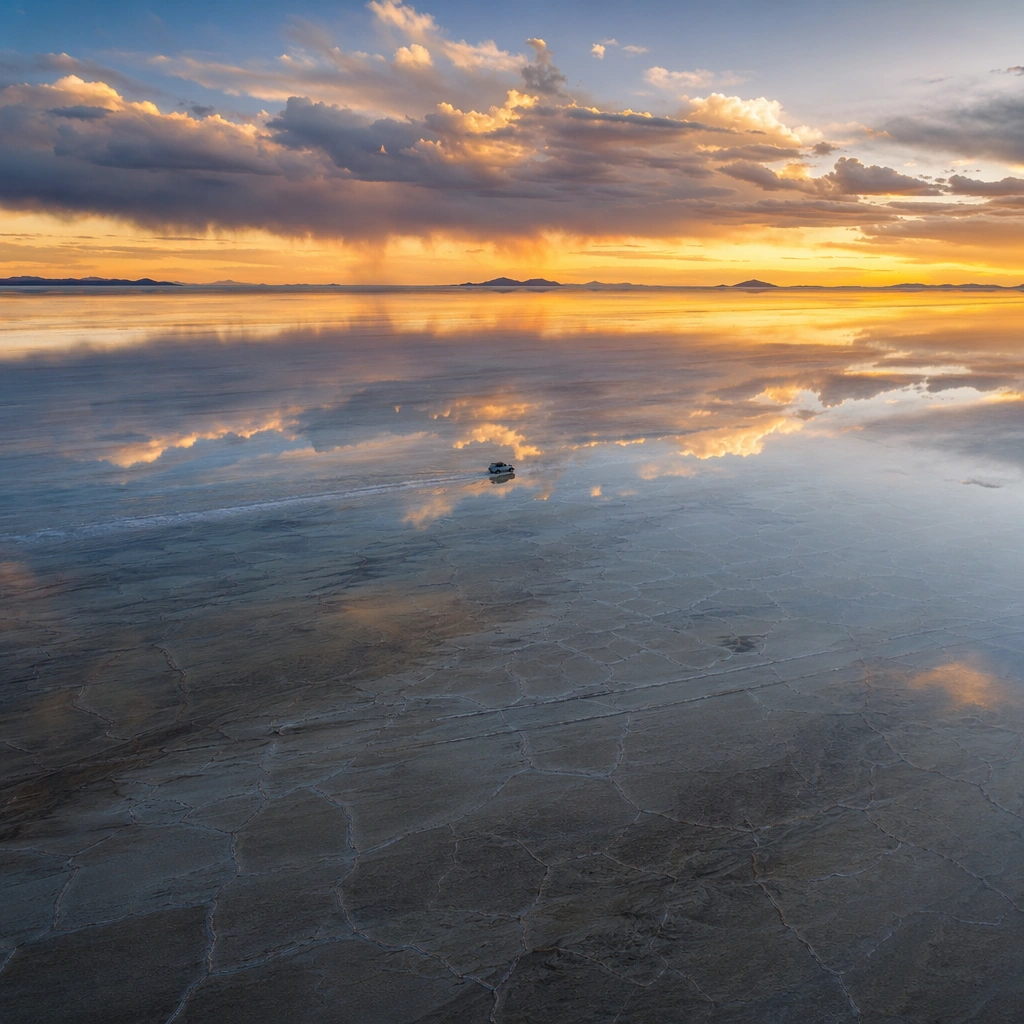
이 프롬프트는 물이 얕게 고인 볼리비아 소금 평원을 해 질 무렵의 풍경 콘셉트로 구성합니다. 지면 가까운 시점에서 질감 있는 바퀴 자국이나 다른 앞쪽 선이 화면의 입구가 됩니다. 선은 시선을 수면, 비친 구름과 먼 지형으로 이끌고 아주 작은 사륜구동차가 크기를 짐작하게 합니다. 눈에 띄는 사물을 늘리기보다 가까운 곳에서 먼 곳까지 이어지는 층이 중요합니다. 하늘과 거울 같은 수면 사이에 차분한 공간을 남겨야 희미한 수평선과 지면의 세부가 함께 작동합니다.
공개된 미리보기에서는 도드라진 두 바퀴 자국이 차량 쪽으로 모이고 따뜻한 노을빛이 얕은 물에 반복됩니다. 문장을 고칠 때도 이러한 시각적 관계를 유지하는 편이 좋습니다. 지명만 바꾸기보다 시점, 지면, 하늘과 크기 기준을 함께 조정해야 합니다. 원문은 텍스트나 로고가 없는 1:1 정사각형을 요구합니다. 미리보기는 구도 연습이나 시각 콘셉트 참고용 생성 작품이며 실제 사진, 현지 날씨나 현장 관찰을 증명하는 자료는 아닙니다.
준비할 사항
- Scene, Subject, 세부 표현과 제약을 포함한 전체 원본 프롬프트.
- 함께 조정할 장면 콘셉트, 빛의 조건과 앞쪽 요소.
- 해당 이미지 구도에 적합한 사용 환경. 이 기록에는 필수 입력 참조 이미지가 선언되어 있지 않습니다.
예상 결과
- 앞쪽의 시선 유도와 반사광으로 공간을 만드는 정사각형 생성 풍경 콘셉트.
- 형태, 크기 관계, 사물 수와 하늘·반사의 일관성을 점검할 수 있는 이미지.
사용 순서
- 원문 전체에서 앞쪽 길, 반사면, 수평선과 작은 크기 기준이 어디에 놓이는지 읽습니다.
- 장면을 바꾸면 Scene과 Subject를 함께 수정하고 지면 재질, 수면과 대기 깊이도 맞춥니다.
- 이 변형을 재현하려면 1:1과 작은 차량 한 대를 유지하고 모순되거나 풍경을 압도하는 추가 요소를 정리합니다.
- 바퀴 자국과 차량을 확대해 보고 하늘과 수면을 대조한 뒤 수평선과 불필요한 글자를 확인합니다.
제한 및 확인 사항
- 앞쪽 선이 자연스러운 깊이를 만드는지 확인하고 시선의 입구가 가려지거나 무관한 빈 공간이 생기지 않게 합니다.
- 구름 위치, 빛의 방향과 반사 형태가 같은 장면에 속하는지 대조합니다.
- 차량 수, 크기와 반사를 살피고 추가 차량, 사람이나 소품이 생겼는지 확인합니다.
- 정사각형 미리보기는 공개된 자료의 한 버전이며 새 출력의 픽셀 수나 품질을 보장하지 않습니다. 시리즈 번호는 참조 이미지 입력 조건이 아닙니다.
자주 묻는 질문
시리즈의 다른 이미지를 함께 입력해야 하나요?
원문은 이 작품을 아홉 개 중 두 번째로 표시하지만 이 기록에는 필수 참조 입력이 선언되어 있지 않습니다. 전체 텍스트는 앞쪽 요소로 깊이를 만드는 이 변형으로 읽고 시리즈 맥락과 입력 조건은 구분합니다.
구도를 결정하는 가장 중요한 요소는 무엇인가요?
낮은 시점과 질감 있는 앞쪽 바퀴 자국이 시선을 거울 같은 원경으로 이끕니다. 차량은 크기 기준이므로 작게 두고 전체 풍경에 종속시킵니다.
가로로 넓은 화면으로 바로 바꿀 수 있나요?
원문은 1:1을 명시합니다. 넓은 화면에서는 앞쪽 선, 수평선과 크기 기준의 위치를 다시 설계해야 합니다. 단순한 자르기만으로 정사각형 구도의 효과가 유지된다고 볼 수는 없습니다.
원본 문서
GPT Image 2 · en
Scene:
Create a square, photoreal landscape study of bolivian salt flat mirror. Compose it as a ground-level entry path that pulls the viewer into the terrain, using a lower vantage with a strong foreground element such as a ridge line, shoreline, stream, boot track, or wet surface leading inward. Let the foreground remain tactile and detailed while the distance opens gradually Keep the frame cinematic but disciplined, with a clear foreground, middle distance, and far mass so the viewer can measure real depth. The image should feel like a field photograph made with patience, precision, and sublime restraint rather than a fantasy matte painting.

Subject:
Show a flooded Bolivian salt flat at sunset with a near-perfect mirror surface reflecting cloud towers, a vanishing horizon, and a single jeep sending one subtle ripple across the water film. This variation should emphasize foreground-led composition. The main landform must dominate the composition, but secondary elements should quietly explain how the place works: water paths, sediment lines, snow bands, surf, ash, wind streaks, stars, or human traces where appropriate. Everything in the image should support the same idea of scale and climate, so the scene reads as one coherent environment rather than a stack of spectacular details.

Important details:
Preserve horizon loss, razor-thin water over salt, exact mirror behavior, soft sunset color mirrored above and below, and a clean sense of infinite horizontal space. The image should reward close looking through layered depth cues rather than pure spectacle alone. Keep geology, weather, and atmosphere physically believable. Use subtle micro-texture, tonal separation, and air perspective to reinforce distance. If a human, vehicle, tent, caravan, bird, or boat appears, it must remain tiny and subordinate to the landscape, functioning only as a scale witness. The composition should feel original, severe, and elegant, with no decorative filler and no imitation of any copyrighted visual property.

Use case:
Bolivian Salt Flat Mirror single study 2/9, exploring the foreground-led composition variation.

Constraints:
No readable text, no watermark, no logos, preserve exact 1:1 aspect ratio, no extra vehicles, no crowd of tourists, no giant props, no surreal floating islands, no blocked foreground, no random props, no awkward dead zone in the lower third, no kitsch color grading, no artificial border, no split-panel treatment.