Explicação detalhada
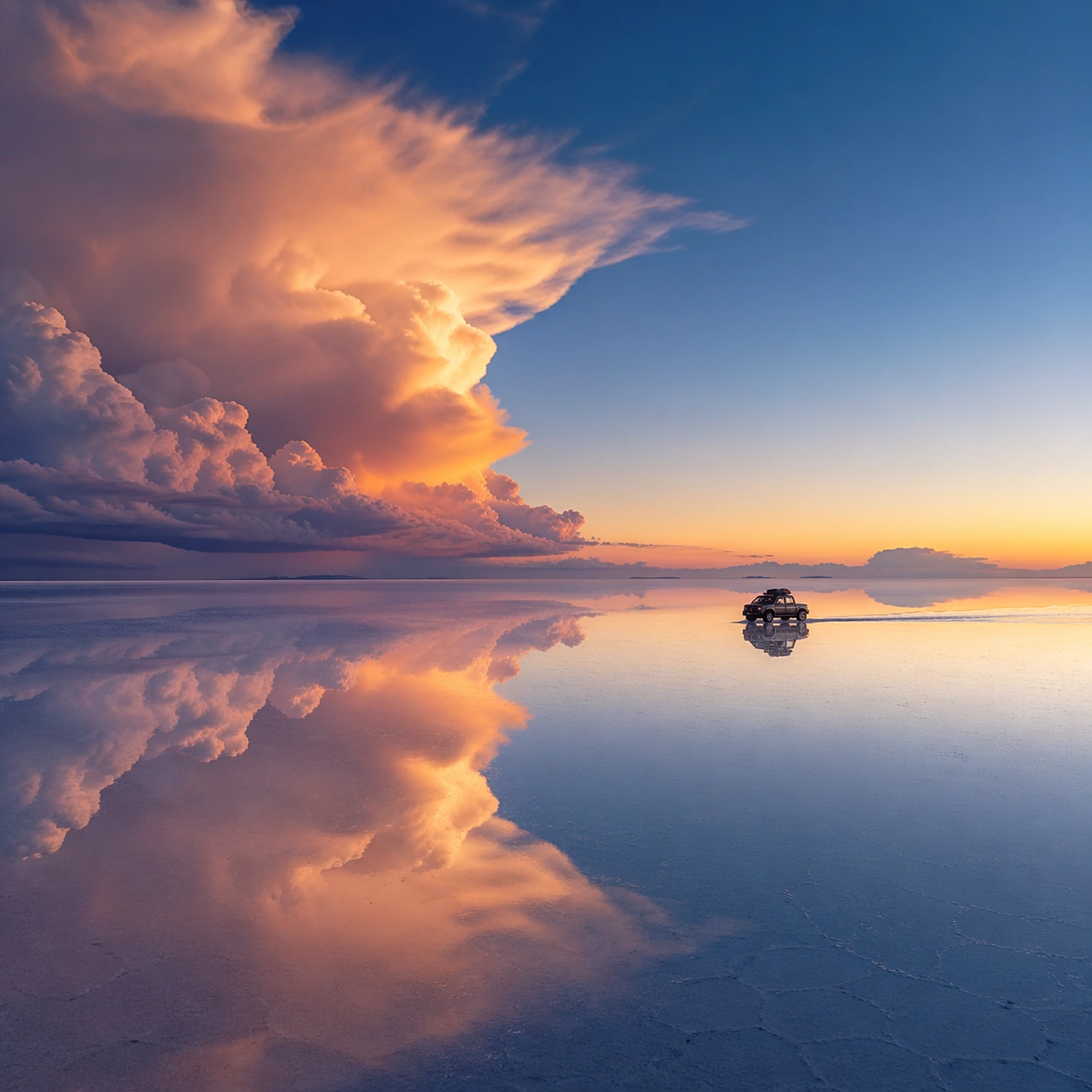
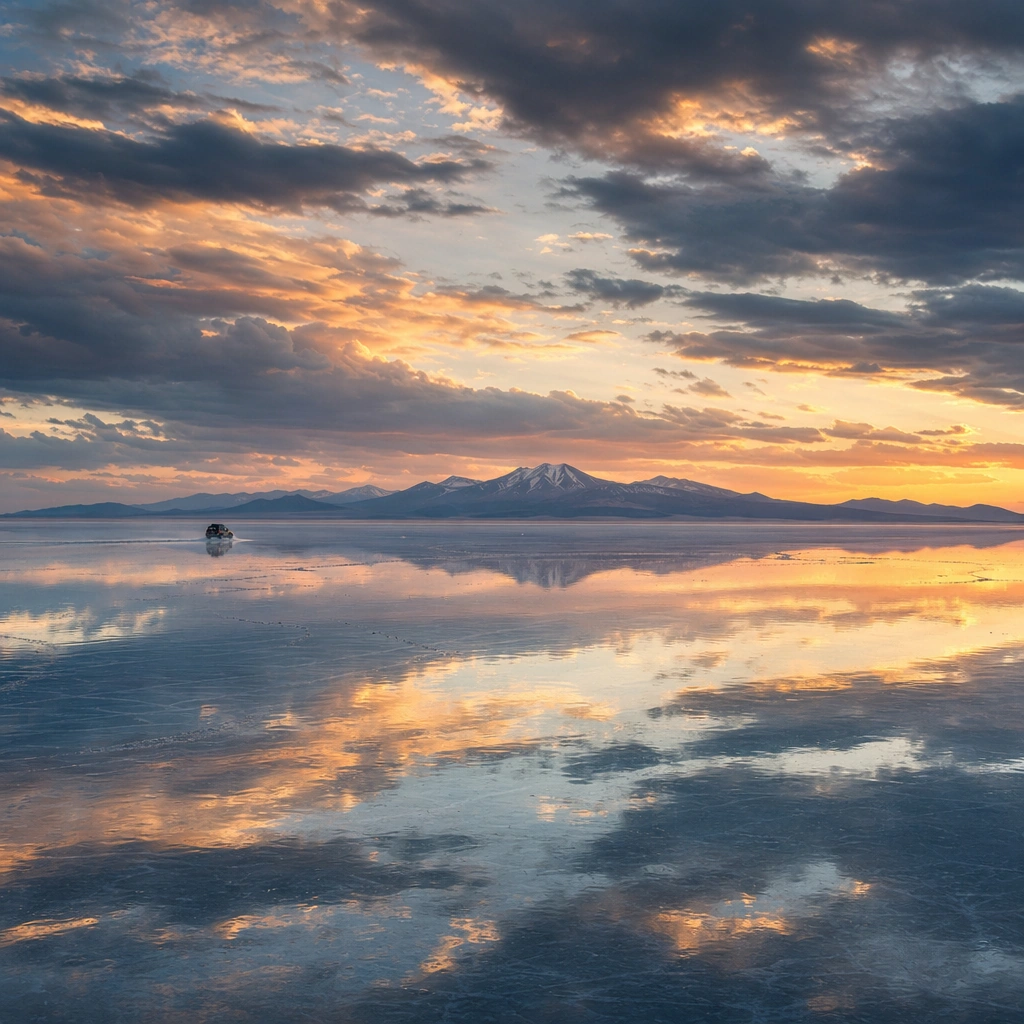
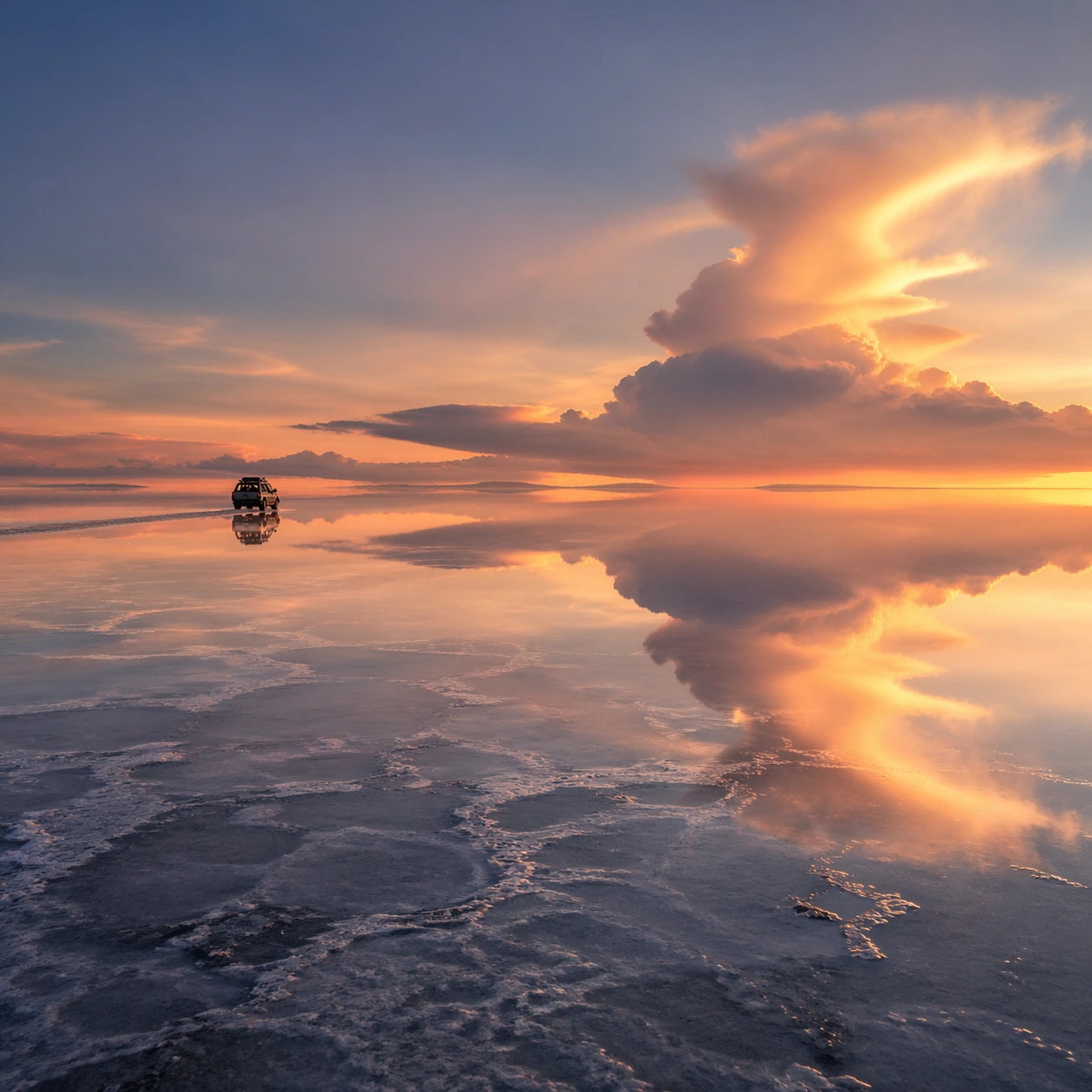
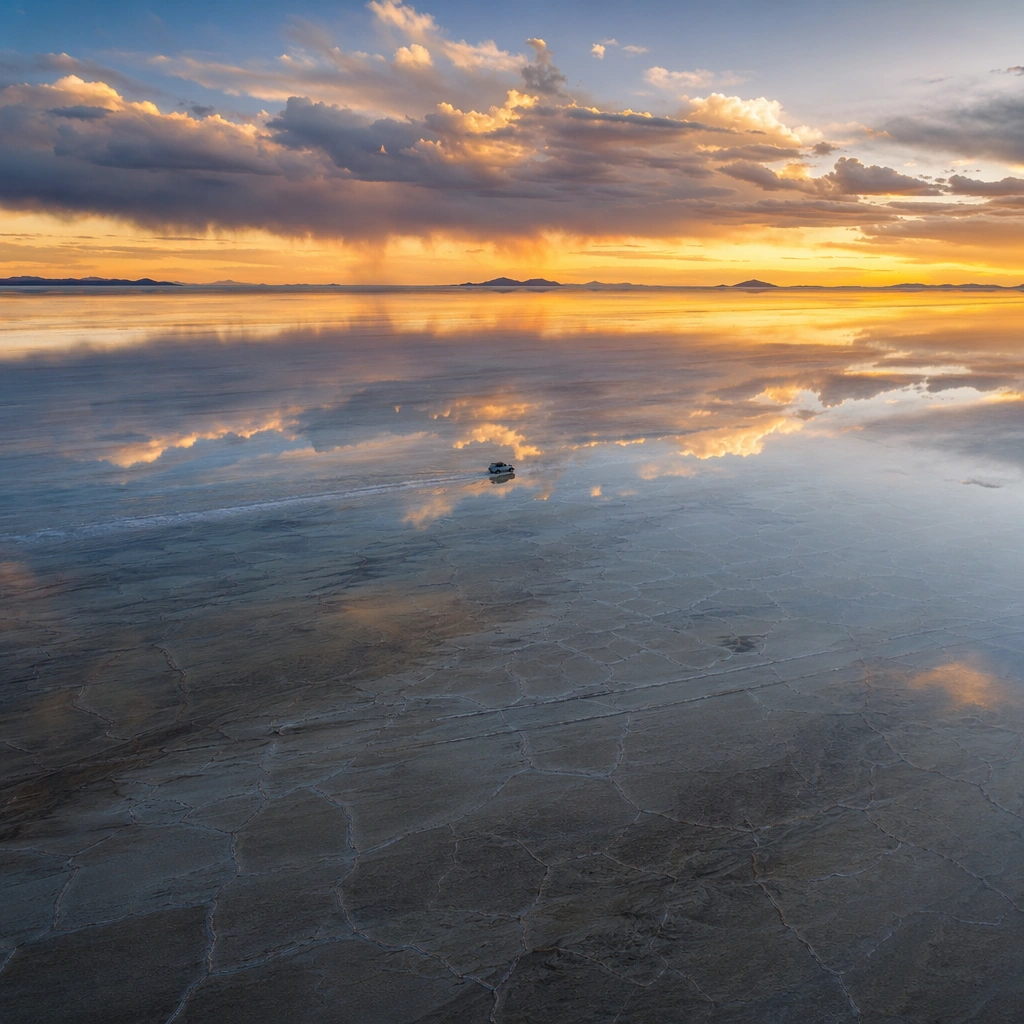
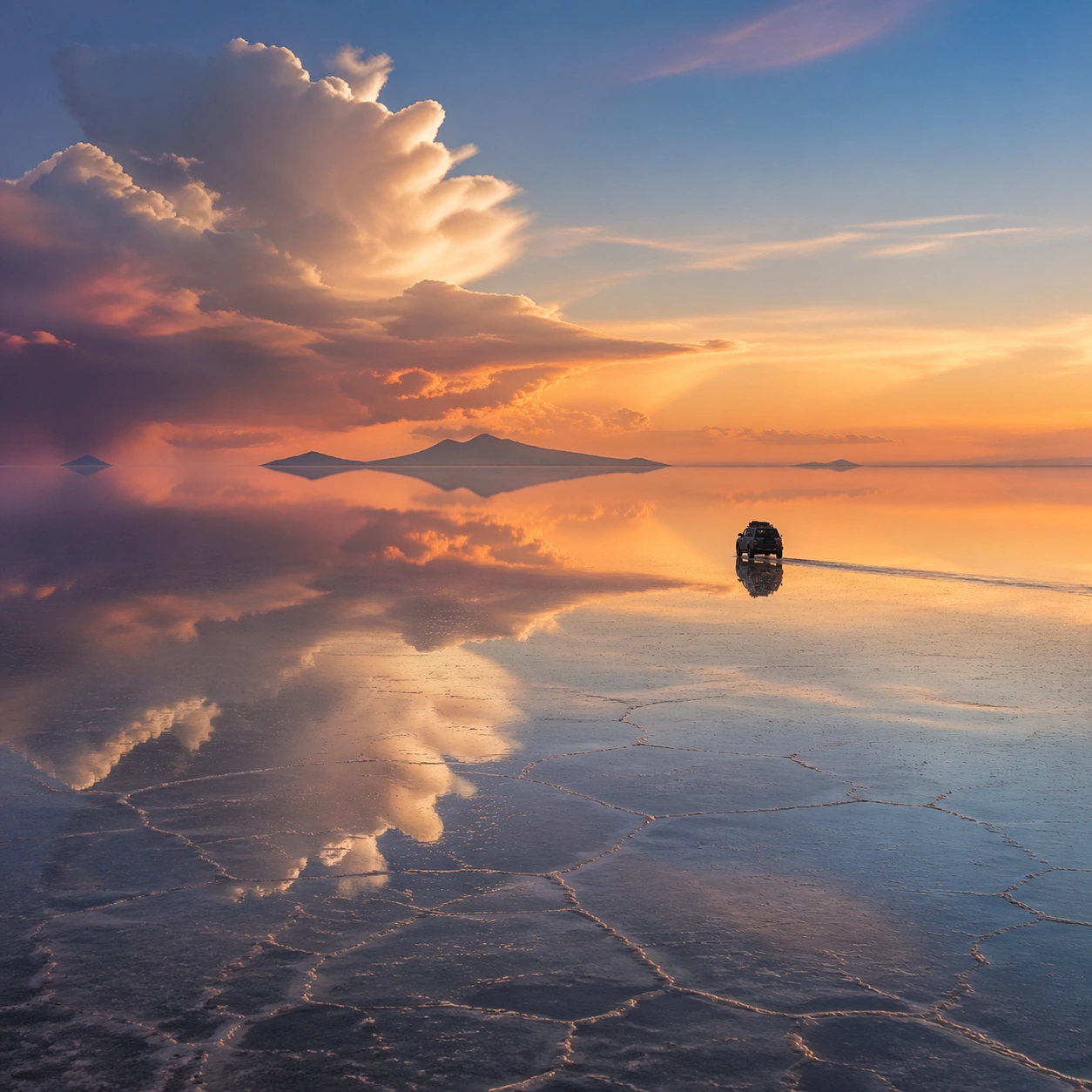
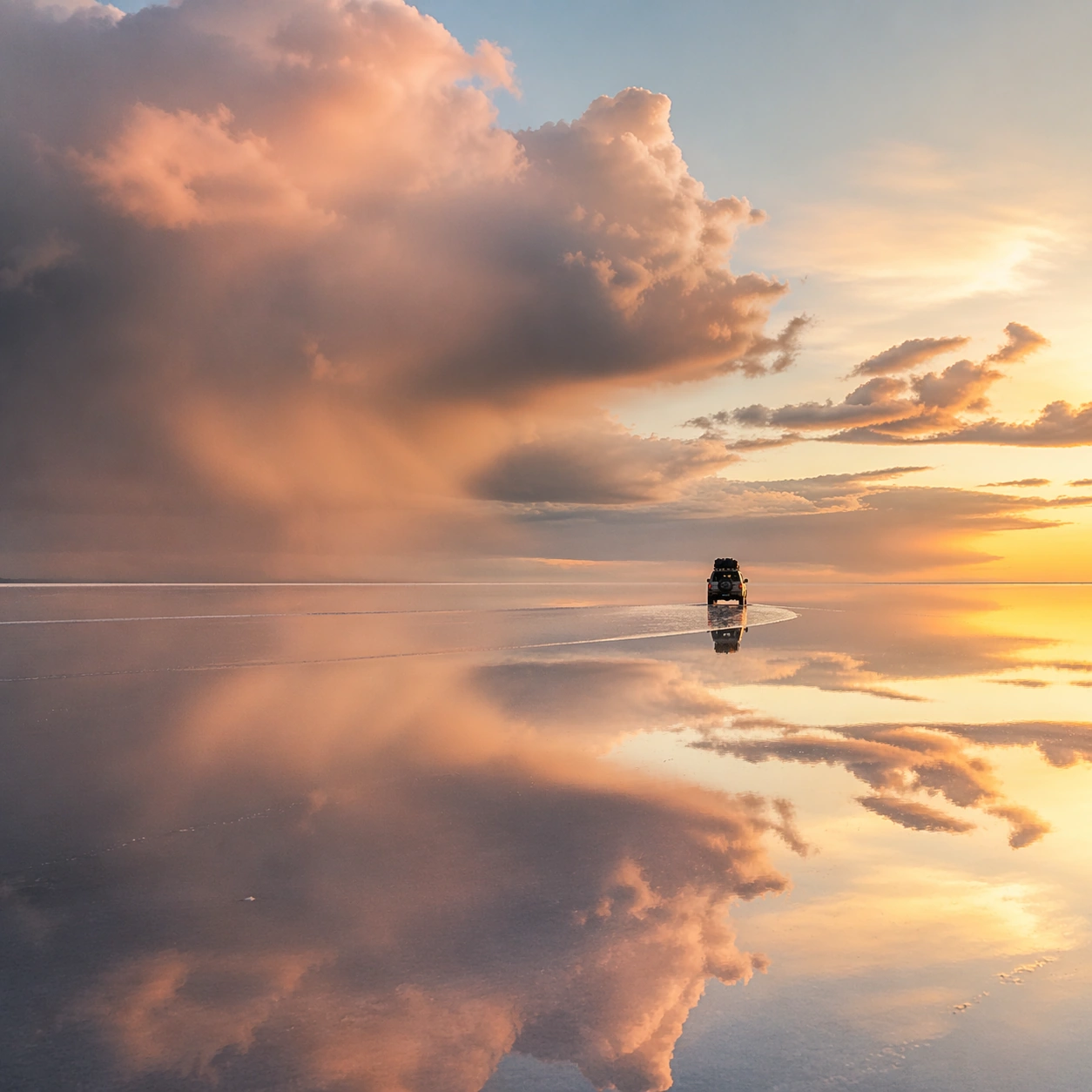
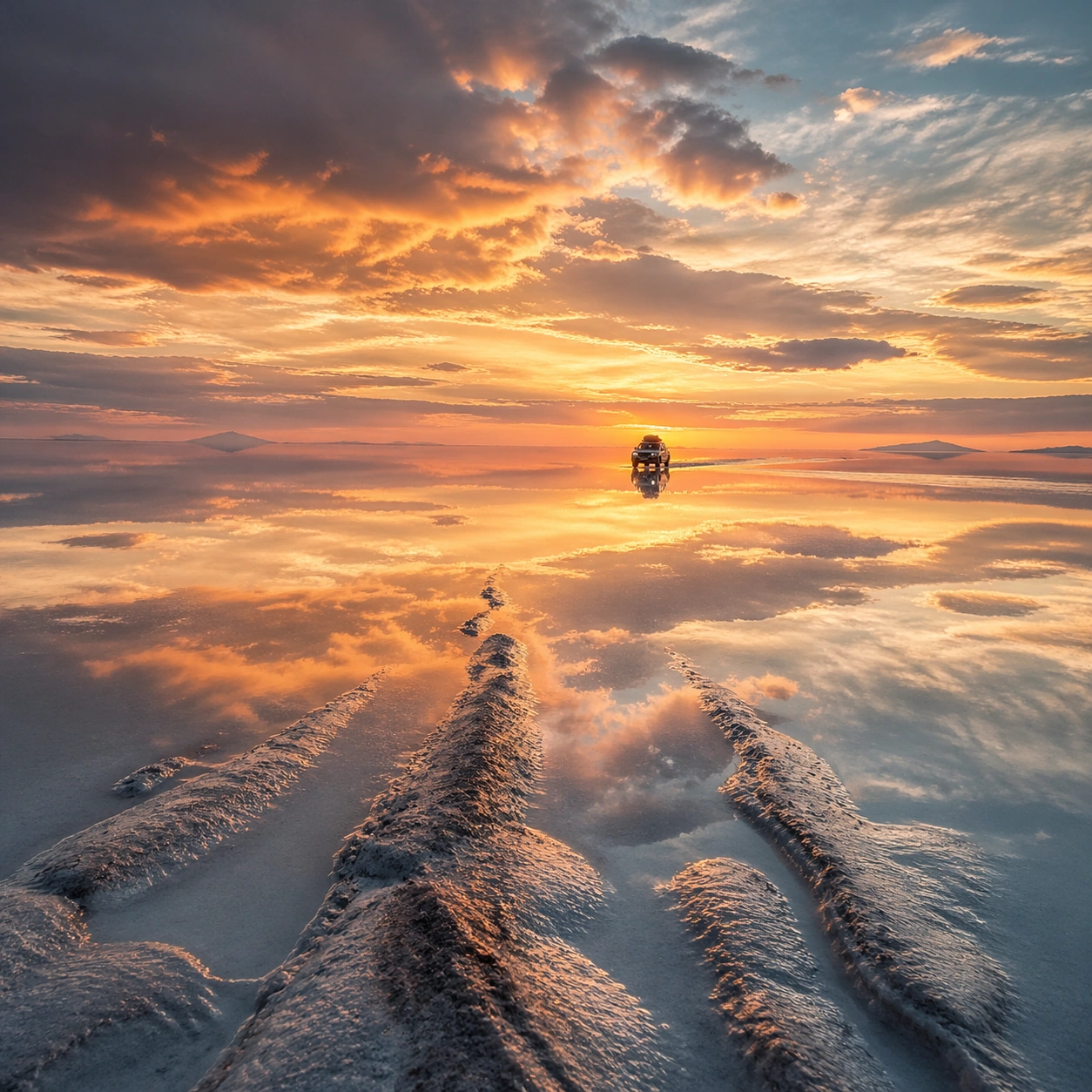
Este prompt propõe uma paisagem de salar boliviano alagado ao pôr do sol. A câmera próxima do chão cria uma entrada visual: marcas de rodas ou outras linhas com textura conduzem o olhar até a água, as nuvens refletidas e o relevo distante. Um veículo fora de estrada bem pequeno fornece escala. O centro da composição é a sequência de planos, não a quantidade de objetos chamativos. Espaços calmos entre céu e espelho d’água deixam funcionar tanto o horizonte quase apagado quanto os detalhes do terreno.
Na prévia publicada, duas marcas elevadas convergem na direção do veículo e o tom quente do entardecer reaparece na água rasa. Ao adaptar o texto, preserve essas relações visíveis: altura do olhar, solo, céu e referência de escala devem mudar juntos. Trocar apenas o nome do lugar não resolve a composição. O original pede formato quadrado 1:1, sem texto ou logotipos. A prévia é uma criação gerada para estudo de composição ou conceito visual, não evidência de fotografia real, clima local ou observação de campo.
O que preparar
- O prompt original completo, com Scene, Subject, detalhes e restrições.
- Uma proposta coerente de cena, iluminação e elementos de primeiro plano.
- Um ambiente de imagem adequado; este registro não declara referência visual de entrada obrigatória.
Resultados esperados
- Um conceito de paisagem quadrado e gerado, com profundidade guiada pelo primeiro plano e luz refletida coerente.
- Uma imagem em que se pode revisar geometria, escala, número de objetos e relação entre céu e reflexos.
Como usar
- Leia o original inteiro e identifique posições das marcas próximas, superfície refletora, horizonte e pequeno indicador de escala.
- Ao mudar a cena, ajuste Scene e Subject em conjunto, incluindo material do chão, água e profundidade atmosférica.
- Para esta variante, mantenha 1:1 e um único veículo pequeno; retire elementos contraditórios ou que dominem a paisagem.
- Amplie marcas e veículo, compare céu e água e confira horizonte e textos indesejados.
Limites e verificações
- As linhas próximas devem criar profundidade plausível, sem bloquear a entrada do olhar nem deixar uma área vazia desconectada.
- Compare posição das nuvens, direção da luz e formato dos reflexos para manter uma única cena.
- Confira quantidade, tamanho e reflexo dos veículos e procure pessoas ou objetos acrescentados sem intenção.
- A prévia quadrada é uma versão publicada do material, sem garantia de pixels ou qualidade de uma nova saída. O número da série não exige uma referência de entrada.
Perguntas frequentes
Preciso fornecer as outras imagens da série?
A fonte identifica esta obra como a segunda de nove, mas não declara aqui uma referência obrigatória. O texto completo descreve esta variante de primeiro plano; o contexto da série e os requisitos de entrada são informações distintas.
Qual escolha define mais a composição?
O ponto de vista baixo e as marcas com textura conduzem o olhar do primeiro plano até o espelho distante. O veículo dá escala e deve continuar pequeno, subordinado à paisagem.
Posso simplesmente mudar para um quadro panorâmico?
O original exige 1:1. Um formato largo requer repensar as linhas próximas, o horizonte e a referência de escala. Apenas recortar não comprova que o efeito da composição quadrada foi preservado.
Documento original
GPT Image 2 · en
Scene:
Create a square, photoreal landscape study of bolivian salt flat mirror. Compose it as a ground-level entry path that pulls the viewer into the terrain, using a lower vantage with a strong foreground element such as a ridge line, shoreline, stream, boot track, or wet surface leading inward. Let the foreground remain tactile and detailed while the distance opens gradually Keep the frame cinematic but disciplined, with a clear foreground, middle distance, and far mass so the viewer can measure real depth. The image should feel like a field photograph made with patience, precision, and sublime restraint rather than a fantasy matte painting.

Subject:
Show a flooded Bolivian salt flat at sunset with a near-perfect mirror surface reflecting cloud towers, a vanishing horizon, and a single jeep sending one subtle ripple across the water film. This variation should emphasize foreground-led composition. The main landform must dominate the composition, but secondary elements should quietly explain how the place works: water paths, sediment lines, snow bands, surf, ash, wind streaks, stars, or human traces where appropriate. Everything in the image should support the same idea of scale and climate, so the scene reads as one coherent environment rather than a stack of spectacular details.

Important details:
Preserve horizon loss, razor-thin water over salt, exact mirror behavior, soft sunset color mirrored above and below, and a clean sense of infinite horizontal space. The image should reward close looking through layered depth cues rather than pure spectacle alone. Keep geology, weather, and atmosphere physically believable. Use subtle micro-texture, tonal separation, and air perspective to reinforce distance. If a human, vehicle, tent, caravan, bird, or boat appears, it must remain tiny and subordinate to the landscape, functioning only as a scale witness. The composition should feel original, severe, and elegant, with no decorative filler and no imitation of any copyrighted visual property.

Use case:
Bolivian Salt Flat Mirror single study 2/9, exploring the foreground-led composition variation.

Constraints:
No readable text, no watermark, no logos, preserve exact 1:1 aspect ratio, no extra vehicles, no crowd of tourists, no giant props, no surreal floating islands, no blocked foreground, no random props, no awkward dead zone in the lower third, no kitsch color grading, no artificial border, no split-panel treatment.