
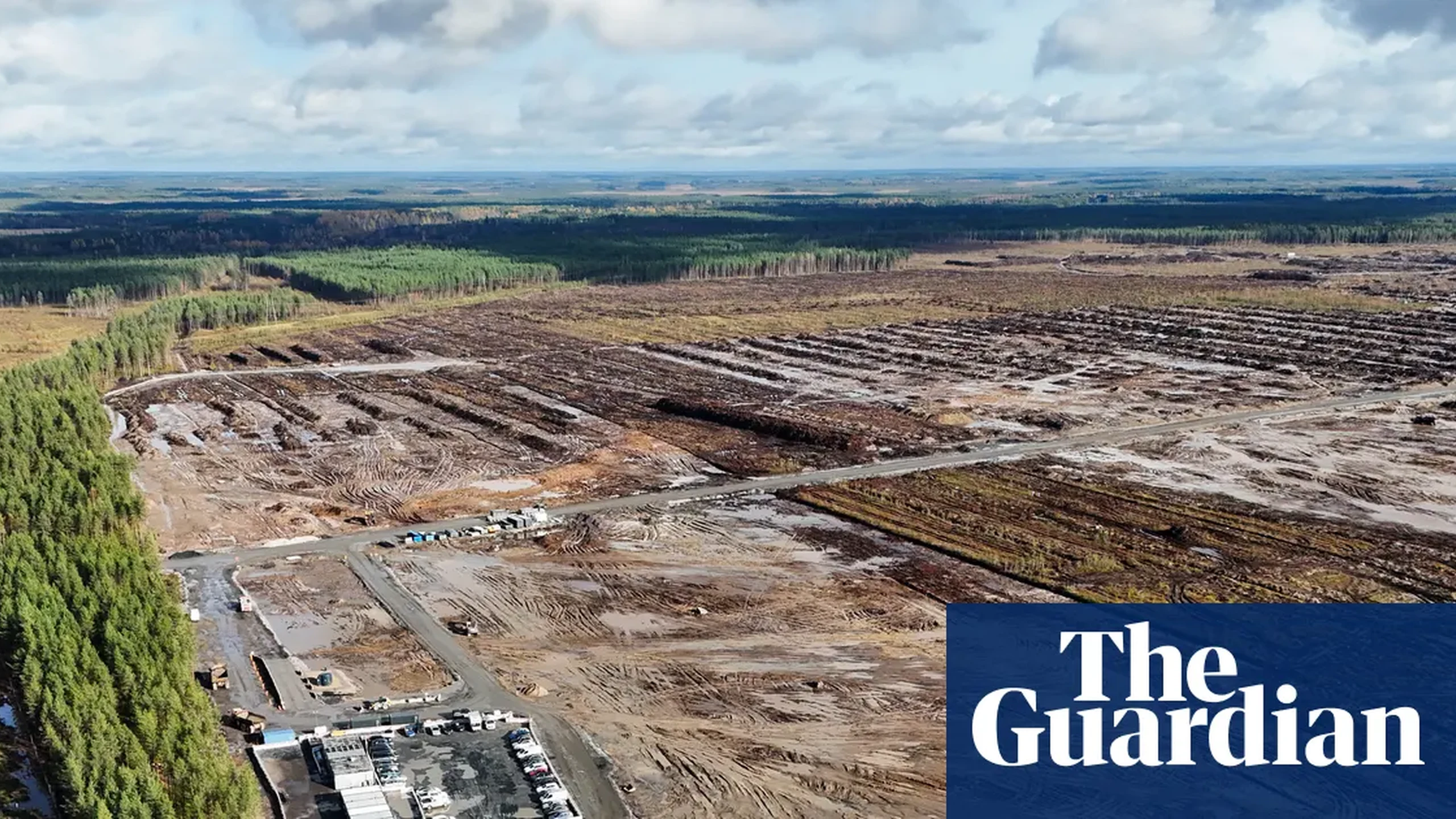
Finland has ordered Google to halt environmentally disruptive preparation at its planned Muhos and Kajaani data centers, after substantial clearing proceeded before environmental impact assessments were complete. The dispute is about what a review can still change once a developer has altered the landscape—not a final decision cancelling either project.
The Licensing and Supervision Authority, LVV, issued its notice to Google's local company, Tuike Finland Oy, on October 6, 2026. It required a written explanation by October 14 and cessation of the specified work by October 23 at the latest. Planning, surveying and limited investigations with only minor effects can continue. Noncompliance could bring enforcement and a fine.
What had changed before the assessment
Reporting described about 330 hectares cleared at Muhos and just under 200 at Kajaani. LVV's notice covers tree removal, topsoil stripping, construction roads, excavation, quarrying, crushing, material transfers, ditching and storage development that significantly alter the environment.
The hectares establish the scale of intervention, not that every parcel was protected or old-growth forest. The regulator's stated concern is sequencing: these activities produce the very effects an environmental impact assessment is supposed to identify before key permitting decisions.
That assessment is neither an automatic approval nor a rejection. It considers land, water, biodiversity, communities and alternatives. Roads, stripped soils and sunk expenditure can make a nominally open choice expensive to change before the process reaches a conclusion.
Google's position and the unresolved legal boundaries
Google says it acted in good faith under Finland's Forestry Act, conducted extensive nature surveys and protected high-value areas. It disputes allegations of illegal forestry. At the same time, the company acknowledged falling short of its own standards and promised to study LVV's findings and follow its guidance.
Forestry compliance does not alone resolve land-use, construction or assessment obligations. Reporting describes administrative-court appeals against local zoning plans, with building restrictions that can trigger separate landscape-work permissions. The available account does not establish a final judicial ruling on every contested activity or prove deliberate misconduct.
The Finnish Association for Nature Conservation alleged that areas deserving protection had been logged. Its chief operating officer, Tapani Veistola, described conduct across the two sites as systemic and said Muhos had become sand rather than forest. These are attributed criticisms requiring assessment against official habitat findings. Commercially managed woodland is not necessarily pristine, but neither is it ecologically empty.
Google points to tree planting over 130 hectares at Muhos. That is proposed mitigation, not demonstrated ecological replacement. The figure cannot simply be subtracted from the 330 hectares cleared: permanent construction, routine harvesting and restoration areas need separate mapping. New planting also does not immediately restore mature forest structure, soils, carbon stocks, drainage or habitat connections.
The assessment still contains real engineering choices
Kajaani's official assessment material describes eight data center buildings and supporting infrastructure. One cooling option uses towers supplied with water from Lake Oulujärvi; another combines air cooling with water chillers. The process also considers sequential versus simultaneous construction and a no-build alternative.
Those choices can affect water demand, noise, construction impacts and site layout. Their significance explains why an unfinished review is not merely missing paperwork. The practical test is whether findings can still change the design, rather than merely describe work already performed.
A larger Finnish expansion, not operating capacity
Muhos and Kajaani sit within a Finnish investment plan reportedly worth €13 billion across 2027 and 2028. Google bought around 1,400 hectares in the two municipalities from state-owned Metsähallitus in 2024, then another 900 hectares in Vaala for a possible project. Land acquisitions are a development pipeline, not proof of completed or available computing capacity.
Google entered Finland through a different site: Hamina's former paper mill, purchased in 2009 and converted into a data center campus using seawater cooling. Brownfield redevelopment has its own constraints, but the contrast makes less-disruptive site alternatives relevant to the new expansion.
In 2022 Google said it would buy roughly 60% of the output of the 211-megawatt Piiparinmäki wind farm, linked to its goal of hourly carbon-free electricity by 2030. That addresses an important operating input. It does not settle separate questions about land conversion, water, construction emissions or biodiversity; equally, this dispute does not erase renewable generation's benefits.
The immediate evidence to watch is Google's formal response, completed assessments and resulting decisions on boundaries, cooling, sequencing and restoration. The October notice establishes a temporary restriction on disruptive preparation, not the final outcome. Its importance is whether environmental review retains the power to shape a major AI infrastructure project before its physical choices become irreversible.