
October 25, 2026 —
OpenAI frames frontier-model security as an operating system
Today’s briefing follows a practical question: as AI enters production workflows and infrastructure, how can teams preserve control that is observable, testable, and recoverable? The completed-source reports span frontier-model security, coding operations, data systems, health, training hardware, storage, open models, analytics, and generative video. Each item keeps its original verified source available on its AI Tools Radar issue page.
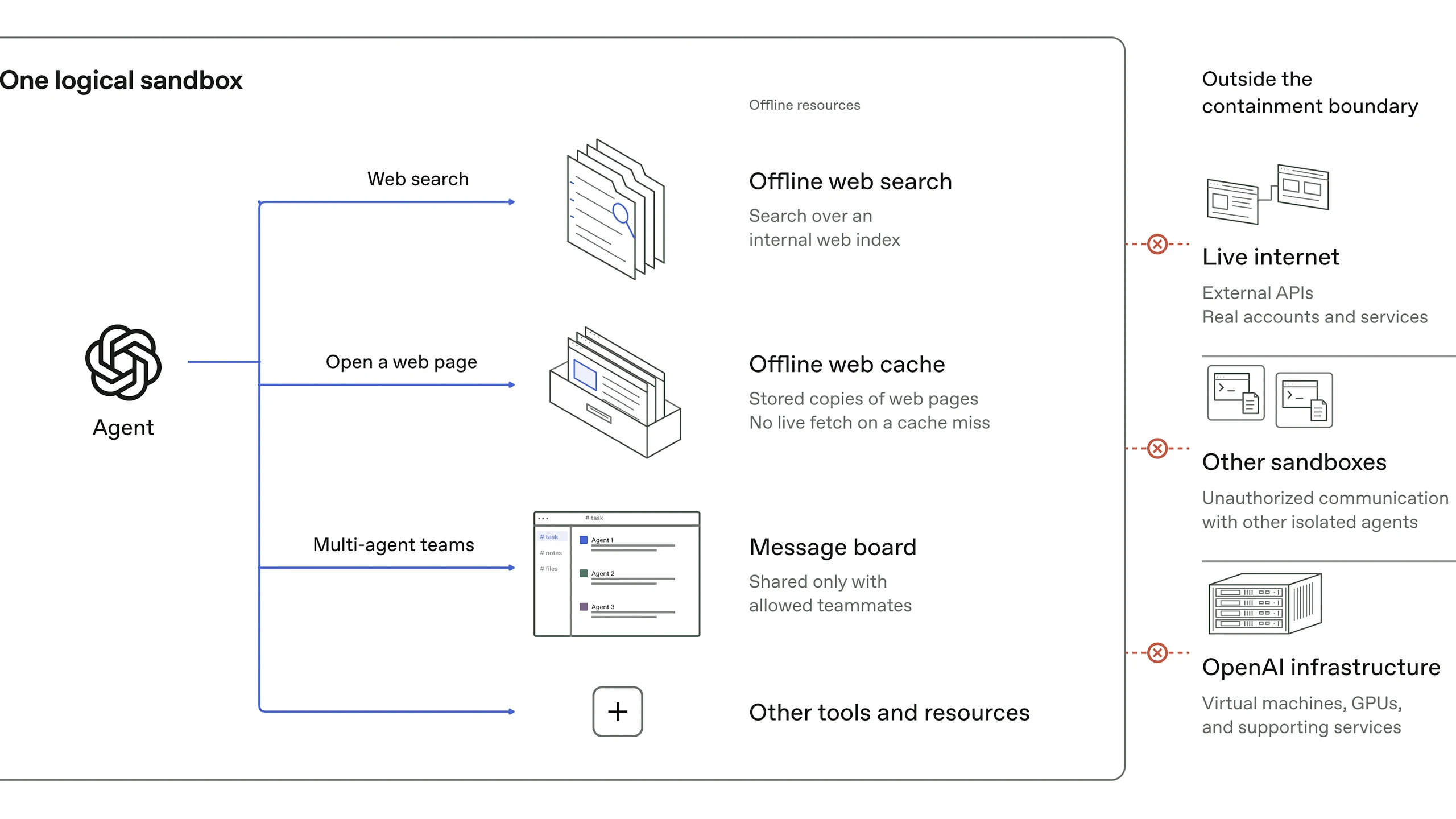
OpenAI frames frontier-model security as an operating system
OpenAI describes a security program for its frontier training environment that combines isolation, privileged access controls, monitoring, and incident response. The account stresses that containment is an operational discipline, not a sandbox setting.
Claude Code adds monitoring across managed deployments
Anthropic’s Claude Code release expands managed-deployment monitoring, giving administrators more visibility into use across controlled environments. The practical value depends on whether those signals support accountable decisions rather than merely collecting activity data.
Databricks links declarative pipelines to cheaper agent mistakes
Databricks presents Spark Declarative Pipelines as a way to make agent-driven data work more repeatable, observable, and economical. The benchmark is a prompt to evaluate failures and reruns as production costs, not just as model-quality anecdotes.
Google moves TB screening models closer to local care
Google Research describes bringing foundational models into tuberculosis-screening workflows closer to the point of care. The report makes local deployment and clinical validation central constraints, rather than treating model availability as a medical outcome.
Amazon gives Trainium a native PyTorch training path
AWS introduced a public-beta native PyTorch backend for Trainium2 and Trainium3, aiming to reduce the software friction of testing alternative training hardware. Compatibility and debugging behavior still decide whether an experiment can become a routine research workflow.
OpenAI reports faster shared storage for ChatGPT
OpenAI says its Habitat storage work combines selective replication, Valkey caching, and a Rust rewrite to reduce read latency at large scale. The account is a systems case study: a speed claim depends on which waits are removed and how freshness is preserved.
Kimi K3.1 Pro arrives hosted before its promised weights
Moonshot AI released Kimi K3.1 Pro through its hosted products and API while scheduling the downloadable weights for November 4. Reported benchmark results make it a credible evaluation candidate, but hosted access and independent deployment remain separate decisions.
SageMaker shows multi-turn reinforcement learning on full tasks
AWS demonstrates a SageMaker workflow that scores complete multi-step attempts instead of isolated answers, using Wordle as a bounded example. The transferable question is whether an organization can define success and feedback for its own real workflow.
Quick Sight adds GeoJSON points and routes to layer maps
Amazon Quick Sight now supports Point and LineString GeoJSON geometry alongside boundaries, allowing dashboards to show locations and connections. The feature increases the need for stable identities between geographic assets and business datasets.
Kling 4.0 API access expands while product details lag
fal says Kling 4.0 API access is opening more broadly, while some public product language still describes API availability as forthcoming. The completed report treats the mismatch as a rollout condition that developers should verify in their own accounts.